A broken phone is an excellent way to discover how many companies were involved in selling you a working one. There is the maker, the retailer, the carrier, the protection provider, perhaps a repair shop. Everyone had a role at checkout. Now comes the more interesting question: who is going to help? Eric Schneider has built the latest chapter of his career around that handoff.
Schneider is the co-founder and co-CEO of AKKO, alongside Jared Brier. The business offers device protection to individuals and supplies the systems that let other organizations offer it to their customers. Its work puts him in a peculiar position: selling an arrangement people hope they will rarely need, then making that arrangement useful when they do.
For someone who began in jet-engine engineering, the move has a certain comic scale. Aircraft turbines give way to cracked screens. Yet the underlying challenge still involves getting different parts to cooperate. A claims process can be surprisingly good at exposing the loose connections.
A different kind of machine
Schneider graduated from Virginia Tech in mechanical engineering in 2015. He entered GE’s Edison engineering program, then moved into management consulting at L.E.K. His curiosity was expanding toward the business surrounding the technical work. Consulting offered a way to examine how organizations made decisions across industries.
Later came Harvard Business School and experience building and investing in early ventures at New York studio 25madison. He completed his MBA in December 2021. Those stops supplied different vantage points: the engineer examining a component, the consultant examining a business, the venture builder considering what should exist in the first place.
It would be convenient to arrange these moves as a tidy preparation for insurance. Careers rarely have the courtesy to reveal their destination so early. Schneider has supplied a more believable explanation: “I don’t have a particular five-year plan.” The sentence leaves room for the next problem to be more interesting than the previous ambition.
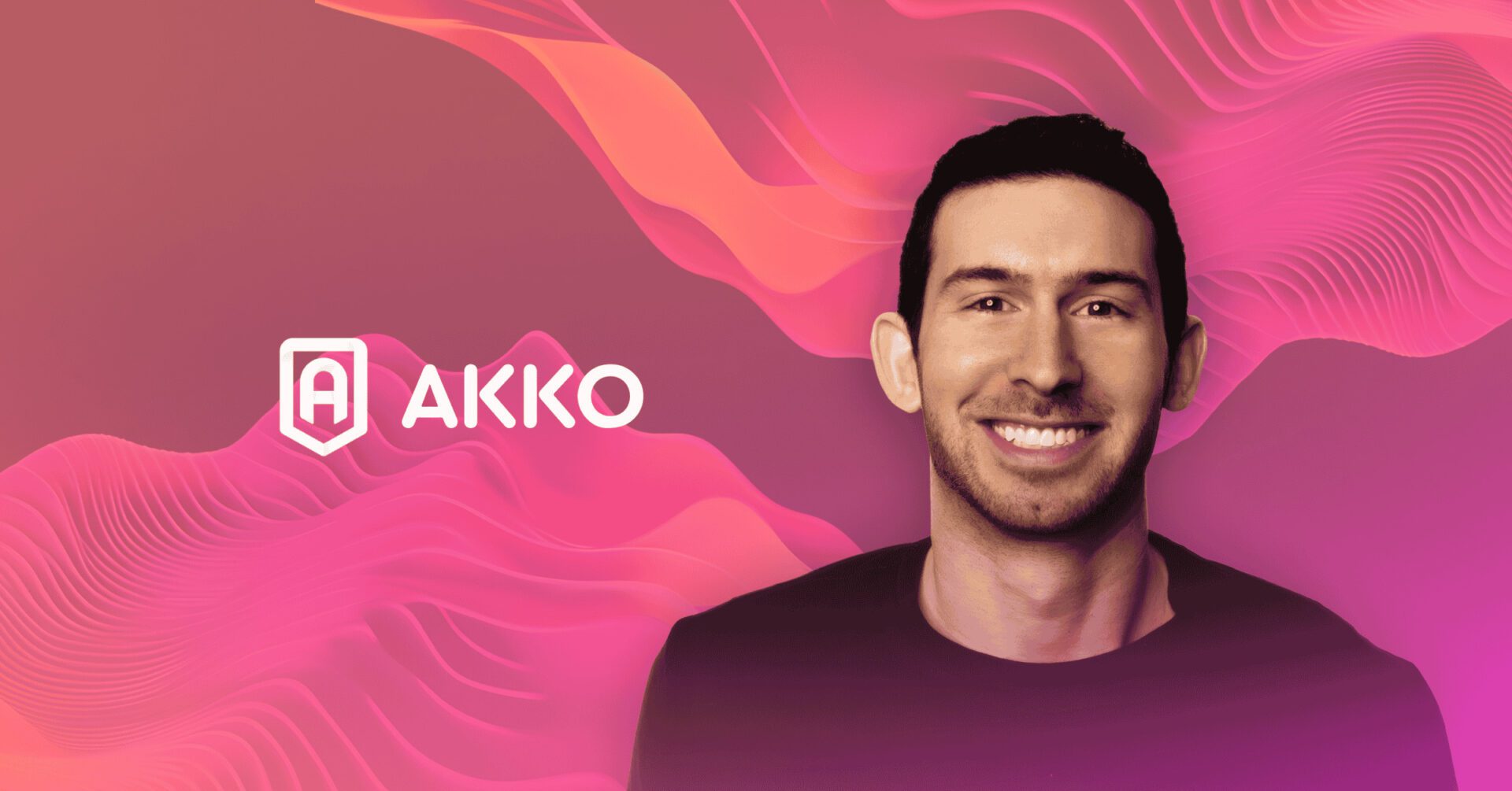
His Harvard activities included co-presiding over the squash club; his professional profile also records a 760 GMAT score. These details give the career a texture beyond successive job titles. One belongs to a competitive game, another to an admissions test. Neither says much about running an insurance operation, but both belong to the person who eventually chose to try.
An enterprise with no tuition bill
Before AKKO, there was Grad Mentors. Schneider founded the nonprofit in 2017, after his own experience preparing for the GMAT brought the cost and availability of test support into focus. His public professional profile describes an organization that has matched mentors and mentees across more than 25 countries.
The model pairs accepted applicants with volunteers who have already succeeded on the GMAT or GRE. Participation is free. The organization also provides study resources, guides, and a podcast. It is aimed at people facing financial or other barriers to graduate preparation, including communities underrepresented in higher education.
A mentor offers something a stack of practice questions cannot quite provide: another person who understands the route. The applicant still has to do the work. But a difficult process becomes easier to approach when there is someone available to answer a specific question. That distinction gives the nonprofit its practical purpose.
There is a family connection. Schneider has described his mother working three jobs while becoming the first person in her family to attend college. It is a concrete example of what access can demand. Grad Mentors addresses one piece of that larger problem, with a deliberately limited promise that volunteers can actually deliver.
Grad Mentors’ documented mentoring reach by 2022. A separate venture, with a separate purpose: free support for graduate test preparation.
When the customer changes the plan
AKKO also developed through changes of direction. Its founders described an early physical product resembling a smart lock. Researching warranties led them toward protection itself. Brier had encountered frustrations protecting his possessions; Schneider recognized a problem worth pursuing. The accessory to the original business became the business.
Schneider and Brier connected through a Facebook business group during the pandemic. Their partnership brought together different backgrounds, including Brier’s branding and digital marketing experience and Schneider’s engineering and business training. A consumer service needs both an intelligible offer and the organization capable of fulfilling it. Their shared title of co-CEO reflects a business they chose to lead together.
The first tests used an existing insurance partner in student property protection. When the arrangement constrained the coverage and experience they wanted to provide, they changed underwriting partners. That gave them more control over the program. The lesson was operational: a promising idea still depends on what the underlying arrangement lets you do.
Then organizations began asking for versions they could offer to their own customers and members. A consumer proposition was becoming a distribution business. By September 2021, the founders were discussing a roughly $3 million seed round backed by Fika Ventures and Pear VC, and a team of more than 20.
“We’ve learned not only that we have to be flexible but also that we have to be open to being wrong.”
Eric Schneider, 2021
Being open to correction sounds admirable in an interview. In a company it has consequences. It can mean changing the partner, the audience, or the product that people have already spent time building. Schneider’s account of AKKO gives the phrase some weight because the revisions were specific.
A promise needs somewhere to go
In October 2023, Schneider appeared on The Real Maxime Podcast to discuss the business. The conversation’s agenda included underwriting, owning the claims experience, channel distribution, and offering the service under a partner’s brand. These are the less photogenic parts of a consumer promise. They are also where the promise acquires substance.
Consider the partner’s position. A retailer or carrier can introduce a protection plan within a relationship that already exists. When a device fails, the customer has little reason to admire the organizational chart behind it. A handoff that makes commercial sense still has to make sense to the person waiting.
AKKO’s acquisition of Upsie, announced in April 2024, added another set of customer relationships and repair connections. The company said it would integrate Upsie’s Independent Repair Network with its own, creating access to more than 3,000 repair locations. The useful detail is the physical footprint behind the digital service.
- 01OfferProtection reaches the customer through a consumer plan or partner.
- 02RegisterThe device and its coverage need an accurate record.
- 03ResolveA claim connects the customer with the appropriate next step.
- 04RestoreRepair or replacement makes the arrangement tangible.
A conceptual view of the service chain, rather than a guarantee of coverage or timing.
A network count describes the available reach. The individual experience depends on the right connection at the right moment. That is why an acquisition in this business invites a question beyond how many customers changed hands: what can the combined operation now get done for them?
The serial number is the story
AKKO’s EDU Hub, launched in September 2025, makes that work unusually visible. Schools can correct enrollment information, organize student directories, follow claims, and print shipping labels. Administrators can consolidate multiple claims into a shipment. These features have the quiet glamour of a cupboard that finally closes properly.
An incorrect serial number is hardly a stirring subject for a founder’s speech. For the person responsible for a district’s devices, being able to correct it without waiting on support may be the feature that matters. EDU Hub was shaped by input from school administrators and IT leaders. Its specificity shows the audience changing the product.
The distribution announcements followed. In November 2025, AKKO announced an alliance with Ingram Micro that would make its protection products available to the distributor’s reseller network. The arrangement emphasized coverage across manufacturers, integrations, and a nationwide repair network. It put the service closer to businesses already supplying technology.
In December, a partnership with Michigan-based 3Eye Technologies extended that approach across enterprise, education, and public-sector channels. Resellers could offer repair and replacement coverage alongside the hardware and connected devices they supported. The pattern was becoming clearer: the protection could travel with someone else’s sale.
For a partner, the sale also attaches its own reputation to the protection. The customer encountered the offer in a place they already trusted. That gives Schneider and his team a second relationship to maintain alongside the individual policyholder’s: the organization that introduced them. A service failure can travel back along the same route as the original recommendation.
That strategy asks a different question of Schneider than the original consumer pitch did. How much can a common system adapt to the organization using it? A school needs administrative controls. A reseller needs a workable offer for its customers. The shared machinery has to leave room for those differences.
A winding route back to the Hokies
In September 2026, AKKO appeared at No. 22 on the inaugural Hokie 100, recognizing growing companies founded, owned, or led by Virginia Tech alumni. The program celebrated its first cohort in Alexandria on September 2. Schneider’s entry listed New York, the city where he is based.
The recognition places an engineering graduate and his device protection business in the same frame. It also offers a useful pause in a career that resists a straight line. The college degree did not dictate the eventual industry. The subsequent moves did not erase it. Each became part of the experience available for the next decision.
Schneider has described interest in expanding AKKO’s business and education channels and exploring international licensing of its platform. Those are directions to pursue, with their own practical demands. The existing work supplies a more revealing measure of his approach: whether a partner can offer a service its customers understand, and whether help arrives through the system built behind it.
The engineer, the mentor, and the founder all deal with the space between an intended result and what actually happens. Sometimes that space contains an unfamiliar admissions test. Sometimes it contains an enrollment error or a damaged laptop. Schneider keeps moving toward it. A five-year plan might have had trouble keeping up.