Aman Narang went to Puttshack with his family and found himself studying the counter. There was mini-golf to play, but he kept noticing how the team handled the rush and how guests moved through the space. After more than a decade building Toast, apparently even a round of golf could turn into fieldwork.
It is a small, revealing habit. Some people look at a restaurant and see the menu. Narang notices the movement: the people taking orders, the people waiting, the handoffs that make a busy room seem effortless. His family, he has said, is used to it. Entrepreneurship has many costs; one of the less discussed is becoming an unreliable companion for a completely ordinary outing.
That attention has a history. Toast began with a familiar complaint about dining out: getting the check could take too long. Narang and his partners wanted to let customers pay by phone. They ended up building technology for the people running the restaurant, then spending years learning just how much responsibility that involved.
The app that sent them behind the counter
The original proposition was easy to understand. Dinner was over. The customer wanted to leave. A phone ought to make payment quicker. A neat inconvenience, a neat solution, and presumably everyone could get on with the evening.
Except the phone app depended on the systems already inside the restaurant. Those systems were difficult to work with, and the founders’ early approach failed. Conversations with operators exposed a deeper dissatisfaction: the technology responsible for running the business itself.
For a founder, this is an awkward discovery. You have arrived to explain your invention, and the customer insists on describing a different problem. Following that conversation means surrendering some of the confidence that got you through the door. Narang, Steve Fredette, and Jonathan Grimm followed it far enough to build a new point-of-sale system.
The change enlarged the job considerably. Speeding up the final minutes of a meal is one assignment. Handling the information that moves through a restaurant is another. Orders, payments, kitchen instructions, and the people working with them have to connect during service. A charming idea gets little indulgence when dinner is backing up.
A change in the customer’s problem changed the size of the product.
An office with a very short commute
Narang had studied computer science at MIT, earning his bachelor’s degree in 2004 and his master’s in 2006. He worked at Endeca, where his experience extended into product management and the mobile business. Fredette and Grimm were colleagues there, too. Their working relationship preceded the company they would build together.
There is something reassuring about starting with people whose work you have already seen. It removes one mystery from a venture otherwise full of them. It does not, however, provide an office. The team considered renting space and settled on the cheaper option: Narang’s basement.
For nine months, the house accommodated a software company. His wife was a teacher. At six in the morning, colleagues could already be downstairs coding; at bedtime, they might still be there. A short commute is an attractive employment benefit until the office is underneath your bedroom.
Toast eventually moved into an apartment in Cambridge’s Central Square. That arrangement ended when the landlord learned a business was operating there. The progression from basement to apartment to actual office reads like a company gradually admitting that it exists. Each move required a little more commitment, and a little less improvisation.
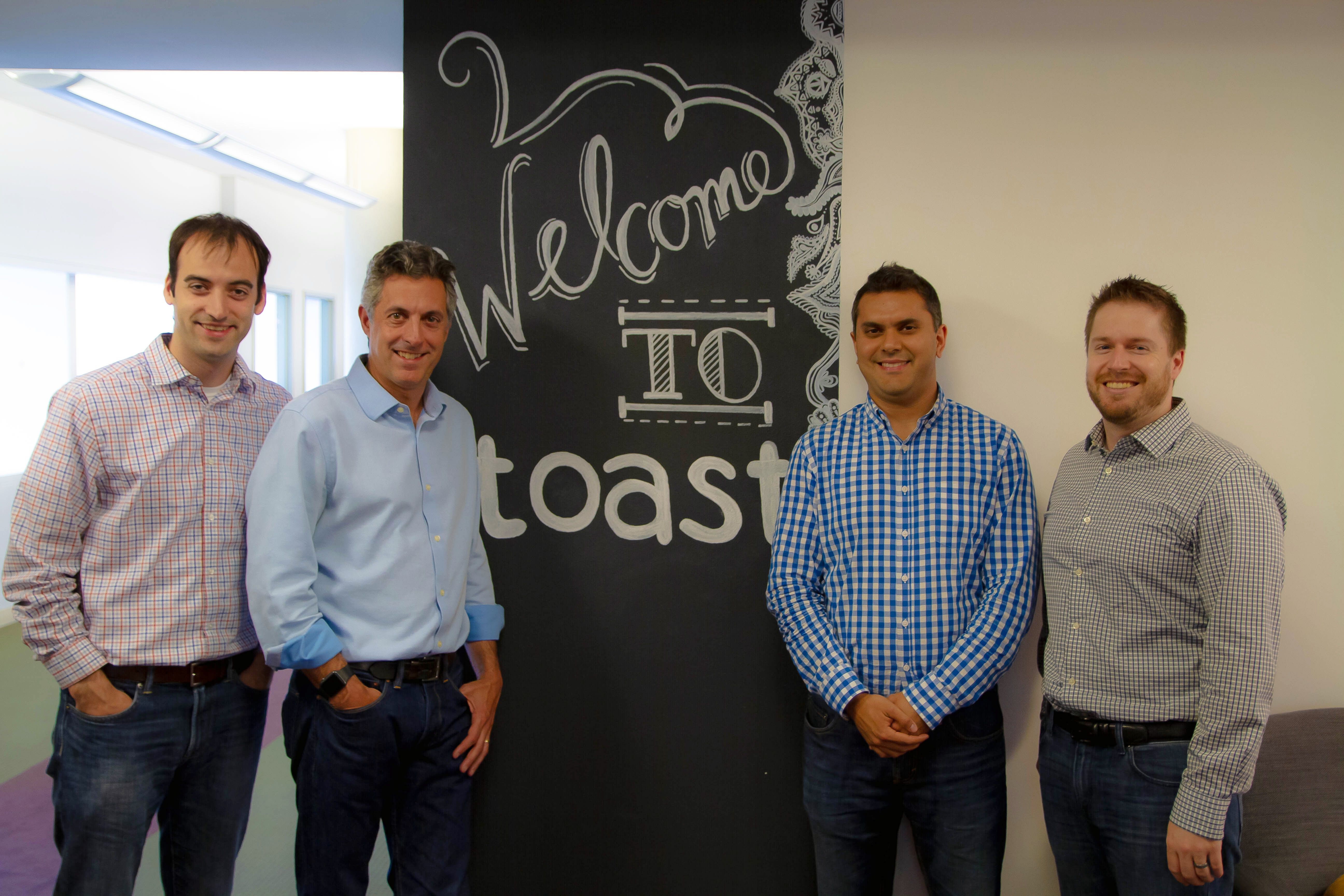
The setting is amusing now. At the time, it was a way to keep working. A basement gives founders time without demanding much rent. It also encourages the belief that a small group can keep solving the next problem simply by staying downstairs a little longer.
The phone rings after dinner
Restaurant software eventually supplies its own objection to that belief. Customers need help when they are working, which includes hours when the people who built the system might reasonably prefer to be asleep. Narang has recalled answering customer calls with Fredette at two in the morning.
That detail changes the character of the origin story. The founders were selling something that had to keep functioning after the sales conversation ended. Their availability mattered. A restaurant could not pause a service while the supplier reflected on its long-term vision.
The lesson extends beyond answering the phone. A point-of-sale business joins hardware, software, payments, and support. These parts meet in the same working environment, so a weakness in one can become the customer’s experience of the whole. More sales can expose the seams faster than a small team can repair them.
In his later discussions of Toast’s growth, Narang has returned to the need to strengthen the company’s foundations before pushing harder. He has also argued for hiring managers earlier and for founders giving up control. Those are practical admissions from someone who had seen how much early progress a few familiar colleagues could make.
The talent required to solve a problem personally is different from the patience required to help other people solve it repeatedly. A founder can know every customer for a while. A company needs a way for people who have never met that founder to deliver dependable work.
For Narang, that education ran through the operating business. His responsibilities grew from sales, marketing, and business development to include customer success, fintech, and operations. The range is worth lingering over. It put him near both the promise made to a restaurant and the work required to keep it.
There is a trade in that kind of experience. Each additional department gives a founder another view of the customer, and another set of people whose judgment he must learn to trust. Sales hears what might persuade an owner to switch. Support hears what happens after the switch. Operations has to make the arrangements repeatable. Keeping those views in conversation is less picturesque than a basement full of programmers, but the restaurant depends on it just as much.
A founder takes the chair
Chris Comparato became Toast’s CEO in February 2015. Narang continued as a co-founder and co-president, adding the chief operating officer role in June 2021. Toast went public that September. The founder’s route to the top job involved years beside another chief executive.
When the succession was announced in September 2023, Narang spoke warmly about Comparato’s mentorship and friendship. He became CEO on January 1, 2024. Both remained on the board. This was a change of responsibility inside a long working relationship.
- 2012Co-president at Toast
- 2021COO; company goes public
- 2024Becomes chief executive
In his first week as CEO, Narang counted the occasion another way: it was also his 604th week since starting the company with Fredette and Grimm in his basement. The arithmetic carries a founder’s sense of time. A new title marks a beginning, but it lands inside a much longer stretch of work.
By then, Toast served more than 100,000 restaurant locations, including customers outside the United States. The basement memory had become a useful measure of distance. It also sharpened the question facing the new CEO: how do you preserve attention to an individual restaurant when the business contains so many of them?
The chief executive’s calendar and the customer’s dinner service operate on different clocks. A quarterly plan can wait for a meeting. A team facing a queue needs its tools to work now. Narang’s earlier jobs had given him repeated contact with that difference.
A personal visit cannot carry an organization at that size. It can still correct its perspective. The rush behind a counter supplies details that disappear inside an aggregate number. Someone has to translate those details into decisions about what gets built, sold, supported, or simplified.
The next job is already waiting
Toast’s second-quarter 2026 results put its location count at approximately 180,000, with annualized recurring run-rate of $2.4 billion at June 30. Those are company measures, rather than a personal scorecard. They describe the scale of the responsibility Narang now holds.
At June 30, 2026 · $2.4 billion annualized recurring run-rate
His current ambitions include larger restaurant groups, international markets, and retail businesses. AI is also becoming part of the work. Toast IQ and its marketing products aim to help operators use their information and carry out tasks that would otherwise consume their time.
The appeal is understandable. A restaurant owner may have access to useful data and very little opportunity to sit with it. Another dashboard can become another place to look. An assistant that helps turn information into a decision, or a campaign into actual work completed, has a different claim on the owner’s attention.
“I think a lot of it is figuring out what people want.”
Aman Narang, on the future of restaurant technology
His view of automation leaves room for the people doing the cooking and serving. He has discussed using technology for manual work such as scheduling, paying staff, and tracking inventory, while describing limits to what machines might contribute to a chef’s craft. The useful question is which part of the working day becomes easier.
He also remembers what happens when demand runs ahead of a restaurant’s capacity. One Boston-area customer promoted online ordering with what he recalled as roughly dollar burritos. The response overwhelmed the operation. Selling more dinner is an imperfect victory when the kitchen cannot make it quickly enough.
That story brings him back to the counter at Puttshack, watching the movement while his family plays. A smooth service contains many decisions that customers never notice. Narang’s career has been spent moving toward those decisions, beginning with the final bill and working backward. The original idea promised a quicker exit. It gave him a reason to keep looking around.