Amir Nashat has occupied a peculiar seat in business: the investor’s chair that comes with the chief executive’s desk. Before a company has settled into its routines, before a management team has acquired the reassuring polish of an annual-report photograph, he has repeatedly taken responsibility for running it. There is something appealingly inconvenient about this arrangement. A financial opinion is easy to deliver. A company requires someone to answer the next question, and the one after that.
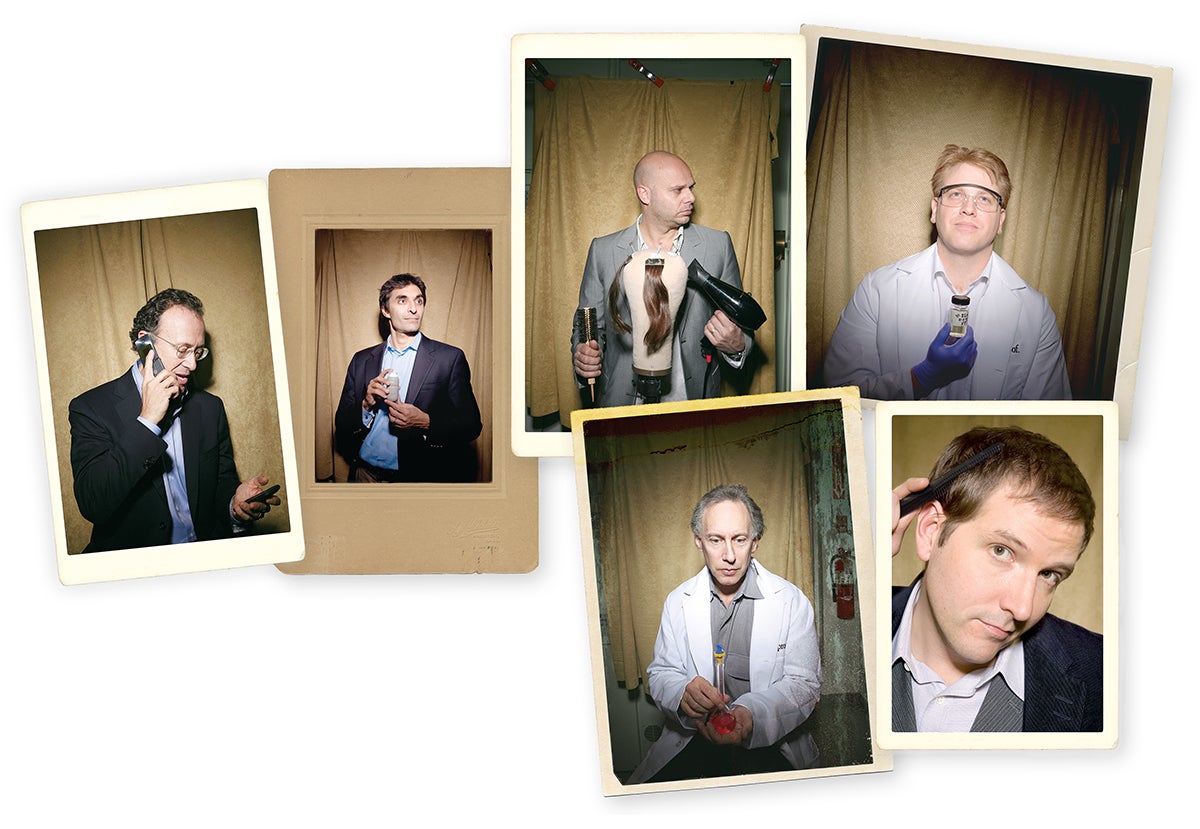
Consider the bottles. In the early days of Living Proof, Nashat spent half a day examining a few dozen gels and sprays in a Polaris conference room. His conclusion was that much of the apparent variety concealed familiar ingredients. “They use all these scientific buzzwords, but it’s just marketing,” he said. The business began in 2005 after salon owner Mitch DeRosa approached Polaris co-founder Jon Flint about a hair-care line. Flint and Nashat brought the question to MIT’s Robert Langer. Scientists and stylists became collaborators. A bathroom shelf had acquired an engineering problem.
Nashat became Living Proof’s founding CEO. The choice is a useful introduction to his career because the product is so ordinary. Hair is something people can inspect without a committee. It also refuses to behave merely because a label has become more expensive. A company attempting to change that behavior needs several kinds of expertise, and each must survive contact with the others. The scientist, the stylist and the investor all have a claim on the conversation.
That mixture keeps returning in Nashat’s work. His career crosses consumer products, energy and research companies, with executive assignments alongside investment responsibilities. The interesting continuity lies in the beginning of the business: who joins, what gets built, and how a scientific proposition acquires an organization capable of carrying it forward.
Berkeley gave him materials. MIT gave him a mentor.
His education started with engineering at the University of California, Berkeley, where he earned bachelor’s and master’s degrees in materials science and mechanical engineering. At MIT he completed a doctorate in chemical engineering, with a minor in biology, under Langer’s guidance. He was a Hertz Fellow, selected in 1994. The combination put materials, mechanisms and living systems within the same intellectual itinerary.
A technical education leaves a distinctive question hanging over a business career: what actually makes this work? In Nashat’s case, the question has a literal foundation. Engineering concerns itself with properties, constraints and performance. A commercial proposition adds another set of constraints: budgets, recruitment, customers and the time available to establish whether an idea deserves further investment. Moving between those worlds means learning to speak precisely to people whose definitions of progress may differ.
During his MIT years, Nashat also completed an internship in Goldman Sachs’s London office. Finance entered the picture before Polaris did. The sequence helps explain the breadth of the eventual job, though it would be too tidy to treat every educational choice as a forecast. A doctorate and an internship offer experiences; building a company asks what someone can do with them.
Langer remained a connection beyond graduate school. Living Proof reunited teacher and former student around a commercial venture, alongside Flint and the stylists. Their partnership offers a less romantic account of entrepreneurship than the solitary founder at a whiteboard. Expertise arrived from several directions. The opportunity emerged through people who already knew how to ask one another for help.
“By exposing students to market realities”
Amir Nashat, on MIT Sandbox, 2016
The title that keeps moving
Nashat joined Polaris in 2002. Today the firm calls him an entrepreneur partner in its Boston office, with responsibilities that include executive roles at portfolio companies. He also serves as a managing partner of Polaris Funds VI through IX. Those descriptions capture two different kinds of work: allocating capital and helping run the organizations receiving it.
The executive appointments are unusually revealing. His CEO assignments have included Living Proof, Sun Catalytix, Olivo Labs, Jnana, Dewpoint and Paratus. His current operating role is CEO of Soufflé Therapeutics. Read as a list, the names can blur together. Read as assignments, they suggest a recurring willingness to enter a company while its shape is still being determined.
An early chief executive has to give the venture enough structure to move without pretending that every uncertainty has disappeared. Hiring establishes what the organization can do. Spending establishes what it can keep doing. Meetings establish which questions receive attention. None of these activities has the elegance of a scientific finding, but a finding can wait a long time for someone to schedule the meeting that matters.
The combination of investor and operator also puts judgment close to consequences. Someone who helps select a venture and then runs it encounters the practical costs of that selection. The calendar fills. Decisions become interdependent. The next hire may change the next experiment or the next budget. Nashat’s repeated executive roles make that proximity a central feature of his professional record.
His history includes board seats as well. The distinction matters because a director and a CEO have different responsibilities. A biography that compresses both into a vague claim about “building” risks losing the work itself. Nashat’s career is more legible when the seats remain separate: executive leadership at some moments, investment and governance at others.
When the bottle reached a bigger shelf
Living Proof eventually brought another kind of collaborator into the company. In October 2012, Jennifer Aniston became a co-owner and hair-care spokesperson. The original grouping of scientists, stylists and venture investors now included an actor whose hair had long received its own share of public attention. The business could hardly have chosen a partnership more closely connected to the object in the bottle.
The company raised a $30 million Series C announced in February 2013. Unilever later agreed to acquire it in December 2016, completing the transaction on February 1, 2017. Those dates mark different events: an agreement and a completed acquisition. They also draw a boundary around Nashat’s founding role. A company can travel well beyond its first CEO while retaining the consequences of its earliest choices.
There is a pleasing reversal in this chapter. An engineer examining familiar products helped start a brand that eventually entered a large consumer-products group. The journey depended on several professions meeting around something customers would use at home. The scientific credentials could open a conversation; the product still had to earn a place in the routine.
Living Proof belongs in Nashat’s story because it makes the translation problem visible. The distance from research to commerce is measured in decisions about formulation, people, financing and distribution. A bottle on a shelf is a small object carrying a considerable amount of organizational history.
Unilever completes its acquisition of the company Nashat helped found.
Paratus, and the discipline of handing over
Paratus launched publicly in 2023 with a $100 million Series A and Nashat as founding CEO. Its founding leadership also included president Phil Ferro and chief scientific officer Deborah Slipetz. The company had sites in New York and Singapore. Even at launch, this was a venture requiring coordination across places and specialties.
By February 21, 2024, Theresa Heah had been appointed CEO and Nashat was chair of the board. In April 2026, Alicia Secor became president and CEO; Nashat was still chair. On August 26, 2026, Dhavalkumar Patel succeeded him in that position. Nashat remained a non-independent director. The succession is a compact illustration of his changing relationship to an organization he helped establish.
There are three distinct seats in that sequence: founding CEO, board chair and director. Each carries responsibility, but the daily work changes. A founding executive assembles the first operating organization. A chair leads the board. A director continues contributing through governance after another person takes the chair. Treating the titles accurately allows the company’s own development to come into view.
A handoff rarely supplies the photograph that makes a founding story memorable. It is nevertheless part of the story. Companies need continuity while their requirements change, and a person’s continued involvement can take a different form. Paratus’s leadership announcements show that progression in dates and appointments. They give Nashat’s contribution an arc beyond the launch announcement.
For a serial company builder, the first chair is temporary by design of the sequence, even when the later relationship lasts. The relevant question becomes how the organization proceeds once someone else occupies the operating seat. Paratus makes that question concrete without requiring a founder to disappear from the picture.
- 2023Founding CEO
Public launch - 2024Board chair
Theresa Heah appointed CEO - 2026Director
New chair appointed August 26
A sandbox with real consequences
Nashat’s involvement with MIT also extended to students attempting their own beginnings. He and Polaris partner emeritus Alan Spoon helped conceive MIT Sandbox, which launched in January 2016. The program offered mentoring, educational experiences and funding of up to $25,000 for student ideas. Its stated purpose put the development of people at the center of the endeavor.
Nashat’s explanation included a practical phrase: “By exposing students to market realities”. The appeal of Sandbox lies in giving a student an opportunity to encounter those realities while learning. An idea can acquire milestones, advice and a budget before it acquires the burden of a fully formed company. An initial attempt becomes something a person can examine, revise and attempt again.
In 2017, he was also named to the investment advisory committee of The Engine, MIT’s initiative supporting ventures built around demanding scientific and technical work. Sandbox and The Engine address different stages, but they belong beside his operating roles. Both concern the arrangements that help ideas travel: access to people, resources and informed decisions about what comes next.
His Hertz connection continued too. He serves on the foundation’s board and Fellowship and Programs Council. In March 2011, he and Lily Kim organized a Cambridge gathering on mathematics education for girls. More than twenty fellows, alumni and guests took part. The subject brought attention back to the conditions under which technical talent gets a chance to develop.
The next conversation
The personal register appears in a long conversation with Petri Kajander, published in November 2021. Its topics include curiosity, trust, recruitment, company culture, and meeting skateboarder Rodney Mullen. That last detail adds a welcome angle to a career otherwise liable to be described entirely through institutional affiliations. Admiration can have a life beyond the boardroom.
On October 16, 2026, Nashat is scheduled to join founders Cheri Ackerman Araromi and David Zhang at a Hertz dialogue dinner in Boston. The planned conversation concerns the passage from laboratory work to founding a company. It brings him back to the subject that connects the bottles, the executive appointments and the student program: what happens when an idea needs people to act on it.
The appeal of Nashat’s story is the range of places where that question has taken him. A conference room full of hair products. A graduate adviser who became a business collaborator. A student fund. A company in two countries. An executive seat that eventually passes to someone else. The first chair gives him a view of the beginning. The rest of the career asks how to make that beginning useful.