A payment is a peculiar place to look for a life story. The customer wants it over with. The merchant wants it accepted. Almost nobody pauses at the checkout to admire the organisation underneath. Yet Semih Muşabak has built his career around that underneath: the systems, the connections and, eventually, the responsibility for making them work. His consequential move came in December 2020, when he left KPMG for Sipay. The adviser became an operator. The problems would now come with his own company’s name attached.
He had spent years learning how financial institutions functioned from the inside. He would arrive at Sipay with experience in information technology audit, data analytics and advisory work. These are occupations in which a charming presentation is unlikely to repair a broken process. They reward attention to how things fit together. For an executive entering payments, that is a useful education in the distance between a promise and a working service.
The engineer before the executive
Muşabak studied industrial engineering at Işık University, first as an undergraduate from 2007 to 2012, then at master’s level from 2013 to 2016. His professional career began at KPMG Turkey in 2012 as an IT auditor. He went on to roles including data analytics technical leader and senior manager in IT advisory. The progression placed him at the intersection of technology and institutions that depend on it.
His work extended beyond finance into manufacturing, retail and energy. Within financial services, he advised banks and electronic-money and payment companies, including work before and after licensing. Later projects involved banks’ digital development and customer experience. The view was broad, but the recurring subject was practical: how an organisation’s systems support the service it claims to provide.
There is a certain occupational irony in this route to fintech. The industry likes the language of speed; audit asks what happened, how it happened and whether it can happen properly again. Muşabak’s background gives the story a different starting point from the familiar invention-in-a-garage tale. His preparation took place in existing organisations, among processes that already had customers and consequences.
IT audit
Master’s studies
General manager
overseas plans
A conversation becomes a career
A mutual friend introduced Muşabak to Nezih Sipahioğlu, Sipay’s founder. Their conversations began while the business was still taking shape. Muşabak later described finding common values and a shared outlook. At the end of 2020, he joined as CEO. It was a professional relationship that began with a conversation and became a change in who would carry the decisions.
He has identified leaving KPMG as his career’s defining turning point. The attraction was the chance to formulate strategies and help build an organisation, after years analysing systems. His account gives the change a personal weight: a new outlook, responsibility and a sense of belonging. The entrepreneurial setting brought uncertainty along with the opportunity.
The partnership also matters to how his role is understood. Sipahioğlu founded Sipay and serves as its global CEO. Muşabak runs the Turkish business, with the official governance page listing him as general manager and board member. The company’s growth belongs to a group of people with different responsibilities. Muşabak’s place in it is the executive’s demanding middle ground, where a vision must become a sequence of operating choices.
The customer would like fewer complications
By early 2021, Sipay had separated its technology operation and placed it at İTÜ Teknokent. Muşabak described the move as a way to create a faster, more dynamic organisation for developing the company’s technology. Infrastructure featured early in his explanation of growth. A payments business could attract demand and still need a structure capable of keeping up with it.
His description of the customer was equally direct. “Every business that wants to receive payments is a potential customer for us,” he said in May 2021. Whether the payment came by card or bank transfer mattered less than making it easier to receive. It is an unusually expansive customer definition. It also keeps the discussion close to the shopkeeper’s concern: completing a sale without turning payment into a second job.
“Every business that wants to receive payments is a potential customer for us.”
Semih Muşabak · May 2021 · translated from Turkish
In April 2024, he described a business serving individuals and companies across payment services. Sipay could provide IBANs and participate in FAST, Turkey’s round-the-clock instant-transfer system. Open banking was another area it had entered. These are the kind of developments that make a product explanation grow longer while the intended customer experience grows shorter. The point of the machinery is to spare people repeated effort.
Muşabak’s language about removing friction is easy to recognise in payments. The detail that distinguishes his account is its breadth. His remit covers how money is accepted, held and moved, and how another business can offer those services to its own customers. Each extra capability adds another connection to maintain. A customer may encounter one interface; the operator has to think about the whole arrangement.
The wallet wearing someone else’s name
In December 2021, Muşabak appeared at Webrazzi Fintech with a presentation about brands. One of his questions was, “Can we empathize with the new generation?” He argued that companies paying attention to younger users and their experiences would gain an advantage. For someone trained in systems, it was a revealing public emphasis: the person at the other end of the process still had to want to use it.
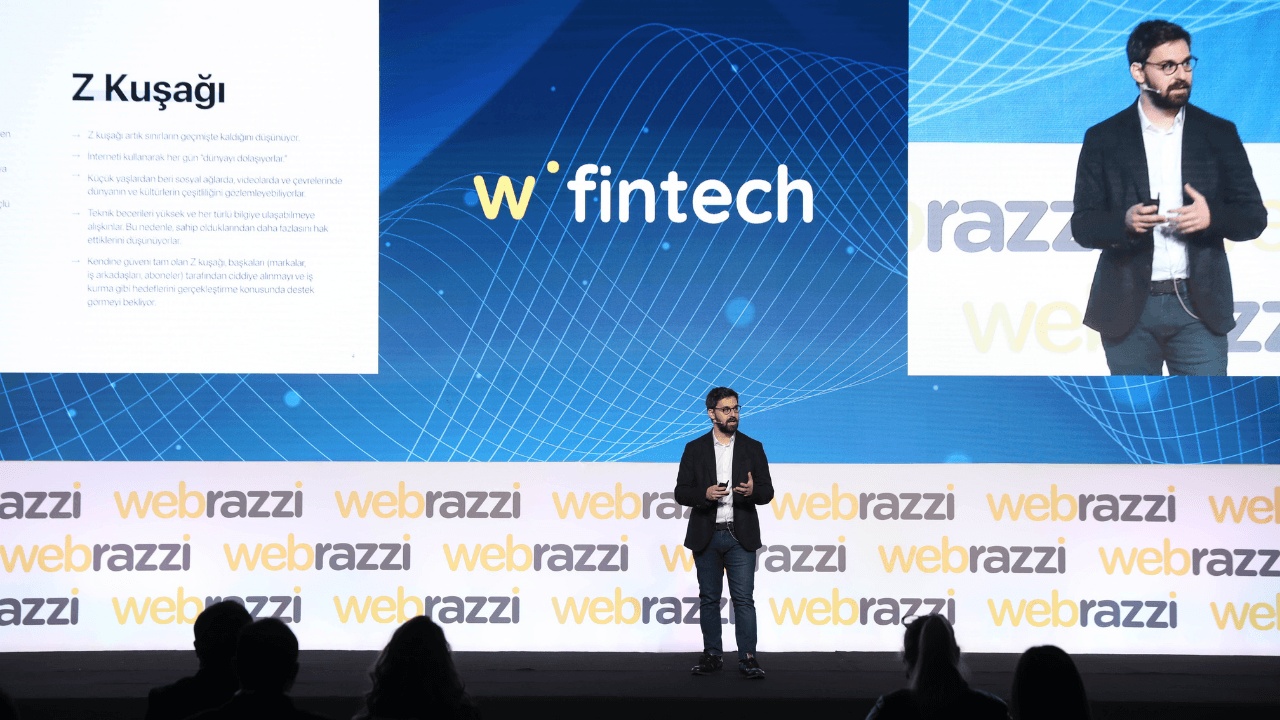
The same discussion introduced Walletgate, Sipay’s infrastructure for businesses offering branded financial services. By November 2022, he was explaining a service through which a business could provide digital wallets, prepaid cards, transfers and loyalty programmes from one provider. The brand would appear in front of the customer, while Sipay supplied the payment infrastructure behind it.
He described financial services, payments and commerce as increasingly connected. The arrangement gives his career an intriguing continuity. An adviser learns about other organisations’ systems; an infrastructure operator supplies capabilities that other organisations use. The relationship changes, but the need to understand another business remains. A wallet with someone else’s name on it still requires someone to do the work underneath.
A simplified illustration of the white-label model Muşabak has described.
Growth arrives with colleagues
Public recognition followed the operating work. Muşabak accepted Sipay’s Deloitte Technology Fast 50 2023 recognition on the company’s behalf. His response emphasised the team behind the growth. In 2024, when he appeared again in Ekonomist’s under-40 CEO list, he similarly thanked colleagues and business partners. Individual recognition gave him an occasion to talk about collective work.
There is a human detail in that pattern. An award photograph has limited space. A company’s work has many more participants. Muşabak’s public comments repeatedly widen the frame. When former Sipay colleague İsmail Sevinç announced his departure after a year and a half, Muşabak thanked him for his contribution and wished him continued success. The exchange was brief, ordinary and more personal than a growth chart.
In October 2024, Sipay convened Partner’Si Day. Muşabak joined Craftgate founder and CEO Hakan Erdoğan and YemekPay CEO Serkan Yazıcıoğlu on a panel moderated by Soner Canko. The discussion covered growth, technology and customer expectations. He spoke about cooperation among competitors and the value of bringing industry partners together. A business that connects other businesses has good reason to keep the conversation going.
The numbers acquire a passport
Sipay announced a $78 million Series B in April 2025, led by Elephant with participation from QuantumLight, the investment firm founded by Revolut’s Nik Storonsky. The company put its valuation above $875 million. The round followed a $15 million Series A led by Anfa in June 2024. New funding was intended to support international expansion and further product development.
Muşabak’s own announcement described $7.4 billion in transaction volume, 6.3 million wallet users and more than 25,000 merchants. He thanked the Sipay team, partners and Sipahioğlu. Those figures describe the company at that moment, rather than a permanent scoreboard. They show the scale of the operation he was helping manage when the next phase of expansion was announced.
The overseas ambition had already appeared in his May 2024 comments. He described work in the UK and Azerbaijan, including plans for test transactions and license applications. Other possible destinations included the United Arab Emirates and Europe. The vocabulary is instructive. Testing and applying are modest verbs carrying a substantial ambition. Crossing a border in payments means making a service function within another country’s arrangements.
What happens after the announcement
At Webrazzi Summit in October 2025, Muşabak discussed the next layer of operating change: artificial intelligence. He described some AI support in recruitment, payment disputes and fraud analysis, alongside a dedicated AI unit and staff training. He also spoke about a more personalised product experience. His emphasis on cultural change brought the discussion back to the people expected to use the tools.
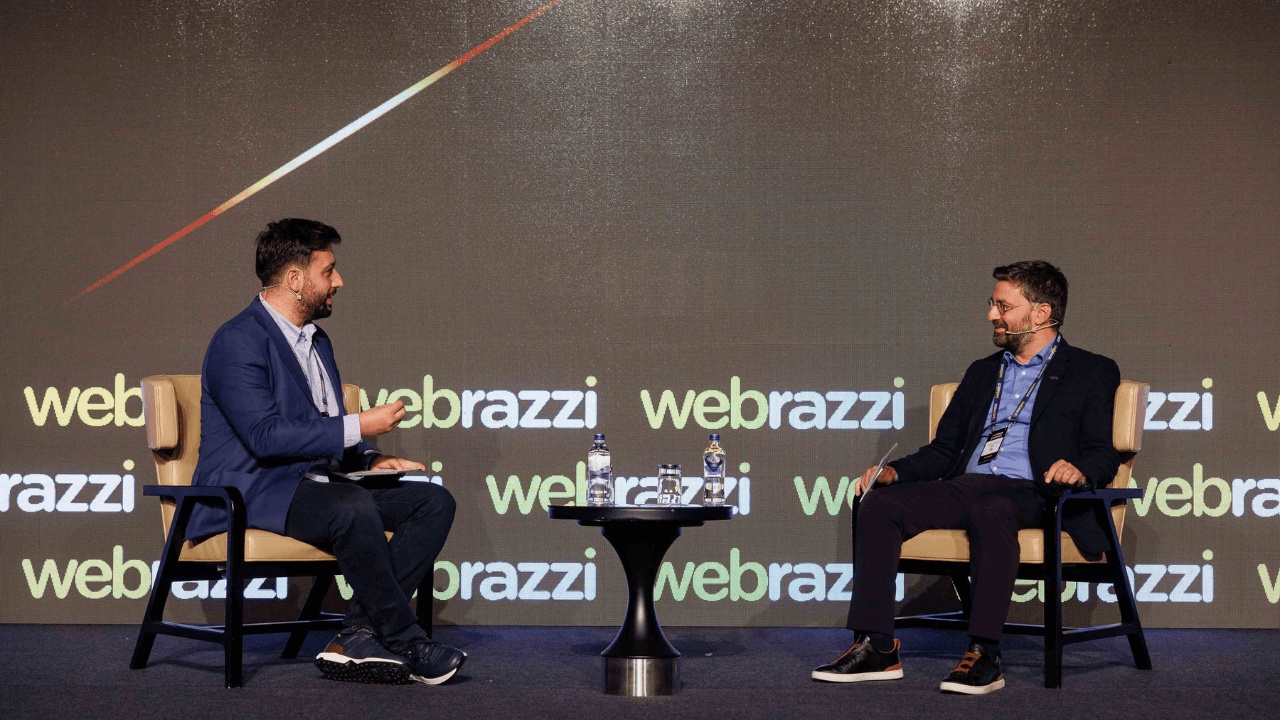
He set a target for 40 percent of transactions to come from abroad by the end of 2027. Longer term, he has also described an overseas public listing as an aspiration. These ambitions extend the question that followed him from KPMG to Sipay: how does an idea become an organisation capable of delivering it?
His career offers a concrete answer up to this point. Learn the systems. Work with the institutions. Choose the moment to take responsibility. Then keep dealing with the people and processes behind the interface. For the customer, a successful payment may occupy a few seconds. For Muşabak, the other side of that payment has become years of work, and a career still being written.
Continue the conversation
Company, career and conversations on camera.
- Sipay · company website
- Semih Muşabak · LinkedIn
- Watch: Finansal Teknoloji with Sefer Yüksel · September 2024 ↗
- Watch: EKOTÜRK TV’s Fintek Dünyası ↗
- Watch: New technologies and finance · 2023 panel ↗
- Read: The career change and overseas ambitions · June 2025
- Read: His Webrazzi Summit conversation · October 2025
- Read: Sipay’s Series B announcement · April 2025