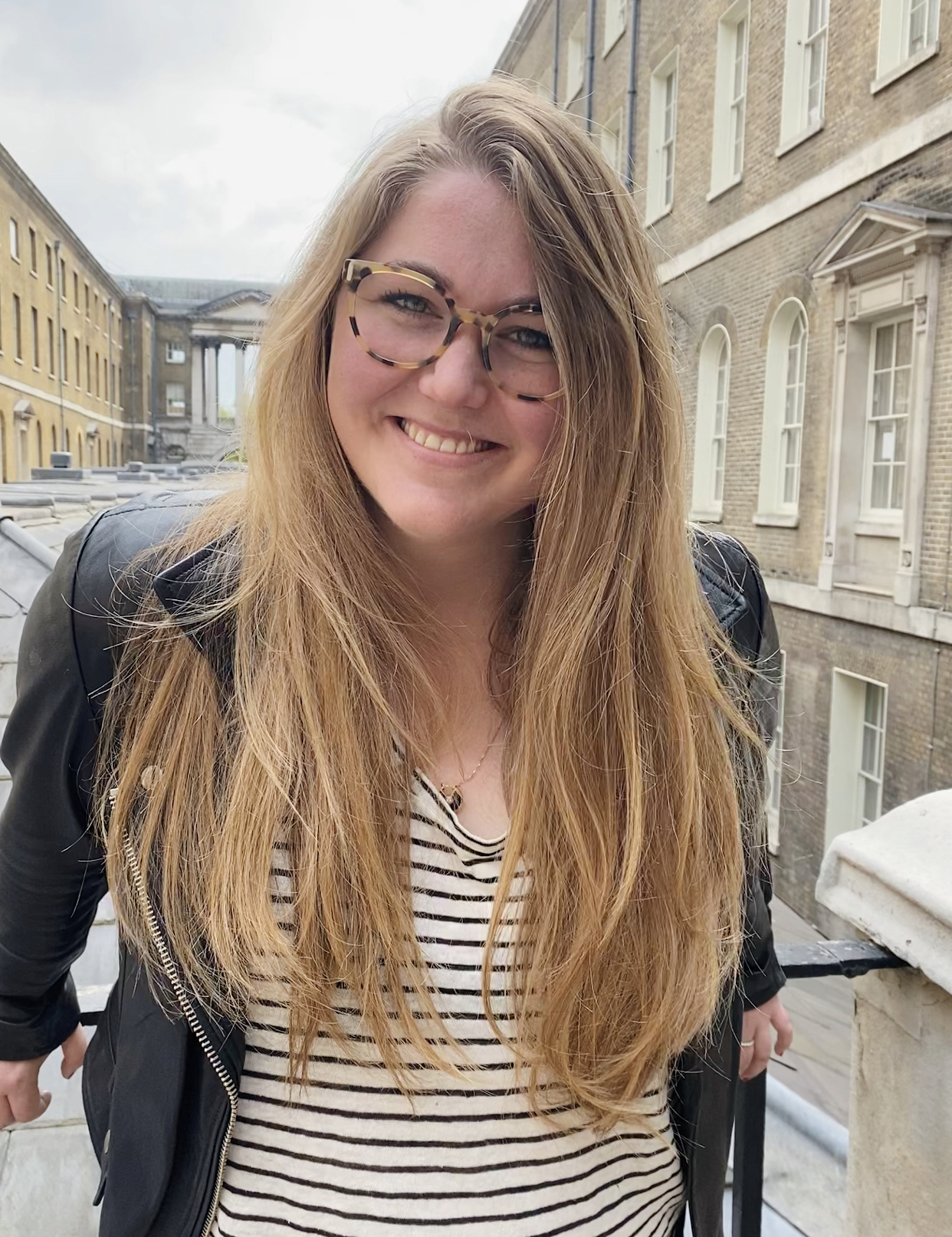
There is a certain kind of person who looks at a $4 cup of coffee and does not see caffeine. They see a transaction - and, more precisely, the roughly thirty cents that quietly leaks out of it every time a card gets tapped. Most of us drink the coffee and move on. Sophia Goldberg started a company. That impulse, to stare at the plumbing of everyday commerce until it reveals its inefficiencies, is the through-line of a career that has taken her from a political campaign to a Dutch payments giant to the author's chair and, finally, to the founder's seat at Ansa.
Goldberg co-founded Ansa in 2023 with JT Cho, a former lead engineer at Affirm who had also done time at Google. The pitch is deceptively simple. Ansa builds white-labeled, stored-value digital wallets that any merchant can offer under their own brand. Think of the Starbucks app - that little balance you top up and spend on lattes, which has quietly turned the coffee chain into something resembling a bank it never applied to be. Goldberg's question was straightforward and slightly subversive: why should only Starbucks get to do that?
It is the sort of line that sounds obvious once someone says it out loud, which is usually the mark of a good idea. For a merchant, the customer who buys a coffee every single morning is both the most valuable and, thanks to per-transaction card fees, among the most expensive to serve. A closed-loop wallet flips that math. Load ten dollars once, spend it across five visits, and the card network only touches the money once instead of five times. "For these small transactions," Goldberg has explained, "it should be a closed loop wallet on your platform, then you're able to get away from barriers to entry with card cost of payments today." The result is a payment instrument the merchant controls, decorated in the merchant's colors, that happens to be cheaper to run.
The making of a payments nerd
Goldberg does not run from the label. "A payments nerd" is how she describes herself, and she means it as a badge rather than an apology. It is a strange and specialized enthusiasm, roughly as glamorous at a dinner party as an interest in municipal water systems, and yet it turns out that money, like water, is something everyone uses and almost no one understands the pipes of.
Her path there was not a straight line. She holds a BA from Tufts University and an MSc in International Political Economy from the London School of Economics - a background in how nations and money interact rather than in code or commerce specifically. Early in her career she worked on Hillary Clinton's finance team, an experience in the machinery of raising and moving money that, in hindsight, reads like foreshadowing. Then came Adyen, the sprawling global payments company, where she spent about four and a half years in San Francisco across commercial and product roles, trained new hires, and served on the board of the industry group PaymentsEd.
How an Ansa wallet works
Adyen was, in effect, an apprenticeship in the full stack of how money settles - the unglamorous journey from a tap at a register all the way through to funds landing in a bank account days later. It is the kind of knowledge that does not photograph well but that separates fintech founders who build durable infrastructure from those who build a pretty screen on top of somebody else's rails. Goldberg's advice to other founders reflects exactly this: "Understand the full payments stack, from processing to settlement," and "prioritize security and fraud prevention from the outset." Dull-sounding counsel, and precisely the kind that keeps a payments company alive.
She wrote the book. Literally.
Before she built a payments company, Goldberg did something that founders almost never do: she wrote the field guide to her own industry first. The Field Guide to Global Payments, published in 2022, is a plain-language map of how money moves around the world, and it struck a nerve that the payments world apparently did not know it had. During pre-sales it hit number one on Amazon in Financial Services, Banks & Banking, eCommerce, and Digital Currencies all at once - four crowns for a book about, of all things, payments infrastructure.
There is a pleasing logic to the sequence. Writing a comprehensive guide to a field forces you to notice its gaps. Somewhere between explaining how cross-border settlement works and mapping the tangle of the U.S. payments stack, Goldberg found the itch that would become Ansa: the peculiar inflexibility of American payments, and the way it penalizes small, frequent transactions - the lifeblood of coffee shops and quick-service restaurants. The book made her a recognized voice. The company made her a builder. Not many people manage both, and fewer manage them in that order.
The round that read like a statement
In April 2024, Ansa announced a $14 million Series A led by Renegade Partners, with Bain Capital Ventures, B37 Ventures, BoxGroup and Wischoff Ventures alongside. The headline figure was respectable. The footnote was remarkable: 95.6% of the capital came from female investors. In an industry where venture money flows overwhelmingly in the other direction, the number landed like a quiet thunderclap.
Where Ansa's money came from
Goldberg has been careful not to turn the figure into a slogan. It was, by her telling, a byproduct of the network she had built and the conviction she had earned rather than a quota she set out to fill. But byproduct or not, it made a point that no panel could: the money follows the pitch, and the pitch was good. The seed round the year before, a $5.4 million raise led by Bain Capital Ventures, had already leaned heavily female - more than 75% - so the pattern was less an accident than a habit.
Off the screen and into the store
Ansa began online, aimed at quick-service restaurants and coffee shops - the natural habitat of the small, repeated transaction. But a wallet that only works in an app is a wallet with one hand tied behind its back. So the company launched Ansa Anywhere, extending its closed-loop wallets into physical stores, where the tap-to-pay counter is and where most coffee is still, stubbornly, bought in person. At the ICR Conference 2025 and on the Fintech One-on-One podcast, Goldberg made the case that the branded wallet is not a niche loyalty gimmick but a piece of infrastructure every merchant might eventually want, online and off.
The recognition has followed the work. American Banker named her an Innovator of the Year in 2024. NYC Fintech Women counted her among its Inspiring Fintech Females of 2023. She has since been recognized as a 2026 Top Woman in Restaurant Technology, an oddly specific honor that nonetheless captures exactly where her closed-loop wallets have found their first, hungriest market.
The person behind the plumbing
For all the talk of settlement rails and swipe fees, Goldberg wears the expertise lightly. She favors depth over hype - the founder who will patiently explain what "closed-loop" actually means rather than dress it in the week's fashionable jargon. She is a builder of communities as much as companies, particularly for women in a field that has historically had too few of them, and the composition of her cap table is the receipt.
The personal details are refreshingly ordinary. She lives in San Francisco. She owns a dog named Earl, a fact she volunteers often enough that Earl has become a small but reliable fixture of her public bio. It is a useful reminder that the person quietly rewiring how merchants handle money is not a spreadsheet in human form but someone who, like the rest of us, drinks the coffee too - she just happens to know exactly what the transaction cost.
The ambition, boiled down, is almost modest in its clarity: make branded, stored-value wallets standard infrastructure for merchants of every size, so that brands can own their customer relationships the way the giants already do, and so that the customer who shows up every morning is finally an asset rather than an expense. It is not a mission that will trend on its own. But then, the best plumbing rarely does. You only notice it when it is missing - which, if Goldberg has her way, is precisely how the wallets she builds will one day feel.