The interesting thing about Inswitch’s first product is that it was never finished. Daniel Fernández, a telecommunications engineer in Uruguay, was developing software for prepaid mobile services. Then Millicom wanted a small piece of it. The team concentrated on that piece. A company study from Universidad ORT Uruguay describes the change: the grand plan gave way to a paying customer’s particular need.
It is an appealing beginning for a business that now supplies the financial machinery behind other people’s brands. Inswitch learned early to pay attention to the connection a customer actually needed. The useful fragment could be worth more than the complete invention.
- It sells to businesses: APIs for payments, wallets, cards and financial operations.
- Cash remains in the picture: digital accounts need practical ways to fund and empty them.
- The client keeps the brand: Inswitch supplies infrastructure underneath the experience.
- The scope has expanded: acquired by TransNetwork in 2024, Inswitch now sits within the Movantis group platform.
The useful fragment
By 2013, the little software operation had become a regional telecom supplier. El Observador described more than 80 employees, 40 operator customers and work across 21 countries. Its early office had been a single room with four people. That is a respectable amount of geography to emerge from one room.
Telecoms provide a useful apprenticeship in money. Prepaid customers need to buy value, hold it and consume it. Someone must keep the records straight. As an editorial way of understanding Inswitch’s later business, that relationship matters: the mobile interface is only the visible end of a much larger operating system.
The company’s own positioning is admirably blunt: “We make any Company a Fintech Company.” Read that as an invitation to enterprises. A retailer, telecom operator or financial institution can select financial capabilities and put them into its own service. Inswitch’s website describes an exclusively B2B business. The consumer meets the client’s product; the client meets Inswitch.
An app still needs a cash door
Consider the problem faced by a digital wallet when a potential customer’s money is physical. A download does not turn banknotes into an account balance. Before the customer can pay electronically, there must be somewhere to hand over cash and a reliable process for crediting the right account.
Inswitch’s work with Fpay, Falabella’s digital payments service, makes that problem concrete. The announced arrangement supplied cash top-ups for Fpay’s wallet in Peru through local networks. It was designed to let people fund a digital payment method even without a bank account or credit card. Once funded, the wallet could support QR payments, ecommerce and transfers.
The practical point is easy to miss when a product meeting starts with screen designs. Access includes the route into the balance. A beautifully designed wallet that customers cannot fund has solved a smaller problem than its designer imagines. For a business choosing infrastructure, the place where money enters deserves as much attention as the button that sends it.
Buy the connections, keep the brand
Inswitch’s product range follows that journey. Its Payments offering covers money coming in and going out across cards, bank transfers, cash and wallets. Businesses can choose payment links, hosted checkout or ecommerce integrations. The degree of control varies with the product: a payment link is a simpler starting point than building a complete financial interface.
Wallet as a Service supplies digital money accounts and stored-value functions. The published capabilities include bill payments, mobile top-ups and configurable interest programs. Issuing adds physical and virtual cards, with authorization rules, spending controls and reporting. An enterprise can assemble a broader service as its needs develop.
Nequi in El Salvador offers a glimpse of the assembly. The platform belongs to Accelera, part of Bancoagrícola. Its announced Inswitch arrangement combines wallet technology, Mastercard debit-card issuing and processing, and deposits and withdrawals. The described functions also include digital registration, identity checks, QR payments and person-to-person transfers. Operational and risk reports support the business behind the app.
For n1co, the job included issuing and processing Visa debit cards. The July 2024 announcement described digital onboarding and access to more than 1,000 physical deposit and withdrawal points in El Salvador. That number belongs to the announced n1co arrangement. It makes the product’s physical footprint unusually visible.
Deposits and withdrawals in El Salvador, described in the n1co partnership announcement.
This breadth is Inswitch’s proposed advantage over purchasing a succession of separate tools. A payment gateway can address collection; a wallet needs accounts and balances; a card program needs issuing and processing. Inswitch sells several of those connections together. Whether that arrangement is better for a particular buyer depends on the countries, payment methods and operating responsibilities involved.
Its public materials establish a business sold through client agreements. They also describe tools for clients to configure fees. Those are separate questions: what an enterprise charges its users, and what it pays its infrastructure supplier. A buyer should model both before celebrating a new revenue stream. Cheap integration is little consolation if the payment economics are poor.
The partnership that became a sale
In 2020, Ronald Alvarenga arrived as executive chairman after experience at Rapyd, Millicom/Tigo and Citibank. His background crossed the worlds Inswitch was bringing together: financial institutions, mobile money and financial technology.
Investor Andrés Cerisola later described a change in business model. Inswitch had traditionally sold enterprise contracts that could take years to sell and implement. Under Alvarenga, he wrote, it became a faster-growing fintech business while retaining its leadership team. In Cerisola’s account, sales exceeded projections and getting customers into production became the pressing challenge. It is an investor’s account, but a revealing one: a technical platform can be valuable long before the business finds the right way to sell it.
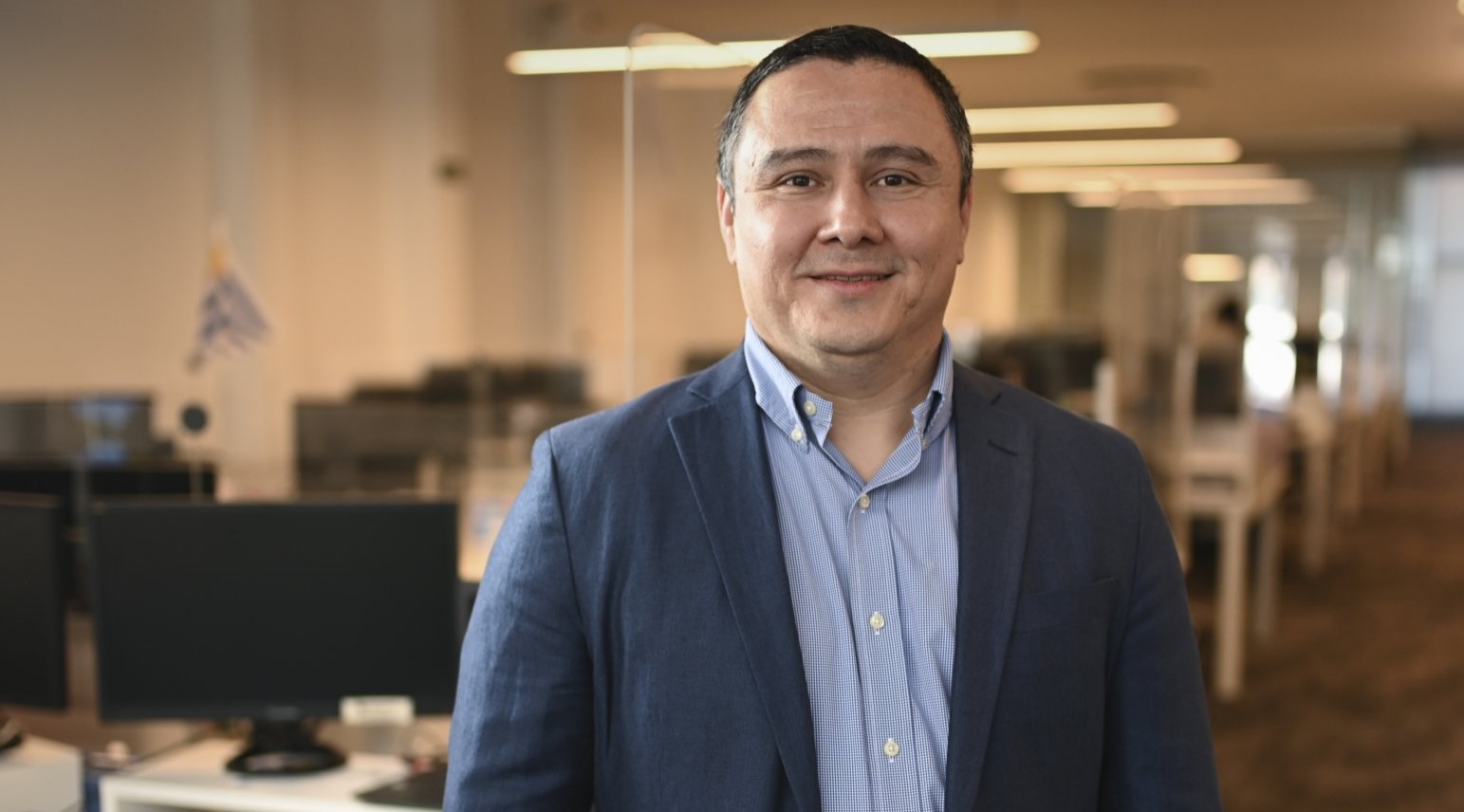
The 2024 deal began with a more modest idea. Alvarenga told Forbes Uruguay that the companies first discussed joint business opportunities. Their complementary capabilities made a deeper combination attractive, while Inswitch was exploring a capital raise. TransNetwork bought 100% of the company; the price remained confidential.
The acquisition announcement paired TransNetwork’s cross-border network and money-movement capabilities with Inswitch’s API platform. The intended combined offering included branded wallets, domestic and international payments, physical and digital cards, and multiple routes for money to enter and leave the system.
“Trust is the most important asset when operating in regulated financial environments.”
Ronald Alvarenga / March 2026
A border is an operating problem
A platform can make connections easier to use. Each country still brings its own operating arrangements. Inswitch’s current website says service availability, scope and regulatory responsibilities are defined through client agreements and applicable local requirements. Some services are delivered through authorized third parties. That detail belongs in the product evaluation, well before launch.
The July 2025 partnership with Thredd shows why. The companies joined Thredd’s issuing platform with Inswitch’s local BIN sponsorship and operational infrastructure to support card programs in Mexico, including local-currency and dollar issuance. A BIN identifies the issuing institution within a card number. Sponsorship and processing solve related parts of the program, and the partnership explicitly brings them together.
Local habits matter too. Inswitch and Banco Rendimento announced an offering that lets Brazilians use Pix for purchases abroad in Latin America. It carries a familiar payment experience into a cross-border transaction, where currency conversion and traceability also need handling. The useful feature is the connection between systems the customer already understands.
Enterprise buyers also want evidence about controls. In March 2026, Inswitch announced independent SOC 1 and SOC 2 reports completed in December 2025. The stated assessment covered its API payments platform, microservices implementation and related IT controls. Reports are available to eligible customers on request. For procurement teams, examining that scope is more useful than admiring a security badge.
The group gets a new name
In March 2026, Movantis emerged as the corporate identity for the consolidated platform built through TransNetwork and businesses including Inswitch, Spectrum and Appriza. The group reported more than $60 billion in annual value movement. That is a group figure, not Inswitch’s standalone revenue or payment volume.
April announcements extended the group story: European market entry and participation in Circle Payments Network, adding stablecoin payment connections to the wider infrastructure. These developments place Inswitch’s embedded-finance capabilities inside a larger money-movement proposition.
For someone building a financial product, the copyable habit is specific. Draw the money’s journey before drawing the interface. Identify where it starts, how the balance is recorded, where it can be spent and how it returns to the customer. Test the particular countries and routes you need. Inswitch offers documented APIs and a sandbox for that evaluation.
The same exercise will expose a poor fit. A company needing only a simple checkout may have little reason to buy a broad financial stack. A wallet without accessible funding points may struggle regardless of its features. A cross-border service needs workable local arrangements at both ends. Inswitch’s history rewards attention to the useful connection. Its first customer, after all, wanted only a piece.
Take a closer look
Explore Inswitch, its API documentation and product news. Follow the company on LinkedIn, X or its YouTube channel. For the wider platform, visit Movantis.