The tests were passing. The software was still breaking. At an unnamed global gaming company described by Tricentis, two or three defects reached production each week despite a high test pass rate. The numbers looked comforting; the customers’ experience was rather less so. The problem was hiding in the question nobody’s spreadsheet could answer: had the tests touched the code that changed?
- SeaLights connects code changes to the tests that exercise them.
- It flags untested changes and recommends a smaller, relevant test set.
- Tricentis acquired the business in July 2024; the product lives on.
A passing test establishes something about what was tested. Its silence about everything else can be mistaken for approval. SeaLights built a business around making that silence visible. It sells software quality intelligence to enterprise development and QA teams: evidence about changed code, test coverage and the risks carried into a release.
A green result with a blind spot
The gaming team first used Tricentis qTest to bring fragmented test reporting into one system. That solved an organizational problem. SeaLights then addressed a different one: code changes, including legacy changes, that escaped the test plan. The team could identify uncovered changes and block them before production.
Tricentis reports that the combined deployment reduced incidents by 90%, from two or three a week to fewer than one a month. It also describes release cycles falling from eight weeks to three. These are vendor-reported results from an unnamed customer using two products together. They are evidence of a particular implementation, not a forecast for everyone who buys SeaLights.
The founders followed the queue
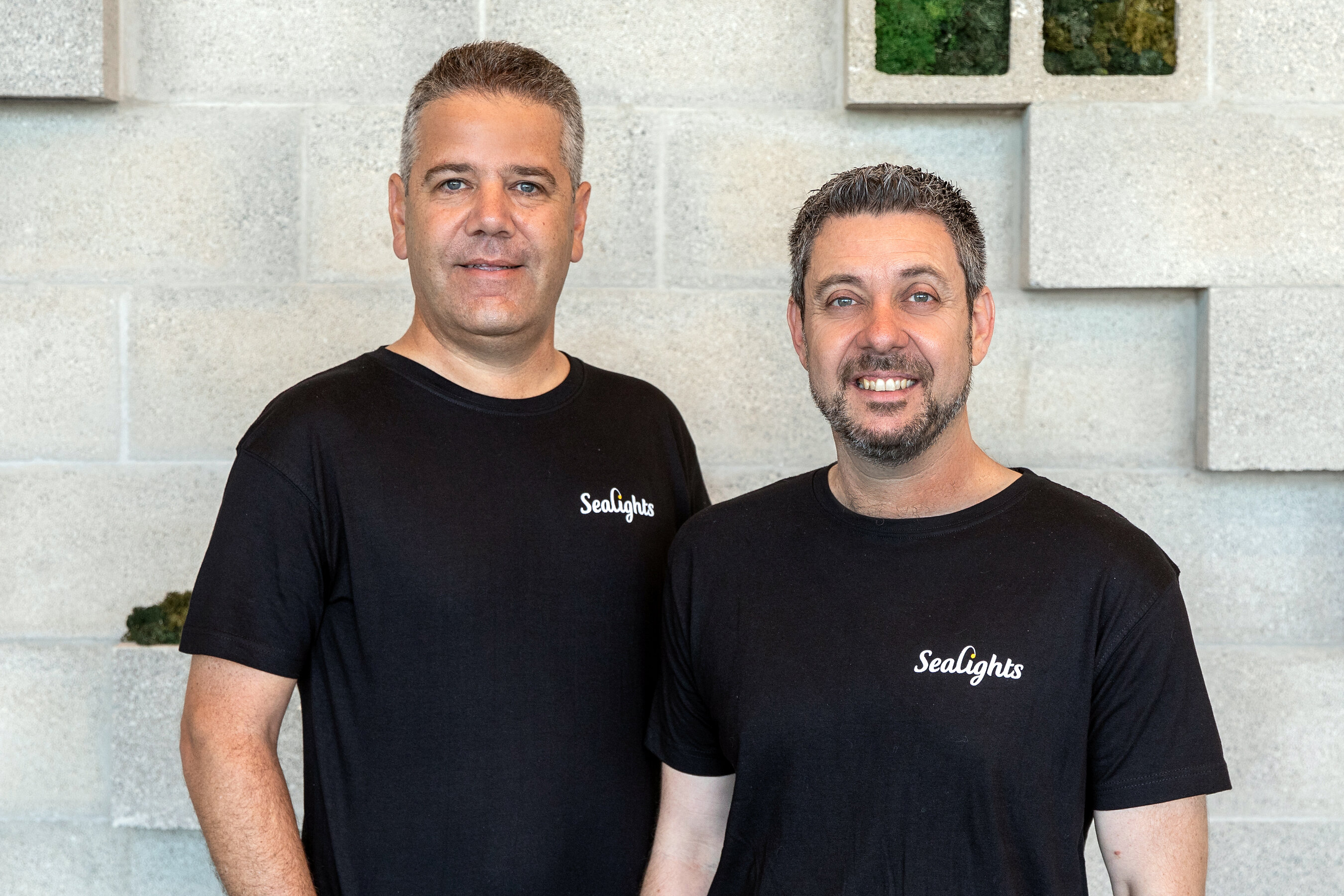
Eran Sher and Alon Eizenman had already helped companies move software faster. Their earlier company, Nolio, automated application deployment; CA Technologies acquired it in 2013. SeaLights, founded in 2015, pursued the difficulty that faster delivery left behind. A deployment pipeline could accelerate while the testing queue grew longer.
“We witnessed delivery speeds going from one or two releases a year to tens and hundreds a month”Eran Sher, SeaLights’ 2016 launch announcement
The observation explains the founders’ second act. Improving the machinery that ships software creates pressure on the machinery that checks it. At its public launch in November 2016, SeaLights announced a beta platform and $11 million in cumulative funding. Its ambition was to make quality measurable across tools, environments and tests, rather than leave release confidence to instinct.
Two agents, one inconvenient map
The mechanism is concrete. A Build Scanner analyzes changes in build artifacts. A Test Listener records test execution and which code it exercises. The platform correlates the observations to show coverage, expose gaps and recommend tests. Its FAQ says source code is not uploaded: analysis uses binary code and artifacts, with metadata sent to the cloud.
This gives teams two useful views. Test Gap Analysis asks which changed code has not been exercised. Test Impact Analysis asks which tests are relevant to the changes. One directs attention toward missing work; the other trims repeated work. User Story Coverage connects that information to the functionality a team promised to deliver.
Its scope extends beyond unit tests to integration, end-to-end and manual testing. The Chrome extension can show coverage in repositories and collect coverage from manual browser tests. That matters when a product’s important behavior appears only after several components interact, or when a human tester exercises a path no automated script visits.
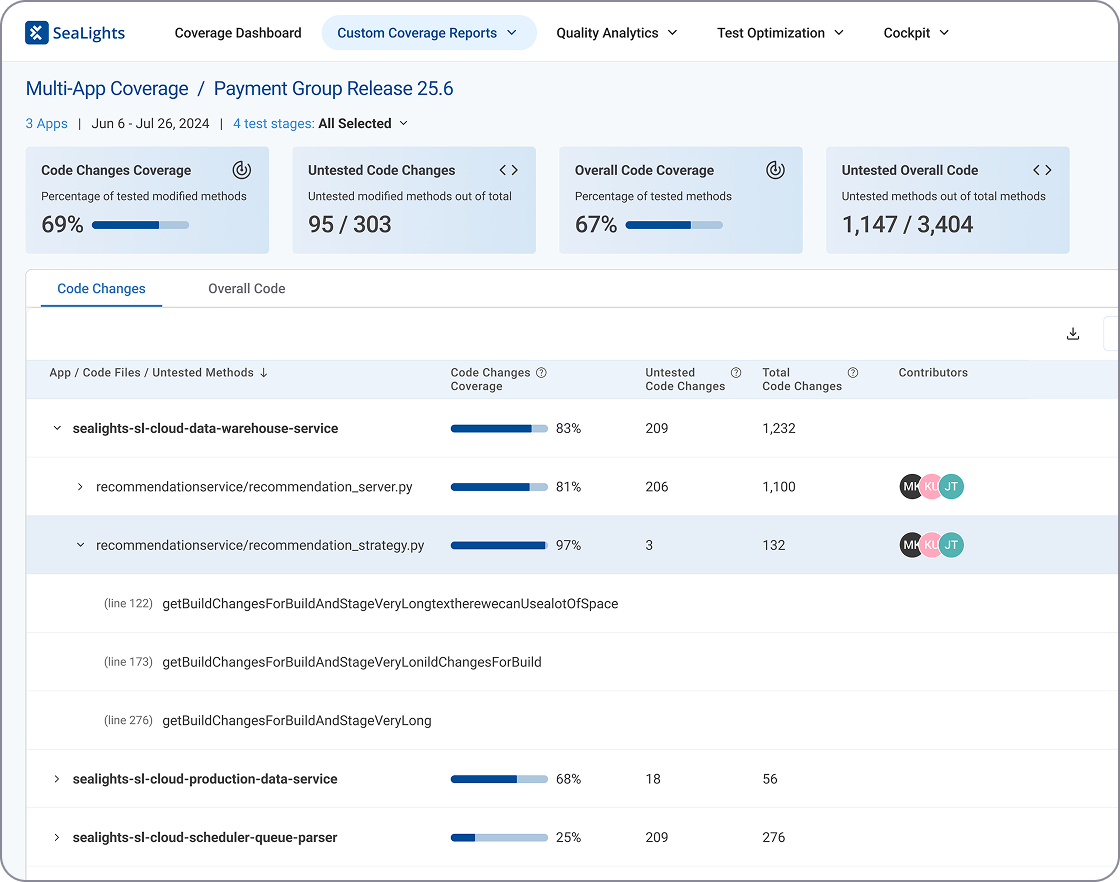
SeaLights consequently occupies a particular corner of the developer-tools market. Test management organizes cases and results. Static analysis inspects code. SeaLights links observed execution to changes. Its FAQ treats SonarQube as a tool that can work alongside it. Test impact analysis also has alternatives, including Teamscale, Launchable and Gradle Enterprise, compared in a 2023 research thesis. Buyers should compare the applications and test stages they actually need to cover.
The bill for testing everything
The commercial proposition is fewer unnecessary test runs, less compute consumption and faster feedback. SeaLights announced Intelligent Test Execution in January 2020 alongside $8.6 million in financing led by Cisco. Wipro, another investor, reported helping an unnamed electronics manufacturer reduce testing effort by 60% while improving release quality.
This is enterprise SaaS, sold through a demonstration and a sales conversation. The public product page asks buyers to request a demo. The practical calculation should include the subscription, engineering effort to connect agents and pipelines, and the time saved in the test stages that matter. A small, fast suite offers less room for savings than a large, repetitive one.
There is a useful discipline readers can copy before buying anything: measure a full run, connect tests to changed areas, inspect the gaps, then trial selection against that baseline. SeaLights’ own documentation retains scheduled full runs. New tests, failed tests and dependent tests also belong in its recommendations. Coverage can show that code executed; teams still need assertions that would detect incorrect behavior. A poorly observed application or a weak suite cannot be rescued by a prettier percentage.
A larger stage, and a smaller test list
A $30 million Series B in October 2021 brought reported total funding to approximately $50 million. Red Dot Capital Partners led the round. In July 2024, Tricentis acquired SeaLights. Calcalist estimated the deal at about $150 million; that figure remains a reported estimate. UST’s earlier implementation partnership and Tricentis’ broader portfolio put the technology closer to enterprise testing programs.
That new interface brings a practical complication. Tricentis describes nearly 100 SeaLights API endpoints, a large menu for an AI model to carry into every request. Administrators can limit which tools the MCP exposes; integration with Tricentis’ AI platform can filter them by the request. The work still begins with coverage data. An assistant can retrieve it more conveniently, but a team must decide which gaps justify stopping a release.
The product has continued developing. A September 2025 announcement introduced MCP access for AI assistants and agents. A September 2026 demo shows customizable coverage-analysis views. SeaLights also supports SAP ABAP change analysis. The recurring idea is modest enough to be useful: make each release decision answerable to the code that changed. A green dashboard deserves a question or two before anyone opens the champagne.
Follow the changed code
Explore the product, watch it work, or follow the team.