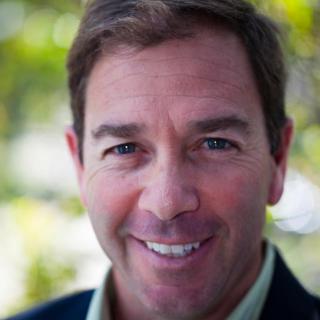
There is a useful trick in Wayne Ariola's career: ignore the job titles for a moment. Chief strategy officer, chief marketing officer, general manager - each sounds as if it belongs to a different drawer in the corporate cabinet. Follow the question instead. For roughly three decades, Ariola has kept returning to the same one: when the machinery of software fails, what does the failure mean to the business?
It is a question with teeth. A developer may see a broken build. A tester may see a failed case. A database engineer may see tail latency moving in the wrong direction. The customer sees a payment that will not complete, a message that will not send or a screen that continues to spin. Ariola's professional territory lies in that awkward distance between the metric and the consequence.
Today he is chief marketing officer at ScyllaDB, the distributed database company. Its engineers talk about throughput, predictable performance and the hard physics of running data-intensive applications at scale. Ariola arrived there after years spent in software testing and automation. The products changed. The anxiety underneath them did not.
Counting what matters, not merely what moves
Ariola's route into software did not begin at a keyboard. He studied business economics at the University of California, Santa Barbara, then earned an MBA in finance and business strategy from Indiana University. His Indiana record has the pleasantly crowded quality of an energetic campus life: honors, president of the Consulting Club, founding member of a sports and entertainment academy, club volleyball and quarry diving. He later added a certificate in international business from the Helsinki School of Economics.
That mixture - economics, strategy and a willingness to get wet - offers a fair prelude. Ariola joined PwC's Strategic Change practice in 1996, then moved through business development at Fasturn before reaching Parasoft in 2003. He would spend 13 years there as chief strategy officer, close to the product and close to the customers who had to explain why the product mattered.
His name appears on patents for change-based testing, policy enforcement, automated test creation and the monitoring of a software project's overall health. Patent prose is rarely invited to dinner, but the subjects are revealing. Each tries to connect a technical event to context: What changed? Which tests does that change affect? Which business rule has been violated? Is the project healthy as a whole?
In 2014, he and Cynthia Dunlop co-authored Continuous Testing. Their argument was aimed beyond the testing team. A release decision should not be made from a heap of isolated pass-or-fail results. It should be informed by the business risk carried by that release. Ariola compressed the distinction into a better question: “Is the level of risk understood and accepted?”
Software is transforming from a business enabler to a business differentiator.Wayne Ariola, 2015
The sentence now sounds almost quaint, because software has since swallowed the table, the chairs and the restaurant bill. At the time, Ariola was giving testers a larger frame for their work. Quality was not clerical hygiene at the end of development. It was part of the promise a business made to its customers.
How Ariola reframes a technical signal
When a bug escapes, somebody pays
One Ariola anecdote explains his instincts better than a polished biography. Around 2015, he began following headline-making software failures and comparing the news with the stock prices of the public companies involved. It was back-of-the-envelope work, not an econometric proof. Its purpose was sharper: to show that a defect could travel far beyond engineering. It could reach operations, customer trust, the news cycle and, sometimes, market value.
At the STAREAST conference that year, he walked into a room of testers and asked what defects really cost. Then he argued the answer was “much more than you think.” The move had a little theatre in it. Ariola's writing often does. He has described brittle software bots as high-maintenance Hollywood stars, warned of an “RPA death spiral,” and compared the slow evolution of software testing to the Cretaceous period. Enterprise software is not famous for comedy. He at least gives the dinosaurs a speaking part.
The humour carries an accusation. Teams can become so absorbed in counting activity that they lose track of outcomes. Ariola criticized swollen test suites, abandoned automation and dashboards organized around totals rather than priorities. He was especially blunt about outsourcing models that rewarded billable manual work while draining business-process knowledge from the companies that owned it.
These were not neutral academic observations. Ariola was an executive selling testing software, and his essays often appeared in commercial contexts. Yet the recurring idea outlasts any one product: a measurement is useful only when it changes a decision. Ten thousand tests can be comforting and still fail to explain whether the software is safe to release.
Strategic Change practice at PwC
Chief strategy officer at Parasoft
Co-authored Continuous Testing
Chief marketing officer at Tricentis
General manager of robotic process automation at Tricentis
Chief marketing officer at ScyllaDB
From the release gate to the database underneath it
Tricentis appointed Ariola chief marketing officer in early 2017. The company served more than 1,500 Global 2000 customers, and his familiar themes - continuous testing, early feedback, business risk - now sat inside a larger software-delivery platform. He later became general manager of robotic process automation, where the problem acquired a new costume.
RPA promised to automate repetitive business processes, but Ariola worried about bots that snapped when an interface, data format or application changed. His “death spiral” described the predictable aftermath: a department bypasses an overburdened development queue, hires help to automate a task, watches the bot break, then returns to technical specialists for repair. Automation had removed the wait only temporarily. Fragility sent the bill later.
By 2021, Ariola had moved down another level of the stack. ScyllaDB hired him to expand awareness of its NoSQL database for real-time applications. In announcing the appointment, he said that businesses were “being rewritten as code.” If that was true, infrastructure scale could no longer remain an obscure engineering concern. The database had become part of the customer's experience, even if the customer never knew its name.
ScyllaDB's proposition concerns predictable performance under demanding loads. The language includes low latency, high throughput and efficient infrastructure. Ariola's earlier career adds the business subtitles. A tail-latency spike may become a stalled checkout. An overloaded cluster may become an unavailable service. Excess capacity may become an avoidable cloud bill. Infrastructure is where technical detail quietly acquires a balance sheet.
His recent public activity remains close to that junction. He has pointed followers toward Discord's Rust-based control plane for automating ScyllaDB clusters, shared comparisons between ScyllaDB's tablets architecture and Cassandra's vNodes, and promoted P99 CONF, the performance-focused event ScyllaDB launched for engineers. The marketer's subject is still engineering. The engineering is still being translated into consequence.
Businesses are being rewritten as code.Wayne Ariola, on joining ScyllaDB
The dashboard is never the decision
Ariola's career contains an unfashionable patience. He has stayed with the same cluster of questions while the industry renamed the tools around them. SOA became APIs. Automated testing became continuous testing. Scripted bots became RPA. Databases moved toward distributed, cloud-native architectures. Each change produced a fresh vocabulary and a familiar temptation: mistake the new mechanism for the business outcome.
His public persona is less oracle than provocateur. He likes a loaded question and an image that risks being slightly ridiculous. Dinosaurs and zombies are easier to remember than a maturity model. The style works because his underlying subject is serious. Software systems increasingly mediate ordinary life, and their hidden failures arrive as visible inconvenience, lost money or broken trust.
That makes the translator's job more than marketing polish. Someone has to carry meaning across the wall between a technical team and an executive room. The translation fails if it drains away the engineering truth. It also fails if the business leader cannot see the choice that truth requires.
Ariola's record - the patents, the book, the articles, the succession of software companies - describes an executive repeatedly trying to keep both sides in the same conversation. His tools are metrics, metaphors and, when needed, a sea monster operating a claw machine at a conference booth. The serious point survives the joke: software performance is never merely technical once a customer depends on it.
A green dashboard can be lovely. So can a fast benchmark. Ariola's durable contribution is the nudge that follows: lovely for whom, under what conditions, and what happens next?