Scott Moscrip was driving through Nevada when a sign offered a peculiar sort of assistance: freight to anywhere, provided you called the number. The offer could travel across the country. The advertisement had to wait beside the road until the right person happened past. For someone who understood computers, this was an arrangement worth reconsidering.
In his own retelling, Moscrip had gone about a mile beyond the sign before the thought took hold. Put the information on the internet, and a driver would not have to go looking for a notice in the middle of nowhere. The distance between a truck and its next load could become a search problem.
There was a small complication. This was 1995. Plenty of the intended customers still needed someone to explain how to get onto the internet. Before he could make finding freight easier, Moscrip would sometimes have to help people reach the place where he had put it.
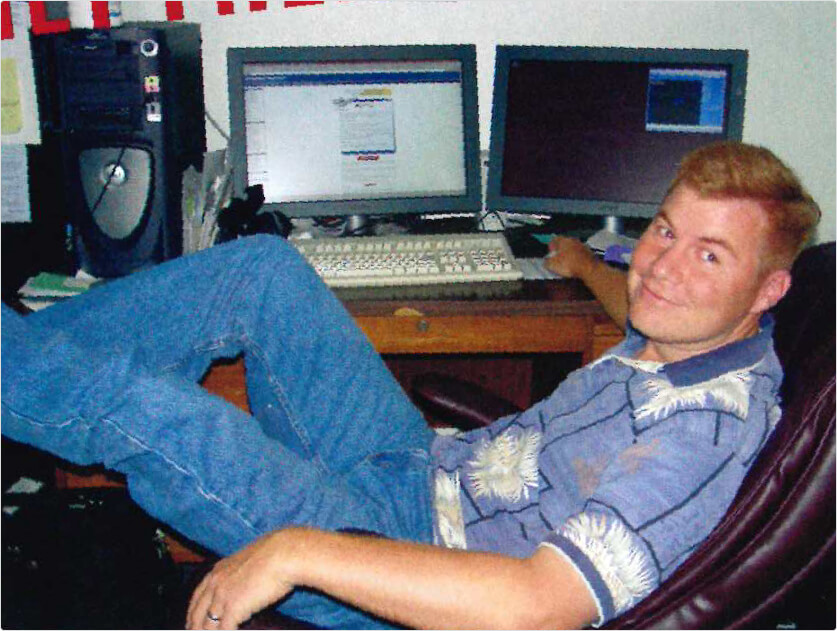
He launched Internet Truckstop that July from his home in New Plymouth, Idaho. Three decades later, the company was large enough to have investors, successive chief executives and a much broader product line. Then, in June 2025, the founder returned to run it. The question that brought him back was recognizably related to the one beside the Nevada road: what is getting between the customer and the work?
A sign with a distribution problem
Moscrip’s training was an unusual preparation for the freight business. He studied physics at Oregon State University, followed by management information systems at Texas A&M. Federal computer research and development work in Washington, D.C., came before the move to Idaho. He brought experience with information systems to an industry whose existing methods gave him something tangible to improve.
Freight matching already existed. Drivers could consult load information on monitors at truck stops. Moving the information into a browser changed where it could be reached. Even the original company name explained the proposition: an Internet Truckstop was somewhere a driver could look for work without first driving to a physical truck stop.
The early business also needed people willing to try it. Paris Cole, who later succeeded Moscrip as CEO, recalled a trade-show panel where the young company received little attention until a customer spoke up about the extra business it had brought him. Interest followed the endorsement. A working customer had supplied the explanation the room needed.
That is a pleasingly practical beginning for a technology company. A person with freight needed a person with a truck. The software’s job was to shorten the introduction. The commercial argument could survive being explained without a single diagram of the future.
Room to grow, reason to stay
New Plymouth was more than the address at the bottom of the paperwork. Moscrip served as the town’s mayor from 2003 to 2007, putting a second kind of public responsibility alongside the software business. The founder helping freight information move farther was also spending time on the place immediately around him.
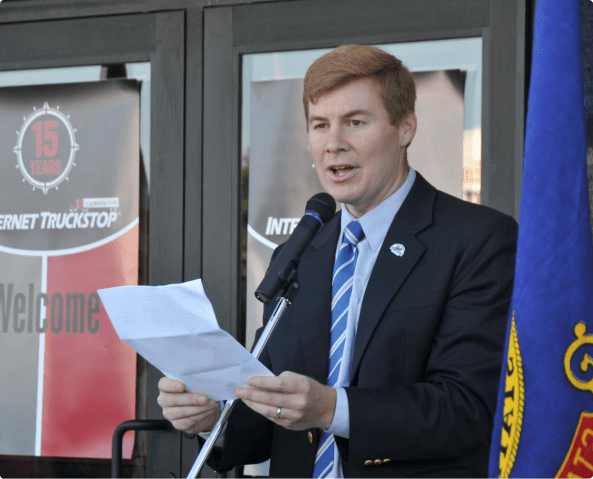
By 2010, Internet Truckstop had moved into a 65,000-square-foot building with room for its 105 employees and associated businesses. Moscrip described the building as evidence of a commitment he had made to stay in the community. The basement origin had acquired a rather substantial upstairs.
A local office is an unusually concrete answer to a question about corporate values. People can walk past it. They can work in it. A commitment to a town becomes harder to mistake for a slogan when it occupies that much floor space.
The company’s work would eventually spread across other offices and markets. Moscrip and his wife, Carmen, moved to Orlando in 2019. Those later moves sit alongside the earlier local investment. His career has room for both the ambition to reach people elsewhere and the decision to build something substantial where he began.
The truck belongs in the picture
One of the more revealing stories about Moscrip concerns a logo. Colleague Brent Hutto remembered bringing him a large selection of design options. Moscrip wanted a truck in the mark. Hutto’s account makes the reasoning plain: the people operating those trucks were the reason the business existed.
It is an everyday piece of stubbornness with a useful managerial consequence. A freight software company can discuss data, markets and products for hours. A truck brings the conversation back to the customer’s working equipment and working day. It is difficult to become entirely abstract while looking at a grille.
Hutto also described a speaker who preferred questions to lectures. Moscrip might arrive with only a couple of slides, then turn the room toward discussion. For an audience that had brought real freight problems, that left considerably more room for the interesting part of the meeting.
The habit fits the business he built. A load board needs participation from people who understand particular routes, equipment and trading relationships. Listening gives a software developer access to details that never appear in a tidy industry diagram. A question from the back of a room may contain an excellent product brief.
A transaction, and a year’s pay
Moscrip passed the CEO role to Paris Cole in December 2015 and moved into the chairman’s role. Bregal Sagemount took a minority stake in 2016. In April 2019, ICONIQ Capital became the majority shareholder, with Moscrip and the management team retaining significant ownership.
The announcement described a business extending well beyond freight listings into rates, vetting, tracking, management software and payments. Each additional task brought the company farther into the daily administration of moving a load. Finding work was the opening connection; running the business involved considerably more.
Moscrip marked the 2019 investment in a way employees could recognize without reading the transaction documents. He personally funded a bonus equal to a year’s salary for current employees. It gave the financial event an immediate meaning inside the company: a year’s pay is a unit of measurement people understand.
Salary bonus, personally funded by Moscrip for current employees after the investment announcement.
Another strand of his work took shape through the Åcahand Foundation, which he co-founded with Carmen. In 2020, the foundation helped support Idaho Codes, an initiative offering online coding education to students. Funding from the program’s supporters removed course fees for its first 1,200 registrants.
There is a practical connection between the two projects. A business built with software benefits from people who know how to create it. Helping students acquire those skills puts some of the means of invention into more hands. The opportunity begins before anyone has a company to name.
Back to a company that had changed
Truckstop announced Moscrip’s return as interim CEO on June 5, 2025, following Kendra Tucker’s departure. The initial announcement included a search for a permanent chief executive. The company’s subsequent public materials identify him as founder and CEO.
His June 2025 message to customers included the return of the Truckstop.com name and a truck in the logo. Familiar symbols accompanied a stated intention to concentrate product work on the needs of carriers and brokers. One early example let carriers see whether loads and brokers qualified for factoring.
“It’s time for Truckstop to get back to our roots.”
Scott Moscrip, June 2025
The work behind the return was harder than a change of lettering. In a June 2026 interview, Moscrip described a difficult financial position and substantial restructuring. He said roughly 80 percent of the leadership had been let go within about six months of his return. This was his account of a painful correction inside the company he had started.
He also described renewed attention to customer suggestions, with a program of product improvements that included broker checks and search filters. A founder’s memory can explain where a business began. The harder task is translating that memory into decisions useful to the people paying for the service now.
The road now runs through a browser
By 2026, the product agenda offered several concrete places to look. In April, Truckstop announced its acquisition of Wize Load, adding rate intelligence for heavy haul and specialized freight. The emphasis was on shipments whose planning can involve permits, escorts and equipment beyond a standard truckload move.
Later that month came a partnership with Trucker Path to make Truckstop freight accessible through its network and TruckLoads app. The company’s announcement paired wider distribution with requirements for the carriers accessing that freight. Putting information within reach still required attention to who was on the other end.
In June, Truckstop introduced Carrier Hub and Broker Assistant. The latter brought brokerage tools into Chrome and Edge, with functions including load posting, carrier sourcing and access to risk information. The setting had changed from a roadside sign to the browser where a broker was already working. The inconvenience under examination remained the extra steps between someone and a useful decision.
Moscrip’s career gives that question an unusually long view. He has been the developer trying to interest people in an unfamiliar internet, the local employer making room to grow, the chairman handing over daily control and the returning executive making difficult changes. The next load still needs a truck. He is once again responsible for helping the introduction happen.
Further down the road
Explore the conversations, company history and recent work.