Ricardo Salgado’s apartment had an unusually demanding guest policy. In 2014, Felipe Capella slept on his couch for six months while the pair worked on Loadsmart. There are grander ways to announce an ambition to change freight transportation. There are also more expensive ones. Before the company could sell anyone on a simpler way to book a truck, the founders had to negotiate the rather smaller matter of where everybody would sleep.
The couch belongs in the story because it gives the enterprise a human scale. Loadsmart began in New York with two founders and a problem that had been bothering Salgado for years. Goods needed moving. Trucks needed loads. Bringing the two together involved more friction than he thought an industry of such consequence should tolerate. He had studied engineering and worked in finance. Here was a chance to put both experiences to work on something that would eventually leave a loading dock.
The problem arrived before the startup
His introduction to freight came through his parents’ paper company. During internships there, Salgado noticed how inefficiently goods moved. A paper business offers a useful corrective to an abstract view of commerce: the merchandise has weight, occupies space and must arrive somewhere. However elegant the transaction, someone still has to arrange the truck.
Raised in Colombia, he moved to the United States to study at Georgia Tech. He graduated in 2000 with an engineering degree, then joined Goldman Sachs. His subsequent work took him from credit trading and investing in New York to distressed investing in London and capital structure investing in Brazil. He later became a managing director in principal investing. The geography changed; the business of examining how companies worked remained.
Working on shipping-company restructurings brought supply-chain inefficiencies into view again. By then, he had another way to examine the trouble he had noticed earlier. An engineer could ask how a process might work better. An investor could ask what its inefficiency cost. Founding Loadsmart in 2014 brought those questions into the same room, along with Capella and the furniture.
The button was the easy part
Salgado often explained the intended experience through something people already understood: buying a plane ticket online. Supply an origin and destination, receive a price, make a booking. Freight customers deserved a similarly direct beginning. The comparison was appealing precisely because the transaction underneath it was so complicated. Making the screen simple meant doing more work behind it.
An early version reveals how carefully that promise had to be bounded. In December 2015, the instant-booking option covered about half of US lanes, concentrated east of the Mississippi. Elsewhere, customers could see a price but would be offered a conversation with an agent when the system lacked enough information to commit to the service. Even an ambitious interface needed to know when to call a person.
By 2019, Salgado described pricing models drawing on roughly 385 factors. He likened those inputs to adjustable knobs: whether a quoted price was accepted supplied feedback for the next calculation. A familiar route between large cities presented a different problem from a lightly travelled lane. The system had to produce an answer even when the available examples were less obliging.
- 01AskOrigin + destination
- 02PriceEstimate the shipment
- 03MatchFind suitable capacity
- 04LearnUse the response
Two linked jobs: offer the shipper a rate and find a carrier able to perform the trip. Simplified process illustration, not a performance chart.
The second job was finding a suitable carrier, considering direction, driver, timing and rate. An attractive quote alone could not move the shipment. The matching had to work on the supply side too. Salgado’s account of the machinery is revealing: he discussed repeated decisions, feedback and adjustment. The apparently instantaneous answer was the visible tip of a continuing calculation.
He also understood where the customer sat. Loadsmart’s principal interface was built for people working at desktop computers, even as drivers’ increasing smartphone use made the other end of the transaction more connected. The product had to join those different working environments. Around half the company’s workforce consisted of engineers and data scientists in a 2019 account, with Georgia Tech alumni helping build the early business.
A wardrobe malfunction, of sorts
Technical ambition did not exempt the founders from small economies. For an early industry event, the team wanted matching company shirts. Salgado sent someone to H&M for plain black and white T-shirts. They printed iron-on logos and devoted more time than was sensible to getting them straight. Eventually, they began ordering their apparel. Even a company devoted to efficiency could misallocate an afternoon.
It is a useful little confession. A founder must decide which jobs deserve scarce attention, and frugality can make that harder to judge. The shirt episode gives Salgado’s public account some welcome texture: an organization trying to automate a freight transaction was briefly operating its own amateur garment department. The lesson arrived without a consulting invoice.
“I firmly believe in learning by doing.”
Ricardo Salgado
Finding the truck beneath the container
Loadsmart’s partnerships made the problem more physical still. In September 2019, Maersk Growth and Ports America invested $19 million to support its Smart Drayage initiative. Drayage is the movement that connects a container terminal with the next part of its journey. Salgado’s explanation descended to the arrangement of containers themselves: where they sat in the terminal, including their vertical position in a stack, mattered to the work.
The proposed system connected terminal information with truck matching, considering accessibility, loading time and haul distance. A container could be geographically close and operationally awkward. That distinction is a good reminder of what logistics software must understand. A dot on a map is a beginning. The order in which somebody can actually retrieve the boxes is another matter entirely.
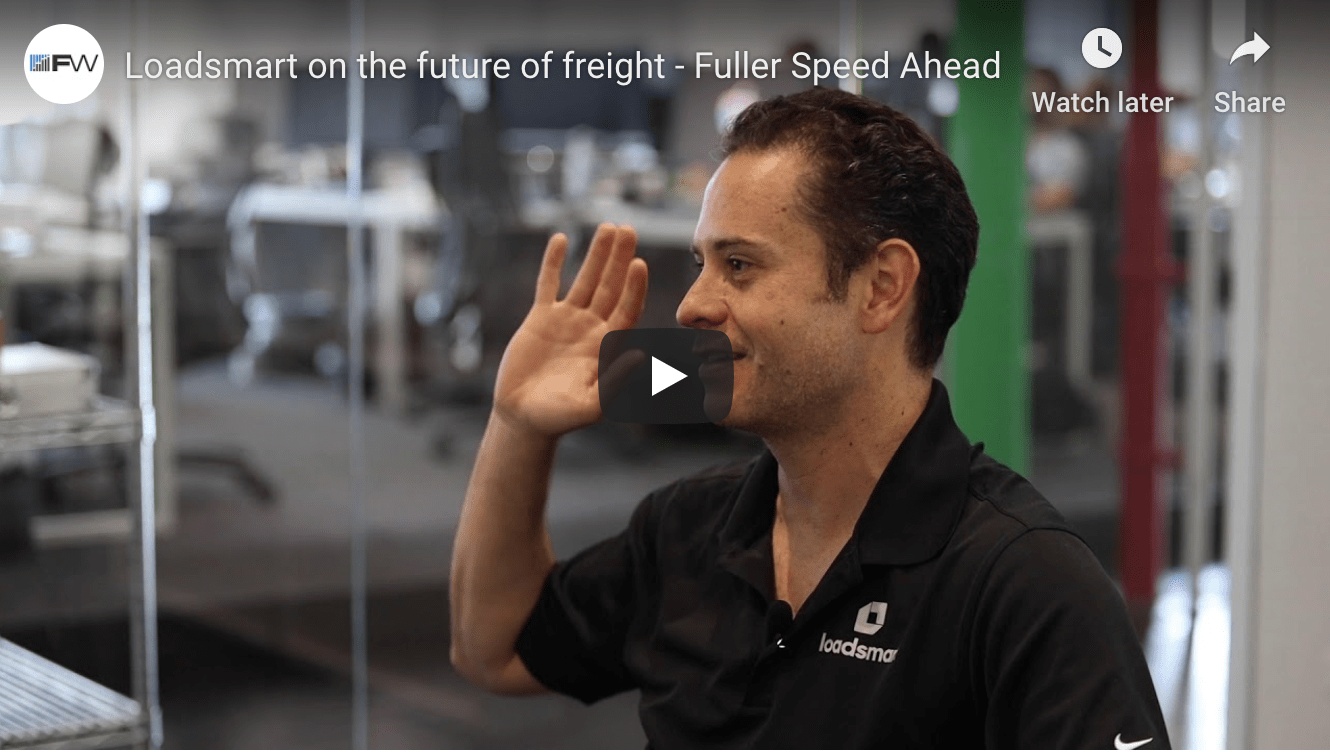
Salgado’s interest in strategic partners was visible in his 2019 conversation with FreightWaves chief executive Craig Fuller. The discussion placed Loadsmart in an ecosystem of companies already involved in moving goods. For a business promising to improve freight, those relationships brought its software argument into contact with the people operating ships, terminals and transport networks. The ambition had to survive that encounter.
The company grows beyond the quote
The financial milestone arrived in February 2022: a $200 million Series D at a $1.3 billion valuation. SoftBank Latin America Fund led the round, with participation from funds and accounts managed by BlackRock, Janus Henderson and CSX. Salgado and Capella were described as co-CEOs. Goldman Sachs, his former employer, served as the company’s exclusive placement agent. His old working world and his newer one had met again.
Series D financing at a reported $1.3 billion company valuation.
By that point, the company had already widened its offering beyond full truckload freight. The funding announcement described additional transport modes and software for procurement, trucking operations and warehouse appointments. The expansion matters to Salgado’s original proposition. Getting a price quickly solves one part of a shipment; the work continues before pickup and after arrival.
Loadsmart’s tenth-anniversary account in August 2024 described a business stretching from planning and execution to gates, yards, docks and payments. It also returned to the apartment where the founders began. Anniversary stories tend to give furniture a retrospective glow, but the contrast here is useful: the original booking problem had opened onto a much larger sequence of connected tasks.
Salgado became executive chairman in 2022, and Capella is now CEO. The company is based in Chicago, while Salgado’s public professional profile lists New York. More recently, Loadsmart launched in Brazil in April 2026 and joined the Brazilian logistics association Abralog that August. Opendock, its dock scheduling and yard platform, featured in the launch. The business he helped begin continues to find places where a shipment can get stuck.
The people who stayed in the picture
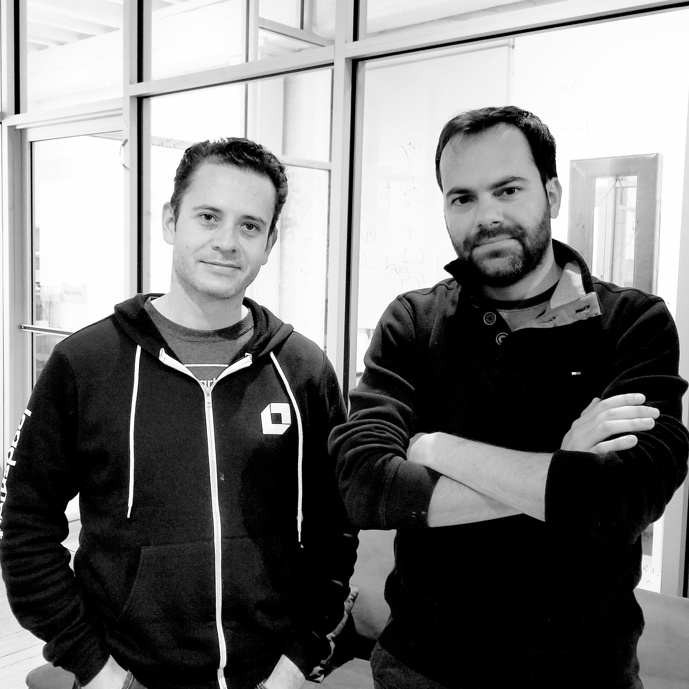
For Salgado, the early team supplied another measure of progress. In 2021, he shared photographs recalling the company’s living-room start and a reunion seven years later. He identified Peng Hou as the technical lead and Victor S. as the lead designer; Capella had taken the original picture. He also remembered that each of the colleagues pictured had lived with him for a while. The apartment had apparently been doing several jobs.
“Our biggest asset is our people,” he wrote. He celebrated the original group’s continued presence and said he knew colleagues and their families personally. Then came a domestic qualification: he was unsure his wife, Carla Vass, would approve the same accommodation arrangements now. A company can outgrow its founding habits for perfectly sensible household reasons.
His connection to Georgia Tech continued through mentoring and advisory work, and he was elected a foundation trustee in 2019. Away from those responsibilities, he has said he enjoys kitesurfing. Both details sit comfortably beside his stated preference for learning through doing: he kept a connection to the place that trained him, while retaining an interest that requires leaving the desk.
The apartment, the shirts and the algorithms belong to the same working story. Salgado noticed something cumbersome, accumulated experience that helped him examine it, and began building with other people. Every instant quote carries a quieter obligation behind it: somewhere, a driver must collect something real and deliver it. That is a useful test for an idea. Eventually, it has to leave the room.
Follow the conversation
Interviews, company milestones and places to follow Ricardo’s work.