Jordan Feldman was having lunch with his father when the table began attracting visitors. People his father knew stopped to ask for advice. Feldman later connected that ordinary interruption to the idea behind Rightway. A meal had supplied something a business presentation might struggle to arrange: people showing, without a survey or a sales pitch, whom they trusted enough to approach.
There is a small comedy in the setting. A prospective founder could spend months looking for an unmet need while the evidence stands beside his father’s chair. The useful detail is that Feldman noticed. He had been studying companies professionally. Here was a different sort of research, conducted at conversational volume, with lunch still on the table.
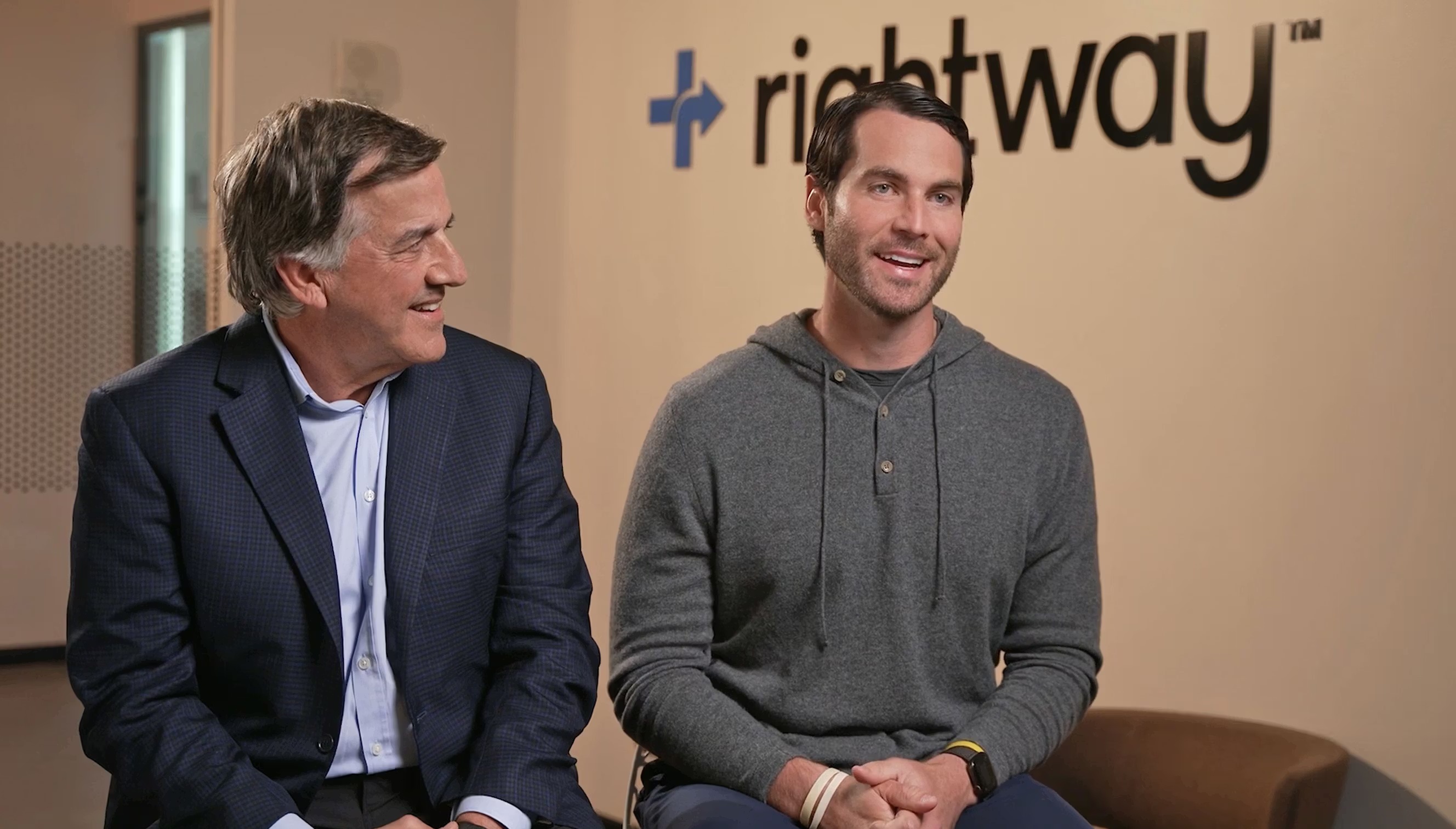
In 2017, Jordan and Theodore Feldman became co-founders. The son brought a background in finance. The father brought the experience that had made him someone people sought out. Their company would be called Rightway. The family relationship sits near the beginning of its business story, before the institutional investors and the financing rounds acquired their own headlines.
Learning to read the machinery
Feldman’s education ran through Harvard, where he studied Government and Economics, followed by Goldman Sachs and RedBird Capital Partners. Government asks how institutions organize power. Economics asks how incentives organize behavior. Those subjects make an apt backdrop for a founder interested in why a complicated service works the way it does, although a degree alone cannot explain the decisions that follow it.
At Goldman, his work included mortgage trading and investment banking. He then moved to RedBird, working on investments before starting Rightway. This was a career spent close to the machinery of business: capital, transactions, ownership, and the assumptions underneath an attractive proposition.
RedBird’s investment interests included technology-enabled services and communications infrastructure. Those areas put software alongside the organizations and systems needed to make it useful. For a future founder, the combination presents a practical question: what has to happen around a product for its promise to hold up? A company can have a persuasive interface and still depend on the less visible work of implementation, coordination, and service.
The eventual move into founding changed his relationship to those assumptions. Investors can ask whether a company has the right team. A founder must assemble one. Investors can question a growth plan. A chief executive must translate it into jobs people can do on Monday morning. The same spreadsheet becomes considerably more personal when your colleagues are waiting for decisions.
It would be easy to make the finance background the entire explanation. The lunch makes that reading less satisfying. Feldman’s origin story joins a professional habit of examining businesses to a familiar relationship he could observe at close range. The interesting turn comes when the person accustomed to evaluating an organization decides to accept responsibility for building one.
RedBird2017 onwardCo-founder
& CEO
The first people to pull up a chair
A family idea still needs people outside the family to take it seriously. In February 2019, Rightway announced an $8 million Series A. Its new and existing investors included strategic family offices. Jonathan Locker, a participating investor and former Tiger Global partner, joined the board. He had also invested in the seed round.
That early continuity matters in a founder’s story. Someone who has watched a company before a formal round arrives with a different perspective from someone encountering the finished announcement. Locker’s involvement links the early venture to the more structured business taking shape around it.
The company described practical uses for the money: expanding its sales team, broadening its offering, and entering new markets. These are ordinary sentences in a financing announcement. Inside a young company, they become a collection of difficult assignments. Somebody must find the new colleagues. Somebody must decide which opportunities deserve attention. Somebody must ensure that expansion does not turn a clear promise into an untidy collection of exceptions.
Feldman had crossed into the part of business where an idea accumulates obligations. Capital made more work possible. It also meant more people would have a reasonable claim on his attention. A founder can explain a vision in minutes; organizing a company to deliver it takes rather longer.
A meeting for the work that gets missed
One of the more revealing details Feldman shared about Rightway was a weekly ritual. In 2020, he described a “mission moment,” during which employees talked about the difference their work had made. The phrase is brief. The choice to give those accounts a recurring place in the week is more substantial.
A service business contains work that is easy to count and work that is easy to overlook. A completed task can appear as a single entry in a report even when it required patience, persistence, or an unusually long conversation. Letting colleagues tell the story restores some of the effort that the entry compresses.
The ritual offers a useful way to read Feldman’s priorities without pretending to know his private temperament. He publicly made room for employees to describe useful work. A company calendar is a fairly honest document: whatever its slogans say, the meetings show which subjects receive time.
His later language on LinkedIn has included a pointed little phrase: “client obsession.” It is easy language to applaud and harder language to organize around. The weekly conversation supplies an earlier, concrete example of how a company might keep its attention on the person at the receiving end of its work.
“And one of the things I take most pride and joy in is rallying a village.”
Jordan Feldman, 2024
Three and a half months to make it work
Other people’s recollections give the founder’s story useful company. In an August 2026 conversation, Rightway president Scott Musial looked back on how Thrive Capital’s search for a new business model connected him with Feldman. The relationship brought experienced operating judgment into the enterprise.
Musial described a stretch of roughly three and a half months between signing his offer letter and taking an initial client live. His account stressed financial alignment and attention to the end user before contracts were written. Those priorities had to become working arrangements on a timetable.
There is a particular kind of suspense in that interval. A signed offer letter is reassuringly definite. A functioning service requires many more things to agree with one another. The story gives the business a useful sense of scale: months of concentrated work can sit behind a sentence that later reads like an uncomplicated launch.
It also puts a limit on the solitary-founder portrait. Feldman’s role involved bringing people into the company whose expertise could carry an idea beyond his own experience. The village in his description has job titles, responsibilities, and deadlines. It has to be able to work together after everyone leaves the meeting.
When the numbers grow another digit
On March 30, 2021, Rightway announced a $100 million Series C at a $1.1 billion valuation. Khosla Ventures led the round; Thrive Capital, Tiger Global Management, and other existing investors participated. Samir Kaul joined the board. A business founded four years earlier now carried a valuation large enough to become the first line of almost any introduction.
The valuation is a financing milestone. It gives little sense of what a founder’s working day feels like. Its real significance for this story lies in the people and resources gathered around the company. Feldman was now leading an organization with institutional backers, an expanding board, and a much larger capacity to pursue its plans.
September 2026 brought another financing announcement: $155 million in Series E funding led by Francisco Partners, with Thrive and Khosla participating again. Rightway said it counted 45 Fortune 500 companies among its clients. Feldman confirmed a $1.75 billion valuation in his own public post.
The company identified further technology and AI investment as uses for the new capital. For Feldman, the announcement joins two parts of his career: the financial knowledge he acquired before founding and the operating responsibilities he has accumulated since. Raising capital and deciding how to deploy it belong to the same job now.
A larger company, the same question
Feldman’s public writing supplies another way into his thinking. In a 2022 essay aimed at HR leaders, he urged buyers to question vendors about low utilization, insufficient data, and return on investment. He also argued for better reporting and stronger analytical resources. The advice puts a specific burden on any company selling a service: make the value understandable.
He opened that essay with a mismatch from a live webinar poll. Only 20 percent of the participating HR teams had grown substantially, while 70 percent faced substantially higher expectations. These were responses from that audience, rather than a census of employers. Still, the gap explains why he focused on workload as well as purchasing decisions. Asking a team to do more creates a problem that another vendor presentation alone will struggle to solve. Any proposed tool must earn the time required to adopt it.
That is an interesting standard for a founder to advance. Buyers who ask sharper questions can make a sales conversation less comfortable. They can also force a business to be more precise about what it delivers. The discipline works in both directions.
Read across his career, the recurring question concerns who receives useful help and how an organization can keep delivering it. At lunch, that question took a personal form. In the company, it became a matter of recruiting, investment, service, and accountability.
The numbers have changed considerably since 2017. The family partnership remains part of the explanation. Feldman found something worth examining in the way people approached his father, then spent years building a company with other people around that observation. The table eventually became a boardroom. The people asking for help remain the reason to pay attention.