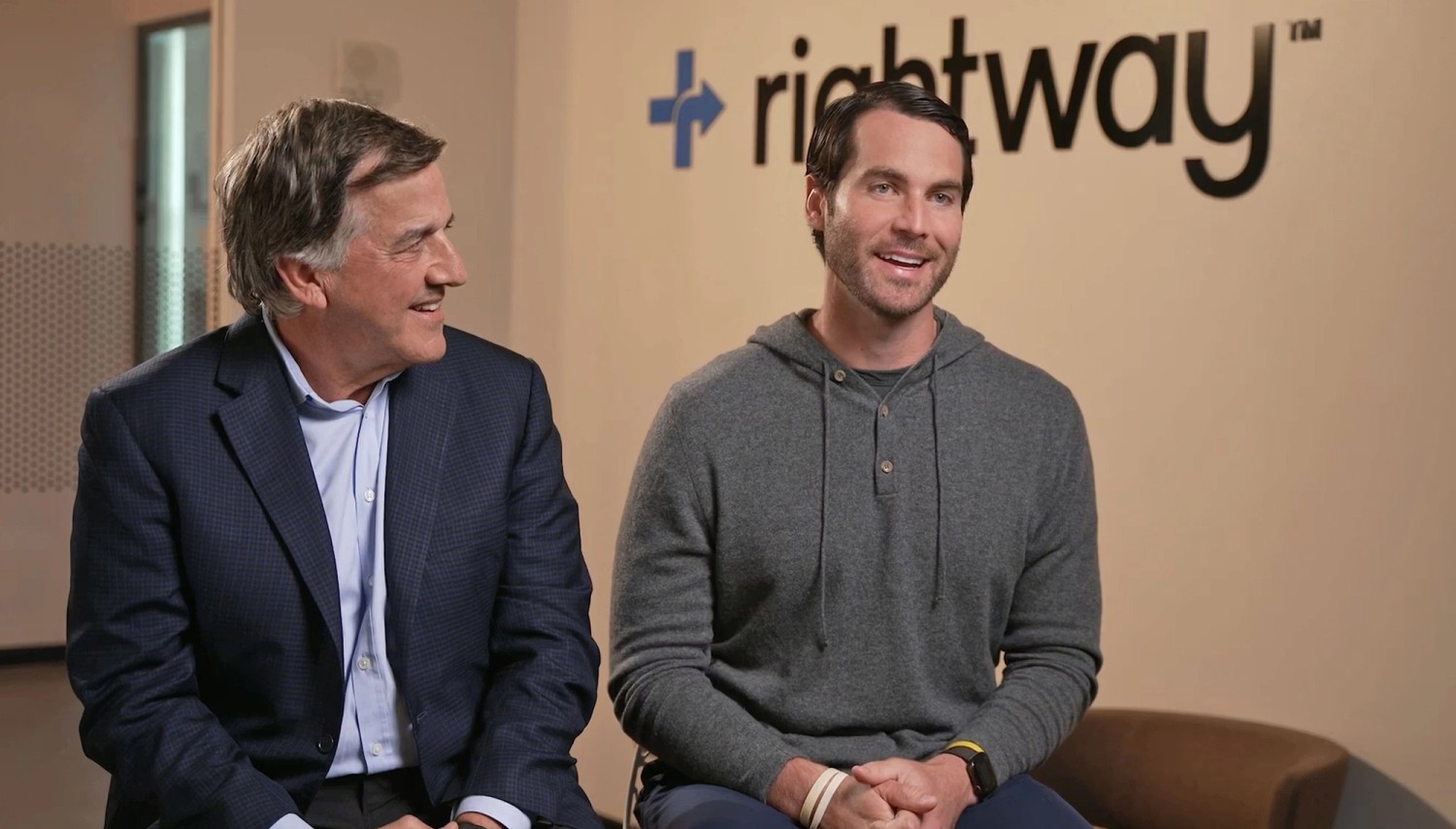
Jordan Feldman grew up with a particular advantage in American healthcare: his father was a cardiologist. When something went wrong, the family had someone who understood what to ask, whom to call, and which answer deserved a second look. Most employees have an insurance card. Feldman had an interpreter.
In 2017, he and his father, Dr. Theodore Feldman, founded Rightway around that difference. The proposition was approachable: give employees help using the healthcare they already had. Find a provider. Understand a bill. Work out whether a benefit covers the thing a doctor just recommended. The ambitious part was making such help available beyond the family dinner table.
- Employers buy the service; employees and dependents use it.
- Care navigation helps people use benefits and get care.
- The PBM administers prescriptions for a disclosed fee, with rebates passed through.
- The buying question: what is the total bill after every discount?
A guide meets a locked door.
Care navigation sounds modest until you list the jobs inside it. Rightway’s teams help locate in-network providers, arrange appointments, clarify coverage, and investigate bills. Nurses, health guides, social workers, and billing specialists handle different pieces. The employer buys relief for its benefits team as well as assistance for its people.
Then came pharmacy. As Feldman described in a 2021 interview, prescription costs and member frustration stood out. Guiding someone through an existing benefit could not fix every financial incentive underneath it. In 2020, Rightway decided to enter pharmacy benefit management itself. The guide was going to work on the machinery.
A pharmacy benefit manager, or PBM, administers prescription coverage for a plan sponsor. It helps manage pharmacy networks, drug pricing, and claims. Rightway competes here with companies such as CVS Caremark, Express Scripts, and Optum Rx. Its navigation business also overlaps with companies such as Accolade and Quantum Health. Combining these jobs gives Rightway a particular foothold: it can influence both the benefit’s economics and the conversation with the person using it.
The discount that distracted the buyer.
Consider the appeal of a large rebate. It is a number a benefits buyer can point to. Yet the size of the money coming back tells you little without the size of the money going out. An impressive discount can coexist with an expensive purchase. That elementary distinction sits at the center of Rightway’s sales argument.
Its PBM says it earns a disclosed administrative fee per member, passes through all rebates, retains no spread or dispensing revenue, and owns no pharmacies. “Neutral” is Rightway’s term for this arrangement. The claim is about incentives: its compensation should not grow simply because a member’s medication costs more.
Pharmacists support members. Rightway says it owns no pharmacies.
The first response was not universal applause followed by a signature. In its September 2026 retrospective, Rightway acknowledged that prospects liked the pitch but struggled to abandon offers promising bigger rebates. The familiar comparison was hard to dislodge. Rightway now markets a pharmacy spending ceiling with reconciliation against actual costs. Buyers still need the contract’s definitions, including how unusually expensive drugs are treated.
Someone still has to make the call.
The member experience begins with a less abstract problem: a prescription, a coverage question, a bill. Rightway offers a mobile and web app with messaging, provider and medication search, digital benefit cards, and cost information. Members can also use phone support. Access depends on the services their employer or plan has purchased.
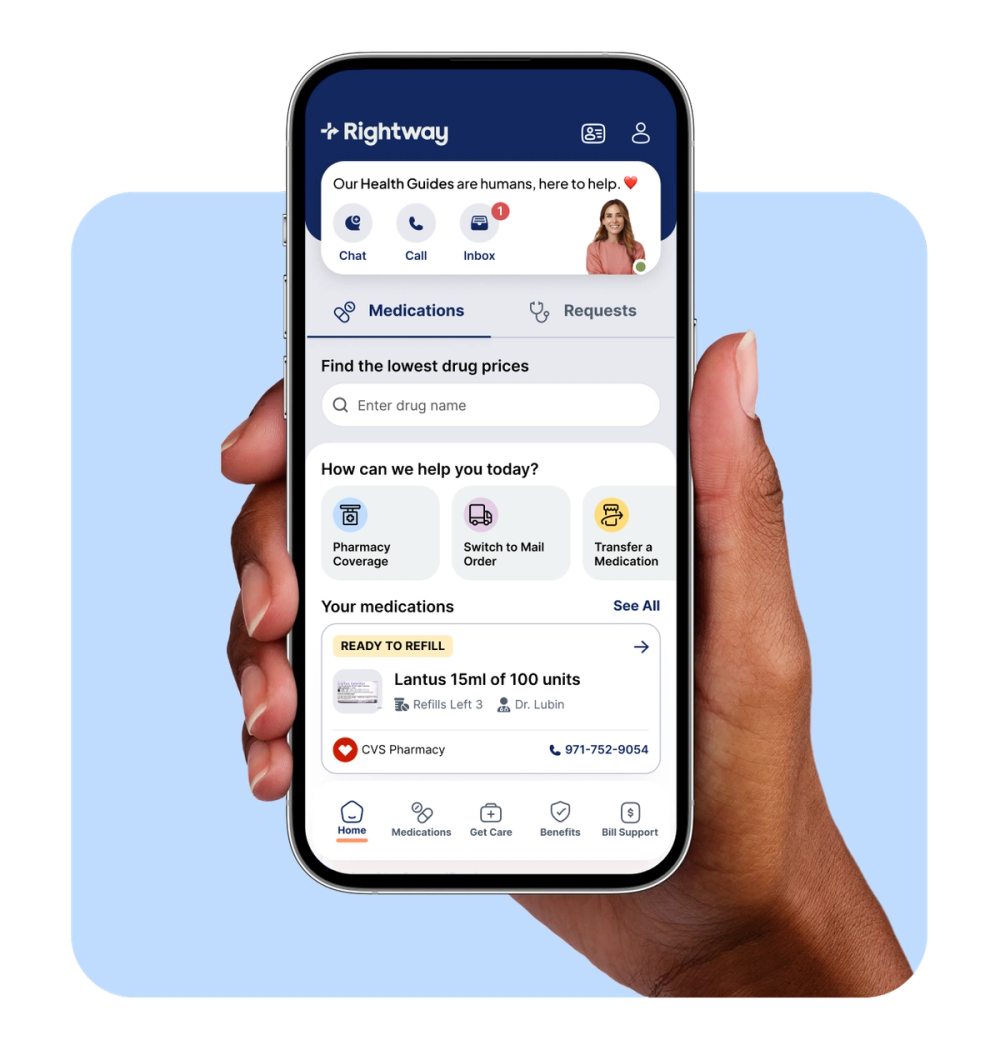
In the combined offering, pharmacy and medical information inform a coordinated clinical team. Pharmacists work on medication access and prior authorizations; navigation teams handle provider choices and coverage problems. Members keep their medical plan. Rightway is selling help operating it, alongside the option to change who administers their pharmacy benefit.
The distinction between finding and doing matters. In September 2022, Rightway announced the first PBM integration with Mark Cuban Cost Plus Drug Company. Its guides could help interested members transfer prescriptions, including coordinating with providers. A lower price on a screen is useful. Help completing the transfer is what makes that price reachable.
“Rightway saved us 13% while providing a true member-first approach.”Renu Chhabra / Tyson Foods benefits executive
Customer testimonial published by Rightway

The bill is the scorecard.
Tyson Foods became a prominent test when it chose Rightway for overall pharmacy benefits management in 2024. The significance was practical: a large workforce had to get medications through a new arrangement. A benefits contract lives or dies in those ordinary encounters, well after the procurement presentation ends.
per month
out-of-pocket costs
Reported portfolio results. Comparisons and populations matter; these figures do not predict every client’s outcome.
Rightway’s 2024 PBM report gives buyers numbers to interrogate. A useful comparison would ask which populations were measured, what baseline was used, and whether implementation and administrative costs are included. Satisfaction, prescription access, and the final net bill each answer a different question. One attractive metric cannot stand in for the others.
What does buying it cost? Rightway does not publish a standard rate card. Employers need a proposal built around their population, claims, and selected services. For another company copying the approach, the practical lesson is to compare full spending after rebates and fees, then specify who will do the work when a member gets stuck.
The conditions matter. Savings depend on the starting benefit, available alternatives, member participation, and usable data. Clinical support cannot make every drug inexpensive, and a spending guarantee needs careful boundaries. On September 24, 2026, Rightway announced $155 million in Series E funding led by Francisco Partners. Part of the money is intended for AI and technology supporting clinical teams. The original promise remains wonderfully concrete: when the system gets confusing, someone knowledgeable should pick up.