The revealing test of Judi Health’s ambitions involved no new customer at all. It involved its own employees. Before taking medical benefits administration to a wider market, the company tried the software on its own health plan. In September 2025, CEO AJ Loiacono told Forbes that the experiment covered 1,800 people, reduced annual costs by 11% and brought claims processing down from more than six months to a maximum of 18 days. That is one company’s account of one plan, rather than a controlled study. It is also a useful place to begin.
- The job: administer health benefits and process the claims behind them.
- The bet: medical and pharmacy work better on shared infrastructure.
- The customer: employers and health plans buying services, plus administrators licensing software.
For most employees, benefits are something you discover when you need them. A prescription belongs to one system; a specialist visit belongs to another. The person is the same. The administrative machinery often treats the events as separate stories. Judi Health wants to change the machinery.
First, follow the fee
The company began in 2017 as Capital Rx. Loiacono had spent years in pharmaceutical supply-chain software and pharmacy benefits auditing. In an interview with investor F-Prime, he described a claims file that unsettled his assumptions about drug pricing: prices shifted, data was duplicated and incentives pointed in conflicting directions. Auditing the arrangements exposed the problem. Operating a pharmacy benefit manager offered a way to change them.
Capital Rx’s answer combined a pass-through model with flat administration fees. The commercial proposition was straightforward: make the cost of administering the benefit visible. Its retail pricing approach drew on NADAC, a public benchmark of pharmacies’ drug acquisition costs. Think of the purchasing question this creates. An employer can ask what it paid for the medicine, then what it paid someone to administer the transaction. Those deserve separate answers.

That distinction puts Judi in the market with established PBMs such as CVS Caremark, Express Scripts and Optum Rx. The argument is about incentives as well as technology. A tidy interface cannot tell an employer whether every source of compensation is disclosed. A transparent contract still needs reliable administration. Judi’s strategy joins those two problems.
Four benefits. One set of machinery.
Judi, whose name refers to adjudication, launched as an enterprise platform in 2021. Adjudication is the decision-making work behind a claim: Is this person eligible? Is the service covered? What does the plan owe? Moving that work into a common system gives administrators a place to connect benefit rules, claims and reporting.
The naming has taken two steps. Capital Rx adopted the broader Judi Health identity in September 2025. In July 2026, its pharmacy business became Judi Rx. Alongside it sit Judi Care, covering medical, dental and vision administration, and Judi Cloud, which licenses the platform to health plans and third-party administrators. Buyers can purchase an operating service or obtain the software for their own teams.
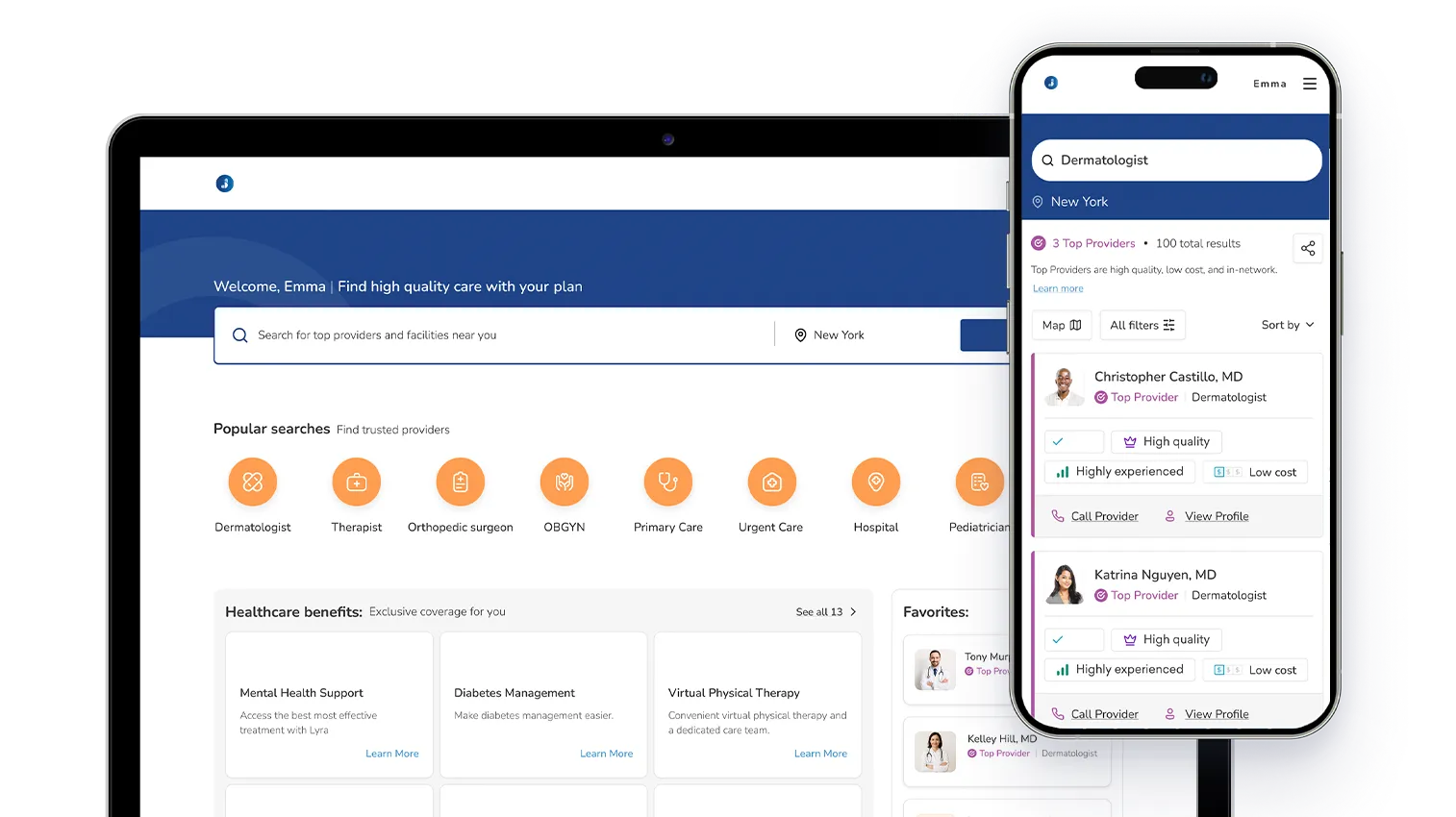
There is a member-facing piece, too. The June 2025 acquisition of Amino Health brought provider search and navigation into the business. Judi Care Navigation helps people examine providers and available benefits. The acquisition connected the administrative ambition with a very ordinary question: where should I go for care?
Selling the engine to another driver
The Prime Therapeutics alliance shows why Judi is more than an employer-facing PBM. In March 2024, Prime announced it would use Judi technology and become a minority investor. A substantial pharmacy benefits business had chosen another operator’s software. Judi subsequently reported that two health plans migrated onto Prime’s instance during 2025. The platform could travel beyond the business that built it.
Scale needs careful reading. In January 2026, the company reported more than five million contracted employer PBM lives. Contracted members are a commercial commitment; they should not automatically be counted as people already running on the system. Judi also reported more than 80 new partnerships for a second consecutive year. Those figures describe demand, while implementation determines when the service actually arrives.
“The mission hasn’t changed. It’s our ability to execute that has expanded.”Kristin Begley · Chief Commercial Officer · July 2026
Building and distributing the platform has attracted substantial capital. The September 2025 announcement described a $400 million financing package, including a $252 million Series F led by Wellington Management and General Catalyst. The larger package included additional securities transactions. Treating every dollar as fresh cash for product development would give the wrong impression. Nor does that headline tell an employer what a Judi contract costs; commercial pricing is negotiated.
The unglamorous work of switching
The useful lesson for a buyer sits in Judi’s implementation team’s account of onboarding. Eligibility feeds and connections to medical partners need attention early. Someone on the client side must own decisions. Data has to move correctly in both directions. The company describes adding a dedicated data-exchange implementation role as larger clients made these dependencies more demanding.
A shared platform still depends on those inputs. Incorrect eligibility, incomplete feeds or badly configured benefits can carry errors into a new system. Employers should ask for an auditable fee model, a migration plan and measures of total spending per member. The internal employee-plan experiment is a reason to investigate, rather than a savings guarantee to paste into a budget.
The latest partnerships extend the same idea. September 2026 brought cancer, autoimmune and gastrointestinal programs from Color Health, WellTheory and Cylinder, plus the StarkRx pharmacy offering with Employers Health. Judi is making room for specialized services on common infrastructure. For a benefits team, the practical question is whether adding another service also means adding another administrative tangle. Judi’s business rests on making that answer simpler.