An empty truck is an unusually expensive search engine. It consumes fuel, occupies a driver’s day and earns nothing while its owner looks for something to haul. Truckstop.com began with that mismatch in 1995: freight somewhere, a truck somewhere else, and too much work required to introduce them. The interesting part is what happened after the introduction became easier.
- Find: carriers search for freight; brokers and shippers find capacity.
- Check: rates, credentials and risk signals help evaluate the deal.
- Collect: factoring and payment tools address the wait after delivery.
A basement, a browser, a very practical problem
Scott Moscrip started the business in his New Plymouth, Idaho, basement. Truckstop’s own retrospective describes a world of payphones, faxes and paper maps, where independent truckers spent precious time hunting for their next load. Moving the search online made a scattered market easier to see. It did not make the physical journey disappear.
The customers still have different jobs. A carrier supplies the truck. A broker arranges transportation. A shipper has goods that need moving. Truckstop sells access and tools around those relationships, rather than asking every participant to become the same kind of business. Its load board is the meeting place; the surrounding software helps turn a promising listing into actual work.

The founder’s return came with a spelling change
In April 2019, ICONIQ Capital became the majority shareholder. The companies did not disclose the terms. There was a memorable human detail: Idaho Business Review reported that Moscrip personally paid current employees a bonus equal to one year’s salary. It is a more concrete glimpse of company culture than a wall covered in adjectives.
The road afterward was uneven. BoiseDev reported layoffs in 2023 and Kendra Tucker’s departure as CEO in June 2025, when Moscrip returned as interim chief. Later that month, he announced that the company would restore the Truckstop.com name and its truck logo. His explanation was unusually plain: the business needed to refocus on removing friction for carriers and brokers.
“It’s time for Truckstop to get back to our roots.”
Scott Moscrip / June 2025
He pointed to a newly launched feature showing whether loads and brokers could be factored. That is an instructive choice of example. A carrier does not merely need freight to exist. The carrier needs to know whether the money attached to it can become usable cash.
The button works because somebody did the paperwork
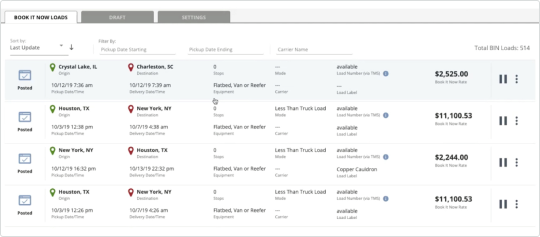
Consider Book It Now. The name sounds like a small convenience: accept a load without another round of telephone negotiation. Underneath sits a specific arrangement. Brokers select preferred carriers, publish the details and set the rate. Eligible carriers accept those terms. Truckstop then sends the rate confirmation automatically.
The useful trick is the order of operations. Agreement about who may book comes before the fast booking. This is a lesson other marketplaces can copy: identify the repeated work, settle the rules early, then automate the handoff. Instant booking depends on eligible freight, approved participants and acceptable terms. It cannot manufacture agreement over a rate nobody wants.
Truckstop bought RMIS in 2021, adding carrier onboarding and insurance monitoring. Risk Factors examines signals including vehicle identification, internet-address behavior and internet-based phone information. Carrier Hub, launched in June 2026, gathers authority, insurance and federal safety data with ongoing monitoring. These tools help decide where to investigate. A risk label remains an input to judgment.
There is a commercial logic to keeping those checks close to the search. The person evaluating a load is already making a decision, already under time pressure. Asking that person to assemble credentials from several places creates another task. Putting the information nearby makes it more likely to enter the decision at all. That is an editorial reading of the product strategy, rather than a claim that software can certify every counterparty.
What the information actually costs
Truckstop’s general carrier pricing lists Basic at $42, Advanced at $135 and Pro at $159 per user per month, before applicable fees and taxes. Equipment-specific packages differ. The general Basic application carries a $42 fee, credited toward the first month if approved. Higher tiers add tools such as broker ratings, instant booking and rate intelligence.
DAT One competes for much the same load-search and analytics budget. Truckstop’s case rests on how its marketplace connects with compliance, payments and specialized freight tools. Choosing between boards requires a less glamorous test: whether the available lanes, equipment matches and broker relationships suit the operator’s business. A crowded screen alone does not establish that.
Rate Insights adds market context to negotiations. The company’s developer documentation describes predictive models informed by booked and posted loads, with attention to geography, seasonality and recent behavior. A predicted price still needs to meet the carrier’s own costs. Fuel, empty miles and waiting time do not become cheaper because a screen calls a rate typical.
The load is delivered. The business isn’t finished.
The August 2025 acquisition of Denim expanded invoicing, factoring and back-office automation. Factoring advances money against invoices for a fee. It addresses the awkward interval when delivery is complete but the carrier still needs cash for fuel or repairs. It also makes the price of getting paid sooner part of the decision.
Payments processed. Transaction volume, not company revenue.
In 2026, Truckstop also acquired Wize Load for heavy-haul pricing intelligence, partnered with Trucker Path to distribute loads, and launched AVA, a voice assistant for finding freight, checking rate context and contacting brokers. The common thread is specific work removed from an already crowded day.
The company describes a remote workplace and calls employees partners. Its careers page puts customer service beside innovation, accountability and integrity. Those are stated ambitions; the practical test is whether product choices save customers time or money. The factorability feature Moscrip singled out provides a useful example of the kind of detail he wanted the organization to notice.
That suggests a sensible way to judge the company. Start with one lane, one booking or one invoice. Measure the calls avoided, the checks completed and the money left after costs. Truckstop’s original promise was a better way to find the next load. Its current business is built around everything a driver discovers that promise also requires.