In January 2025, Central Transport agreed to spend $54.5 million on three pieces of another trucking company’s network. The list included a terminal in Memphis and lease interests in Fontana and Gardena, California. The tempting detail is the price. The revealing detail is the doors: 198 in Memphis, 165 in Fontana, 87 in Gardena. In trucking, a door is a place where a promise becomes physical.
- Central Transport pools business freight through a North American LTL network.
- Its Yellow agreement covered one owned terminal and two lease interests.
- For shippers, the useful test is the lane, the handling and the complete bill.
A manufacturer with a few pallets needs access to that choreography without paying for an entire trailer. Central Transport sells that access. The yellow trucks are the visible part; the harder business is arranging the places, people and departures that make a shared journey possible.
The $54.5 million door count
The January agreement followed Yellow’s 2023 collapse. Memphis brought a 51.6-acre property. The California locations brought lease interests, an important distinction for anyone inclined to count every acquisition as purchased land. Together, the sites offered 450 dock doors. That measures physical capacity, not how many shipments Central Transport would actually move.
Transport Topics points to the difficulty of finding terminal land near major metropolitan areas. A truck can be reassigned. A suitably placed freight terminal is rather less portable. Buying into an existing footprint can therefore solve a problem that adding vehicles alone leaves untouched. This is the logic of the deal, rather than proof that every acquired door earns its keep.
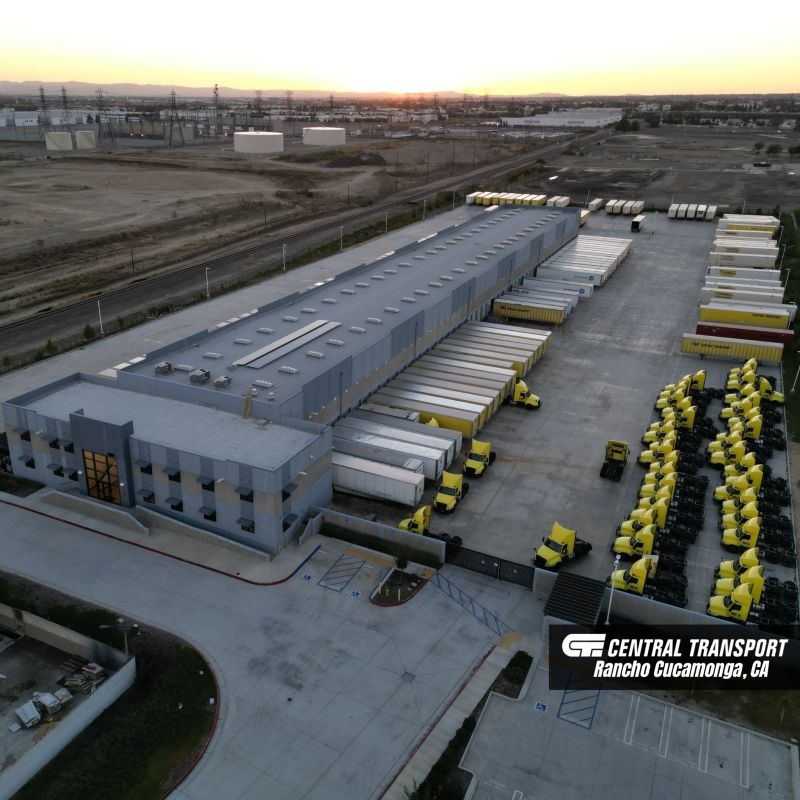
There is a useful warning inside the opportunity. Yellow’s buildings remained useful after its business stopped operating. CoStar’s account describes debt pressure and labor disputes before the shutdown. Concrete survives a balance sheet. Owning the right infrastructure still leaves the daily work of running it economically.
A debt before a dynasty
Central Transport dates its history to 1932. The Moroun family entered later. In the reported acquisition story, Tufick Moroun bought Central Cartage from brothers who owed him $8,300 for tires and gasoline. His son Manuel, known as Matty, was largely running the trucking business by the mid-1950s.
It is a pleasingly unromantic beginning: unpaid supplies, an existing operation, a family willing to work. But the dates matter. Buying and enlarging a predecessor business does not make someone its original founder. Central Transport’s long history and the Morouns’ ownership story overlap; they are not interchangeable.
In 1970, the family formed CenTra as a holding company. A federal appellate opinion describes Central Cartage doing local pickup and delivery while Central Transport handled intercity linehaul. The two worked together on door-to-door service. Even that earlier arrangement contains the enduring idea: divide the journey into tasks, then make the handoffs behave.
The business of sharing a trailer
Less-than-truckload shipping, usually abbreviated LTL, lets businesses buy freight transportation for loads smaller than a full truck. Consider a hypothetical parts manufacturer shipping three pallets to a distributor. Combining its freight with other shipments spreads the cost of the journey. The bargain depends on compatible loads and competent handling.
Central Transport serves manufacturers, retailers and smaller businesses. Its services include regional, interregional and long-haul transportation. It competes in the same market as Old Dominion, Estes, XPO, Saia and R+L Carriers. The category is well established; Central Transport’s distinction lies in its particular network, private ownership and investment choices.
Up 4.7% from 2024. The U.S. LTL market fell 1.9%.
SJ Consulting’s April 2026 table ranks Central Transport tenth by 2025 U.S. LTL revenue. Its estimated $1.705 billion includes fuel surcharges. Growth against a declining market is interesting. It does not establish that the Yellow deal caused the increase, or tell us the company’s profit margin.
The paperwork travels too
For a shipper, the front door is increasingly digital. My Central provides account-specific rate quotes, shipment tracking, payment history and invoice access. Those tools make routine shipping administration easier. They also expose the essential question: what, precisely, has been booked?
“Your business is our business”Central Transport’s published company line
The company’s published Canada guide describes coordinated transportation and customs brokerage. Its Mexico guide lays out a relay involving pickup, a U.S. border terminal, drayage, a broker and a Mexican carrier partner. One commercial relationship can simplify the customer’s job, while several organizations still perform the movement. Before shipping, reconfirm the arrangements and required documents.
Price deserves equal attention. Central Transport’s March 2026 rules tariff includes a $25 charge for shipments originating in or destined for California. A freight quote must be read alongside applicable fuel and additional-service charges. The cheapest-looking number can become less charming when delivery requirements arrive separately.
LTL also involves tradeoffs. Freight needing exclusive trailer space, unusually little handling or a deadline beyond the available service may call for another arrangement. National coverage cannot answer a specific lane question. Check the origin, destination, estimated transit and receiving conditions before treating the network map as a promise.
There is also a distinction between convenient administration and reliable execution. A tracking screen can help explain a delay; it cannot unload a trailer. The sensible buyer uses the online tools to establish visibility, then judges the actual service on repeated shipments. That is a more demanding test than a handsome map, and a more useful one.
Copy the discipline, not the acreage
The transferable lesson is modest and useful. Find the constraint that makes the whole job harder. For Central Transport’s expansion, dock locations offered something extra trucks could not supply. For a small shipper, the constraint might be an incomplete bill of lading, awkward receiving hours or dimensions nobody measured.
Start with one lane. Record the complete cost, arrival performance and handling experience. Expand when the evidence earns it. A loading dock is an ordinary object. Central Transport’s story becomes interesting when you realize how much business depends on getting that ordinary object in the right place.
Website & shipping tools ↗ Company news ↗ LinkedIn ↗ X ↗ Instagram ↗ Facebook ↗ TikTok ↗