For six months in 2014, Felipe Capella slept on Ricardo Salgado’s couch in New York. The two were building Loadsmart, a freight business that would eventually attract a billion-dollar valuation. Before there was much to value, there was a rather practical arrangement involving somebody else’s living room. A truckload needs a destination. A founder, apparently, can make do with a sofa.
Capella had already done the respectable thing. Born in Brazil, he had studied law, practiced it, taught it, and worked across international transactions. His résumé offered several plausible routes to a comfortable future. Freight brokerage was a departure from all of them. Yet the shift contained a question that would follow him through the next decade: what happens when you stop advising on other people’s decisions and start standing behind your own?
Loadsmart’s early answer was a price. A shipper could ask what moving a full truckload would cost and receive an instant figure. Behind that small convenience lay a commitment: the company had to arrange the transport. A quote on a screen is easy to admire. A truck that actually arrives is a more demanding critic.
A perfectly good career to leave behind
The academic record makes the couch seem an especially curious piece of career furniture. Capella earned an MBA at Fundação Getulio Vargas, studied business law at Universidad Francisco de Vitoria in Spain, and completed a law master’s at the University of Pennsylvania, where he was his class’s valedictorian. The journey took him from Brazil to Madrid and then the United States.
He also taught enterprise recovery and restructuring at the Federal University of Santa Catarina. At 25, he was explaining how businesses get into trouble and how they might get out again. That is an interesting subject to have taught before starting a company. Optimism supplies the opening chapter; restructuring teaches you to read the small print.
His work included mergers and acquisitions in New York and legal responsibilities at the Inter-American Development Bank in Washington. At the bank, his remit covered more than 40 operations, including development projects backed by Latin American governments. These were jobs in which agreements, institutions, and consequences had to fit together.
One connection helped carry him into New York law: Jay Clayton, whom Capella knew as a professor. But professional momentum did not settle the larger question of what he wanted to do. After roughly a decade practicing law, he wanted to run a business. The qualifications had accumulated. The desire to build something himself had survived them.
“I always wanted to start something new.”
Felipe Capella, 2024
Two ideas, one couch
Capella’s first startup effort was Duelus, a platform for online contests and promotional marketing. Salgado, a friend coming from Goldman Sachs, had a different proposition: freight. The attractions were concrete. Transportation was a large market, divided among many participants, with plenty of work still waiting to be digitized.
Capella decided his friend’s idea was better. That admission deserves a little space in a founder’s story. Entrepreneurial biographies often make the original idea sound like personal property requiring permanent defense. Here, changing direction was part of getting started. The contest platform yielded to the less glamorous problem of finding and booking trucks.
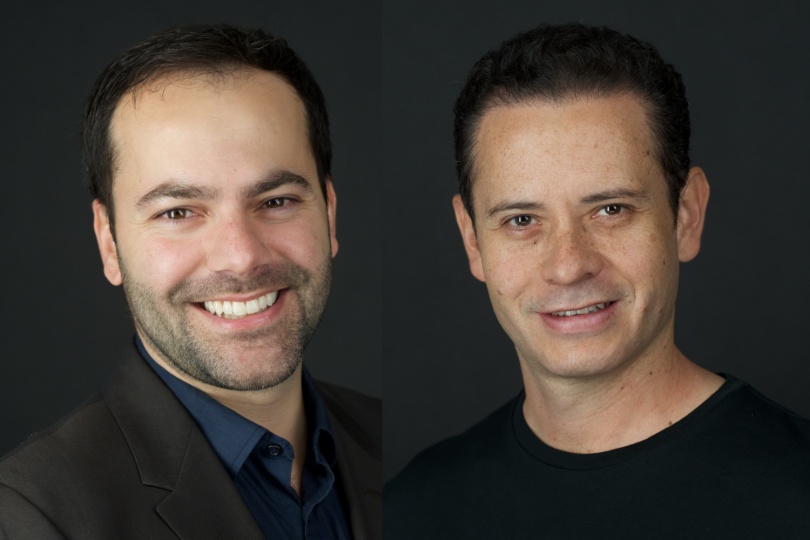
The arrangement in Salgado’s apartment belongs to that early period. It is a good anecdote because it supplies a scale the funding announcements cannot: two people making room for an uncertain venture. It also keeps the story honest. The later company had to be assembled, decision by decision, before it could be described with a large dollar sign.
Capella initially led product, later becoming president and chief operating officer, then co-CEO, and finally CEO in May 2022. The sequence matters. He worked through the product and operating jobs before taking sole possession of the chief executive title. His own responsibilities grew as the company’s original proposition grew more complicated.
The awkward distance between a quote and a truck
Loadsmart’s proposition challenged a familiar routine: people calling other people to establish the price of a shipment. Algorithms offered another way to produce a quote. Software connections could put that quote directly inside a customer’s transportation system, allowing a booking without a fresh round of conversation.
The appeal is easy to grasp even without a trucking vocabulary. Waiting for an answer interrupts work. A usable price lets the next decision happen. But a shipper accepting the quote does not magically produce a carrier willing to haul the load at the expected cost. Loadsmart was accepting responsibility before every detail on the other side was settled.
That distinction helps explain why the early product was more consequential than an attractive interface. A business had to support the button. Capella’s career had moved from helping write agreements to building an operation capable of fulfilling them. The legal background gives the promise a familiar shape, even though the company fulfilling it looks very different.
- 01 Plan & price
- 02 Book & move
- 03 Gate & dock
- 04 Audit & pay
A simplified view of the freight journey Loadsmart now serves.
When the customer became the software customer
By 2020 and 2021, Capella was confronting the limits of automating the brokerage’s internal work. Some tasks still involved another business whose systems did not connect neatly to yours. Improving your own software could take you only so far when the next participant was working differently.
He described a decision to redirect a substantial share of research and development toward tools customers could use themselves. It was a change in where the engineering effort went and who would pay for its results. Brokerage remained part of the business. Software could become a business alongside it.
The product history puts dates on that turn. Loadsmart acquired Opendock in November 2021 and launched the in-house product that became ShipperGuide, initially called RFPGuide, that year. One addressed appointments at the warehouse dock. The other developed into a transportation management system. These are unromantic places to look for opportunity, which is part of their charm. Nobody throws a party for a correctly scheduled loading appointment. They certainly notice the alternative.
For Capella, the focus was increasingly the shipper’s working day: planning movements, selecting providers, managing facilities, and settling the bill. In a 2024 conversation, he described customers with annual freight spending ranging from $5 million to $1 billion. Across that range, the purchase was becoming broader than access to a truck.
A billion-dollar moment, followed by arithmetic
On February 1, 2022, Loadsmart announced a $200 million Series D at a $1.3 billion valuation. SoftBank Latin America Fund led the round, with participation from funds and accounts managed by BlackRock, CSX, and Janus Henderson. It was a financing milestone with a date attached, rather than a permanent appraisal of the business.
The investors also reveal something about the company’s connections. Alongside financial backers were organizations embedded in transportation, including Maersk, Ports America, and TFI International. Freight software still has to operate in the world of terminals, trucks, and railways. Those relationships put Loadsmart in conversation with businesses whose work extends well beyond a screen.
Recognition followed. In 2023, Goldman Sachs included Capella among the entrepreneurs honored at its Builders and Innovators Summit. He shared the credit with Loadsmart’s employees. The occasion offers a pleasing career loop: his co-founder had left Goldman to start the company; years later, Goldman was recognizing what they had built.
By October 2024, the announcement worth watching was more prosaic. Loadsmart reported reaching operating profitability in the third quarter, using its stated operating-cost definition. That is a specific company-reported milestone. It is also a different kind of achievement from persuading investors to put a value on future possibilities. This one concerned the operation already being run.
The half that changed the company
In October 2026, Capella said software accounted for half of Loadsmart’s gross profit. Gross profit is the relevant measure here, rather than revenue. The distinction makes the strategic change easier to see: a business founded around freight transactions had developed a substantial second source of economic value.
of Loadsmart’s gross profit came from SaaS, according to Capella.
His explanation was plain: “We cannot afford to be that fragile.” The company needed economics that could support continued development through changing freight conditions. The software investment was a response to that problem. It gave engineering a source of income beyond the margin on an individual shipment.
The next ambition adds AI agents to the mix. Capella has been discussing software that handles routine freight workflows, with people taking over where judgment is required. The ambition follows the same route through the customer’s operation: fewer repetitive steps, more work completed. Its test will be what happens to actual tasks after the demonstration ends.
There is also a cavaquinho
The person discussing these economics has interests that would make a less predictable conference introduction. Capella plays guitar, piano, and the Brazilian cavaquinho, and practices amateur photography. A 2021 profile recorded visits to 47 countries. That figure belongs to that moment in his life; it is already enough to suggest a well-used passport.
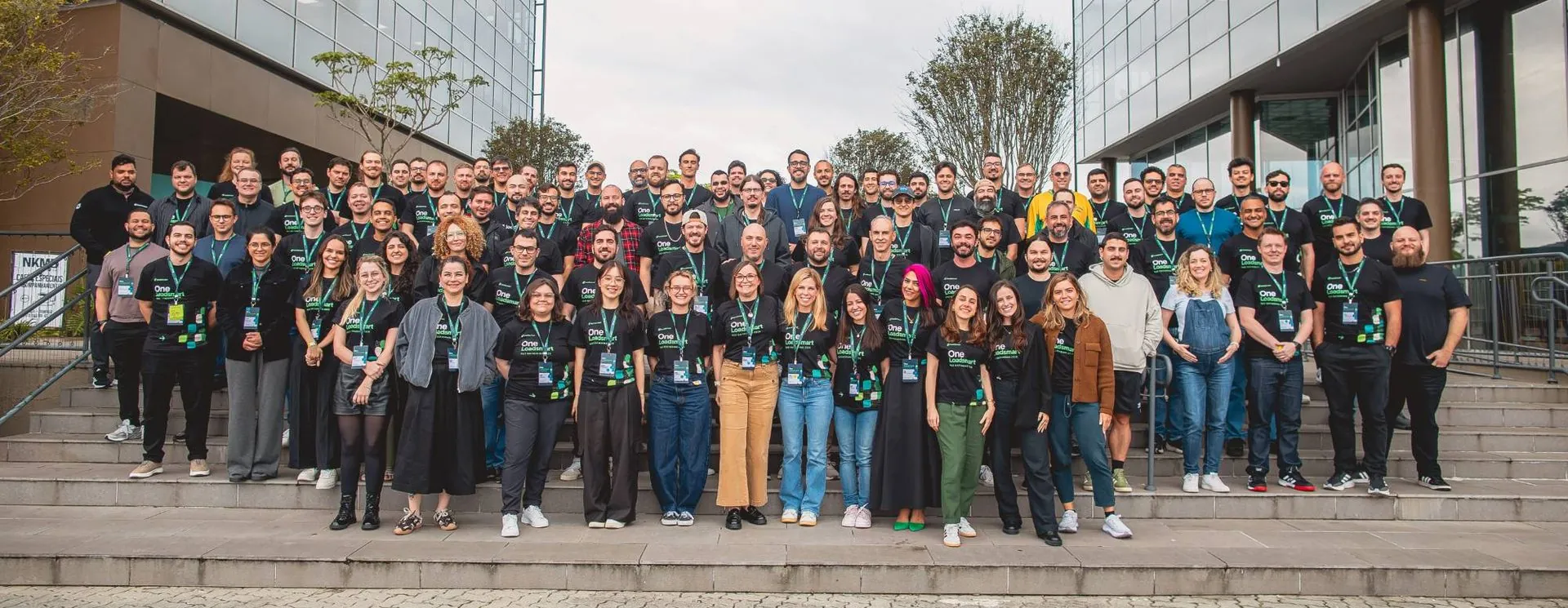
Those details do not explain a software strategy. They do restore the person behind it. There is a musician alongside the executive, a photographer alongside the former lawyer. A career that reads as a chain of institutional names has included a willingness to leave the institution and try something with a friend.
The couch is the memorable opening image. The more revealing part of Capella’s story comes afterward: moving through product and operations, revising where the company invested, and accepting that an early business idea could become something broader. The founding promise was a price you could act on. Twelve years later, his work still turns on what it takes to keep it.