Before FCP Euro became a national retailer, it was five people, two computers, a 2,000-square-foot office and a tractor-trailer holding inventory. This was not a garage startup. A garage would have been tidier. In 2002, Scott Drozd joined his closest friend, Nick Bauer, in the online version of the Bauer family’s Connecticut auto-parts store. Their first important innovation was not glamorous: they made sense of which part fitted which European car.
Anyone who has ordered the wrong gasket understands that compatibility data is a form of mercy. In the early days of ecommerce, it was also a moat. Drozd and Bauer built out the catalog, assembled repair kits and tried to preserve the habits of the original counter in Groton: know the product, answer the question and do not sell a customer something you would not use yourself.
By 2007, the operation was producing about $8 million in annual sales. A year later, with the warehouse at its limit, it moved to Old Saybrook and installed the connective tissue of a grown business - order management, inventory sourcing, fulfillment and customer records. Drozd made a prediction around then: FCP Euro would one day pass $100 million. Bauer later recalled that his father looked at Drozd as if the young executive had misplaced a vital bolt.
The friend you call when ambition needs an accomplice
Drozd and Bauer had known each other since they were 12, growing up in Deep River. Childhood friendship is excellent preparation for sharing embarrassing photographs. Its usefulness in executive governance is less guaranteed. Their partnership endured because affection acquired structure. Drozd gravitated toward people, culture and alignment; Bauer brought an analytical temperament. One could see the destination while the other worried the spreadsheet. Neither talent cancels the other.
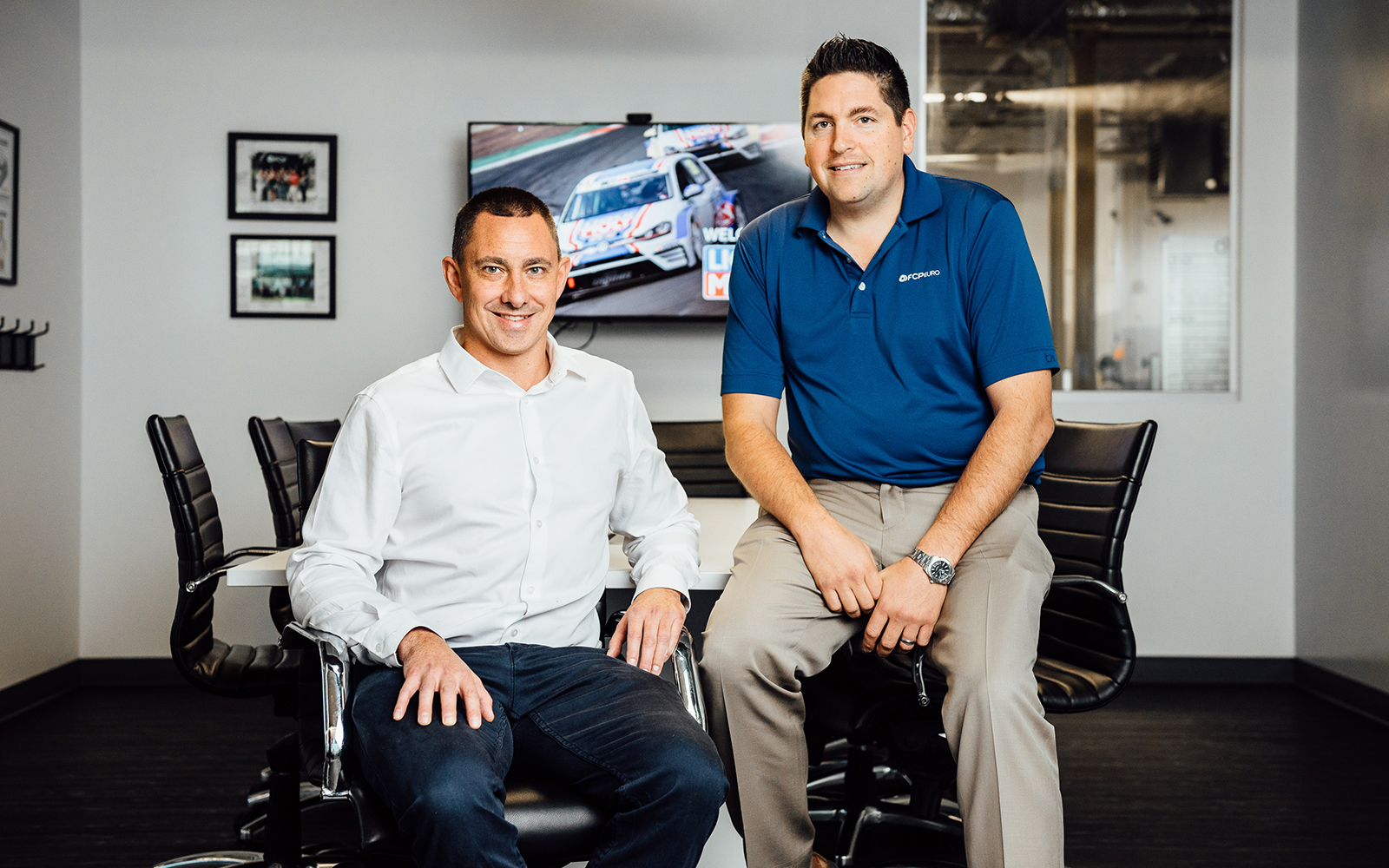
The pair also learned by doing, which is the polite phrase for being wrong at industrial scale. “We’ve tried and failed at 1,000 things,” Drozd once said. “The key is that you have to recover quickly and adjust.” The statement is striking for its lack of entrepreneurial perfume. There is no worship of failure. A failed experiment is simply an invoice for information, and the sensible response is to read it promptly.
In 2014, after annual sales had climbed to roughly $18 million, the company moved again, this time to Milford. The decision began with data. UPS helped model warehouse demand and picking patterns. Real-estate advisers considered access, infrastructure and labor. Milford sat within reach of New York and Boston, near major roads and a larger talent pool. The new building was not merely a bigger cupboard for brake rotors. It was an argument about the sort of organization FCP Euro intended to become.
A guarantee so memorable it had to become true
In 2012, FCP Euro introduced the proposition that would define it: a Lifetime Replacement Guarantee. Buy an eligible part, use it until it wears out or fails, order another, send the original back and receive credit under the program’s terms. This included items whose entire purpose is to wear down, such as brake pads and wiper blades. Somewhere, an accountant reached quietly for a chair.
The guarantee was cheeky, but not frivolous. Drozd framed it as a way to make European-car ownership more affordable and to show confidence in the parts the company stocked. It also gave a specialist retailer a sentence that Amazon could not easily borrow. A vast marketplace can promise selection. Expertise has to promise judgment.
A good promise creates useful pressure. If every replacement may return years later, quality selection matters. Records matter. Service matters. The economics matter. In 2022, after a decade of growth, FCP Euro changed future refunds to store credit and tightened administration while preserving earlier terms. The adjustment was less romantic than launching the guarantee, and more revealing. Keeping a promise sometimes requires maintaining it, which is adulthood in both machinery and business.
The company’s trust machine grew beyond returns. FCP Euro developed repair guides and videos for owners with tools in hand and doubts in mind. It staffed customer service with automotive specialists. It assembled kits around whole jobs rather than isolated part numbers. In 2016 it began building a motorsports program, first in endurance racing and later on a professional stage. Racing put the company’s competence where enthusiasts could watch it sweat.
A Mercedes C300 endurance car, built in two months, won its first race and finished second among 139 teams in its championship. The result was useful, but the program’s larger job was credibility. Drozd said motorsport let FCP Euro engage its customers at a higher level. The catalog sold the component. The track supplied the story that made the component matter.
Profitable, fast-growing and still short of oxygen
Success did not make financing simple. In 2018, FCP Euro had about $46 million in revenue and 88 employees, yet conventional credit could not keep pace with its needs. Inventory-heavy ecommerce consumes cash with an almost comic appetite: buy more products, rent more space, install more equipment, hire more people, then wait for the order that repays the expense.
Alternative financing through Connecticut’s Invest CT program helped. By 2021, Drozd told state lawmakers, revenue had grown to $116 million, headcount to about 180, and the company was tracking toward $160 million for the year. His testimony was unusually plain about the awkward middle of business growth. A company can be profitable, popular and starved for capital at the same time.
In October 2023, FCP Euro announced a $25 million minority Series A investment. Drozd and Bauer remained at the helm. The capital had specific assignments: faster national shipping, broader inventory, stronger customer experience and more ways to bring the car community together. By March 2024, the company said it had passed $200 million in revenue, employed nearly 300 people, held more than $40 million of inventory and operated 230,000 square feet of distribution space. A new 150,000-square-foot facility in Mesa, Arizona, gave the Connecticut company a western lung.
Growth, in the numbers Drozd made public
The CEO as keeper of unfinished lists
Drozd’s public writing is notable for how often gratitude is followed by a checklist. Thank the customer; identify the miss; publish the next obligation. His 2026 commitments included live service later into Pacific time, Saturday support, seven-day shipping, improved search and fitment tools, closer integration between parts and DIY instructions, and 13 detailed vehicle-maintenance video projects.
The most telling figure was not a sales target. FCP Euro said changes made in 2025 had reduced order errors and damages by 31 percent. It called the measure “Perfect Orders,” a phrase carrying just enough danger to keep an operations meeting lively. More than 99 percent of products on the shelves were slated for optimized photography, descriptions and fitment information by the end of 2026. The original problem - which part fits which car - was still present, only enlarged.
Drozd has also carried his learning habit outside the warehouse. He served as an Entrepreneur-in-Residence with the University of Connecticut’s startup program, advising young teams. His counsel favored persistence over sparkle. Clever ideas were abundant; grit and patience were scarcer. It was advice earned in catalog rows, credit constraints and the accumulated indignities of trying a thousand things.
FCP Euro now hosts enthusiast gatherings around the country, ships from both coasts and speaks to millions of owners through its content. Yet Drozd’s governing aspiration remains pleasingly domestic: build the resource the team would want if it were in the customer’s shoes. The shoes, presumably, are under a car.
There is a temptation to tell growth stories by discarding the small beginning once the numbers become impressive. Drozd’s story works in reverse. The two computers explain the software. The crowded warehouse explains the logistics. The parts counter explains the support desk. The childhood friendship explains why two people could keep arguing productively for a quarter-century. The promise explains nearly everything else.