Scott Abel had a problem that a software upgrade could not fix. The company was growing, and the lunches were getting harder to arrange. He used to take employees out individually after they had settled into the job. Eventually, there were too many people for that to remain practical. His replacement was called Slices with Scott: ten employees, pizza, and permission to ask questions.
It is an appealingly modest scene in the life of a technology founder. There is no ceremonial unveiling. Nobody needs a keynote remote. There is, however, a question with consequences: can the person who signs your paycheck also be someone you tell the truth?
The price that disappeared
Abel had confronted a different kind of barrier when he helped start Spiceworks in January 2006. He and co-founders Jay Hallberg, Greg Kattawar, and Francis Sullivan wanted to make network management easier for small IT teams. The original plan included subscriptions. Then the founders considered a nasty possibility: another team could copy the idea and charge nothing.
Abel asked Hallberg to work out how they could earn money while giving the software away. Advertising supplied an answer. That made the business depend on the attention of people who were busy doing something else: keeping their employers’ technology running.
By December 2007, Spiceworks had passed 200,000 users. Its advertisers included familiar technology names. Abel’s condition for the model was blunt: “This model will not work if people don’t love the software.” Free had removed one obstacle. The application still had to justify a place in the working day.
The view from the server closet
The founders’ early research was wonderfully resistant to boardroom abstraction. Hallberg recalled visiting roughly thirty small businesses and talking with their IT people. The offices they were shown could be closets full of equipment. The administrators used assorted utilities, with little consistency between businesses. Ask what software they hated, and conversation came easily. Ask what they loved, and one answer was Doom.
A game had managed to inspire an affection that workplace software had somehow misplaced. There was a product brief in that embarrassment.
Hallberg described the ambition as an iTunes-like experience for systems management. He connected Abel’s attention to interface design with his earlier work at NeXT. The aspiration was legibility: put useful functions together so that the person responsible for the network could understand and use them.
Abel brought experience as a developer and at Apollo Computer, followed by seven years at NeXT. Motive was another stop in his entrepreneurial career. Yet the setting for this new company’s opportunity was smaller and less ceremonious than those names might suggest. Someone in a cramped office needed to discover what was on the network and whether it was working. The application had to earn that person’s patience.
Two million reasons to come back
By May 2012, Spiceworks was reporting two million users and more than 300 million minutes spent in the network each month. Those were company-reported figures, a snapshot of a particular moment. They described something broader than people downloading a utility and forgetting where they put it.
The tools brought IT professionals into the same environment as advice from peers and contact with technology vendors. A person could monitor equipment, ask a question, and consider a purchase within the same professional network. For advertisers, the attraction was a concentrated audience with relevant purchasing responsibilities. For users, the reason to return had to remain useful work and useful people.
That arrangement had competing demands built into it. An advertiser wants attention. An administrator would generally like fewer interruptions. The quality of the relationship matters because the same person must be both a satisfied user and a worthwhile audience. Charge nothing and you still have to negotiate that bargain every day.
A simplified view of the early Spiceworks model.
The community also acquired a life beyond the application. At SpiceWorld in Austin in 2015, IT professionals gathered in person around the business that had brought them together online. Abel described an environment that discouraged sales spin. The software’s feature-voting mechanism had already given users a direct way to express what they wanted next.
There is a certain comedy in enterprise technology producing fans enthusiastic enough to display a dinosaur tattoo, as one Spiceworks user did. Most software purchases leave behind a renewal reminder. Spiceworks had developed rituals, gatherings, and a mascot people recognized. The affection was visible, and the company’s behavior had to live up to it.
Pizza, questions, and an open door
Inside the business, the challenge of maintaining a relationship had its own arithmetic. A founder can know everyone in a small room. A larger organization requires deliberate ways to keep conversation possible. Slices with Scott preserved a recurring appointment for employees’ questions when individual lunches became impractical. The menu was simple. The answers could be complicated.
Abel’s instruction to leaders was to make themselves available in practice. He also described taking responsibility in front of employees after a planning mistake. Inviting people to challenge the boss means demonstrating what happens when the boss is wrong. Otherwise, everyone can admire the open door from a safe distance.
His interest in openness extended to meetings with venture capitalists. He discussed a workplace where access to information was part of building trust, and described himself as the least important person in the company. A founder who says that still possesses considerable authority. The interesting part is how he chooses to exercise it.
“When people know you care, they’ll do their best work.”
Scott Abel · on leading employees
The employee experience received recognition beyond the office. Spiceworks appeared among Glassdoor’s top ten places to work in its December 2014 awards. Abel’s public professional profile also records repeated Austin workplace awards and a fourth-place finish in Fortune’s 2016 technology workplace ranking. These are dated judgments about that company at those moments. They give some substance to the culture conversation without making it a claim of permanent perfection.
In advice for IT professionals published in 2014, Abel put considerable weight on communication. The person moving into management has to set objectives that other people understand, recognize that different employees need different amounts of attention, and earn their willingness to follow. Technical competence remains valuable. Leading adds a separate obligation to the people doing the work.
Seen together, those habits describe a leader concerned with the passage of information. A problem has to reach someone who can act on it. A team needs to know what it is trying to accomplish. People need enough confidence in the response to speak before a difficulty becomes expensive. A closed conversation can be as obstructive as a badly designed interface.
Finding the studs
Abel’s language could be rather less solemn than the management vocabulary suggests. In a 2013 discussion of leadership, he estimated that nearly forty percent of Spiceworks’ 185 employees were under twenty-eight. He valued their willingness to attempt things, while recognizing that enthusiasm benefits from experience.
His illustration involved putting your head through a wall. It might be possible, he explained, but knowing where the studs were would help. He added, “I’m a martial artist; I happen to know it’s doable.” One hopes the office maintenance budget allowed for metaphor.
The joke captures a particular version of the experienced founder’s job. A younger colleague supplies momentum. The older colleague may know which obstacle conceals something harder. Advice is useful when it preserves enough ambition to attempt the task while sparing everyone an unnecessary repair bill.
By 2018, Abel was describing mentoring as an increasingly important part of his work. He also spoke about enjoying the company of smart people without needing to dominate the conversation. The connection is easy to see: advice improves when the person offering it first understands the problem. Listening belongs in the same working toolkit as technical judgment.
A different chair at the same table
In January 2015, Hallberg became Spiceworks’ president and CEO. Abel became chief strategy officer, concentrating on products, services, and culture. The change divided responsibilities between two people who had started the company together. It also made clear that the founding CEO’s contribution could continue in another role.
His next product challenge involved a different kind of disorder. At Umuse, founded in 2016, the target was the flood of workplace messages. Email and chat had multiplied the places where someone could need your attention. A useful answer could be buried in the wrong application.
In March 2018, Umuse announced $5 million in seed funding from Shasta Ventures, Next Coast Ventures, and Floodgate Capital. Its beta combined messages from services including Gmail and Slack in one feed. It used communication patterns to help prioritize the people a user dealt with frequently.
The resemblance to the earlier ambition is striking. Spiceworks gathered scattered management tasks into a more approachable tool. Umuse gathered scattered conversations. Both addressed a day that software had made unnecessarily fussy. The investment announcement established a funded attempt at the problem, with early users and a beta to try. The attraction was familiar: fewer places to look, less work before the real work could begin.
What travels with the people
The advisory work became another expression of that experience. Vertify announced Abel’s appointment to its advisory board in April 2019. ALTR also lists him among its advisers, identifying him through Spiceworks and Motive. The founder who once had to assemble an answer could now help someone else test theirs.
Spiceworks itself entered Ziff Davis ownership in 2019. Abel’s founding credit belongs to the company established in 2006, the predecessor of the later Spiceworks Ziff Davis business. The distinction keeps the chronology straight: his story begins with those four co-founders and their original software experiment.
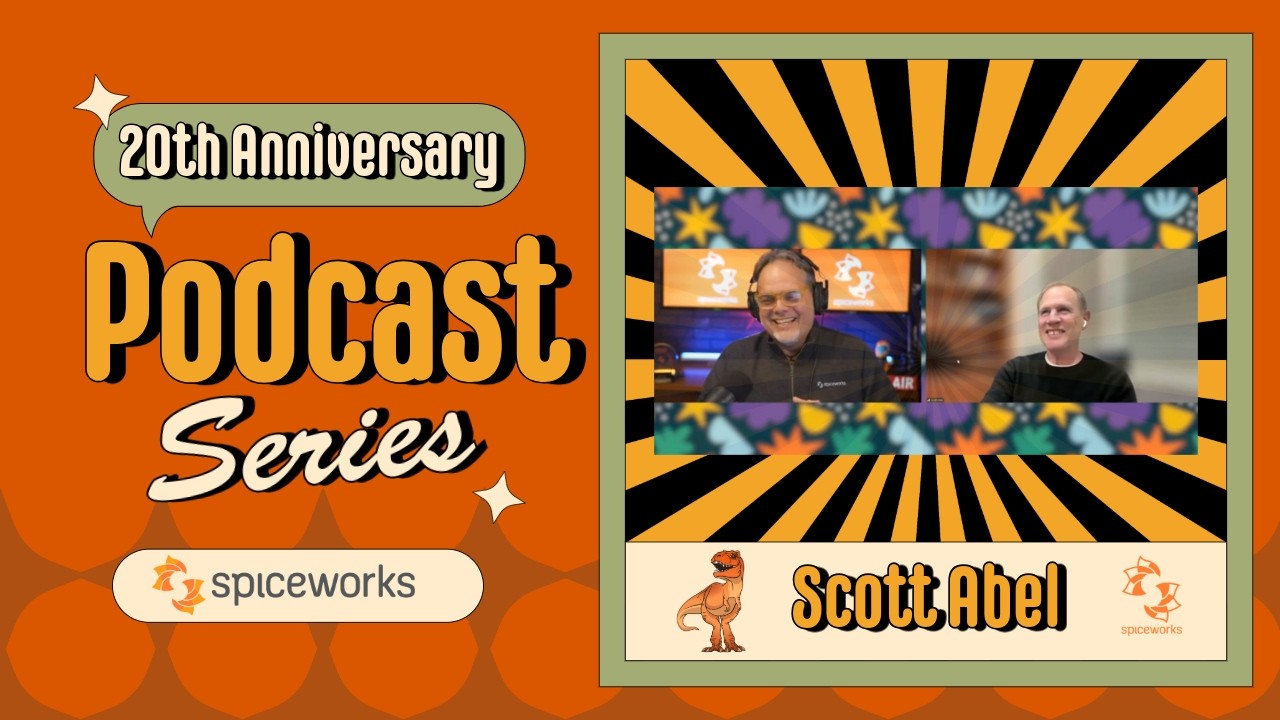
In February 2026, he returned for the opening episode of Spiceworks’ twentieth-anniversary podcast series. Looking back, he emphasized the culture the team had built and the way it spread through the Austin community. The pride was in something people could carry with them.
That gives the pizza lunches a longer afterlife. Employees change jobs. They become managers. They discover whether another boss welcomes an inconvenient question. What once seemed like an ordinary conversation becomes a standard against which later workplaces are measured.
Free software helped people through one door. Abel’s other concern was whether they felt able to walk through his.