Amy Johnson had just won a $100,000 investment, and her thoughts had gone to the vacancies. A developer, perhaps. An account manager. Maybe both. At the Rococo Theatre in Lincoln, Nebraska, in October 2016, LifeLoop had won the Rise of the Rest pitch competition in front of more than 650 people. Steve Case, the AOL co-founder backing the competition, offered congratulations and a hug. Johnson had a rather less theatrical use for the money: more hands.
“I was overwhelmed. It was awesome,” she said afterward. The response was delighted and practical in almost the same breath. A young software business had persuaded the judges that its problem mattered. Now somebody had to help build the product and look after the customers. Applause, regrettably, does neither.
That hiring plan makes a useful introduction to Johnson. LifeLoop began with her family wanting a better connection to a loved one’s daily life. As the business grew, she kept returning to the people around the software: the customers who explained what needed fixing, the colleagues who knew things she did not, the families waiting for an update.
A telephone call on Interstate 80
The idea reached co-founder Philip Lee by telephone. He was driving west through Nebraska on Interstate 80, traveling toward Colorado with his wife and young son, when Kent Johnson called. Kent and Amy had been discussing a software idea for senior living communities. Lee remembered an unlikely combination of founders and subject matter. He was intrigued.
The family problem was straightforward. After Kent’s grandmother moved into a senior living community, keeping in touch with her, the staff and other family members had become difficult. Amy and Kent wanted a better way to follow what was happening. The concept emerged in 2013. LifeLoop launched in 2015.
Johnson brought a professional history that made sense once the problem was described in human terms. She had spent eleven years in insurance, specializing in sales, marketing and account management. She held a bachelor’s degree in Family and Consumer Science from the University of Nebraska - Lincoln. Understanding people, explaining a service and maintaining relationships were already part of her working life.
Running a software company had never been her childhood plan, she explained in 2018. The surprise is more interesting than a tidy origin myth. A software company was the form the work took once she started following the problem. Her earlier experience had given her ways to begin the conversations; other people would help supply the technical answers.
“I never set out with a goal to run a software company.”
Amy Johnson, 2018
The app grew a back office
The first customer was Dial Retirement Communities. Before there was a product, Johnson approached a contact there about the idea and asked to spend time with staff. The founders needed to understand how information moved through an ordinary working day. They would build in small steps, observe what people used, and revise. A feature could look perfectly sensible to its creators and still need a customer to explain its shortcomings.
That approach changed the size of the assignment. A family app depended on information the community itself needed to collect and organize. Calendars, photographs and messages had to come from somewhere. The people entering them needed a system that fitted their work. A good intention on the family’s phone could become another task on somebody else’s desk.
Aviture helped the founders develop the initial product. Its team worked alongside them on a minimum viable platform designed for three groups: residents, families and community staff. Early release and feedback were part of the method. The business needed something usable enough to learn from, with room to change as those three groups began using it.
An illustration of the relationships LifeLoop was built to connect.
In a 2021 conversation with Aviture, Johnson recalled the period from late 2013 through 2014: applying for a grant, working in the Garage and figuring out the first version. She also remembered selling something that did not yet exist. That is an unusually candid description of early software sales. A promise reaches the customer before the finished feature does; colleagues then have to close the distance.
The resulting subscription platform served communities as its paying customers while allowing families and residents to connect. Its functions extended to activity calendars, digital signage, transportation and maintenance. The family’s original request had led Johnson into the daily machinery of an organization. The product would be useful only if that machinery could run it.
A little room to take the leap
Johnson explained the importance of early financial support in a setting with rather different acoustics from a pitch competition: a Nebraska legislative hearing. On March 13, 2019, she told lawmakers that a prototyping grant and seed funding had helped make it possible to start. The support let the founders test whether their idea could become something useful while limiting the initial risk.
She brought a progress report. LifeLoop had twelve employees and operated in thirty states, with families connected across the United States and Canada. Those details gave the discussion a tangible scale. Public support had helped an idea reach the point where there were salaries to pay, customers to serve and a product crossing state lines.
employees, with LifeLoop operating in 30 states by Johnson’s March 2019 legislative testimony.
The earlier pitch win offered a more public kind of encouragement. Eight companies had competed for the Rise of the Rest investment in 2016. Winning brought LifeLoop attention as well as capital. Johnson’s immediate hiring plans showed how quickly a ceremonial moment could turn into an operating decision. A check has its greatest charm when it can become somebody’s first day at work.
By 2019, Johnson had also been selected as an Argentum Senior Living Leader Under 40, following recognition as Entrepreneur of the Year in Omaha in 2018. The honors marked her progress through an industry she had entered from outside. They sat alongside the less photogenic evidence: repeated customer conversations and the work of assembling a team.
The company inside the company
Some of LifeLoop’s early growth arrived by an unexpected route. By July 2016, the platform had more than 1,200 users and 300 families. It had expanded beyond Nebraska, Iowa and Kansas into Oregon and Colorado. There was also a pilot in Chile, prompted by people Johnson met at a trade show. Browser translation tools offered a way to try the product across a language barrier.
The Chile pilot was an experiment, and it deserves to remain one in the telling. Its interest lies in the founder’s willingness to follow a conversation into a test. The company was still young enough for a meeting at a trade show to open a new geographic question. A useful next step could be smaller than a formal expansion plan.
People helped make those steps possible. Nick Nemer had known Amy and Kent for years before joining LifeLoop. He later became vice president and a partner. Their shared history would eventually carry into another business. For Johnson, the relationships inside the company became part of what she valued about having built it.
Asked in 2018 about her favorite thing she had built, she chose the team. Her later descriptions of recruiting were personal and direct: understand someone’s strengths, consider what work excites them, and work out where they could contribute. She also described being clear about the uncertainty of startup life. Flexibility was part of the arrangement; so was an honest explanation of the risks.
She took a similarly open approach to the women working with her. In 2019, Johnson spoke about making the experience visible enough that younger women could imagine doing it themselves. A founder who can be related to offers a particular kind of encouragement. The example becomes more useful when it includes the awkward decisions along with the award photographs.
The next set of people
On April 26, 2022, iN2L announced its acquisition of LifeLoop. Johnson became chief strategy officer of the combined organization, joining an executive team led by Lisa Taylor. The deal brought LifeLoop’s communication and operational tools together with iN2L’s engagement offering. Johnson discussed the acquisition with Taylor on a video conversation hosted by Mary Furlong and Fred Fishkin.
- 2013The family conversation
- 2015LifeLoop launches
- 2022iN2L acquisition announced
- 202322eleven publicly profiled
Johnson and Nemer subsequently moved into advisory work and established 22eleven. The consultancy works with startups and small businesses on ideas, market strategy and growth. Its stated approach puts people alongside strategy and forward progress. Johnson’s emphasis is on creating company cultures in which people can do useful work and develop.
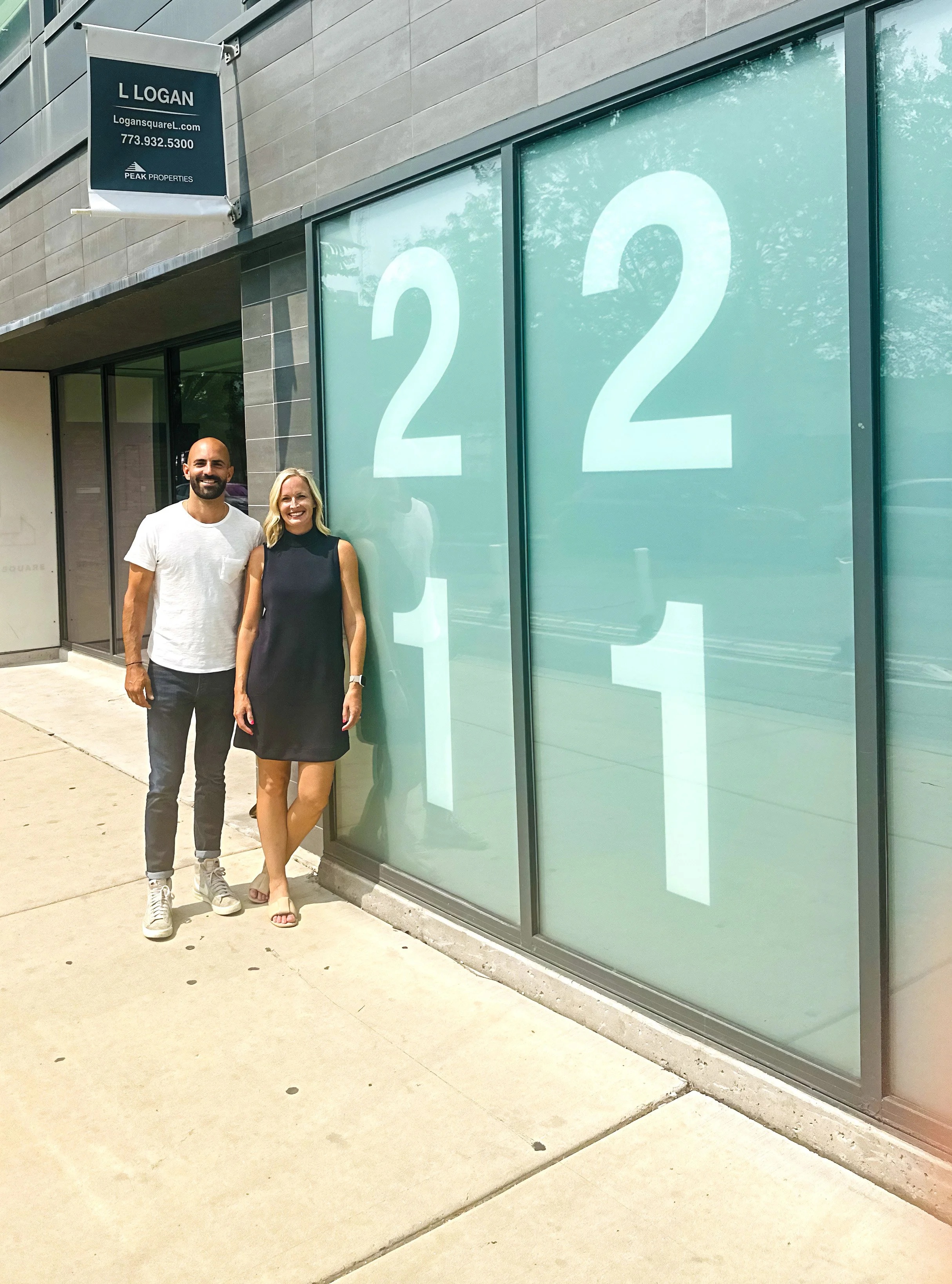
By August 2026, she was also serving on Invest Nebraska’s board. The connection gives her story a satisfying return address: an organization that backed LifeLoop now has its former CEO helping with its governance. Her experience can enter the next founder’s conversation from the other side of the table.
Looking back that August, Johnson spoke about the difficulty of reproducing a particular team at a particular moment. Her advice was brief: “When you create that magic, just enjoy it.” Coming from someone whose first thought after a pitch win was hiring, the remark feels earned. The company changed hands. The pleasure of making something with other people remained.