Mary Ann O’Brien gave herself the job before anybody could offer it. Growing up in Spencer, Iowa, she signed her name with CEO attached, followed by O’Brien Industries and a New York address. She was in third grade. Most children are still negotiating the terms of bedtime. O’Brien had moved on to corporate stationery.
The address would change. The appetite for running a business survived. Her route led through computers, a California startup and an advertising agency that found its home in Omaha. Along the way, she developed a professional interest that complicates the usual picture of an agency founder: what happens to people after they believe the advertisement?
A job title before a job
Business was part of the family conversation. Her father ran several businesses, and she tagged along with him and her grandfather, absorbing what they knew. Her ambition had people behind it. Watching someone operate a business gives a child a different introduction from simply hearing that being your own boss sounds pleasant.
O’Brien’s personal website dates her first company to age nine. Years later, addressing entrepreneurs in Nebraska, she encouraged them to look for solvable problems without waiting for a grand invention. A useful idea could be small. The requirement was the willingness to do something with it.
That advice gives the childhood signature a second meaning. She had imagined a position; eventually she would have to find a problem worth occupying it for. A title is pleasantly cooperative. Customers tend to ask more questions.
The cow spots came first
After college, her father suggested a computer company in North Sioux City, South Dakota. She doubted the fit. Computers were not her interest. Gateway hired her anyway, and her University of Iowa marketing degree found practical work in integrated marketing programs.
Gateway co-founder Ted Waitt helped sharpen her interest in entrepreneurship. She participated in the company’s move to San Diego, then left to co-found Hotpaper.com in San Francisco in 1998. The business developed applications for handling data. After its acquisition by GoAmerica Communications, she became vice president of business development and sales there.
The pattern is revealing: O’Brien moved between the business being marketed and the business doing the marketing. She understood the client’s side of the desk. Later biographies describe her as a former Gateway chief marketing officer. Her current agency identity grew out of a career in which technology, commercial decisions and customer relationships were already tangled together.
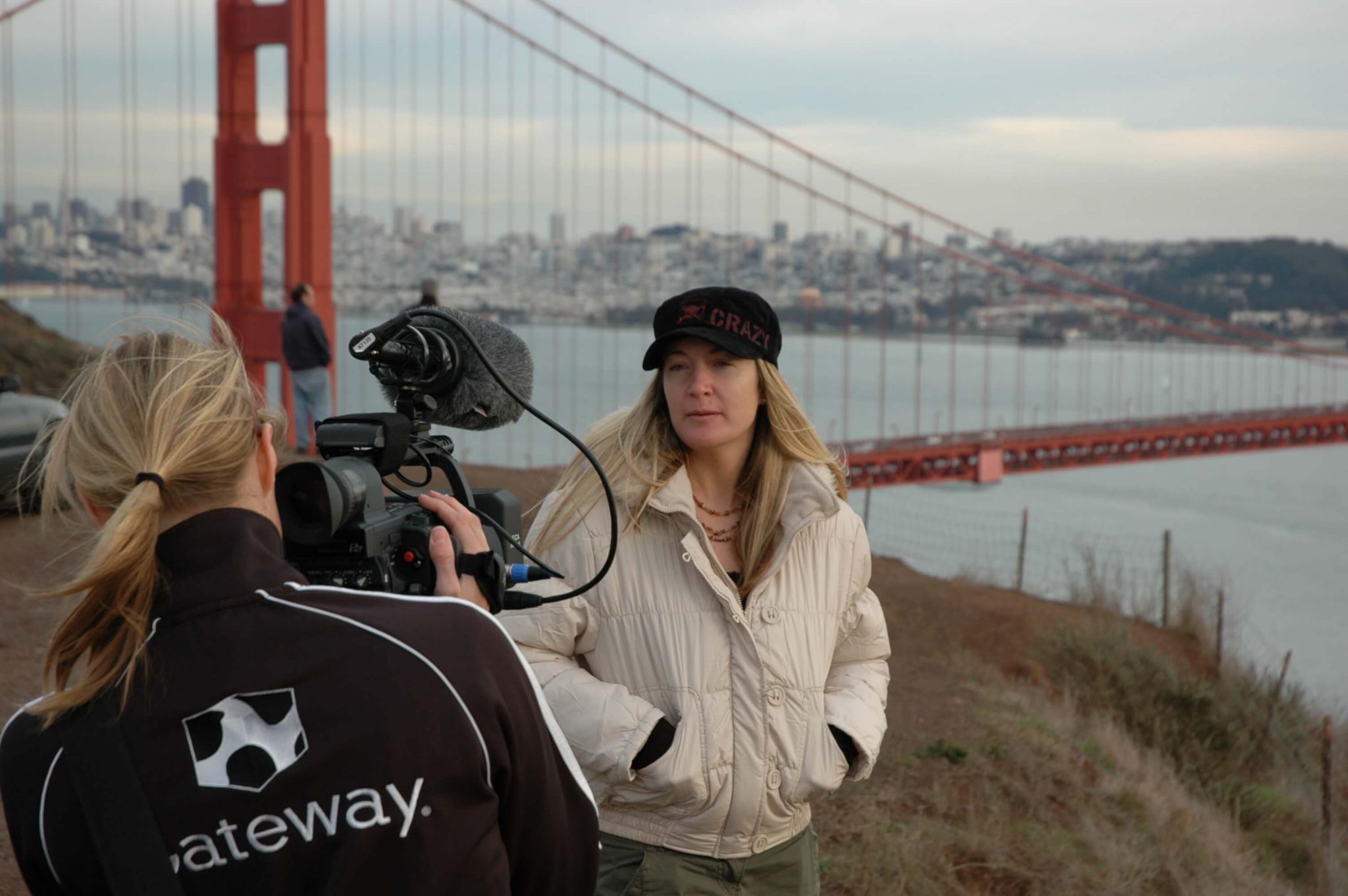
OBI dates its founding to 2001. In 2006, she brought the agency back to the Midwest, opening in Omaha. The geographical turn matters because her childhood version of success had come with a New York address. The real business found another place to belong.
A promise meets the help desk
One of O’Brien’s formative lessons came from marketing a digital-home product with Gateway. The idea was ambitious; the customer support experience could not sustain the promise. Outsourced technical support contributed to disappointed customers. An attractive proposition had run into the mechanics of delivering it.
“The experience is the brand,” she says. It is a compact sentence with inconvenient consequences for anyone hoping that marketing can remain safely inside the marketing department.
Consider the example she has given of an order confirmation that fails to arrive after a platform change. Someone has missed a setting. The customer calls to find out what happened. A small internal omission becomes a public experience, consuming time on both sides. The advertisement has no authority over that encounter.
“The experience is the brand.”
Mary Ann O’Brien
Her answer is to examine the customer’s journey before sending the assignment to the creative team. The research looks at experiences over time, including after a sale. It asks where confidence develops and where it disappears. A brand’s practical obligations become visible in the places a campaign alone cannot repair.
That perspective gives O’Brien’s work an operational cast. The business has to understand what it is asking customers to trust. A slogan can travel through the company quickly. Making the experience live up to it requires more people to agree about what needs doing.
Asking is the easy part
O’Brien developed the O’Brien Voice of the Customer and Voice of the Employee studies around that attention to experience. Her method uses research to connect what people say with decisions a business can make. The customer’s perspective becomes part of the strategy before the messaging takes shape.
She has described research as a way to reach underlying beliefs, rather than merely collect the answers people think an interviewer would like. That distinction appeals to someone who reads for ideas as well as information. She has spoken enthusiastically about The End of Average, a book that prompted her to question familiar assumptions.
There is a useful tension here. O’Brien began with considerable confidence in what she wanted to become. Her professional method makes room for discovering that a business has misunderstood what somebody else wants. Ambition gets the project started. Curiosity has to keep it honest.
- AskFind out what customers need.
- ListenUnderstand the experience they describe.
- DeliverUse that understanding to guide the business.
Her book, Ask & Deliver: Discover the Heart of Your Business by Listening to the Voice of Your Customers, was published by Forbes Books on December 5, 2023. Its 208 pages follow the evolution of her research method from work with Gateway through different clients and industries.
The book also examines what happened when she applied the method to her own agency. That is the part an adviser might be tempted to leave out. Asking other businesses to accept scrutiny becomes a more substantial proposition when you submit your own decisions to it.
O’Brien has taken the conversation into public discussions, too. Her video series includes interviews with business leaders about customer focus, brand awareness and rebranding. One video examines OBI’s customer research work with Lenovo. These are practical questions that change as the business changes: who is buying, what do they value, and what needs to happen next?
Her role in those conversations extends beyond directing an agency. She is also explaining how a business can learn. Research produces information; leadership determines whether anybody acts differently because of it. The second task gives the first its commercial purpose.

Omaha, with the world still in view
O’Brien’s strategic work has included Intel, Microsoft, Sony and Lenovo, alongside organizations rooted in Nebraska. Her career shows how a particular home city and a broad field of work can coexist. Moving to Omaha did not require making Omaha the outer boundary of her interests.
Her community involvement has included six years on the Omaha Chamber board and work with the Business Ethics Alliance. Ethical growth is a recurring interest, and she has identified a Better Business Bureau Integrity Award as a defining moment. For someone whose work concerns promises, that attachment has a certain consistency.
In 2023, she joined the Omaha Business Hall of Fame. The recognition placed her career in a permanent exhibit at The Durham Museum, alongside the other honorees that year. A childhood ambition had acquired a public history.
Her own account of the celebration was full of people. College friends came from Chicago, Atlanta, Minneapolis, Austin and Omaha. She thanked her mother for setting her moral standards and her father for shaping her love of business. She also thanked her family, colleagues and clients.
The list makes the occasion feel less like a solitary arrival. These were people who had known her through different chapters, including before there was an agency to celebrate. The professional title remained hers; the evening belonged to a much larger group.
Family time has its own geography. She and her family enjoy Okoboji, travel and time with friends. The career has plenty of corporate names in it. The personal map contains places where a job title is presumably less useful.
The tools change. The question stays.
In 2026, O’Brien was discussing artificial intelligence with the same concern for relevance that runs through her earlier work. She sees uses for faster research, testing, personalization and production. She also worries about generic messages multiplying more efficiently than anyone needs them.
Her emphasis is on a recognizable point of view and human judgment. A team still has to decide whether something connects with another person. The technology can accelerate work; the people using it have to know what deserves their attention. The argument follows naturally from a career spent investigating the difference between what a company broadcasts and what somebody experiences.
By OBI’s 25th anniversary, she was also describing a change in her own management. Productivity had become more important to her than monitoring how people arranged their working day. The founder who once concentrated on outworking everyone had become more flexible about how professionals get results.
She has encountered less flexible assumptions from others. Visitors to her Omaha office asked whether her father or husband had started the business. The person conducting the tour, with her own name on the company, had apparently been insufficient evidence.
“You can just sit at the table,” she says. The advice suits someone who assigned herself a seat decades before there was a table. But the adult career adds another obligation: once you are there, listen carefully. People will tell you what the business has promised them. Then comes the work of keeping it.