Before Mike Haywood became a colleague of Kyle Salem, he had homework. Salem asked the future chief financial officer to arrive at his interview with a solution to a math problem. Most applicants prepare a polished account of their strengths. Haywood had an additional assignment: bring an answer.
It is a small story, but a useful entrance into Salem’s world. A problem puts thinking on the table. A résumé tells you where someone has been; a discussion about a solution gives you something to work on together. Haywood remembered that interview years later, alongside the puzzles that continued to make their working relationship interesting.
Salem now runs CQuence Health and Cassling in Omaha. His title puts him in the familiar company of executives concerned with strategy, investment and growth. His route there is less tidy than a business-school case study might suggest. He trained as an engineer, became a research scientist, joined a regional business, learned from its founders and eventually took responsibility for running it. The classroom kept turning up along the way.
A scientist acquires a different set of problems
At Case Western Reserve University, Salem graduated summa cum laude in biomedical engineering and went on to earn his doctorate in 2002. His next setting was Siemens Medical Solutions, where he worked as a scientist and manager. He managed research collaborations with institutions including Duke, Emory, Princeton and the University of California, Davis.
That is a career built around working across institutional boundaries. A research collaboration asks people with different responsibilities to agree on a problem worth solving. The scientist has to understand the technical work, but the work also has to travel between organizations. Even a sound idea needs people who can explain it, organize it and keep the conversation going.
In 2005, Salem joined Cassling as Director of Clinical Imaging Technology. Subsequent positions included Vice President of Advanced Imaging and Vice President of Corporate Strategy and Development. Read together, the titles describe an expanding field of responsibility: first a technical specialty, then a broader view of the business surrounding it.
He also completed the Kellogg Management Institute at Northwestern’s Kellogg School of Management. The scientist was adding another vocabulary. In a company, technical knowledge sits beside questions about customers, employees, costs and priorities. Each has its own demands on the person expected to make a decision.
The education that came without a diploma
Salem’s account of his own business education gives considerable space to three people: Bob Cassling, Ken Vetter and Mike Cassling. When he wrote to customers after becoming president in 2017, he credited them with some of the most important lessons he had learned in business. He particularly valued the opportunity to sit with Bob and hear his thinking about customers and service.
There is something pleasantly unceremonious about that picture. An executive education can happen at a management institute. It can also happen when someone who built a company takes the time to explain why it works. The second sort rarely supplies a certificate suitable for framing, although it may prove just as hard to forget.
His 2017 appointment made the division of work explicit. Mike Cassling would remain CEO, concentrating on the company’s direction and its relationships. Salem would assume responsibility for day-to-day sales and service operations. The promotion gave him a specific job to do inside a continuing partnership.
In his own message, Salem emphasized employees, customers and the culture established before him. He also made a plain commitment to return calls. “My door is always open,” he wrote. It was the kind of promise whose credibility would be tested in ordinary working hours, rather than in the announcement of an appointment.
“My door is always open.”
Kyle Salem, in his 2017 message as Cassling president
The doctorate has a sense of humor
Mike Cassling offered a revealing aside in a 2019 company anniversary reflection: Salem disliked having the PhD attached to his name. The detail sits nicely beside a career in which that qualification is routinely part of his introduction. A doctorate may be useful on a biography. Its owner can still prefer a conversation without the extra syllables.
The distinction helps explain why Salem’s public work has so often involved exchanging ideas. On the Cassling Academy Podcast, he hosted conversations with executives, entrepreneurs and other industry figures. One episode brought Bellevue University’s Mike Freel into a discussion of leadership, emotional intelligence and professional development.
An interviewer has a different task from a speaker delivering a prepared argument. The value of the conversation depends partly on the next question. A guest can bring expertise that changes the direction of the discussion. For an executive whose working life began in research collaborations, that format offers a familiar pleasure: someone else knows something worth finding out.
Putting learning on the calendar
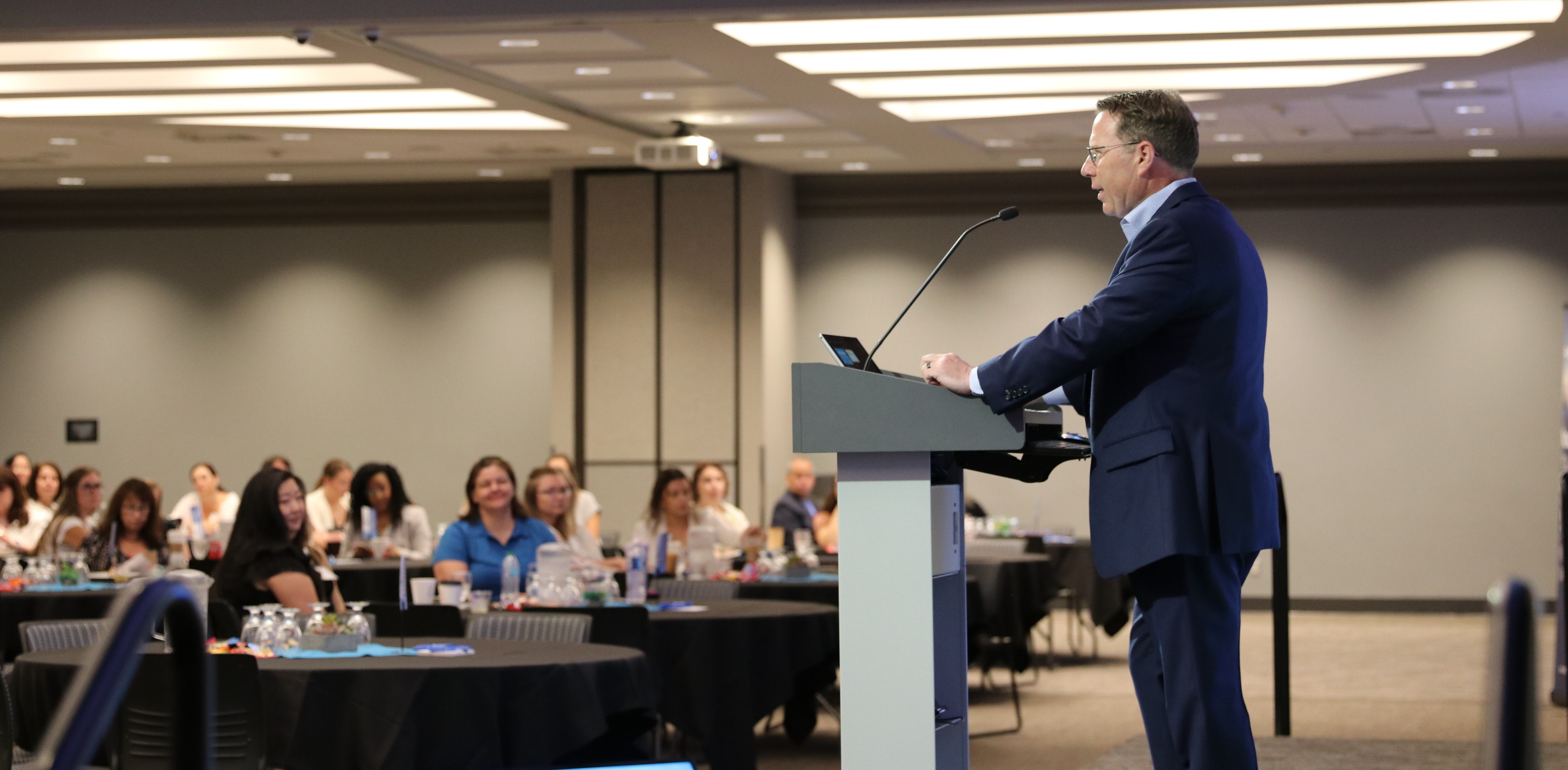
In January 2019, Salem announced the Cassling Leadership Institute, developed with Bellevue University. It extended the company’s education work to executives, board members and other organizational leaders. The format was practical: quarterly webinars, certificates and a curriculum organized around the problems people face while managing others.
The year’s subjects included leadership practices, organizational change and performance. One session asked participants to distinguish between what they could control, what they could influence and what lay beyond either. That is a useful exercise for anyone with a busy calendar and an exaggerated sense of personal jurisdiction.
A program like this gives development a date and a place. Learning becomes something a person can attend, rather than a worthy intention postponed until the workload improves. It also lets people return to basic questions without having to pretend that a senior title has already supplied every answer.
By August 2025, CQuence’s second annual Summit was bringing portfolio leaders together for another kind of classroom. Its speakers included Vincent Chapman, the Savannah Bananas’ dancing umpire, and Sarah Wirth of Ecsell Institute. Culture, accountability and leadership shared the agenda. The presence of a dancing umpire suggested that the day would not be entirely devoted to solemn nodding.
Salem described the gathering as an opportunity for founders and CEOs to learn from others walking a similar path. The appeal is straightforward. Another entrepreneur may recognize a difficulty before it has acquired a neat name. A useful peer conversation can begin where a polished presentation stops.
When the people become the owners
Salem became Cassling’s CEO in 2023. In December of that year, CQuence announced that he would succeed Mike Cassling as its CEO as well. Mike continued as executive chairman. Salem’s new brief included aligning CQuence’s portfolio companies and business units with its strategy and leading their growth and development.
The organizational story acquired another chapter in 2025. CQuence transitioned to 100 percent employee ownership through an Employee Stock Ownership Plan, effective September 15. Its leadership team and daily operations continued. Ownership changed while the people responsible for the work kept doing it.
CQuence’s ESOP took effect September 15, 2025.
Mike Cassling presented the move as a way to preserve the company’s culture and keep decision-making in Omaha. Salem connected it to service and succession. For a business that supplies other companies with guidance, capital and professional support, its own continuity is part of the proposition.
There is an interesting symmetry here. Salem learned from people who had built a business over time. Now he leads a company whose ownership structure is intended to extend that business beyond its founder. Mentorship and succession both ask a person to take the future seriously enough to prepare somebody else for it.
Omaha gets another classroom
In January 2026, CQuence announced its partnership with UNeMed and UNeTech Institute on the Steel Works Health Accelerator. The program offered founders mentorship, training, workshops and individual coaching. Pricing, capital planning, commercialization and strategy road mapping were among the subjects.
“Being the founder of a startup company can be a lonely place,” Salem said. His emphasis was on teaching people to anticipate difficulties. An idea can be exciting while the business around it is still unfinished. Someone has to decide what it costs, who might buy it and which step should come next.
Resources for the next stage.
Decisions, priorities and plans.
Finance, people, marketing and IT.
CQuence’s three forms of business support, shown as a model rather than a measurement.
On June 10, six companies delivered their final presentations at Omaha Catalyst. At the event, Salem recalled arriving in Omaha 21 years earlier and wondering why the city could not become a national hub in his field. The accelerator gave that old question a present-tense setting: founders, advisers and companies in the same room.
His local commitments also include a place on Jesuit Academy’s 2026-2027 board. The connection belongs alongside the executive roles without needing to become a grand theory of his character. It is another named responsibility in the city where he works.
Salem’s career has accumulated bigger titles, but its recurring activity is smaller and more recognizable: helping people work through a problem. Sometimes that means a business strategy. Sometimes it means a room of founders comparing experiences. Once, for a prospective CFO, it meant arriving at an interview with the homework done.
Keep the conversation going
- CQuence Health
- Kyle Salem on LinkedIn
- Cassling leadership
- Salem’s 2017 letter
- Cassling Academy Podcast
- Watch: Salem and Mike Cassling
- Steel Works first cohort
- CQuence’s employee ownership announcement
Photograph: CQuence Health.