The first version of Findhelp had a remarkably ordinary ingredient: an Excel spreadsheet. In 2010, Erine Gray sat in a small office near his Austin home, entering local assistance programs by hand. He wrote Python scripts to move those entries into a database. Before there was a national network, there was a programmer checking what help existed nearby.
- People search for free. Institutions pay for coordination software.
- The directory leads to referrals, benefits applications and deliveries.
- The useful measure is what happens after the handoff.
Gray had already encountered the problem from the other side. His mother developed a brain disease that left her needing care. Finding support became part of the family’s work. Later, working on Texas benefits systems, he saw the same difficulty at institutional scale: assistance could exist without being easy to discover or access.
That distinction explains the company better than the language of healthcare technology does. A service may be available somewhere. A person may qualify for it. Between those two facts sits a surprisingly large administrative job.
The aunt who filled in for Uncle Sam
Gray called the business Aunt Bertha. In a 2014 TED interview, he explained the joke: “Aunt Bertha picks up where Uncle Sam leaves off.” The name suggested a helpful relative who knew where to turn. The product attempted to give that knowledge an address, a search box and a ZIP code.
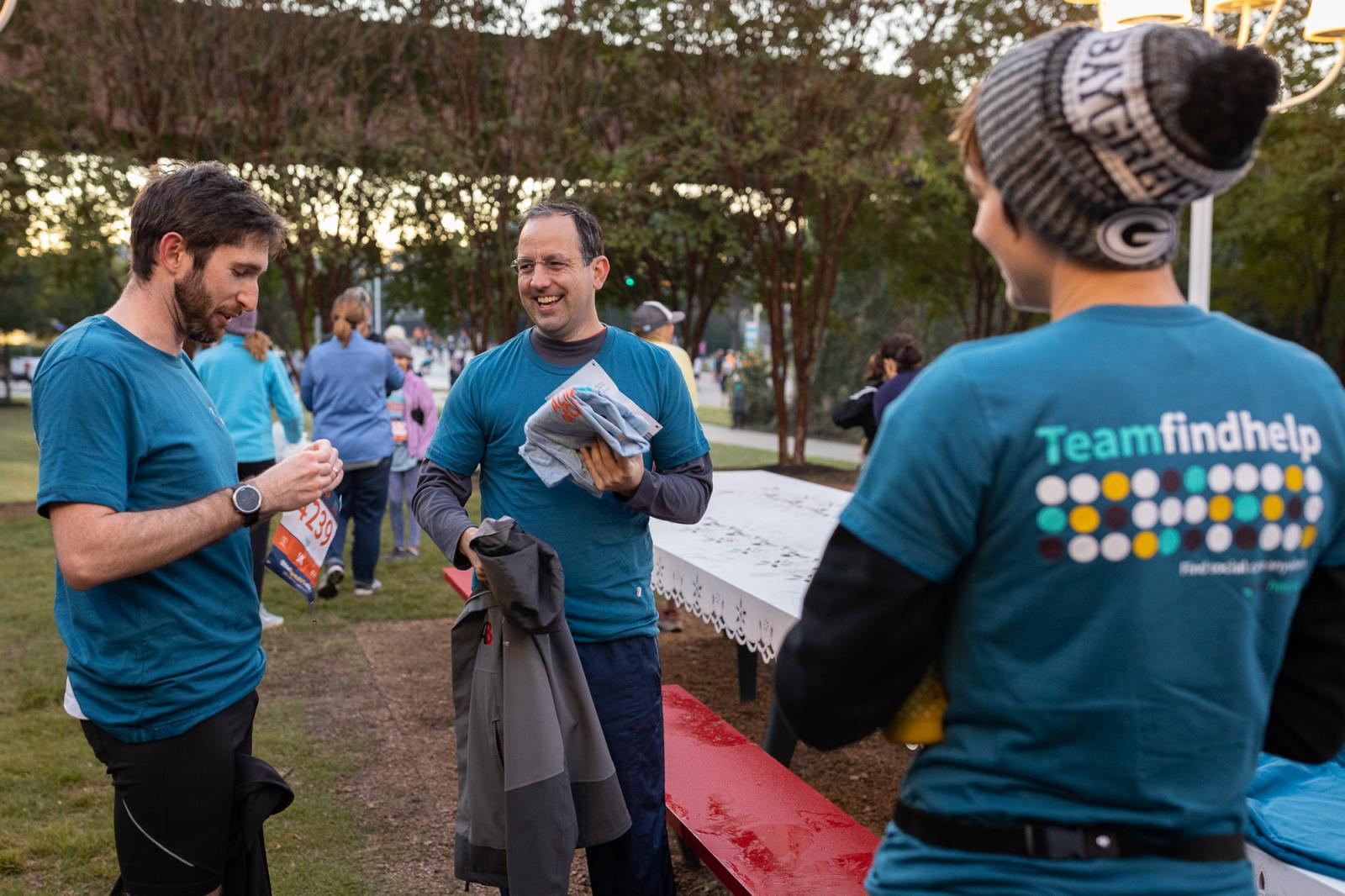
The name changed after a practical experiment. During the pandemic, the team launched Findhelp.org with newly available COVID-related resources. The company says people found the address easier to remember. Its public sites were consolidated there, and in November 2021 the business announced its own rebrand. The helpful aunt gave way to an instruction.
Today, someone can enter a ZIP code and look for food, housing, transportation or other free and reduced-cost services. Public self-navigation requires no login. Community organizations can claim their listings and update information. Findhelp says they can participate without signing a contract or abandoning their preferred system of record.
The customer is often the helper
The paying customer is usually an organization with people doing this work repeatedly: a hospital, health plan, government agency, college or employer. Findhelp sells a branded platform for screening needs, managing referrals and reviewing outcomes. Its expertise lies in maintaining resource information and fitting social care into the systems those organizations already use.
Consider Geisinger’s Neighborly platform. At a June 2026 Findhelp summit, Geisinger described integrating the resource tool into its medical record and building a social needs hub staffed by community health workers and behavioral health care connectors. The software gives those workers somewhere to search and somewhere to record what happens next. The conversations remain their job.
- 01IdentifyWhat does this person need?
- 02MatchWhich program can help?
- 03ConnectMake the handoff.
- 04Follow upRecord what happened.
This is the meaning of a closed-loop referral: the handoff has a trackable aftermath. Unite Us sells screening and referral software too, so the feature alone does not distinguish Findhelp. Its particular proposition combines public access, an existing national directory, configurable partner networks and paid institutional workflows.
The distinction matters to a small nonprofit as much as to a large health system. Appearing in a directory and actively managing incoming referrals require different amounts of effort. Findhelp offers an open network alongside more deliberately curated partner networks. For a buyer, the practical question is which organizations will participate in the workflow, who maintains their information and who notices when a request stalls. National coverage supplies a starting point. A local relationship determines what happens when a specific person needs a specific service on a specific afternoon.
There is independent evidence of customer satisfaction. KLAS Research named Findhelp its 2026 winner for Social Determinants of Health Networks, with a score of 89.3 out of 100. That is a technology customer rating. It should not be mistaken for a percentage of people whose needs were resolved.
Free at the front door. A subscription behind it.
The business model makes an unusually useful separation. The person looking for a food pantry can search for free. The organization coordinating thousands of such encounters pays for the software. Published general-sector licenses run from $5,400 annually for Basic to $75,000 and up for Enterprise+, with intermediate tiers at $24,000 and $50,000.
Unlimited users, searches and referrals. Sector pricing and additional fees apply.
Those figures need their qualifications. Healthcare providers and payers, governments, United Way/211 organizations and K-12 districts have sector-specific pricing. Implementation, ongoing support, added features and additional states can cost extra. Buyers should budget for the whole deployment. Unlimited users, searches and referrals are included in annual licensing.
The financial backing is substantial. In June 2021, the company announced $27 million led by Warburg Pincus. In March 2026, TPG announced an approximately $250 million investment through The Rise Funds. The latter announcement described plans to expand access and strengthen the platform; it did not disclose a valuation.
A directory is the beginning of the errand
Findhelp’s subsequent products follow the same unfinished errand. Fulfillment lets staff order goods and services, manage approvals and payments, and track delivery. That can mean arranging food or transportation instead of handing someone a list. Its October 2025 acquisition of Uno Health added capabilities for benefits eligibility, applications, submission and recertification.
Behavioral health partnerships extend the idea. SimplePractice contributes availability and scheduling; MiResource contributes maintained provider information. In July 2026, Findhelp also announced an AI navigation beta for staff, designed to search multiple needs in ordinary language. Human navigators review matches. The announcement described an evaluation program, so its promised efficiency deserves measurement.
A service may exist. A person may qualify. Connecting those facts is the work.
The lesson another organization can copy is straightforward: establish reliable local information, put it where staff already work, and assign responsibility for follow-up. Buying a directory does not establish those habits. A useful evaluation asks whether the receiving organization responded, whether the person qualified and whether assistance arrived.
There are also limits that software cannot negotiate away. A housing referral cannot create an empty apartment. A pantry needs food and staff. Eligibility rules still apply. Findhelp can make those constraints more visible and the coordination less cumbersome. Its value ultimately depends on the people and programs at the other end answering the door.