In July 2023, Chris Dillie gave himself a different job. After nearly two decades building ESO, he moved from chief executive to executive board chair. Eric Beck would run the company. Dillie would help with its longer view. A founder who had spent years finding people, customers and capital was now making room for somebody else to make the daily decisions.
There is a useful way to read that change: as another act of company building. A business that depends forever on its founder has a rather inconvenient design flaw. Eventually, the founder needs a holiday. Or dinner with the family. Or simply a successor who has been given enough room to become one.
Dillie’s career had already involved several changes of direction. Volunteer service, emergency operations, real estate and software all feature in it. The connecting thread is a taste for practical problems, including the human ones that arrive when an organization grows.
The attraction of a difficult puzzle
Dillie’s public work history reaches back to the Sweetwater Volunteer Fire Department, where he lists service as a firefighter and first responder from 1989 to 1991. Later came Austin/Travis County EMS. Before software became his principal occupation, he had accumulated 13 years of experience in emergency-service operations, including a commander’s role in Austin.
That background gave him a view of organizations from inside the working day. His responsibilities included quality initiatives involving 1,300 providers. It is a substantial difference in vantage point: a person selling software can describe a workflow; a person who has managed the work knows how many opportunities there are for the workflow to misbehave.
He also worked in real estate before pursuing ESO. The attraction of his earlier public-service career remained. In a 2016 interview, he described enjoying the combination of helping people and having to think on his feet. The intellectual appeal was wonderfully unpolished: “you’re constantly solving puzzles.”
That phrase is a better introduction to him than a collection of executive titles. A puzzle has particulars. Somebody has to understand the pieces, decide which belong together and keep working when the first arrangement fails. Software offers plenty of all three.
“you’re constantly solving puzzles.”
Chris Dillie, 2016
A company acquires more moving parts
ESO was founded in Austin in 2004. Dillie was a co-founder, initially working in marketing and sales before becoming president and CEO in 2009. His route to the top job included persuading people to buy what the business made. That experience matters in a company whose customers have jobs to finish beyond attending a software demonstration.
The company’s growth became visible in stages. By 2016, ESO had more than 100 employees in the Austin area. Investment from Accel-KKR brought resources for further product development and expansion of the team. An early venture was becoming an organization with departments, hiring plans and the decidedly less romantic business of coordinating them.
The acquisition of FIREHOUSE Software in October 2017 added another kind of scale. FIREHOUSE, founded in 1997 and based in Urbandale, Iowa, was used by approximately 11,000 fire departments. ESO hired the employees on the FIREHOUSE team as part of the transaction. The purchase brought an established product and the people who knew it into the company.
For Dillie, the argument for the acquisition included making data capture easier and improving operational efficiency. Those are modest-sounding ambitions with demanding consequences. A promise to save somebody time has to survive an ordinary workday. The customer is unlikely to award extra points for the elegance of the investor presentation.
In May 2018, he was named a Central Texas finalist for EY’s Entrepreneur Of The Year award. His response credited the ESO team and the distance the company had travelled from its beginnings. The distinction was a regional finalist selection, a useful marker of recognition during his years leading the business.
Belfast gets the whole application
In October 2019, Dillie was in Belfast as ESO announced plans for its first engineering centre outside the United States. The proposal was to create 120 jobs over three years. Invest Northern Ireland offered £780,000 in support. This was a recruitment plan, with a timetable and public commitments attached.
The first seven employees were already in place. Dillie described a full software operation, with product managers, business analysts, software engineers and testing engineers. Crucially, he said the Belfast team would receive complete applications to work on. The plan gave the new office responsibility for whole pieces of the product portfolio.
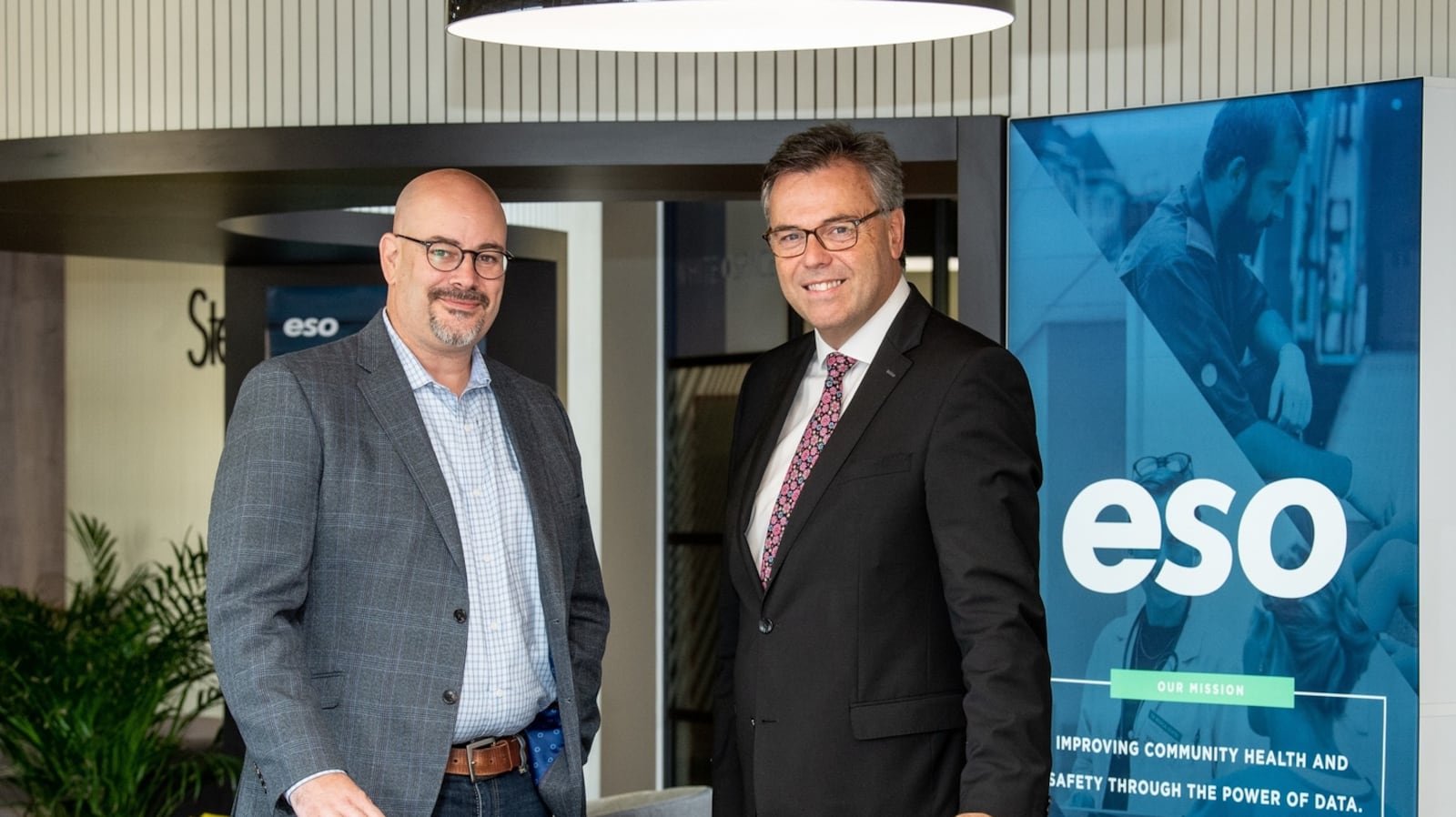
There was a geographical logic to the decision. Dillie pointed to Northern Ireland’s pool of technical talent. ESO was building products for North American customers while choosing another place to develop them. The distinction is easy to lose in an expansion announcement: opening an engineering office abroad does not automatically mean winning customers in that country.
The announcement also provides a glimpse of his preferences about working space. He wanted room for people to meet and create, rather than fitting the maximum possible number of desks into a floor plan. Even an ambitious hiring programme, apparently, need not turn the office into a test of everyone’s ability to reverse into a chair.
The people arrive with the deal
Expansion continued through investment and acquisitions. In March 2021, ESO announced an agreement for a strategic investment from Vista Equity Partners. Accel-KKR would continue investing alongside Vista. For Dillie, the new partnership meant more capacity for technical development and customer experience. The terms were not disclosed.
The same year brought the acquisition of Emergency Reporting, announced in June. The deal joined businesses serving first responders and added another team’s knowledge to ESO. In March 2022, ESO acquired Toronto-based Interdev Technologies and said it would retain the Canadian office. Each transaction enlarged the practical work of running the company across locations and teams.
Acquisitions have a ceremonial beginning and a much longer ordinary life. The announcement is brief. The questions about who decides what, which practices survive and how people work together can occupy considerably more of the calendar. Dillie’s comments about leadership repeatedly return to that less photogenic work.
In an endorsement of the book Be a Better Team by Friday, he described working with the leadership consultancy BLUECASE through thirteen acquisitions. He recalled a period in which the customer base grew from 500 to more than 10,000, the workforce from 50 to more than 400, and the business from one location to five. Those figures describe that stretch of the company’s development, rather than its current size.
His endorsement emphasized practices used in daily operations. There is something telling about a founder choosing to praise help with the mechanics of working together. More people create more possible conversations, more interpretations of the same instruction and more places for a decision to stop travelling. Growth gives a business extra hands. It also gives it extra elbows.
An editorial reading of Dillie’s emphasis on leadership, communication and cultural integration.
Communication has to arrive on time
BLUECASE’s account of its work with ESO describes strategic planning, leadership development, group coaching and executive coaching. It also describes the difficulty of maintaining a company’s culture as acquisitions increase its size. This is the business behind the business: arranging the conditions in which people can do the work they were hired to do.
Dillie made the connection to his earlier career explicit. Speaking about emergency-service settings and business, he emphasized communication that is clear, timely and done properly. The thought is straightforward enough to escape notice until one of those qualities is missing. A beautifully clear decision delivered too late still leaves people waiting.
His recruitment decisions reflected the same concern with organizational capacity. In September 2019, ESO announced Becky Logan as vice president of people and Lauren McQuade as vice president of marketing. Dillie described both as essential roles during rapid growth, linking the appointments to culture, recruitment and the company’s ability to serve customers.
It is easy to attach a founder’s name to everything a company achieves. The appointments offer a more useful picture of his work: choosing specialists, giving functions a leader and building a business with people responsible for different parts of it.
A successor with time to learn the room
Eric Beck’s move into the executive team in June 2022 supplied another piece of that structure. He became president after eight years on ESO’s board. Dillie was bringing an established colleague closer to the company’s daily operations, with responsibility for helping it advance its plans.
The following year, Beck succeeded him as CEO. ESO announced the planned succession in August 2023, with Dillie taking the executive chair role. A board member had become president before taking the chief executive’s job. The sequence gave the transition a period of overlap, rather than making the appointment someone’s first encounter with the organization.
In his July letter, Dillie described the personal side of the change: more family time after years of trips, long days and divided attention. He would continue supporting leadership and longer-term strategy. He also looked back to ESO’s beginnings in an Austin coffee shop. The business had grown large enough to require a different relationship with its founder.
That is a fitting place to leave this chapter of his story. The early work asked Dillie to see a business where there was only an idea. The later work asked him to fill it with other people’s ability. By 2023, making room for the next chief executive had become part of the job.