At an Austin awards ceremony in June 2006, David Winn had a slightly awkward reason to congratulate the winner. His company, e-MDs, was one of four finalists for a corporate growth award. The award recognized sustained growth and financial performance among organizations with revenues below $500 million. Motion Computing took the prize. Winn pointed out that e-MDs often recommended Motion to its customers. In a small way, he had helped the competition win.
It was a good joke for a software founder. The useful product does not always occupy the whole stage. Sometimes it helps somebody else look good. Winn acknowledged the irony and congratulated Motion. The trophy went elsewhere; the relationship could carry on perfectly well.
That moment offers an appealing entrance to a career usually described in job titles: physician, founder, chief executive, chairman. Winn founded eMDs in 1996 and retired in connection with its sale in 2015. Between those dates, his public record returns to a practical concern: how to make software useful to the person sitting in front of it.
A signature before the slogans
In February 2005, Winn put his name on a page of independent signatories to the Agile Manifesto. He added the initials M.D. and identified his company as e-MDs. The signature placed a physician founder inside a discussion about how software should be built.
His accompanying comment emphasized the range of things a product could do, the ease with which people could use it, and the value created by bringing those qualities together. He also said the company shared selected intellectual property components with the open source community. The ambition extended beyond keeping everything inside the company fence.
“We espouse an egalitarian philosophy”
David Winn, independent Agile signatory, 2005
The word is striking in a business built around specialized expertise. It suggests an interest in participation and access. The comment is a statement of intent, rather than a scorecard of every subsequent decision. Still, it gives the story a center: Winn chose to describe his company through the way it built and shared software.
A signature is a modest artifact. It costs little and proves less than a working product. It does, however, preserve a founder’s priorities before later transactions and changing titles crowd the page. Winn’s priorities were already expressed in language that an ordinary user could understand.
The arithmetic of a working day
Winn had been making a business argument for software before that signature appeared. In March 2001, he published an article called Leaving Money on the Table? The byline identified him as founder, president and CEO of e-MDs in Cedar Park, Texas.
The title was wonderfully unromantic. Here was an entrepreneur willing to discuss the purchase decision through office economics. His argument examined whether a smaller organization could justify the cost of a system by capturing work and revenue more completely. Computers, in this account, had to earn their place.
There is a particular discipline in selling something that people must use while doing another job. A feature may look persuasive in a demonstration and still impose extra work on Tuesday afternoon. The business case has to survive that afternoon. Winn’s early writing placed measurable returns alongside the product itself.
That helps explain the shape of eMDs as a business: connected applications, office management, and the movement of information between tasks. The promise depends on what happens between screens as much as what appears on any one of them. A handsome menu is pleasant company. It does not finish the work.
Winn’s stated priorities, illustrated. No performance data implied.
A chair beside the screen
By the company’s 2011 annual meeting, there was a community gathered around those applications. Attendees included people from smaller offices as well as larger organizations. Alongside the scheduled sessions was a live computer lab, with employees available to sit down and help people work through questions.
The scene is worth pausing over. A conference can make almost any product appear orderly. A live question at a keyboard introduces the untidiness of actual use. Somebody has arrived with a task, a habit, or a difficulty. Another person has to understand it well enough to help.
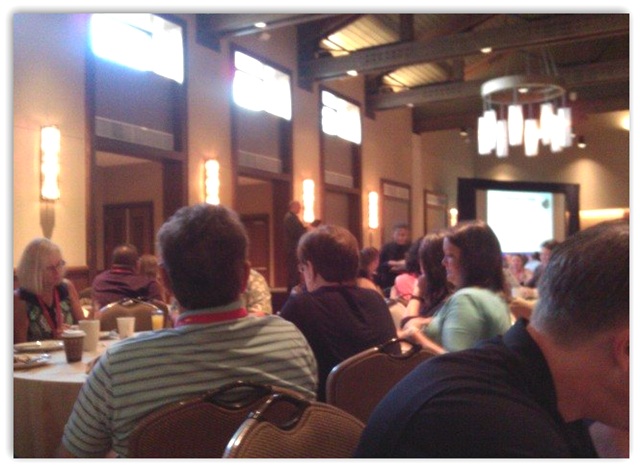
It would be too easy to turn a friendly meeting into a complete theory of company culture. The more useful observation is smaller: the company Winn founded provided a place for that exchange to happen. A presentation could introduce a capability; a chair beside a computer could help someone use it.
The founder changes seats
Winn’s place inside the company changed over time. In 2008, he stepped down as CEO and continued as chairman. He said he intended to expand his philanthropic endeavors. The operating job passed to Michael Stearns, who had been serving as president.
Four years later, Winn resumed the CEO post. By 2014, he was publicly identified as founder, chief executive and board chairman. Those titles describe different responsibilities, even when they sit beside the same name: starting the organization, running it, and overseeing its direction.
His educational path included a bachelor’s degree from the University of Texas and a medical degree from Baylor College of Medicine. His career subsequently placed him in the software business, where knowledge of a customer’s work has to be translated into choices about products, employees and spending.
There was evidence of the company reaching beyond its Texas beginnings. In 2013, Huron Valley Physicians Association selected e-MDs’ Solution Series for its 700 physicians in several Michigan counties. The selection was an organizational decision on a different scale from a single office buying a program.
Growth complicates the founder’s original bargain. More customers bring more routines and more competing requests. Knowing the work remains valuable; deciding whose request comes first becomes a management problem. The distance from a user’s chair to the executive’s chair can be surprisingly short, and surprisingly difficult to cross.
Founds e-MDs
Steps back from CEO; continues as chairman
Resumes CEO role
Retirement announced with the sale
The difficult art of leaving
In 2015, Marlin Equity Partners acquired e-MDs and combined it with MDeverywhere, already part of Marlin’s portfolio. Winn’s retirement was announced with the deal. Corum advised e-MDs, with Nat Burgess leading the transaction for the advisory firm. Jim Brady was named interim CEO of the combined business.
The combination joined different kinds of experience. e-MDs brought its software; MDeverywhere brought services and operational capabilities. The combined organizations served more than 13,000 practitioners and about 50,000 other professionals and staff. Those figures describe the combination at that point in time, rather than Winn’s original startup.
Patrick Hall, e-MDs’ executive vice president of business development, explained the logic through the two companies’ complementary abilities to deliver software and services at scale. A project already under way at e-MDs could move faster with the combination. The transaction had an operating argument as well as a change of ownership.
“I leave with the confidence that e-MDs customers are in good hands”
David Winn, 2015 departure statement
The sentence places customers inside the account of an exit. They would still have work to do after the founder left. A sale could change who made decisions without changing the immediate need for a dependable product and somebody to answer a question.
The financial terms of the 2015 acquisition were not disclosed. The visible endpoint of Winn’s executive chapter is therefore a handoff: new ownership, a combined organization, an interim leader, and a founder announcing his retirement. It is a substantial ending without requiring an invented number.
One year after the sale, the engineering team was still working through the consequences of expansion. In 2016, CTO Alan Ortego described the work of integrating three companies and standardizing their tools and workflows. Different applications had to become a more coherent working arrangement. The announcement had been a moment; the implementation was a continuing job.
That later account helps put the founder’s departure in proportion. Software keeps acquiring obligations. New owners inherit existing customers, older technical choices and the work of connecting what has been purchased. Winn could leave the executive role in 2015. The product still needed people to make decisions about its next version.
It is a useful perspective on the word founder. The title records a beginning. It stays attached to a person while the organization accumulates other authors, each responsible for decisions the first author will never make.
The company keeps its calendar
eMDs continued after Winn’s departure. In December 2020, CompuGroup Medical completed an acquisition announced at an enterprise value of $240 million. This was a later transaction, five years after his retirement announcement, involving a business that had continued to evolve.
The distinction matters to a personal story. A company’s later price records one moment in its corporate life. It does not establish a former founder’s wealth or proceeds from an earlier sale. Keeping the dates straight gives Winn’s contribution its proper boundaries and leaves room for the people who followed him.
His own chapter contains enough: a business founded in 1996, an early argument about making the numbers work, a public commitment to usability, years in different leadership seats, and an exit expressed partly as a responsibility to customers.
Then there is that Austin awards ceremony. Motion won. Winn could see that helping another company sell its product had contributed to the result. He found the joke, offered his congratulations, and let the winner have the evening. For a founder concerned with useful software, there are worse ways to lose a prize.
Follow the thread
Profiles, interviews and the company’s next chapters.
- David Winn on LinkedIn
- The 2005 Agile signature
- The 2014 Austin profile
- The 2001 business case
- The 2006 awards announcement
- The 2011 user meeting
- The 2008 leadership change
- The 2012 leadership change
- The Michigan selection
- The 2015 transaction announcement
- The combination explained
- The engineering work after the sale
- The 2020 acquisition
- Interview archive: MedTech Moments, episode 2
- eMDs company profile
- Company website