Ridge had a data warehouse. It had dashboards. It sold wallets and everyday carry gear across international markets. Yet, according to a Saras Analytics case study, some business questions still took ten days to answer. Employees pulled numbers, assembled slides, and reconciled competing definitions. A warehouse had solved the storage problem. Getting an answer remained a small expedition.
- Daton collects commerce data; Pulse prepares it; iQ makes it conversational.
- The target: brands juggling stores, marketplaces, advertising, inventory, and subscriptions.
- The practical lesson: agree on your metrics before asking AI to explain them.
That gap is where Saras Analytics has planted itself. The company combines data pipelines, prepared datasets, dashboards, consulting, and an AI analyst. Its pitch to growing commerce brands is straightforward: bring the scattered records together, settle what the numbers mean, and let people ask useful questions without joining an analyst’s queue.
The warehouse had no interpreter
At Ridge, the problem extended beyond slow reporting. Finance, marketing, product, and operations were looking through different windows. Revenue, margin, and customer cohorts could mean different things to different teams. Asking a machine to accelerate that arrangement would simply make disagreement arrive sooner.
Saras encoded Ridge’s business rules, product taxonomy, and metric definitions into its conversational setup. It connected an existing data foundation to iQ MCP, the bridge into tools such as Claude. It also built a reusable prompt for weekly business reviews and combined business metrics with Northbeam attribution data. The company reports that selected analysis turnaround fell from ten days to 45 minutes.
“Brands don’t spend enough time organizing their data.”
Connor MacDonald / CMO, Ridge
The detail to copy is the reusable review. Choose the questions your management meeting asks every week. Define their inputs and calculations once. Check the answers against known results. Only then automate distribution. That sequence turns a recurring reporting chore into something a team can inspect and improve.
Source records
Shared definitions
Business answers
Conceptual product map. Data preparation comes before the conversation.
Software born from repetitive work
The origin explains the emphasis. Saras began in 2016, founded by cousins Krishna Chaitanya, Abhiram Kolli, and Balaji Kolli, according to 2021 reporting. Its current leadership page names Krishna Poda as co-founder and CEO. The founders brought experience in enterprise architecture, financial data products, and analytics.

During the first two years, their consulting work repeatedly ran into manual data preparation. Building their own tools became a response to work they were already doing. Daton, the pipeline product, officially launched around 2020; Halo, an earlier commerce analytics offering, followed in 2021. The company’s own timeline places Pulse’s productization in 2024.
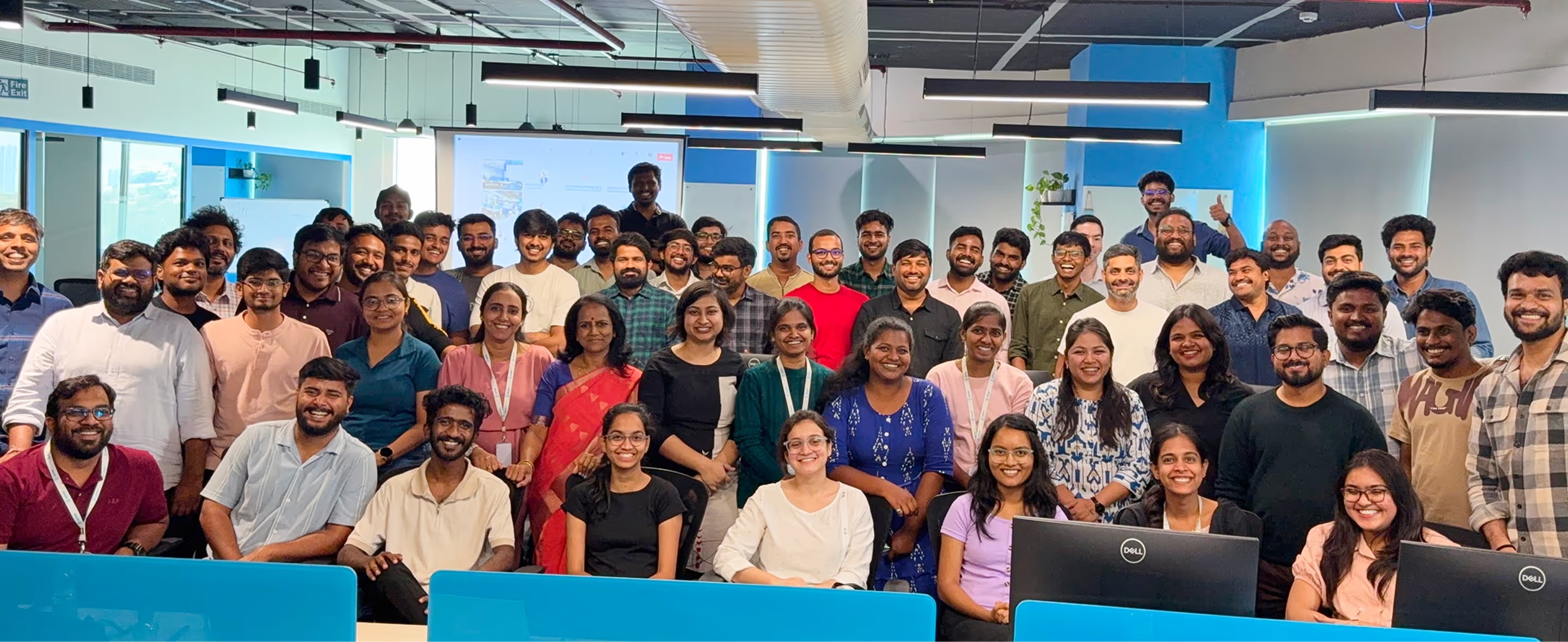
That history matters in a market full of separate tools. A merchant can buy connectors, a warehouse, dashboards, and AI access from different vendors. Someone still has to make the pieces agree. Saras sells software alongside the engineering and consulting needed to do that joining-up work.
A connector is only the beginning
Daton offers a catalog of more than 200 connectors, moving records from commerce and business systems into cloud warehouses. Its expertise sits close to the daily mess of selling: marketplace reports, advertising costs, subscription activity, product identifiers, and inventory. These are awkward ingredients for a single view of performance.
Pulse has been positioned as the prepared-data and dashboard layer. Saras iQ adds conversational analysis, including access through Claude and Slack. The advertised questions are concrete: contribution margin by channel, rising acquisition costs, products associated with repeat purchases, and stock ranked by margin and sales velocity.
Saras describes a validation process using 30 to 100 real client questions, expected SQL, and verified answers. Automated testing, manual refinement, client acceptance, and regression checks follow. The useful distinction from a bare warehouse connection is the business context around the data. A table name cannot explain how your company treats a bundle.
The price of an answer
The company says it serves more than 200 Shopify and Amazon brands. Its audience includes agencies as well as merchants, with finance, marketing, retention, and operations teams asking different questions of the same records. The products have different entry points. Published monthly pricing lists Daton Lite at $0 for one million rows, with basic connector restrictions; Growth begins at $95 for five million rows. Saras iQ Essentials starts at $1,999 a month and targets Shopify brands with $10 million to $50 million in annual revenue. Enterprise pricing is custom.
Saras iQ Essentials. Implementation scope and custom requirements need a separate conversation.
Those figures answer the subscription question. A purchasing decision also needs warehouse compute, historical loads, overages, custom sources, and implementation scope priced explicitly. Against Fivetran, Airbyte, or an internal pipeline team, Daton competes on integration work. Against a collection of analytics tools, Saras offers more of the surrounding data operation.
The expensive average
Faherty’s shipping problem shows what that operation can change. National carrier averages concealed differences between states during holiday peaks. Switching every parcel to premium service would protect against some risk while spending money where economy delivery still worked.
Saras built a dashboard with twice-daily carrier ingestion and state-level performance views. Its case study reports approximately $150,000 saved in two weeks, with roughly 30,000 shipments kept on economy service. The decision changed because the geography became visible. Faster access mattered because there was still time to choose a carrier.
Shipping savings reported in the Faherty case
Two-week holiday window / company-reported outcome
Another customer, supplement brand BPN, used Recharge subscription data to identify high-value customers who had stopped buying. Saras built a Customer 360 model; the customer-success team carried out targeted weekly outreach. The case reports $900,000 in incremental revenue and a 12% repurchase rate. The division of labor is instructive: the model found the audience, and people still had to contact it.
There are conditions attached to the idea. A team needs accessible records, agreed definitions, and people able to act. Daily refreshes cannot answer a question requiring minute-by-minute information. An automated answer also needs testing when products, channels, or accounting rules change.
Saras’ most transferable lesson is therefore pleasantly unglamorous. Pick a costly decision. Find the records that govern it. Agree on their meaning. Check the result. Then make asking easier. The conversation earns its place when it changes what happens next.