Sanjay Gala had already spent time with neural networks when selling software was still a future occupation. His master’s thesis, completed in 1993, concerned chip design using them. The detail gives his present job an unusual echo. After years spent learning how to sell, hire and build a business, the founder of SMARTe is working on AI again. This time, the machinery has to help somebody find a customer.
There is a pleasing lack of straight lines here. Gala went from design engineering to sales, co-founded Zycus in 1998, and started SMARTe in 2005. The engineering student did not disappear. He acquired a second education in what people will buy, what they will keep using, and how long a company can spend attending to the same stubborn problem.
His version of the entrepreneurial journey includes changes of direction, humbling experiences and gains that accumulate slowly. That is a useful corrective to the neatly edited founder biography. A career can look inevitable once someone has removed all the junctions. Gala remembers the junctions.
The engineer learns to sell an unfinished idea
Early jobs put him inside the semiconductor and networking worlds. He worked as a senior design engineer at Quality Semiconductor and Lara Networks. These were technical roles before the founder titles arrived, and they make the later move into commercial work more interesting. He had experience making a product before taking responsibility for persuading people to want one.
Zycus supplied the next set of problems. As co-founder and executive vice president, Gala built and managed field sales, business development and marketing. The responsibilities were outward-facing: finding customers, explaining a young business and making its proposition understandable. The engineer’s work now included the very human business of getting a meeting.
He helped grow Zycus into a profitable company with 125 people before moving on. That number describes an earlier chapter of the business, rather than its present size. It also gives some substance to the phrase “serial entrepreneur.” Before SMARTe, Gala had already participated in the less photogenic work of building an organization large enough to need departments.
He later managed Western Region sales at Verticalnet. Along the way, he earned an MBA from Golden Gate University in San Francisco. The combination of engineering, business study and field sales is a more useful description of his preparation than a single job title. Each required him to account for a different kind of failure: a design that did not work, a proposition that did not persuade, a customer who did not return.
neural networks & chips
Zycus
SMARTe
enterprise customers
A company financed by patience
When Gala started SMARTe in 2005, his ambition was to supply data as a service. Businesses needed useful information about the companies and people they hoped to reach. SMARTe would help them obtain it. The opportunity sat close to his own experience: someone could have a capable sales team and still struggle because its information was poor.
The funding decision was deliberate. Gala recalled being approached by investors and choosing to bootstrap anyway. In September 2020, he described the choice as difficult, made at the beginning of a road he considered uncertain. By then, the company was marking its fifteenth year. The milestone gave that early decision a little more weight than a slogan on a pitch deck.
A bootstrapped company still has to make choices about product, people and growth. Money continues to have opinions. For Gala, the public explanation of the business has stayed close to a practical question: can better information help a sales or marketing team do its work? It is a question that makes customers rather influential participants in the answer.
Parul Gala is SMARTe’s co-founder, with a background spanning web development, product and people operations. Her earlier work included PayPal and Agile, alongside startups. SMARTe therefore brought together commercial experience and the work of making software usable. A contact record may be accurate and still be awkward to find. A product has to survive both tests.
“build for the customer first, and the rest follows.”
Sanjay Gala, reflecting on starting SMARTe
The customer has moved. Has the database?
Gala’s business concerns an ordinary source of friction. People change jobs. Companies reorganize. A buyer who once approved a purchase may now work somewhere else. Anyone who has been sent a message addressed to their predecessor understands the problem without needing a diagram. Software can preserve the old answer with admirable efficiency.
His interest in sales intelligence extends beyond finding a telephone number. He has discussed information about a prospect’s technology, the tools already in use inside a business, and the context that helps a seller decide whether an approach makes sense. Those details connect the record to the reason for making contact in the first place.
The older SMARTe product names, InfoGenie and DataGenie, belonged to that effort. The present offering extends into enrichment, buying signals, integrations and AI agents. The language has changed as the software has developed. The enduring commercial problem is recognizable: a seller needs a reasonably current picture of the person and organization on the other side of the conversation.
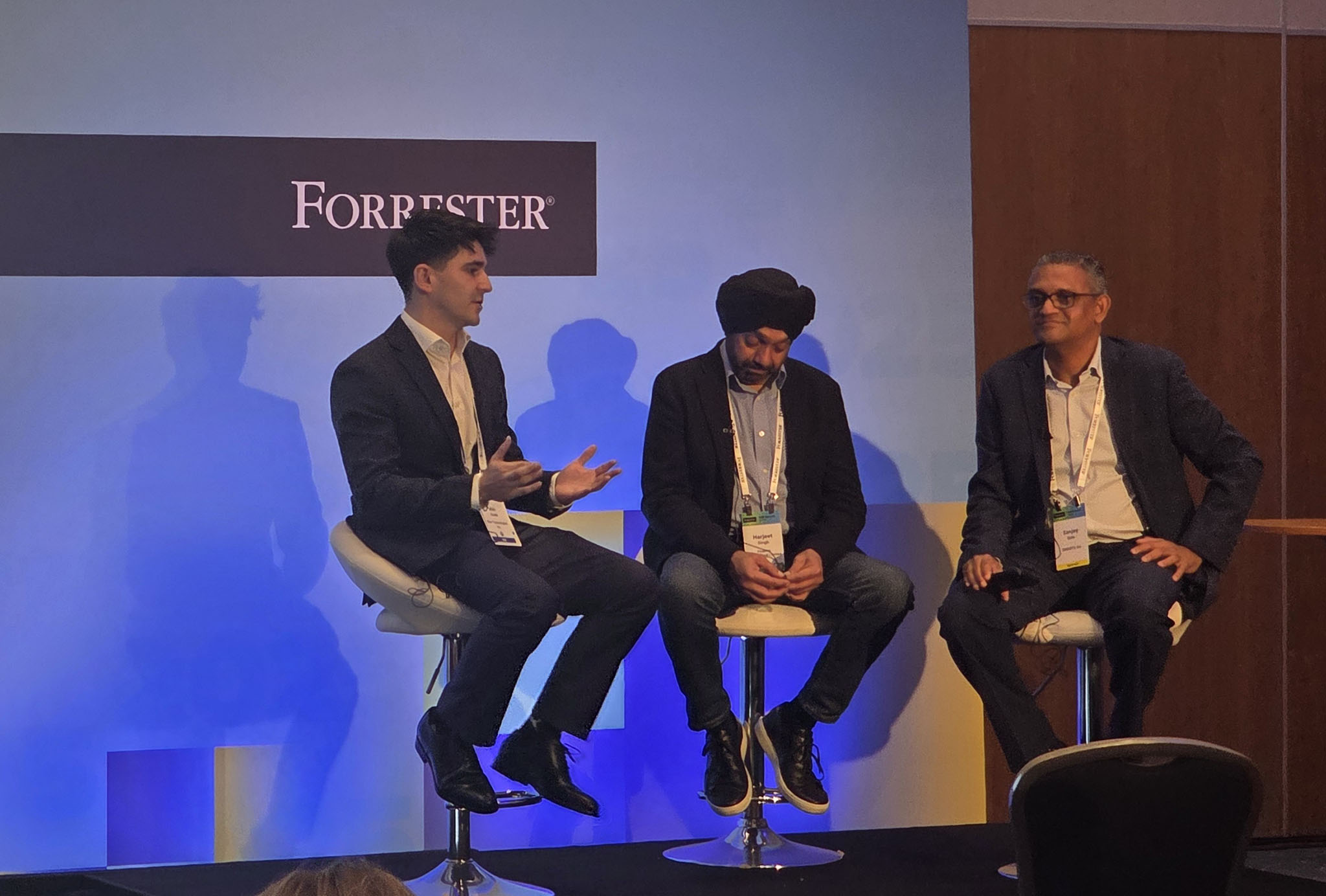
At Forrester’s B2B Summit EMEA in 2025, Gala appeared with enterprise practitioners including Uber’s Miki Steele and Finastra’s Harjeet Singh. The setting brought the founder’s proposition into contact with the people responsible for using data inside large organizations. Their work involves accounts, territories and buying groups, with all the complications those tidy nouns conceal.
Uber’s account of working with SMARTe describes duplicate records and incomplete company hierarchies that obscured potential territory. The work included cleaning up those relationships and mapping buying groups across regions. For Gala’s story, the interesting part is how far this sits from a simple list of names. He is selling a clearer view of how businesses connect.
An editorial sketch of the sales intelligence task. The diagram shows a process, not measured performance.
Back to the subject of his thesis
By 2026, SMARTe’s shift toward AI gave Gala a reason to revisit his engineering beginnings. He described that development as a return to an earlier interest. A thesis about neural networks had preceded the sales career; now the sales business was drawing him back toward them. The route took more than thirty years and included a considerable amount of customer conversation.
The connection is intriguing without requiring a prophecy. Research in 1993 and a contemporary sales platform belong to different technical and commercial settings. What connects them in Gala’s career is his willingness to move between building technology and finding a useful place for it. The intervening years matter because they supplied the practical questions.
He has also drawn attention to the trouble that follows when automation is applied to poor information. A system that works faster can repeat an error faster. For a founder whose company depends on the usefulness of business data, AI raises the stakes of a familiar concern. The new capability still needs something reliable to act on.
His public writing remains close to the working day of sales teams. Recent articles under his byline cover revenue intelligence, sales qualification, attribution and alignment between sales and marketing. These subjects concern decisions people must make after the demonstration ends. They suit a founder whose career crossed the gap between a technical product and its commercial use.
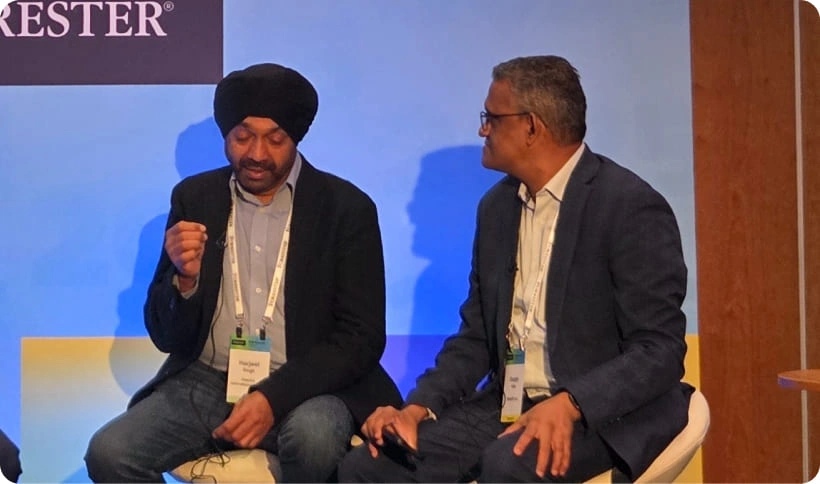
His stated influences also give the commercial turn a recognizable shape. He has named Marc Benioff as an inspiration, pointing to the move from enterprise software to software as a service. It is an example that fits Gala’s own interest in how a technical capability becomes a service customers can continue to use.
His reading list has included Brian Tracy’s The Psychology of Selling, Grant Cardone’s Sell or Be Sold and Steve Lucas’s Engage to Win. The titles sit comfortably beside the engineering degree: another set of tools for understanding the job, acquired after the job changed.
A different kind of contact network
There is another way Gala talks about connections. In a public offer of help to people affected by layoffs, he said he had referred more than 50 people over a 28-year career. He invited people in his network to get in touch if he could assist. The offer drew on experience hiring hundreds of employees across SMARTe and Zycus.
That is a concrete use for the professional network that accumulates around a founder. A name becomes an introduction. An introduction may become an interview. Gala’s interest in career coaching belongs beside his commercial work because both involve knowing something about people and helping a connection become useful.
His gratitude has an earlier point of reference. In a Thanksgiving reflection, he credited individual donors and education trusts that had supported his early education. He described their belief as giving him confidence to aim higher. The account puts other people into the beginning of a career often summarized with his own founder titles.
His interests away from the company include hiking, marathon running and singing. In writing about his father, he recalled music and generosity as things he carries forward. Those details make room for a person whose life has more in it than software categories. They also give his enthusiasm for helping others a family context, expressed in his own public reflections.
Gala’s career now contains two long conversations: one with technology, another with the people expected to use it. The neural networks of his student years have returned in a different setting. Between then and now came sales calls, two companies, colleagues, customers and introductions made for other people. That is a considerable education to bring back to an old subject.