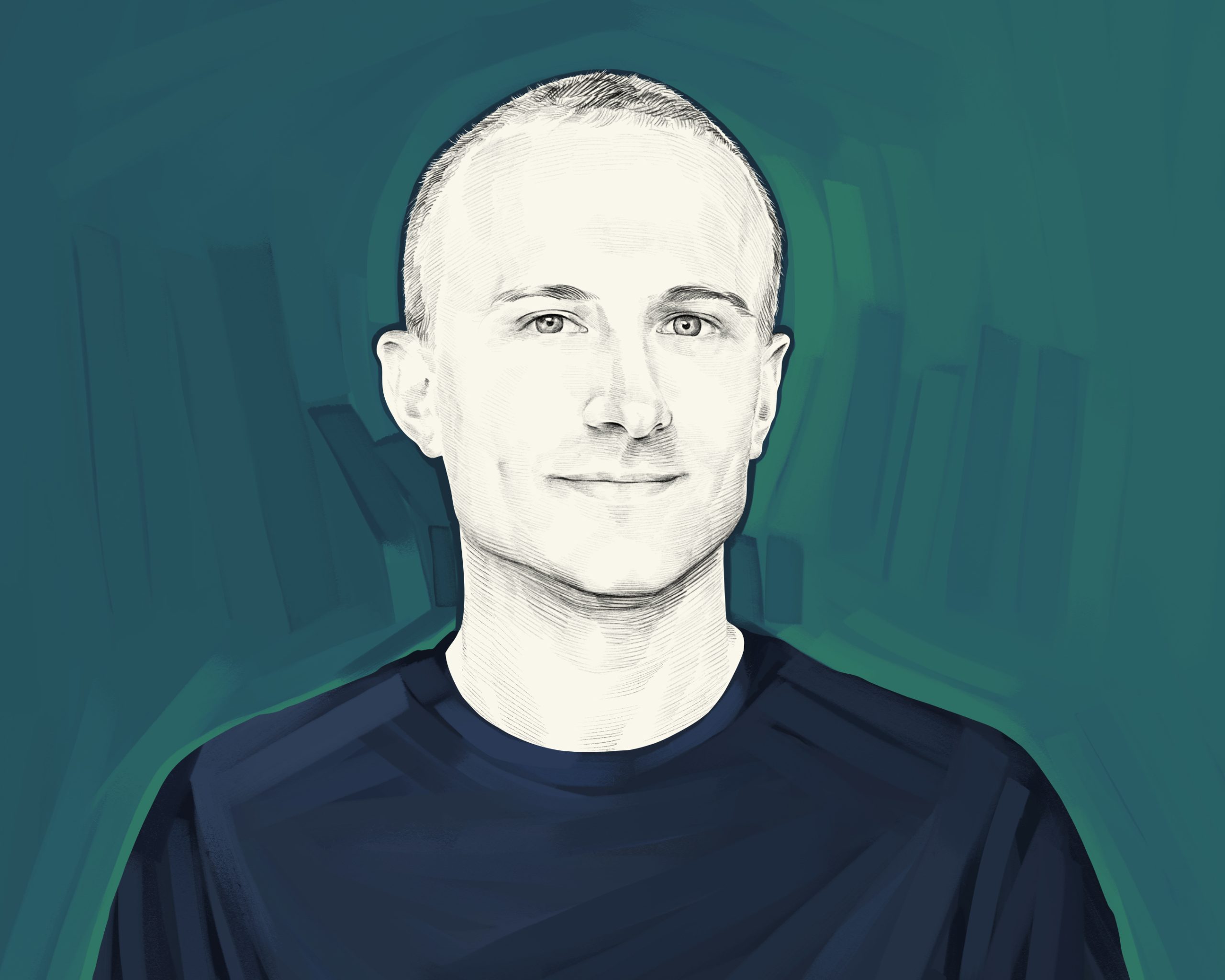
The Man Who Logs Everything - And Still Owns Nothing
Here is what Sam Corcos did in his first two years as CEO of Levels Health: he tracked every 15 minutes of his work life. Not approximately. Not roughly. Every. Fifteen. Minutes. At the end of those two years, he had logged 7,922 hours across dozens of categories, ran the numbers, discovered he was spending 23% of his time on email - and fixed it.
That is Sam Corcos in miniature: the obsessive data collector who built a company specifically to apply that same rigor to your metabolism. Levels pairs continuous glucose monitors with a software layer to show you exactly what happens to your blood sugar when you eat "healthy" food, exercise, or stay up too late. The insight that launched the company was simple and a little horrifying: most of us have no idea what's happening inside our bodies, and the gap between what we believe is healthy and what actually is might be killing us slowly.
Before Levels, he co-founded CarDash (Y Combinator S17, acquired 2020), Sightline Maps (3D topographic maps for the U.S. military using LiDAR), and LearnPhoenix.io (a 400-page book on building apps with Elixir and React). Before that, he did oncology research at UC Davis. The thread connecting all of it is systems thinking: find a broken system, build something better, make the data visible.
In 2025, that thread led him to Washington D.C. He joined the Department of Government Efficiency (DOGE) as a special advisor at the U.S. Treasury and was appointed Chief Information Officer in May. His stated goal: modernize government technology infrastructure, starting with the IRS. He committed to six months. Classic Corcos: specific, bounded, and probably logged on a calendar somewhere.
The Juice That Changed Everything
The founding moment for Levels wasn't a garage whiteboard or a late-night epiphany. It was a juice cart.
Josh Clemente - SpaceX alum, Hyperloop engineer, and the original visionary behind Levels - drank what he considered a healthy juice before an investor meeting. His continuous glucose monitor read 217 mg/dL. The healthy ceiling is around 140. And it was still climbing. Clemente pulled up his phone, showed the live glucose graph to the investors in the room, and watched their eyes go wide. That was the pitch. That was the whole thing.
Sam Corcos had been introduced to Clemente through Clemente's parents back in 2014. In May 2019, after taking a year off from startup work, Corcos reconnected with him - initially just to make introductions to venture capitalists. Then he strapped on a CGM himself and watched his own blood sugar spike after foods he'd assumed were healthy. That was enough. He persuaded Clemente that the company needed a software-focused CEO (himself), and that Clemente's health-science expertise was the scientific backbone the product needed. Dr. Casey Means, a Stanford-trained physician, joined that fall. The five-person founding team was complete.
First paying customer: July 2019. First product shipped: November 2019. Then the build began in earnest - and in public.
Your job as CEO is building fire departments, not putting out fires.
- Sam CorcosRadical Transparency
as a Business Model
In May 2021, Levels began releasing all of its investor updates and all-hands meeting recordings to the public. Not summaries. The actual documents. The actual recordings. With a 12-month delay, yes - but the full thing. The internal deliberations. The failed experiments. The numbers.
Most of the Levels team opposed it. Some investors called Corcos negligent. He published anyway.
His logic: transparency forces rigor. When you know a document will be read by strangers - including competitors, journalists, and future employees - you write it better. You think harder before putting something in writing. You hold yourself accountable in the way that private bureaucracies almost never do. And crucially: it makes the company real to people who haven't yet tried the product.
It worked. Andreessen Horowitz (a16z) invested in September 2020. They had been following Levels' public investor updates since February. Eight months of relationship-building with zero formal pitch meetings. The memo wrote itself.
The approach also made Levels' community round in 2022 something extraordinary. The company raised $5 million from over 1,400 Levels members on Wefunder - hitting the $4.9M cap in under six hours. These weren't random small investors. They were people who used the product, read the updates, and had been along for the entire ride.
Levels Funding History
| Round | Date | Amount | Notable Investors |
|---|---|---|---|
| Seed | Nov 2020 | $12M | a16z (lead), Marc Randolph, Dick Costolo |
| Series A | Apr 2022 | $38M | a16z, Ben Gilbert & David Rosenthal, Mat Fraser |
| Community Round | 2022 | $5M | 1,400+ Levels members (raised in <6 hours) |
| Series A Ext. | Jan 2023 | $7M | Existing investors |
| Total | - | ~$67M | 36 investors across all rounds |
How He Runs a Company
Without Running Out
Corcos spent two years tracking every 15 minutes of his work life. The results were uncomfortable: nearly a quarter of his time - 23% - was going to email. Another 18% to team meetings. Only 13% to operations. The exercise didn't just produce data; it forced a reckoning with the gap between how a CEO thinks they're spending their time and how they actually are.
His response was systematic. He eliminated traditional to-do lists and replaced them with a calendar that forces real time commitments. If it can't fit on a calendar, it doesn't exist. Batch email twice a day. Use Loom videos instead of meetings whenever possible. Delegate approximately 400 tasks per month through a pool of three to four executive assistants - with one EA "quarterbacking" the others.
Once a quarter, he takes a "think week" - fully offline, airplane mode, website blockers, zero meetings. He generates hundreds of pages of internal documentation per session. Solo or with a co-founder. The idea, borrowed and rebuilt, is that the best strategic thinking rarely happens in the margins between calendar events. You have to carve out the space intentionally.
The most counterintuitive part: he doesn't have direct access to his own Twitter account. Executive assistants post content he sends them as an intermediary layer - a deliberate buffer against the social media compulsion loop. He treats his own attention like a scarce resource to be allocated, not a tap to be left running.
CEO Time Breakdown - First Two Years at Levels
Source: First Round Review — "An Exact Breakdown of How One CEO Spent His First Two Years" (approximate values)
Content scales; your time doesn't.
- Sam Corcos, First Round ReviewFrom CGMs to the IRS
In early 2025, Sam Corcos did something that surprised even the people who know him well: he went to Washington.
He joined the Department of Government Efficiency as a special advisor at the U.S. Treasury, eventually being appointed Chief Information Officer in May 2025. His focus areas include IRS modernization, government data infrastructure, and API systems - essentially the same problem set he'd been working on in health technology, just scaled to the apparatus of the federal government.
One early data point: he approved more than $1.5 million in spending for up to 3,000 ChatGPT Enterprise licenses for Treasury employees. He appeared on Fox News to discuss the initiative. He gave a three-hour interview to Modern Wisdom's Chris Williamson titled "Inside DOGE, The IRS & How to Scam the U.S. Government."
He committed to six months in D.C. He transitioned from CEO to Board Member at Levels. True to form, he bounded the engagement precisely, told people exactly what he intended to do, and left a seat at the table rather than burning the bridge.
Whether the government tech modernization effort succeeds or not, the move reflects something consistent in Corcos's character: he's genuinely interested in broken systems, not just lucrative ones. The IRS is, by most accounts, the most thoroughly broken system in American civic life. That might be exactly why he said yes.
The Quotable Sam Corcos
"If you cannot write out your ideas, you do not have coherent thoughts."
"Almost all of the good things that have happened to me have happened because of people I knew."
"Every new surface you add is an obligation to maintain - maybe forever."
"If the company is a steam engine, my job is the lubricant."
One Pair of Pants,
Maximum Optionality
The backpack is real. The single pair of pants is real. Sam Corcos travels with everything he owns in one bag. This is not an aesthetic choice or a Twitter persona. It's an extension of the same logic that governs his entire approach to work: minimize maintenance obligations to maximize decision bandwidth.
His formulation: "The numerator is the amount of money that you make and the denominator is the amount of money that you spend and if you spend a lot less, you'd be surprised at how much easier your life is and how many more choices you have." This is the mathematics of optionality. More stuff equals more choices about what to do with stuff, which equals less time for everything else.
The same principle applies to attention. He doesn't have his own Twitter access because the platform is engineered to consume attention without return. He doesn't have a traditional to-do list because it lets you feel productive without committing to a timeline. He doesn't do unplanned meetings because they're someone else's urgency dressed up as collaboration.
What he does instead: reads two books a week (one rule: only buy the next book you'll read, never stockpile), hosts weekly intellectual salon dinners for eight to ten people in New York and San Francisco (topics ranging from postmodernism vs. pragmatism to death, love, and the wine industry), and takes quarterly think weeks where he disappears offline and writes hundreds of pages of strategic documentation.
He has done the salon dinners more than 100 times. He describes most of them as "selfish" - a word he uses with precision. They're about topics he himself doesn't understand yet. The guests are smart enough to help him think, not just to validate what he already believes.