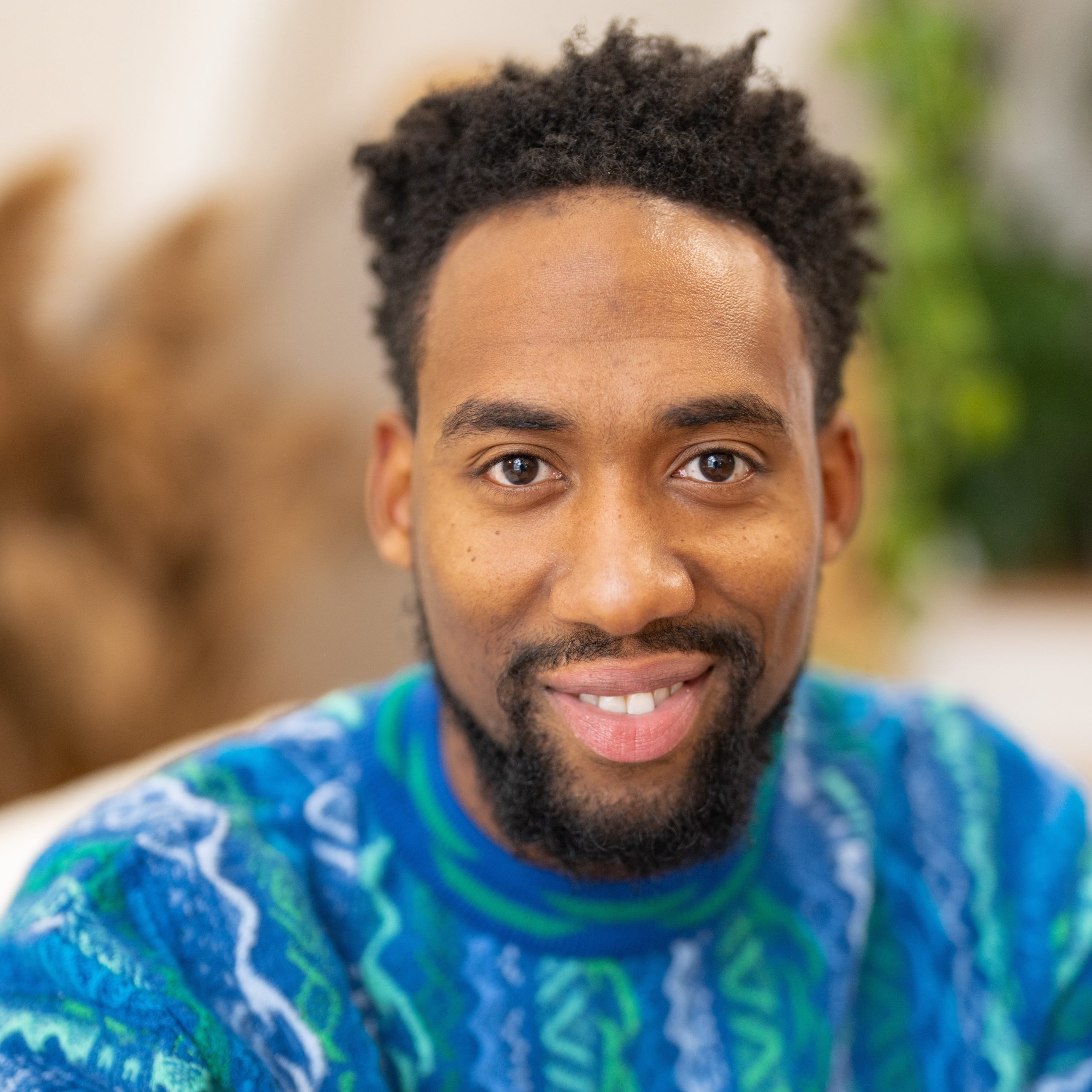
The Man Who Reads the Internet Before Anyone Else Does
Preston, Nova Scotia does not appear in many marketing origin stories. It should. It is a historically African Nova Scotian community outside Dartmouth - an old town with deep roots and a specific kind of pride. It is where Ross Simmonds grew up quiet, watched his grandfathers build things with their hands, and decided that he, too, would build something.
The first thing he sold was do-rags. From his high school locker. Not a lemonade stand, not lawn mowing - do-rags, which he sourced and moved with the quiet confidence of someone who already understood supply, demand, and distribution. The amount was real enough to matter. The instinct behind it was even more real. Nobody taught him the hustle. It arrived pre-installed.
When Ross Simmonds arrived at Saint Mary's University in Halifax with a marketing scholarship and an overactive internet addiction, he did not waste it studying. He launched a fantasy football blog. Posted three times a week. Built an audience of readers who had no idea the author was a university student paying his tuition with affiliate marketing commissions from the same blog. He did not tell them. The content was too good for the detail to matter.
The truth is that you can create a great piece of content but if it doesn't get in front of the right people, then it's for nothing.
- Ross SimmondsHe graduated in 2009 with a Bachelor of Commerce in Marketing and a side business that had already taught him the most important lesson in his field: creation without distribution is not a content strategy. It is a diary. He walked into his first real job at CBC - Canada's national broadcaster - and started building social media strategy for the Maritimes. He was 21. He was building his own audience in his spare time. The day job was useful. The nights were more interesting.
The Agency Nobody Expected
Ross Simmonds founded Foundation Marketing in 2014. At the time, most content agencies were built around a simple premise: produce more. Write more blogs. Publish more posts. Volume is visibility. Ross did not believe this - and more importantly, he had data to prove it was wrong. He had watched his own content get abandoned the week after publication while other pieces kept generating traffic for years, simply because someone kept pushing them into the right channels at the right time.
Foundation was built around a different premise: content is an investment. You do not publish a blog post and walk away from it any more than you plant a crop and stop watering it. You distribute it. You repurpose it. You find every community where it belongs and you put it there, again and again, for as long as it remains true.
Foundation Marketing currently operates with 11 people across 4 continents, pulls in roughly $3.8M in annual revenue, and has generated over $110M in new business for clients including Canva, Snowflake, Bitly, Mailchimp, and Unbounce.
The team is small by design. Every person carries weight. Foundation is not a content farm - it is a content laboratory, where briefs get stress-tested against search data, audience research, and a proprietary framework Ross calls the Sherlock Homeboy Method: reverse-engineer what works, find where audiences already gather, and build content that earns its place there. No guessing. No vibes. Data in, distribution out.
Create Once. Distribute Forever.
In April 2024, Ross published his thesis as a book. Create Once, Distribute Forever became an Amazon bestseller. The premise is exactly what the title says - and it is, on its face, obvious. Which is why 85% of content marketers still get it wrong. They budget 90% of their time and money for creation and treat distribution as an afterthought: a tweet on publication day, maybe a LinkedIn post, then nothing.
Ross built a 320-page argument against that approach. He structured it around a principle that sounds deceptively simple: the content you made last year is still good. Your audience still has not seen it. Publish it again. Find new platforms. Translate it into a thread, a video, a newsletter excerpt, a slide deck, a Reddit post in a community you have been building trust in for six months. Let it live forever, not for a news cycle.
Blogs, white papers, case studies. The reliable base. Audience is predictable. ROI is measurable.
Twitter threads, sponsored posts, email sequences. Requires skill. Upside is proportional.
Reddit AMAs, influencer collabs, subreddit campaigns. Higher variance. Higher ceiling.
The book took four years from decision to publication. Not because Ross was slow - he writes constantly, speaks at conferences across three continents, runs a newsletter for 75,000 subscribers, and manages a global agency. It took four years because he refused to publish until he had something to say that he could not say in a blog post. He had enough blog posts.
Distribution as Infrastructure
Ross runs his own distribution schedule like a manufacturing operation. Day one after publication: tweets, LinkedIn posts, subreddit submissions in communities where the content belongs. Day two: growth platforms, Instagram, Hacker News, Quora threads that answer questions the piece addresses. Day three: Twitter threads, Medium republication, newsletter inclusion. After that: perpetual promotion, ongoing for as long as the piece is accurate.
Twitter, LinkedIn, subreddits, newsletter teaser
Instagram, Hacker News, Quora, growth platforms
Repurpose, remix, republish - as long as it's true
He calls this "distribution arbitrage" - finding the pockets of the internet where an audience exists but the content hasn't arrived yet. Most brands, he points out, distribute only to their own followers. Ross distributes to other people's audiences. He goes where the attention already lives instead of building a new room and hoping people show up.
This thinking spawned his newest venture: Distribution.ai. Launched in 2024, it is an AI-powered platform designed to automate exactly what Ross has been doing manually for a decade - taking a piece of content and systematically identifying every channel, community, and format where it belongs. The platform repurposes, schedules, and amplifies. It is the thesis of his career turned into software.
Be shameless. Promote all the time, create all the time, distribute all the time, amplify all the time.
- Ross SimmondsThe "Shy Ross" Origin Story
His high school nickname was "Shy Ross." He was not the kid who raised his hand in class or worked a room at parties. The instinct to get louder came deliberately, from watching opportunities pass to people who were simply more willing to speak. He started saying yes to every speaking opportunity that came up - local events, school panels, anything with a microphone - until public speaking became less frightening than not speaking.
He now commands speaking fees between $20,000 and $30,000 per live event. He has stood on stages at Harvard, Stanford, and the London School of Economics. He keynotes MozCon, SXSW, and Cannes Lions. The progression from "Shy Ross" to one of the most sought-after voices in B2B marketing is not a personal growth story he is shy about telling. It is evidence for his central argument: the thing you are not doing is the thing you should start.
He wears suspenders. Not because anyone asked him to - because his grandfather wore them. His grandfather owned a paving company and a farm, and had the kind of schedule that came from building something for yourself. Ross wanted that schedule. The suspenders are a reminder of why he got into this and what he is trying to build. Some details carry more weight than a mission statement.
The African Nova Scotian Thread
Preston, Nova Scotia is one of the oldest African Nova Scotian communities in Canada. It has history - real history, the kind that is not often discussed in Canadian marketing conferences. Ross Simmonds grew up in it and carries it with him. His mother Debbie is a church minister. His grandfathers built physical things. His community produced people who worked hard in places that did not always reward that work with visibility.
He is on the board of the Black Business Initiative in Atlantic Canada. He is on the board of the Boys & Girls Club of Preston and the Phoenix Youth Programs. In 2019, he received the Harry Jerome Young Entrepreneur Award - one of Canada's most prestigious recognitions for Black excellence. His mentor Rustum Southwell, also of the Black Business Initiative, described him as "a game-changer."
Ross talks about this not as a separate track from his business career but as inseparable from it. He built a career that is globally visible on purpose, partly because visibility is what his community historically lacked in these spaces. Being on stage at Cannes Lions and crediting Preston, Nova Scotia in the same breath is not a coincidence.
The Numbers, Unadorned
Foundation Marketing: 11 employees. 4 continents. ~$3.8M annual revenue. 159% monthly run-rate growth in 2025. Named to Clutch's Top 100 fastest-growing B2B service companies globally in 2026. Clients include Canva, Snowflake, Bitly, Mailchimp, Procore, Unbounce, Jobber. Over $110M in documented new business generated for those clients. Best month in company history: November 2024. Team planning week held in Malaga, Spain - because they could, because the team earns it, and because being fully remote on four continents should come with occasional proof that you're building something real together.
BuzzSumo ranked him #3 content marketer in the world. SEMrush and Moz have both called him one of the most influential marketers globally. Mashable once named him one of the top Snapchat marketers on the planet - which is either a timestamp on his career or evidence that he was ahead of every platform curve before anyone else had the language for it. Probably both.
His newsletter has 75,000 subscribers. His Instagram has 115,000 followers. His Twitter/X handle is @TheCoolestCool - created in university, still in use, still accurate.
On AI, On the Future, On Not Being Left Behind
Ross has been watching AI land in marketing with neither panic nor euphoria - the rarest possible response in 2024. His view is the same one he applies to every platform shift: the fundamentals do not change. Distribution is still the problem. The channels change. The algorithms change. The format changes. The need to get your ideas in front of people who need them does not change.
Distribution.ai is his bet that the distribution layer is where AI has the most to offer - not generating content, which every tool now does adequately, but systematically identifying where that content should go, how it should be reformatted for each channel, and when it should be pushed. He is not afraid of AI making his clients' content better. He is building the thing that makes sure anyone can see that better content.
In 2026, the brands that win will act like creators, think like distribution machines, and optimize for AI answers - not just blue links.
- Ross SimmondsHe also holds a view on work-life balance that most people describe as controversial until they hear the actual argument: he does not believe in balance, he believes in integration. He works seven days a week. He stops at 5 PM for family. He resumes at 9:30 PM. His schedule is not a productivity flex - it is an acknowledgment that he built something that does not feel like captivity. The suspension of the 9-to-5 was the whole point.
What He Keeps Saying
His favorite quote is Calvin Coolidge: "Nothing in the world can take the place of persistence." He has said this in enough interviews that it reads as the foundation under the foundation. Foundation Marketing did not become a $3.8M agency because Ross had one great idea. It became what it is because he was willing to promote ideas nobody asked for until someone asked. He posted. He distributed. He repurposed. He said the same true things in every format on every platform for over a decade.
The kid from Preston who used to be called Shy Ross now gets $20,000 per keynote and is building a software company on top of an agency on top of a bestselling book on top of a decade of newsletters and podcasts and Twitter threads. The through-line is not genius. It is persistence dressed up in suspenders, shipped on schedule, promoted shamelessly, distributed forever.
AwardHarry Jerome Young Entrepreneur Award - one of Canada's top honors for Black excellence (2019)
Global Ranking#3 Content Marketer in the World - BuzzSumo Top 100
Business ImpactOver $110M in documented new revenue generated for Foundation clients
AuthorAmazon Bestseller - "Create Once, Distribute Forever" (Lioncrest, 2024)
AgencyClutch 100 - fastest-growing B2B service companies globally (2026)
RecognitionTop 50 CEOs in Atlantic Canada - Atlantic Business Magazine (multiple years)
MediaFeatured in Forbes, HuffPost, Business Insider, VentureBeat, BET, CBC
InfluenceNamed top global marketer by BuzzSumo, SEMrush, and Moz simultaneously
"Create once. Distribute forever."
The mantra that became a book, a company, and a career"Distribution isn't just through your following. It's arbitrage opportunities."
On finding audiences where they already live"The culture reflects your worst leadership habits, not your best intentions."
On building a real organization, not an org chart"I don't believe in work-life balance. I believe it is a fictitious concept."
On integration vs. balance"Get out and build. Start something, no matter how small, and see how the market responds."
On entrepreneurship"Remove fear from your mentality."
The shortest advice he ever gave that stuck