Ross Kramer had a problem that more customers would not necessarily solve. During the 2008 recession, Listrak was losing customers and cash. The company sold email marketing software to different kinds of businesses. Breadth had seemed reasonable. When budgets tightened, however, too few customers considered the service essential. Being useful to many people had left it vulnerable to each of them.
A consultant proposed a narrower future: choose an industry. Retailers were only a small share of Listrak’s customer list, but they were its most lucrative sector. Kramer followed the evidence and concentrated on retail. It was an awkward moment to start turning away from possibilities. It also gave the company a more precise reason to exist.
By 2020, Listrak served more than 1,000 retailers and brands, and its workforce had grown from about 30 to more than 300. Kramer credited the willingness to hear an outside perspective, investigate it, and act. The interesting part of the rescue is how little it resembles a flash of solitary genius. Someone offered advice. The founder listened.
“Those who focus are those who win.”
Ross Kramer, recalling advice that stayed with him, 2020
Before the inbox, there were computers
The sequence began with hardware. In 1993, while still a high-school senior, Kramer founded Ross Kramer Personal Computer Solutions. A business carrying your entire name has the useful property of making the complaints department easy to identify. He was already finding customers before he had finished school.
He attended Penn State from 1994 to 1998 and started a web hosting and design business during college. His father, Howard, became his business partner; their ventures included Vertex Internet and Listrak. The family connection is a substantial part of the company’s history. Its founders shared a surname as well as the work of building the business.
In 1999, Movies Unlimited, a catalog retailer working with Kramer and his colleagues, asked for an email marketing tool. They had been building ecommerce websites. The request extended their work into what happened after a website existed: helping the retailer communicate with its customers. A cataloger had supplied a practical opening for another business. The recession would later make choosing that kind of customer an explicit strategy.
An office built to interrupt
As Listrak grew, the question of how people worked together became architectural. In 2017, the company moved into a new headquarters near Lititz, Pennsylvania. The project brought five separate offices together. Kramer favored a single-story complex, taking inspiration from Facebook’s approach to space and collaboration.
The architects arranged shared functions along a central concourse. Meeting areas, lounges, and places to eat gave people reasons to cross paths. A building can make a perfectly ordinary conversation require either a short walk or an appointment. This one was planned to encourage the short walk.
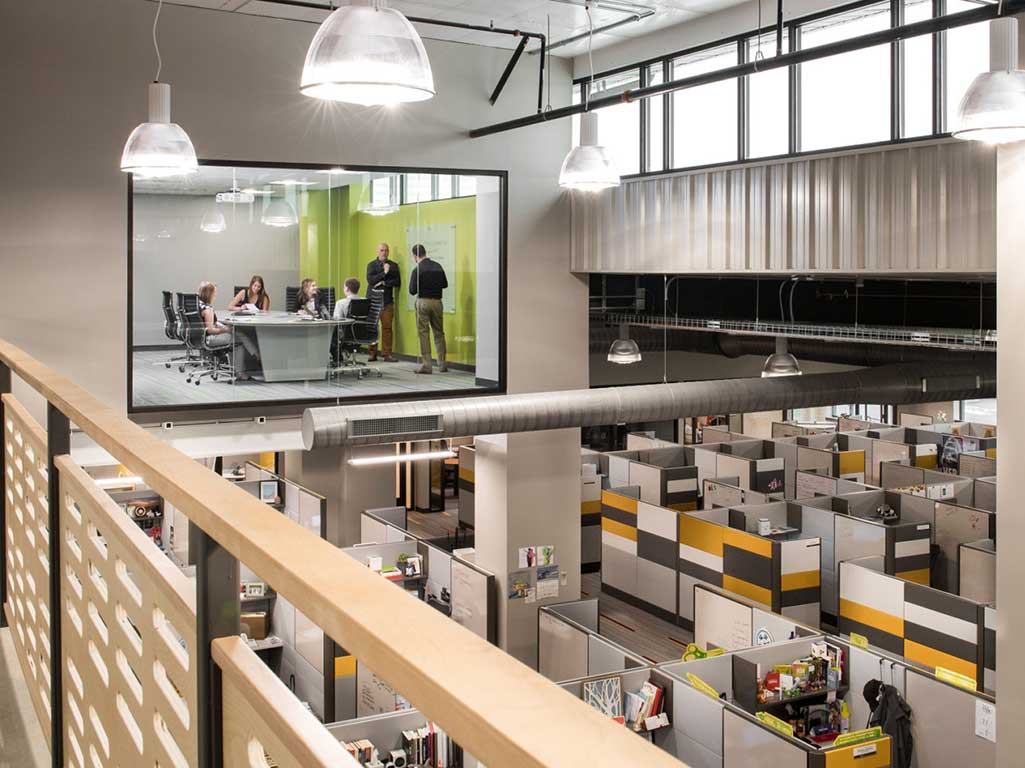
Kramer described his own office as glass-walled and placed in the middle of the building. He could see employees; employees could see him. He also led interactive sessions in which he walked teams through client accounts, identifying opportunities and problems. The physical arrangement and the teaching habit suggest the same preference: make it easier for useful information to move.
His choice of fictional counterpart adds some levity. Asked which superhero he related to, Kramer picked Tony Stark, admiring the reliance on ingenuity and effort. In Kramer’s account of daily work, the equipment includes a transparent office and email. The armored suit appears to have been optional.
The holiday rush starts in January
Retail specialization brings a very specific calendar. Black Friday and Cyber Monday arrive once a year; preparation occupies much more of it. A March 2022 account of Listrak’s infrastructure described planning that began at the start of the year, with network throughput tripling or quadrupling during the peak period.
Kramer reported a holiday season in which the company sent more than 1.5 billion emails and 30 million text messages for clients. The numbers describe messages, rather than unique shoppers. Behind the campaign that arrives on a phone sits an infrastructure problem: deliver large volumes when a great many retailers want the same hours.
One holiday season, as reported by Kramer in a March 2022 infrastructure case study. Volumes represent messages, not individual customers.
The company’s footprint had already expanded beyond its Pennsylvania base. In November 2018, Listrak announced a satellite office in Wayne, aimed at recruiting talent in the Philadelphia region. At the time, it reported 300 employees, a West Coast office in Newport Beach, and $52.7 million in revenue for 2017.
Kramer linked the new location to hiring in analytics, strategy, and account management. Those job categories say something about the company he was building. Software needed people who could examine a retailer’s business, understand its results, and help decide what should happen next. The retail focus had consequences for recruitment as well as the product.
A conversation can travel
His public appearances offer a view of that work away from the product announcement. In September 2020, Kramer joined filmmaker Derek Dienner for the MAKE/IMPACT podcast. Their conversation concerned building, serving, and moving forward through the challenges of that year. It placed the technology executive in a discussion about the work of leading.

Another Listrak event that year paired business conversation with Nashville’s Bluebird Cafe. Before the main event, Kramer spoke with vineyard vines co-founders Shep and Ian Murray about their story, the year’s challenges, and country music. The setting gave a client relationship a little more room than a campaign review usually permits. Even retail software occasionally gets an evening off from the spreadsheet.
Teaching has also taken him beyond employee onboarding. During the 2022-2023 school year, students visited Listrak through IU13’s enrichment program for a seminar on ecommerce. Kramer guided interactive discussions about technologies changing how people shop, including mobile tools, predictive analytics, and artificial intelligence. The audience was considering possible futures of its own. A founder’s account of getting started had a different use in that room.
Following the shopper out of the inbox
The product has followed shoppers across more of their day. In August 2024, Listrak expanded its Shopify app, adding capabilities around customer data, segmentation, and automation across email, mobile, and push. The company named shared clients including Sol de Janeiro, Marc Fisher Footwear, and Bluemercury.
Later that year, it worked with Dooney & Bourke and Infobip on a holiday RCS campaign. RCS adds richer experiences to mobile messaging. When Kramer shared the announcement in January 2025, he emphasized the team’s work and the opportunities presented by the channel. New formats gave the old retail problem another place to be solved.
By July 2026, his attention was also on the website receiving the click. Listrak expanded Experience Builder to connect website personalization, acquisition, and conversion tools with its existing messaging platform. Its stated approach used a retailer’s own customer information, including purchases, browsing, and engagement, to shape what a shopper encountered.
The logic is easy to recognize: a message tailored to one person can lead to a website that remembers something useful about that person, too. Kramer argued that retailers were underusing websites as a way to acquire customers. The company’s proposed answer brought more of that experience into the same system. The customer’s journey had become the unit of work.
When the computer becomes the customer’s scout
In an August 2026 discussion, Kramer considered a further complication: shopping software that helps people decide what to buy. An AI agent can receive a person’s preferences and search on their behalf. For a retailer, being discoverable starts to mean being understandable to that intermediary.
His memorable shorthand was that “computers have eyes.” Product discovery can begin with an image as well as a typed description. A shopper might show an agent an outfit and ask it to find something similar. Kramer’s point was that retailers need to think beyond the words traditionally used to make products searchable.
He also described designers and other non-coders at Listrak using AI development tools to create prototypes and ship software, while developers focused on infrastructure, APIs, and security. His interest extended to who could build the answer. Someone who understands a customer problem may now have another way to test a solution. The person asking the question can get closer to making the thing.
The work between the idea and the send
September 2026 brought a concrete example of reducing work between teams. Listrak launched Studio, a Figma plugin that converts designs into responsive emails inside its platform. The product addressed a familiar handoff: the design is approved, and then somebody has to rebuild it for production.
Kramer described eliminating copying, rebuilding, and waiting on developers. Listrak estimated potential savings of more than 250 hours annually. That remains the company’s estimate. The everyday frustration it targets is recognizable to anyone who has watched a finished design begin a second career as a queue of implementation tasks.
On October 7, Listrak announced an expanded SiteVibes integration, bringing loyalty and review activity into its marketing workflows in real time. Purchase histories, rewards, and messages were becoming more closely connected. It was another addition to the retail system Kramer had chosen to concentrate on years before.
His career now stretches from selling computers to considering how a computer might shop. Between those points lie a college web business, a partnership with his father, a cataloger’s request, and a recession that forced a choice. The useful question keeps returning in a new form: what does this particular customer need done? Kramer has spent a considerable part of his working life making the answer more specific.