Profile / Biotech
Ron CohenM.D.
He built a billion-dollar company from his apartment. Now he is back, trying to grow Parkinson's patients a fresh supply of neurons.
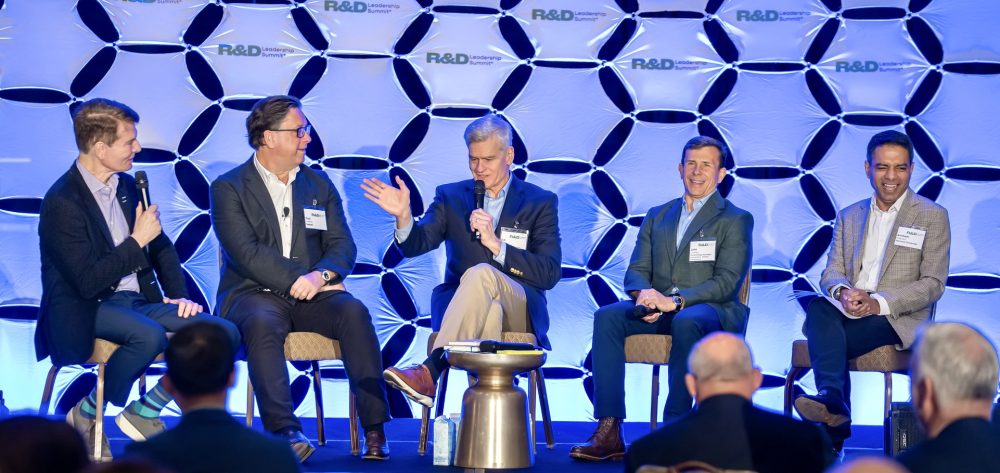
Thirty years in. Still picking up the phone.
He built a billion-dollar company from his apartment. Now he is back, trying to grow Parkinson's patients a fresh supply of neurons.
In March 2026, Ron Cohen sat down across from roughly two dozen biotech startups and turned almost all of them away. The one he picked, Oryon Cell Therapies, had three things he refused to do without: money in the bank, a working technology, and human data showing it actually moved the needle. "I preferred to find somebody that already had funding," he said. "With money, technology and proof-of-concept data, then I can contribute fully."
That is a peculiar thing to say for a man whose entire reputation was built on starting from nothing. But Cohen has done the from-nothing version already, and he knows exactly what it costs.
Oryon is chasing one of the boldest ideas in neuroscience: take a Parkinson's patient's own blood, reprogram those cells into stem cells, coax them into dopamine-producing neurons, and implant them back into the part of the brain that controls movement. Because the cells come from the patient, there is no immune rejection and no need for the lifelong immunosuppression that has shadowed other cell therapies. The company emerged from stealth with $42 million in total funding, including a $21 million Series A led by Neuro.VC and Byers Capital. The science traces back about 30 years of stem-cell and neurosurgery work at Harvard and Mass General Brigham, anchored by co-founder and neuroscientist Ole Isacson.
Cohen did his homework the way a physician would. He called around 250 neurologists in his network and asked them a single, pointed question about the approach. "I didn't get a single one who didn't say, 'Oh, if I can avoid immune suppression, then I will,'" he recalled. For a man who has spent his career on the nervous system, that was the answer that mattered.
He is also refreshingly blunt about the stakes. Asked about demand for a better Parkinson's treatment, he didn't reach for a market-sizing slide. "This disease sucks," he said, "and you can quote me on that."
"Biotech isn't just about molecules. It's about moral responsibility to the people we serve."
Ron Cohen, M.D.Cohen founded Acorda Therapeutics in 1995, in his apartment, with no full-time employees and no outside funding. Over three decades he grew it into a public company with roughly 300 employees and a market capitalization that crossed a billion dollars. Acorda's identity was the nervous system: it developed and commercialized Ampyra, a treatment that improved walking in people with multiple sclerosis, and later Inbrija, an inhaled therapy for Parkinson's.
The arc was not a straight line up. Ampyra was generating close to $550 million a year by 2017, more than 90% of Acorda's revenue, when a 2018 court ruling invalidated key patents and cleared the path for generics. The pandemic then hammered Inbrija's launch. Cohen negotiated with bondholders, steered the company through a 2024 bankruptcy, and arranged its sale to Merz Therapeutics. After nearly 30 years, he handed over the keys.
Most founders would have framed all of that as an ending. Cohen treated it as a between-jobs interval.
Look closely and the resume rhymes. The psychology degree from Princeton was about the mind. The M.D. from Columbia and the internal medicine residency at the University of Virginia were about the body. His first biotech job, in the mid-1980s at Advanced Tissue Sciences, was about engineering living tissue long before "cell therapy" was a category anyone funded. Acorda was about the nervous system. Oryon is about regrowing the very cells that nervous system loses.
For 40 years the subject has barely changed. The tools have. Where Acorda delivered molecules that managed symptoms, Oryon is attempting something closer to repair, replacing the dopamine neurons that Parkinson's destroys rather than masking their absence.
Cohen frames the work in moral terms, citing the Jewish concept of Tikkun Olam, repairing the world. He argues that profit keeps a biotech alive but purpose is what gives it a soul. It is not a throwaway line. As past Chair of the Biotechnology Innovation Organization, the industry's largest trade group, he spent years on Capitol Hill explaining to policymakers why bringing a therapy to market is so slow, so expensive, and so worth it. He called that advocacy both gratifying and frustrating, often in the same afternoon.
"BIO is the only large-scale platform that amplifies the aspirations of small and mid-sized companies."
On championing emerging biotechOryon's Phase 1b/2a trial is underway, with early signs of motor improvement and neuroimaging that suggests dopamine signaling is being restored. The next mountain is a Phase 3 trial, the long and unforgiving stretch where promising biology either becomes medicine or doesn't. Cohen has crossed that terrain before, with all its patent cliffs and pandemics, and he is clear-eyed about today's tighter capital markets. "Investors are risk-averse now," he observed, "focusing on fewer companies but writing bigger checks." The narrative, he insists, has to be airtight.
If it works, the implication is enormous: not a better way to live with Parkinson's, but a way to give the brain back what the disease took. That is the kind of swing Cohen came out of a comfortable exit to take. He could be mentoring from a board seat. Instead he is running a small company in Belmont, Massachusetts, with a two-person headcount on paper and an outsized ambition in the lab.
Forty years on the nervous system, and the most interesting chapter might be the one he is writing now.
Oryon's autologous approach uses a patient's own cells, which sidesteps immune rejection. Here is the journey, start to finish.
Collect the patient's own blood cells. Nothing donor-derived, nothing foreign.
Convert those cells into induced pluripotent stem cells, a blank-slate state.
Coax the stem cells into dopamine-producing neurons, the exact cells Parkinson's kills.
Place the new neurons in the brain's motor-control region, no immunosuppression required.
This disease sucks, and you can quote me on that.
I didn't get a single one who didn't say, 'Oh, if I can avoid immune suppression, then I will.'
Biotech isn't just about molecules. It's about moral responsibility to the people we serve.
Investors are risk-averse now, focusing on fewer companies but writing bigger checks.
His undergraduate degree is in psychology, not biology or chemistry. The mind came first; the molecules came later.
He was engineering tissue at Advanced Tissue Sciences in the mid-1980s, decades before cell therapy became a fundable category.
Before saying yes to Oryon, he phoned roughly 250 neurologists. Not one preferred immune suppression if it could be avoided.
Oryon's science draws on about 30 years of stem-cell and neurosurgery research at Harvard and Mass General Brigham.