Rodrigo Volio has a phrase for his teams: “Duros con el problema, suaves con la persona.” Tough on the problem, gentle with the person. It is a compact instruction for a profession in which the spreadsheet is often better behaved than the conversation. A problem can be taken apart, examined and repaired. A person tends to object to that treatment. Volio’s formulation gives the two different rules of engagement.
In May 2026, he became CEO of Nacascolo Holdings after eight years inside the organization. The appointment put him in charge of a group whose business involves buying stakes, helping companies expand and working with the founders who know those companies from the inside. His recent public comments make the relationship with those founders a useful place to begin. The money arrives with expectations. So does the investor.
A title catches up with the work
Volio’s professional preparation took him abroad. He studied finance and accounting in the United States, then pursued an MBA in Spain. His career includes corporate banking, investment banking and business strategy. On his public profile, he also lists Wharton Executive Education in 2022. These are the financial coordinates of his story: an education in how businesses are measured, followed by work helping businesses make decisions.
At Nacascolo, he helped lead the acquisitions that expanded the group. Becoming chief executive therefore meant taking responsibility for an organization he had already helped assemble. There is a particular challenge in that progression. Someone involved in bringing companies together must eventually deal with the practical consequences of having brought them together. The agreement is a beginning. The daily work has a much longer calendar.
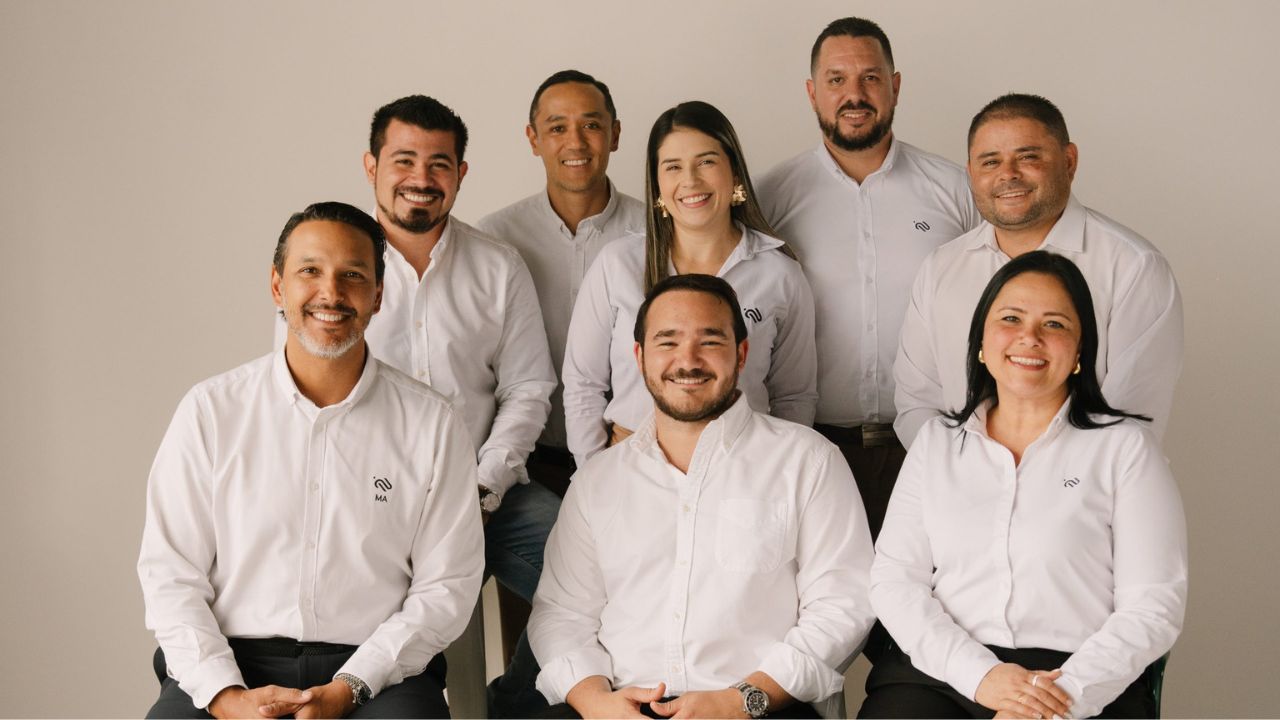
Nacascolo is the Quirós Tanzi family’s family office. Its stated approach includes working alongside founders and helping with the practical machinery around a business. For Volio, that makes the person behind a brand part of the investment relationship. A founder’s knowledge does not become less useful because somebody else has acquired a stake. If anything, expansion creates more occasions to need it.
The tent on the roof
Consider KOP, short for Keep Outdoors Passion. Its founder, Raquel Segura, wanted equipment for a pastime she already enjoyed. Sleeping on the ground had made camping less attractive than the scenery. A rooftop tent offered a solution, but she could not find the product locally. She began bringing equipment into Costa Rica and founded KOP in 2018. An inconvenience had acquired a business plan.
Segura’s route was gradual. She worked in an importing company while building the venture. In 2022, she partnered with Fabio Perrone, a customer, and left her employment. Her monthly income initially fell from $1,700 to $1,000. By August 2026, the business had stores in La Garita and Liberia, with an Escazú location planned. Expansion into Guatemala and Colombia was being discussed for 2027. Those were plans, with the usual work still ahead of them.
Nacascolo announced its KOP alliance in June 2026. Volio’s own description of the investment emphasized respect for the business Segura and her team had built. His public announcement identified the acquired interest as a majority stake. Ownership had changed; the founder was still central to his account of why the business mattered. It is a revealing detail in a deal announcement, where percentages can easily steal all the attention.
The community surrounding KOP was part of the appeal. Customers were buying equipment, sharing experiences and making the stores places of encounter. That gives an investor something more complicated than stock to manage. Camping chairs can be counted. The reasons people keep coming back require closer attention. In Volio’s description of KOP, culture, product and vision belonged together. None was presented as a decorative extra.
The founder knows why the customers came. Growth has to give them a reason to return.
On the question raised by the KOP partnership
A car before the showroom
AutoXperience offers a different setting for the same interest in customer confidence. Founded by Erick Xirinachs in November 2019, it buys and sells used vehicles in Costa Rica. Its model brings digital tools and structured checks to a purchase that can involve a great deal of uncertainty. A car has a price, a history and several opportunities to make its next owner nervous.
The company’s offering includes independent inspections covering 70 points and road tests. Buyers can explore vehicles online, request quotations and review financing options. Digital assistants handle inquiries around the clock. For sellers, an online submission can lead to an initial offer within 48 hours if the vehicle meets the company’s criteria. These are operational details, but operational details are where a promise of convenience gets tested.
When Volio discussed the investment in August 2026, AutoXperience reported that its inventory had doubled since Nacascolo invested. It also reported that more than half its sales were agreed before the customer visited a branch or physically saw the vehicle. That second measure is especially interesting. It describes a business in which the first substantial step can happen away from the showroom, through information and conversation.
Company-reported results discussed by Volio. These figures describe AutoXperience, not the full Nacascolo portfolio.
Volio said the priority was technology and logistics rather than opening the greatest possible number of branches. He described investment in infrastructure, service and financing options, with the aim of making a purchase possible from across Costa Rica. The ambition was national reach through a more capable operation. A map full of pins would tell only part of that story.
In his public welcome to AutoXperience, he named Xirinachs and the team. He pointed to transparency, support and listening to customers. Again, the founder’s work appeared in the foreground. KOP and AutoXperience sell quite different things, but the accounts of their partnerships share a concern with what a customer needs to believe before making a purchase. Capital can fund the next step. The business still has to earn it.
Many companies, many conversations
Nacascolo’s footprint extends across Costa Rica, Colombia and the United States. In April 2026, it described an organization of more than 30 companies and more than 1,000 collaborators. The scale creates a practical question for a chief executive: how does a group keep a recognizable way of working when its businesses face different customers, markets and pressures?
The organization describes internal development, recognition and channels for listening to employees as part of that work. Those practices are less photogenic than a new acquisition. They are also closer to the recurring experience of being employed by a company. An announcement can fit into a morning. The consequences of how people are managed occupy the rest of the week.
Volio takes leadership after eight years within the group.
A founder-led outdoor brand enters its next stage.
Volio discusses inventory, technology and logistics.
The leadership team around Volio includes Carlos Sequeira as CFO, Fernán López as CIO and Adriana Rodríguez as CPO. The public roster also identifies work in auditing, accounting, treasury, data and marketing. That list makes the holding company’s role tangible. There are people responsible for the unglamorous systems a growing business needs. A founder may start with an idea; expansion brings a rather demanding supporting cast.
The contrast between the two recent deals makes this work easier to see. At KOP, the conversation concerns a brand shaped by outdoor enthusiasts and a founder who came from that community. At AutoXperience, it concerns a system for helping customers assess a used car. The circumstances differ. The attention to the relationship with the customer appears in both. A holding company can bring shared resources to those businesses while recognizing that the reasons people trust each one have their own history.
What survives the next stage
The next chapter of Volio’s tenure is framed by investment and expansion, including Costa Rican businesses that can contribute to employment and local development. These are stated ambitions. The useful way to follow them is through the individual companies: whether their operations improve, whether the customer experience holds up and whether founders can keep contributing as the scale changes.
His story has an international education and a portfolio that crosses borders, but its recent examples are wonderfully specific. A tent above a vehicle. A vehicle bought through a digital conversation. A founder thanked by name. They bring the discussion back to ordinary choices about what people buy, why they trust a business and what would make them come back.
For an investor, preserving the founder’s knowledge while supplying the resources for growth is a continuing negotiation. More stock, better systems and wider distribution each create decisions about the original promise. Volio’s public comments put that promise within the deal’s logic. The founder remains in the picture because the founder’s understanding of the business remains part of what the investment is meant to support.