In 2007, Justin Kan needed a favor. He was broadcasting his life with a camera attached to his head, a business proposition that made mobile data rather more urgent than it was for the average telephone customer. Robin Chan worked at Verizon. One had a running camera; the other worked inside the company that could keep the pictures moving. It was a promising introduction, provided somebody could agree on the bill.
The hoped-for data arrangement failed to materialize. The acquaintance survived. Years later, Kan and Chan would start Goat Capital together, then work on businesses including Stash. For an origin story, a disappointing telecom negotiation has its advantages. It leaves room for improvement. It also offers an early glimpse of the setting in which Chan repeatedly turns up: between somebody with an idea and the people or systems needed to make it work.
That position would become explicit at Operator, the shopping service he co-founded with Garrett Camp. A customer could describe a purchase in a message and receive help from a person. Chan called the ambition “The switchboard for goods and services”. The phrase had an appealing lack of futuristic upholstery. A switchboard connects a caller to the right destination. Much of Chan’s career can be read through that small, practical act.
Seven jobs, one rowing boat
Before the startup affiliations, there was Columbia University. Chan studied there from 1995 to 1999 and earned a degree in economics. He also rowed on the heavyweight crew team. His public professional profile records seven part-time jobs to pay for college, including telemarketing, web design and financial analysis. It is an unusually crowded undergraduate footnote: a telephone, a website, a spreadsheet and, somewhere in the schedule, an oar.
Those details give the career a useful human scale. The familiar investor biography can become a procession of logos, each company name standing in for years of work. College jobs restore the smaller units. Somebody has to make the call, build the page or do the arithmetic. Rowing adds a different kind of obligation: other people are waiting for you to pull at the appointed moment.
Chan had also attended Punahou School in Honolulu. The later career would take him through American and Asian technology businesses, but the educational sequence is concrete: school in Hawaii, economics in New York, then work in mobile technology and entrepreneurship. It is tempting to make every early detail predict the adult. A more useful observation is that his experience accumulated across settings where understanding another person’s needs mattered as much as understanding a product.
Telemarketing. Web design. Financial analysis. And heavyweight crew alongside an economics degree.
Beijing was a working address
In 2008, Chan founded XPD Media in Beijing. The business developed social games for international audiences. Its co-founder Andy Tian had been an early employee of Google China. By May 2010, Zynga had agreed to acquire XPD, bringing a team of 40 into its organization. Chan became general manager of Asia business operations; Tian would lead the Beijing studio. The purchase price was undisclosed.
For Chan, the transaction joined two sides of a market he would continue to work across. XPD’s developers were in China; its products reached users through global social platforms, including Facebook. The arrangement required more than a translation of words on a screen. A company had to organize people, distribution and expectations across borders. The acquisition made that experience part of Zynga’s expansion into Asia.
His other work repeatedly involved introductions and practical help across that divide. He advised Uber on entering China and Bird on its Chinese supply chain. In Bird’s case, that included negotiating supplier agreements in Chinese and building a local team. These are less photogenic activities than launching a scooter, but the scooter is rather dependent on them. A factory agreement rarely gets a standing ovation; it does, however, help produce something to stand on.
An introduction could change an individual career, too. Alvin Tse, who had worked at Flipboard in China, recalled Chan connecting him with Hugo Barra after Barra joined Xiaomi. Tse was considering his next step; Barra needed a bilingual chief of staff who understood both China and Silicon Valley. The two connected. It is a specific example of the work hidden inside the convenient description “well connected”: recognizing which two people might actually have something useful to say to each other.
- 2008XPD Media
Founded in Beijing - 2010Zynga
XPD acquisition - 2015Operator
Public emergence
A shopping list with someone listening
Operator brought that connecting instinct into a consumer product. The service emerged publicly in 2015. Its premise was easy to grasp: send a request, talk through the options, buy within the conversation. Instead of beginning with a retailer’s menu, a customer could begin with an intention. The product made room for uncertainty, which is a substantial part of shopping and a remarkably awkward thing to type into a search field.
The founding group included Camp, the Uber co-founder, and Eric Kwan, an early Facebook employee. Chan served as CEO. Operator paired software with people who knew particular merchandise categories. In an April 2016 interview, he described a service in which experts helped customers move from an initial message through recommendations, purchase and delivery. The phone was already where people talked; the proposed change was to let a shopping conversation accomplish something there.
The mechanics mattered. A bot collected initial information and helped route the request. A human operator and a category expert supplied judgment. Software could then handle ordering and follow-up. Chan said the service made clear whether a customer was speaking with a bot or a person. That division of labor was central to his explanation of the product. Automation had a job; expertise had another.
In April 2016, Operator became available through Facebook Messenger. Customers could browse curated selections, receive product information and order confirmations, and even begin with an emoji. Sunglasses were an obvious candidate. A small yellow face wearing shades could, at last, aspire to something beyond indicating that its sender had enjoyed lunch.
The commercial question was more serious than the entry point suggested. Buying a familiar item is straightforward; choosing an unfamiliar one requires judgment. Operator tried to package that judgment as an accessible service. The customer’s incomplete brief became the beginning of an exchange rather than an error to be corrected before the system would cooperate.
- 01Describe the requestSoftware gathers the details
- 02Talk to an expertPeople help with the choice
- 03Complete the purchaseSoftware handles the order
A conversation with a division of labor. Diagram summarizes Chan’s 2016 description.
The cost of a useful conversation
Chan’s 2016 account of Operator was candid about one trade-off: a conversation did not necessarily make shopping faster. He argued that it could produce a better experience. That distinction matters. Time saved is easy to advertise. Confidence gained is harder to reduce to a button, yet it is often what a hesitant buyer is seeking.
The network also needed a way to pay the people providing the help. Operator took a commission on sales; independent experts received a share. Chan described several hundred operators in the United States. This was a business with people doing work behind the chat window, each requiring an incentive to answer thoughtfully and keep answering. A friendly interface could make that work less visible. It could not make the work disappear.
Looked at this way, Operator was an experiment in where to place responsibility. A conventional online catalog asks the buyer to assemble the answer from descriptions, filters and reviews. Operator assigned part of that effort to someone with relevant knowledge. Whether a customer preferred that arrangement depended on the purchase, the quality of the advice and the patience available on both sides of the conversation.
Chan’s public profile dates his Operator tenure from 2013 to 2017. His later career moved into other ventures. The business remains a revealing chapter because its central question is so ordinary: when a person asks for help, how does the request reach somebody capable of giving it? The elegance of the proposition sits alongside the difficulty of staffing, paying for and repeating the answer.
“The switchboard for goods and services”
Robin Chan on Operator, 2015
Back to games, closer to the customer
By 2020, Chan and Kan had founded Goat Capital. His public professional profile identifies him as a founder and general partner. Alongside company building, he had invested in businesses including Twitter, Square, Foursquare and Xiaomi. The portfolio crosses communication, payments, location and devices. It is a record of participation in several kinds of consumer technology, rather than a reason to assign every subsequent change in those industries to one investor.
Games remained part of the story. Chan co-founded Fractal and later Stash, whose founding team includes Kan and Dan Borstelmann. Stash was introduced publicly in January 2024 as a direct-to-player webshop business. It gives game developers tools for selling to players through their own web stores, with payments, loyalty programs and tailored offers among the components.
The connection to Operator is an editorial one: both businesses concern the route between a customer and a seller. The product and the buyer have changed. At Operator, a shopper wanted help finding merchandise. At Stash, a game studio wants a direct commercial relationship with its players. In either setting, the interesting work is in the passage between wanting something and successfully obtaining it.
Stash’s integration approach also puts weight on the unglamorous details. Its launch described account linking, familiar development tools and testing a webshop inside a game engine editor. Such features are easy to overlook when describing a company in a sentence. They are harder to overlook when an unfamiliar login or an awkward payment step sends a player away. A checkout can be a very small room in which to lose a customer.
By August 2026, Stash was describing that work through its collaboration with Snowprint Studios on Warhammer 40,000: Tacticus. The project combined a PC launcher, a web store and a loyalty program. It is a concrete destination for the commerce discussion: a player moving between screens, a studio keeping its offers consistent and software doing the coordination behind them. Chan’s latest business chapter has brought the customer connection back into games.
Who stays when the plan changes?
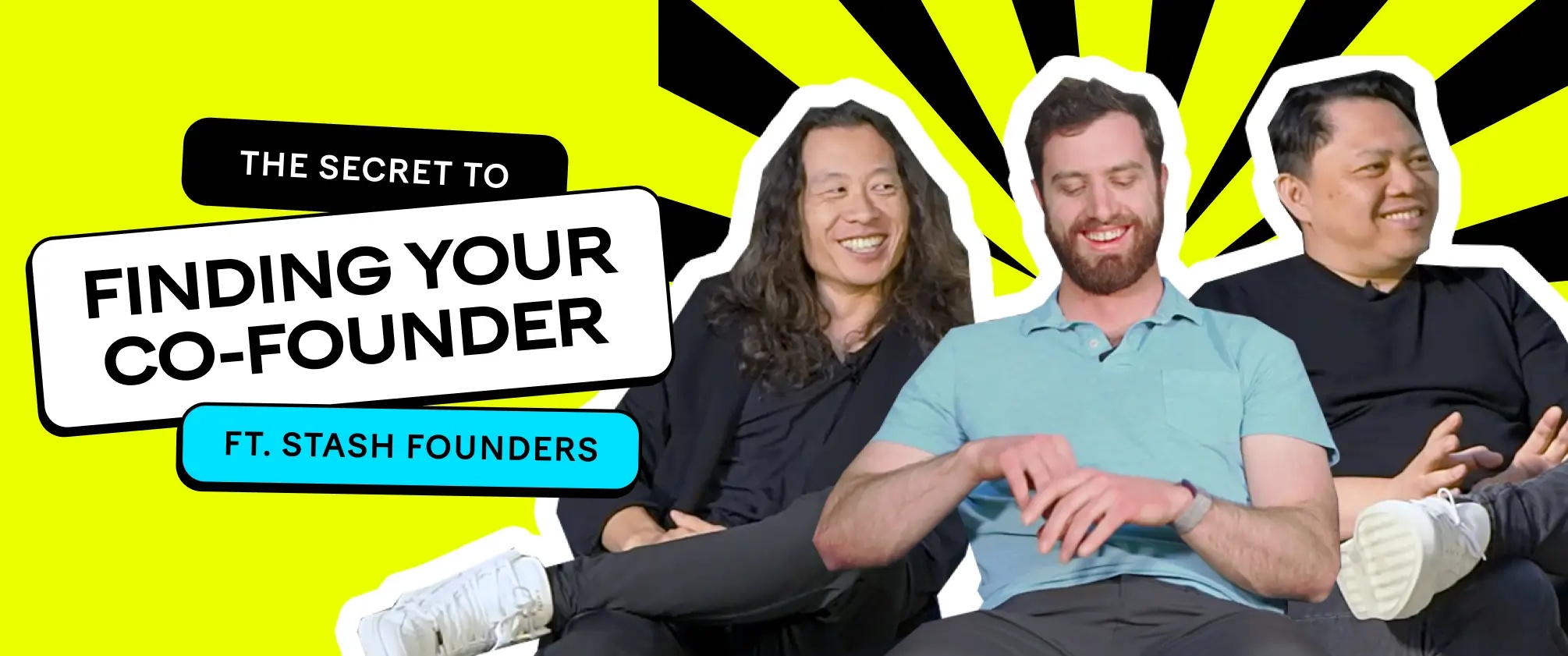
In a 2024 discussion with his Stash colleagues, Chan returned to the strain of an early startup. Frustration with a co-founder can make leaving seem attractive. Then comes the recognition that the company depends on the people who started it. As he put it, “we can’t quit. We have to make this work.” The thought is less decorative than most advice about finding a business partner. It concerns who remains when the work becomes unpleasant.
Kan described Chan as a generator of ideas and possible directions, while Borstelmann supplied a different emphasis on execution. The picture is of colleagues whose contributions vary. That offers a more useful account of a founding team than the suggestion that each member can do everything. Somebody has to propose another route. Somebody has to work out whether it can be built.
Chan’s story contains acquisitions, investments, introductions and a shopping app that asked customers to talk. The thread connecting those chapters is visible in the work itself: organizing a developer team across markets, bringing an adviser into a new setting, routing a buyer toward expertise, helping a studio sell to its players. Each begins with a gap between two parties who could benefit from reaching each other.
The failed data negotiation with Kan now looks like a fitting opening. The immediate request went nowhere; the relationship went somewhere else. Careers assembled through people do not always follow the first plan. Chan has kept working on the connection, even when the original call did not go through.