Robert Paull has an architecture degree, three turns as a founding chief executive, and an executive producer credit on a film about coral. Put those details next to one another and the usual career ladder starts to look rather inadequate. A ladder, after all, is designed to take you in one direction. Paull’s working life has included a venture firm, a research business, startup leadership, university service, and documentary filmmaking. The interesting part is how often he has returned to the beginning of something.
Mahana is one of those beginnings. He co-founded the company in 2018 and served as its founding CEO through December 2020. Before that came Genocea, where he was founding CEO from August 2006 to February 2009, and Kala, where he held the founding chief executive role from 2009 to June 2012. These were separate assignments, with separate organizations and years attached. “Founder” can become a decorative word in a biography. Here, the repetition has a calendar.
There is a useful distinction between founding a company and being its founding CEO. One describes participation in its creation; the other adds an operating job. Paull’s record includes both. It also includes the investor’s seat at Lux Capital, where he is identified as co-founder and venture partner. Read together, those roles give his career its particular shape: helping establish organizations, taking responsibility inside them, and continuing to work with people building their own.
02 /A degree with an unexpected afterlife
Paull graduated from the University of Virginia with a bachelor of science in architecture. That qualification is an appealing opening detail because it resists the tidy professional biography, the sort in which every youthful choice appears to predict the eventual job title. Architecture supplies a language of structures and beginnings. His subsequent appointments supply a different set of structures: companies, boards, investment relationships, and collaborations. The connection makes a useful way to read his career, without turning his degree into a theory of his personality.
His relationship with the university continued beyond graduation. In 2016, he was among the alumni on the Investment Management Committee overseeing UVA’s Seed Fund. The committee also helped select its managing director. Its members included Gerry Brunk of Lumira Capital, Jonathan Ebinger of BlueRun Ventures, Dayna Grayson of New Enterprise Associates, and Peter M. Grant II of Anchormark Holdings. Paull appeared there as Lux Capital’s co-founder and venture partner, alongside people bringing experience from other investment firms.
That appointment is a small but revealing part of the record. University entrepreneurship has practical decisions behind its hopeful language: who evaluates opportunities, who oversees investments, and who is entrusted to run the fund. Paull’s involvement placed him in that machinery. The institution where he studied architecture had become another setting in which he could participate in the formation of ventures. An alumnus can return to campus in many capacities. This one came with an investment committee.
03 /Before the company, the question
Lux Capital was founded in 2000 by Peter Hébert, Robert Paull, and Josh Wolfe. It is an important anchor in Paull’s biography, but the three names matter as much as the year. This was a shared founding. The later titles and separate careers should not erase that basic fact. His place in the firm’s history sits alongside Hébert’s and Wolfe’s, rather than substituting for either of them.
By October 2003, Paull, Wolfe, Hébert, and Michael Sinkula were also co-authors of “Investing in nanotechnology,” a feature published in Nature Biotechnology. Its bibliographic coordinates are unusually concrete: volume 21, pages 1144 to 1147. The title itself identifies the meeting point that occupied them - technical work and the question of investment. It is a written artifact from an early stage of Paull’s career, preceding several of the CEO appointments that would follow.
In January 2004 came Lux Research, another business Paull co-founded, this time in emerging technology market research and consulting. A research company and an investment firm perform different jobs. One helps customers understand a field and make decisions; the other commits capital. Having both in the biography makes the early period more interesting than a single founding date suggests. The work included studying emerging technology as well as participating in the businesses built around it.
There is no need to turn that sequence into a prophecy. A 2003 article does not contain the rest of a person’s life. It does, however, give the story a tangible starting point: four people putting their names to a question about how new technology meets money. Later companies would give Paull further occasions to work at that junction, with the added obligations of an executive title.
- Lux Capital / Co-founder
- Lux Research / Co-founder
- Genocea / Founding CEO
- Kala / Founding CEO
- Mahana / Co-founder and founding CEO
- The Coral Rescuers / Executive producer
04 /Three first days in the chief executive’s chair
The dates make the operating chapter legible. Genocea came first, beginning in August 2006. Kala followed in 2009. Mahana began in January 2018. Paull’s founding CEO tenure at Mahana lasted until December 2020. The sequence covers well over a decade, with intervals between the appointments. It describes repeated participation in early company leadership, rather than one uninterrupted chief executive job dressed up with several names.
At Kala, his responsibilities also included president and treasurer. The combination is worth pausing over. Startup biographies tend to favor the expansive word “vision,” while treasurer is a wonderfully unromantic title. It belongs to the part of an organization that has to count. Alongside the founding CEO designation, it brings the account back to formal responsibility. Corporate titles can be dry reading, but occasionally their dryness is exactly what makes them informative.
Paull’s Lux venture partner role dates from 2014. That timing places the Mahana founding later in his investment career, after he had already held the two earlier founding CEO positions. Mahana therefore belongs in a longer operating history. Calling him its founding CEO is also more precise than treating the role as a current appointment. The distinction leaves room for what came afterward, including advisory work and film, without asking an old title to do the work of a new one.
“He is a dynamic, innovative leader.”ROBIN TERRELL / PUBLIC LINKEDIN RECOMMENDATION
05 /A different way to give an idea an audience
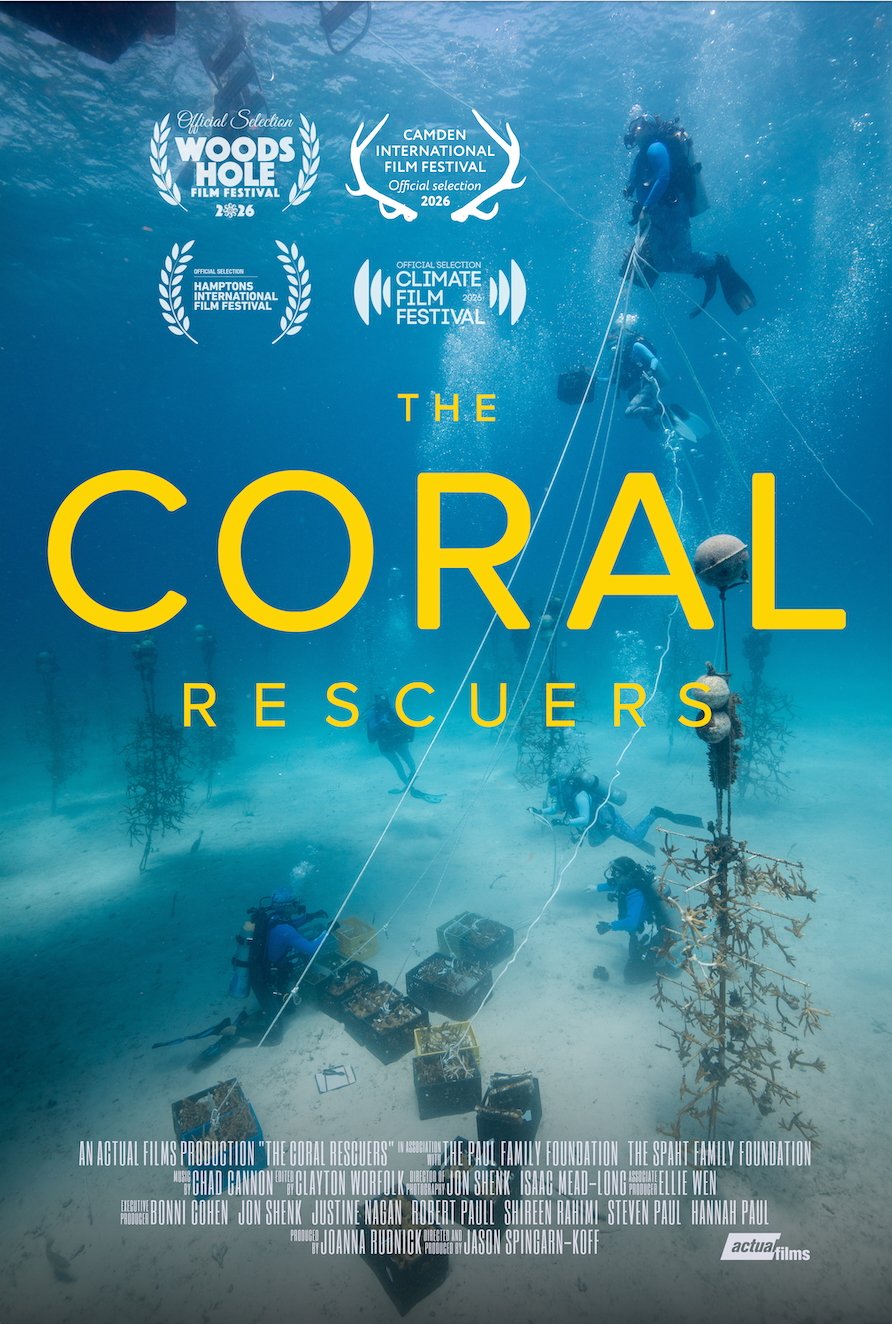
In 2026, Paull’s name appeared among the executive producers of The Coral Rescuers, directed by Jason Spingarn-Koff and produced by Joanna Rudnick and Spingarn-Koff. The film follows scientists and reef guardians working to save Florida’s corals. It is an Actual Films production, and its running time is 39 minutes. After years of company names and board appointments, a film credit changes the texture of the biography. There is a screen, an audience, and a story with an ending chosen by an editor.
Spingarn-Koff announced its Woods Hole Film Festival premiere for July 28. The film’s subsequent screening calendar included Camden and the Climate Film Festival in September, followed by Berkeley, the Hamptons, the University of Miami, and Santa Fe in October. Those dates give the credit a public life beyond a line in a résumé. People could go into a room and watch the work.
The distinction between an executive producer and a director deserves respect. Paull’s credit belongs among the film’s collaborators; directing belongs to Spingarn-Koff. The poster also names executive producers Bonni Cohen, Jon Shenk, Justine Nagan, Shireen Rahimi, Steven Paul, and Hannah Paul. Documentary filmmaking, like company formation, has a habit of gathering a long list of people behind a short description.
In discussing the project, Spingarn-Koff described an interest in the people working on solutions for coral conservation. That focus gives this particular film its relevance to a profile of Paull: the subject is people attempting difficult practical work. The parallel is an editorial reading of the two careers, rather than a claim about Paull’s private reasons for joining the production. The credit itself is enough to establish his involvement.
06 /The company beyond the companies
Paull’s wider professional record includes service on Motorola’s Research Visionary Board and an advisory role with the Bill & Melinda Gates Foundation. He has been an invited lecturer or panelist at institutions including MIT, Stanford, Yale, Brown, Georgetown, and UVA. These are distinct kinds of engagement. A board appointment, an advisory relationship, and an invitation to speak are different things, even when a biography places them in the same paragraph.
His more recent advisory work includes Outsized Ventures, beginning in December 2021, and Zelda Ventures, beginning in January 2023. Sabanci Climate Ventures lists him as a senior advisor. His public LinkedIn profile also records a June 2026 guest instructor appointment for Stanford Engineering’s Advancing Technology Ventures program, a hands-on entrepreneurship program for technical founders. The subject fits the operating and investment experience that preceded it.
These roles shift the emphasis from running one company to working around several. The record offers no single new destination that cancels everything before it. Lux continues to identify him as co-founder and venture partner; advisory organizations give him other responsibilities; the documentary supplies another kind of collaboration. A professional life can accumulate without becoming a straight line. Paull’s is easiest to follow when each role is allowed to retain its own meaning.
07 /A park, a camera, a volleyball court
Away from the organizational titles, three details bring the person into clearer view. Paull enjoys national parks, particularly Yosemite. He cheers for his daughter at beach and indoor volleyball tournaments around California. He also takes an interest in documentary production and working with a camera rig. It is a pleasingly mixed set of enthusiasms: a landscape, a family commitment, and a piece of equipment that can make even a short outing involve rather more luggage.
Those details make the film work feel less like a stray entry. His interest in protecting national parks and his involvement in a conservation documentary occupy related territory, even though they are different activities. Volleyball adds something simpler: time spent showing up for someone else’s endeavor. A profile needs room for that, too. Otherwise, the person disappears behind a particularly industrious collection of nouns.
Paull’s career offers plenty of those nouns - founder, chief executive, partner, advisor, producer. Their sequence tells a story of repeated beginnings and changing responsibilities. The architecture degree remains at one end of it, the coral film at another, with Mahana among the companies in between. The through line is visible in the work: joining people at the point where something still has to be built, organized, or brought before an audience. Even after several beginnings, there is room for another.