At Pivotal, the workday began at 9:06. A cowbell or gong summoned people to a short standing meeting. Breakfast had already been provided. Programmers then settled into their work. In a business devoted to removing waste from software development, even the clock had been given a small adjustment.
Rob Mee’s explanation was practical, with a pleasingly crooked edge. Nine o’clock sounded like an appointment people would miss. Five past nine seemed excessively precise. Six past nine introduced a little fun. The day also had an ending: six in the evening. A company selling better ways to work had arranged to demonstrate one before lunch.
There is a useful clue here to the founder of Pivotal Labs and, later, Mechanical Orchard. Mee pays attention to the arrangements surrounding the work: who sits beside whom, how quickly a mistake becomes visible, what makes a team willing to try something unfamiliar. His career has moved from programming to running a public company and back to building a startup. The question underneath has stayed remarkably consistent. How do you make change less frightening?
Pivotal’s unusually punctual experiment.
A language he could spend his life learning
Mee grew up in Silicon Valley, but the familiar childhood scene of a future founder glued to a bedroom computer does not fit his account. His serious interest in programming arrived in his third year at the University of California, Berkeley, where he had been studying Japanese. Seeing a computer program written out gave him a different way to think about it: here was another language.
He began taking computer classes and practising. That is a more interesting origin than predestination. It leaves room for the moment when an unfamiliar thing becomes comprehensible, and then irresistible. His first encounter with code offered a connection to something he already enjoyed.
Early in his career, he worked in an artificial intelligence laboratory in Tokyo, writing natural language translation systems in Lisp. The combination looks almost suspiciously tidy in retrospect: language, AI, software. Decades later, AI would become part of his next company’s toolkit. In between lay the less tidy business of getting groups of people to build things together.
He founded Pivotal Labs in 1989. His mother suggested the name. For someone whose work would eventually include teaching large companies to reconsider their habits, it was a useful family contribution: short, adaptable, and unlikely to need explaining on the telephone.
Two people, one piece of work
In the 1990s, Mee’s path crossed with Kent Beck’s in the Smalltalk programming community. Beck later recalled Mee’s ability to explain ideas and lead people through the discomfort of trying new approaches. They worked together on projects including a container-shipping scheduler and an online life-insurance system. These were consequential applications with real customers, rather than exercises designed to make a methodology look good.
Beck developed Extreme Programming from experiences of what worked. Mee made a business out of helping teams use those practices. At Pivotal, client developers worked alongside the firm’s engineers. Pair programming made the collaboration literal: people built software together, sharing decisions and knowledge as they went.
The arrangement changed what a consultancy could leave behind. The client received software and experience of making it. Knowledge travelled through the work itself. Mee’s later description of the approach was a compact one: “teach-a-team-to-fish”.
By 2002, he was teaching an Extreme Programming simulation at OOPSLA with Joshua Kerievsky. Participants would work through a nontechnical project, experiencing practices such as automated testing, planning, integration, and pairing. The tutorial treated learning as something people did together. Sitting through a declaration of principles was apparently insufficient; attendees were asked to bring a laptop.
When the customers got bigger
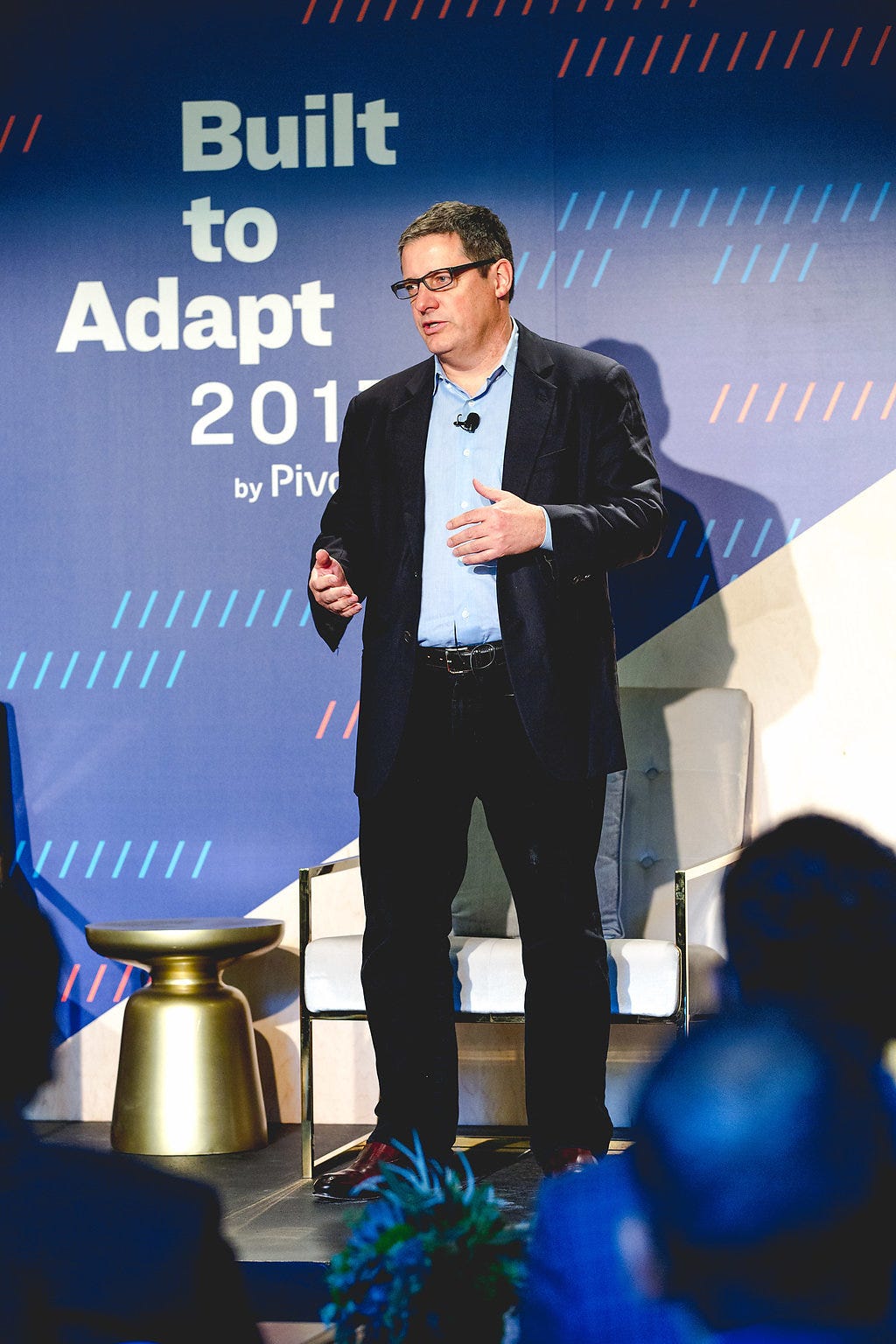
EMC acquired Pivotal Labs in 2012. The following year, the consultancy became part of Pivotal Software, alongside cloud and data technology drawn from EMC and VMware. Paul Maritz, Scott Yara, Bill Cook, and Mee were among the new company’s founding team. The scale of the assignment had changed.
Mee became Pivotal Software’s CEO in 2015. Its work now joined a development method to a platform: teams learned to build applications, then deployed them on Pivotal Cloud Foundry. Running the platform added another discipline to the mix. Helping a client write software was one responsibility; helping it keep that software working was another.
In a 2017 interview, Mee described the commercial turn in unusually plain numbers. Pivotal Labs had once worked with roughly 80 to 90 percent startups. It had shifted to roughly 80 to 90 percent large enterprises, most using its cloud technology. The company had also needed to learn enterprise sales. Engineering skill did not automatically supply that knowledge.
There is something disarming about a software founder admitting the business had to learn to sell software. It suggests an organization changing its own habits while charging others to change theirs. The customers grew; the learning continued.
In April 2018, Mee rang the First Trade Bell as Pivotal became a public company on the New York Stock Exchange. VMware completed its acquisition of Pivotal in December 2019. The chronology offers the usual milestones of a successful technology career. It also leaves a question that a stock-market ceremony cannot answer: what work remains difficult after the company has grown up?
By 2021, Mee was also introducing Geometer, an incubator using Elixir, at the Code BEAM conference. His speaker biography gave the preceding career a comic compression: a first job washing dishes, then three decades associated with Pivotal. Even the interval between companies carried an interest in how to build the next one.
The old system still has to work on Monday
For Mee, one remaining difficulty sat deep inside large organizations. Their older systems performed essential work, but replacing them could mean years of expense and uncertainty. The applications had accumulated dependencies, institutional knowledge, and business decisions. Moving them required understanding more than a programming language.
Mechanical Orchard, founded in October 2022, took up that problem. Mee returned to people he knew from Pivotal, bringing established working relationships into a new company. The ambition was to rebuild critical software in forms that would be easier to operate and change.
His account of the problem is attentive to the people protecting those systems. In a 2025 conversation, he described the mainframe as a fortress surrounded by a “human moat”. Access might depend on networking, security, compliance, and database teams. Before anyone could replace a program, they had to navigate the organization around it.
The metaphor is amusing because the obstacle is recognizable. A new tool may arrive in seconds; permission to reach the necessary data can take weeks. Mee’s long exposure to enterprise work has made room in his technical argument for the queue, the request, and the person who has good reasons to say no.
“Our biggest challenge is inertia.”Rob Mee, January 2026
That short diagnosis also explains why proof matters to him. A team responsible for a functioning system needs grounds for confidence. An attractive replacement still has to produce the right result. The consequences of a failed change belong to the customer long after the presentation has ended.
Let the running software set the exam
In April 2025, Mechanical Orchard launched Imogen, its mainframe modernization platform, and announced Thoughtworks as its first partner. The premise was to study how an existing system behaves, then rebuild it in increments and check that the replacement behaves equivalently.
The running system supplies evidence through its inputs and outputs. Those observed data flows become tests for newly generated code. Generative AI can help produce the replacement; comparison against the old system supplies a way to discover whether the result is correct. Components move into production after verification. The practical attraction is the opportunity to make progress in smaller steps.
- ObserveCapture the old system’s data flows.
- RebuildGenerate modern components.
- CompareCheck outputs against observed behavior.
- ReplaceMove verified components into production.
A simplified view of the generation and verification cycle.
Mee called a late-2024 technical breakthrough the company’s Kitty Hawk moment. By his account, the team had found a way to accelerate generation and validation while retaining its incremental method. The aviation reference was ambitious. The engineering concern behind it was wonderfully grounded: would the thing work?
His announcement also thanked a team committed to useful work and kindness toward one another. That detail belongs beside the architecture. A company descended from pair programming has a particular reason to care how people treat the colleague beside them.
Old friends, new machinery
The financing brought another small story. GV’s Crystal Huang and Michael McBride wrote that their meetings with the Mechanical Orchard team included getting lost together on the Las Vegas Strip during Google Next. They went on to lead a $50 million Series B, announced in August 2024. Even people proposing to untangle enterprise software can lose their way in Las Vegas.
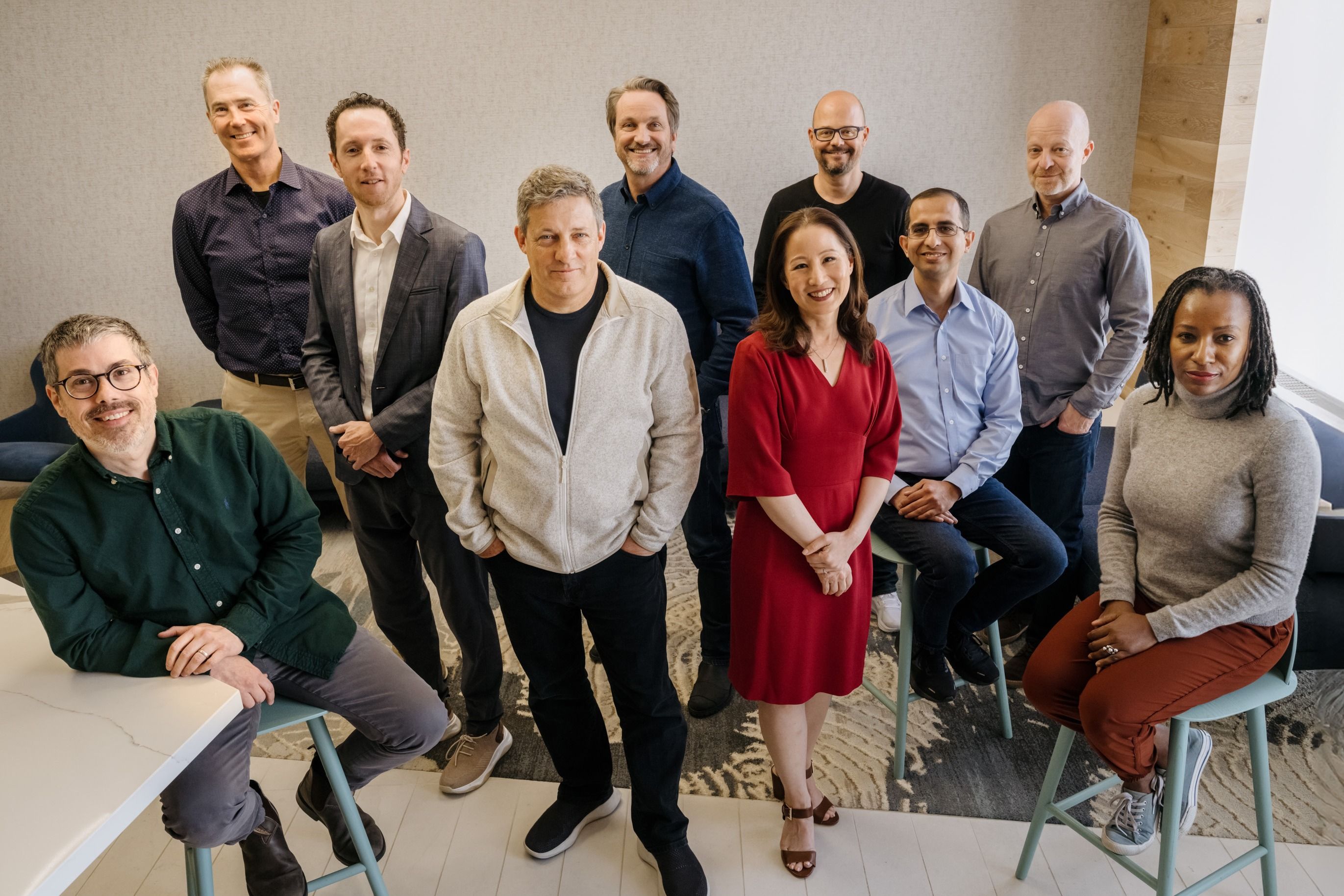
By July 2026, the company was announcing further changes to Imogen: integration with AWS Transform, an autonomous build and verification pipeline, and a partnership with Leidos to reach federal agencies. Its account of the pipeline described automated checks replacing human code review. The tools were evolving; verification remained central to the proposition.
In September, Mechanical Orchard announced ISO/IEC 27001:2022 certification following an independent audit of its information security management system. Such milestones lack the theatrical convenience of a bell on an exchange. For customers deciding who may handle their code and data, they address a more immediate concern.
Mee’s stated ambition extends beyond moving a workload. He wants organizations to be able to keep changing their software afterward, and Mechanical Orchard plans to expand its capabilities beyond mainframes. That makes the destination an ongoing working condition, rather than a single migration date.
The thread back to Pivotal is easy to see: a colleague at the keyboard, a test that catches a mistake, a smaller change that people can inspect. Mee has spent decades adjusting the conditions under which software gets made. There is new machinery in the workshop now. He is still paying attention to how the workday starts.