Apoorv Gehlot encountered an early business problem while he was supposed to be finishing college. Interning with the City of Cupertino, he was asked to assess proposals for an emergency mapping system. He found the options costly and awkward. His response had the confidence particular to a capable student: he would build it himself. The project became part of his senior work at the College of the Atlantic. A municipal procurement question had acquired an unusually personal answer.
The resulting system brought information about roads, buildings and supplies onto a map. These were practical details, intended to help officials understand a changing situation. A map earns its keep when someone can use it to make a decision. That is a demanding standard for software, and a useful place to begin the story of a future software company chief executive.
Gehlot would later co-found Matellio and become its CEO. The connecting thread is an interest in systems that do something useful for the people relying on them. His career has passed through geographic information, overseas operations, enterprise customers and, more recently, the business of putting AI into working software. The vocabulary has expanded considerably. The opening question remains refreshingly plain: what problem needs solving?
A college chosen with a business in mind
Raised in Jodhpur, Rajasthan, Gehlot attended Mahindra United World College before studying in Maine. He approached the choice of college with a particular ambition: to bring scientific ideas into conversation with economics and emerge with a business. It is an admirably concrete question to put to an admissions office. Universities promise many things; a route from curiosity to a paying customer is a useful one to examine.
At the College of the Atlantic, he studied human ecology with a concentration in geographic information systems. His 2009 graduate statement connected that education to understanding the relationship between people and their environment. He wanted to develop his skills in GIS and data modeling, and described a continuing commitment to being a human ecologist and global citizen.
That combination gives his education a recognizable place in the career that followed. Geographic information systems organize data around location. Human ecology asks how relationships fit together. Enterprise software has its own complicated geography, consisting of organizations, users and processes. The parallel is an editorial way to understand his route, rather than a claim that a student in Maine had already drawn Matellio’s entire future on a whiteboard.
His early professional work kept him close to mapping. It included roles at G4 Global Tech and the University of Maine, along with GIS teaching work at the College of the Atlantic. These were settings where information had to be collected, organized and made legible. The glamorous part of a map is often its appearance. Much of its value lies in the work that makes the appearance trustworthy.
There was another concrete result from his college years: a GIS program for Acadia National Park’s annual BioBlitz, and a National Park Service contract. His academic advisers included people working in economics, mathematics, physics and GIS. That mix gave his early business ambition several kinds of expertise to draw upon. The record of his undergraduate work already includes a city project, an environmental application and a commercial agreement. For a student hoping to leave college with a business, these were useful things to pack.
- 2009College of the Atlantic
GIS & human ecology - 2014Matellio founded
Co-founder - 2022June 10
Appointed CEO
2014: a company takes shape
Matellio dates its founding to 2014. Its work developed around software engineering for other businesses, a field in which the customer brings an ambition and a considerable amount of existing complexity. There may be systems to connect, workflows to understand and an organization that cannot stop operating while the new software is being built. A neat diagram is an excellent beginning. The business still has to function on Monday.
Gehlot’s responsibilities included overseas operations and enterprise clients. That puts the co-founder close to the difficult exchange between what a business wants and what an engineering team can deliver. The customer may describe a desired result; the development work needs decisions about how to get there. Someone has to keep those two conversations attached.
Matellio now describes its work through product innovation, workflow modernization and scalability. Those categories give some texture to the executive title. Leading a services company means attending to several customers’ problems, rather than shepherding a single consumer product. The work asks for repeatable methods and the judgment to recognize when the next assignment differs from the last one.
“You can’t predict what data you’ll need.”
Apoorv Gehlot, on his student mapping project, 2009
June 2022: the title catches up
On June 10, 2022, Matellio’s board appointed Gehlot CEO, effective immediately. He remained a board member. The appointment emphasized his role in the company’s vision and growth since its beginnings, together with experience in sales, marketing, technology and global operations. This was a founder taking formal responsibility for the next stage of a business he had already helped build.
The announcement also named changes around him. Puneet Rao moved into the global COO role, while Deepak Singh Gehlot became executive chairman of Matellio India. Dilip Singh served as founding partner and executive chairman of the Matellio board. The names matter because companies grow through a division of responsibilities. Even a founder with an appetite for solving problems needs colleagues with responsibilities of their own.
For the new CEO, the stated objective was to help clients grow through engineering teams capable of designing, building, deploying and supporting products. The last two verbs deserve their place. Software continues to demand attention after its unveiling. A launch may supply the photograph; support supplies many of the subsequent working days. His appointment framed the task as carrying the company into a growth phase.
A founder’s next assignment.
Advice has to survive implementation
In May 2024, Matellio announced an alliance with New Port Partners, a business advisory firm. The arrangement paired strategic advice with Matellio’s technology and software delivery. Gehlot publicly welcomed the partnership, with particular attention to opportunities in technology, media and telecom. It was a business development move with a familiar practical concern beneath it: connect the decision about what to change with the work required to change it.
The companies described a scope including 5G, the Internet of Things, cloud and edge computing, and AI. Matellio’s chief strategy officer, Amrit Singh, emphasized understanding which business problems deserved priority and what caused them. The technology list was substantial, but the sequencing was sensible. A business can acquire a remarkable collection of technical capabilities and still need help deciding what to do first.
The partnership illustrates the environment Gehlot operates in as CEO. Customers need both a direction and a workable implementation. Bringing advisory work and engineering together creates a route between the two. Whether an individual engagement succeeds depends on its execution; the alliance’s announced purpose was to make that connection part of the offer.
The AI conversation reaches the foundations
By October 2025, Gehlot was publicly discussing enterprise AI in terms of readiness. His emphasis fell on clean data, governance and connected systems. He promoted a session by Matellio colleagues Puneet Rao and Keith Amann about the distance between an AI strategy and something that can scale. It was a useful reminder that the preparations can be less theatrical than the demonstration and more consequential to daily use.
His writing also addresses the choice of an enterprise software partner. A September 2025 essay examined how software can become awkward when it fits a business poorly, and why choosing the builder matters alongside deciding to build. Read beside the AI readiness discussion, the concern is consistent: technical decisions have to fit the circumstances of the organization making them.
On October 1, 2026, Matellio announced AWS AI Competency in the Generative AI category. The company described work spanning discovery, architecture, deployment and continued optimization. Gehlot described its position as “building software and bringing AI into software.” That short phrase is more helpful than a grand prediction. It locates the company’s effort in products and engineering work that customers already have reason to care about.
The announcement also described using AI within software development itself. That gives the CEO two related questions to manage: how AI changes what the company delivers, and how it changes the process of delivery. Neither question is settled by an attractive prototype. The declared aim is production use, where integration, reliability and continued attention become part of the price of admission.
A little room for the cars
Gehlot’s interests extend to cars, cooking, travel and nonfiction. As a child, he imagined becoming an automobile engineer or designer. He also enjoys obscure facts and policy discussions. It would be easy to conscript every hobby into an explanation of executive skill. Cooking deserves the occasional evening off from being a leadership metaphor.
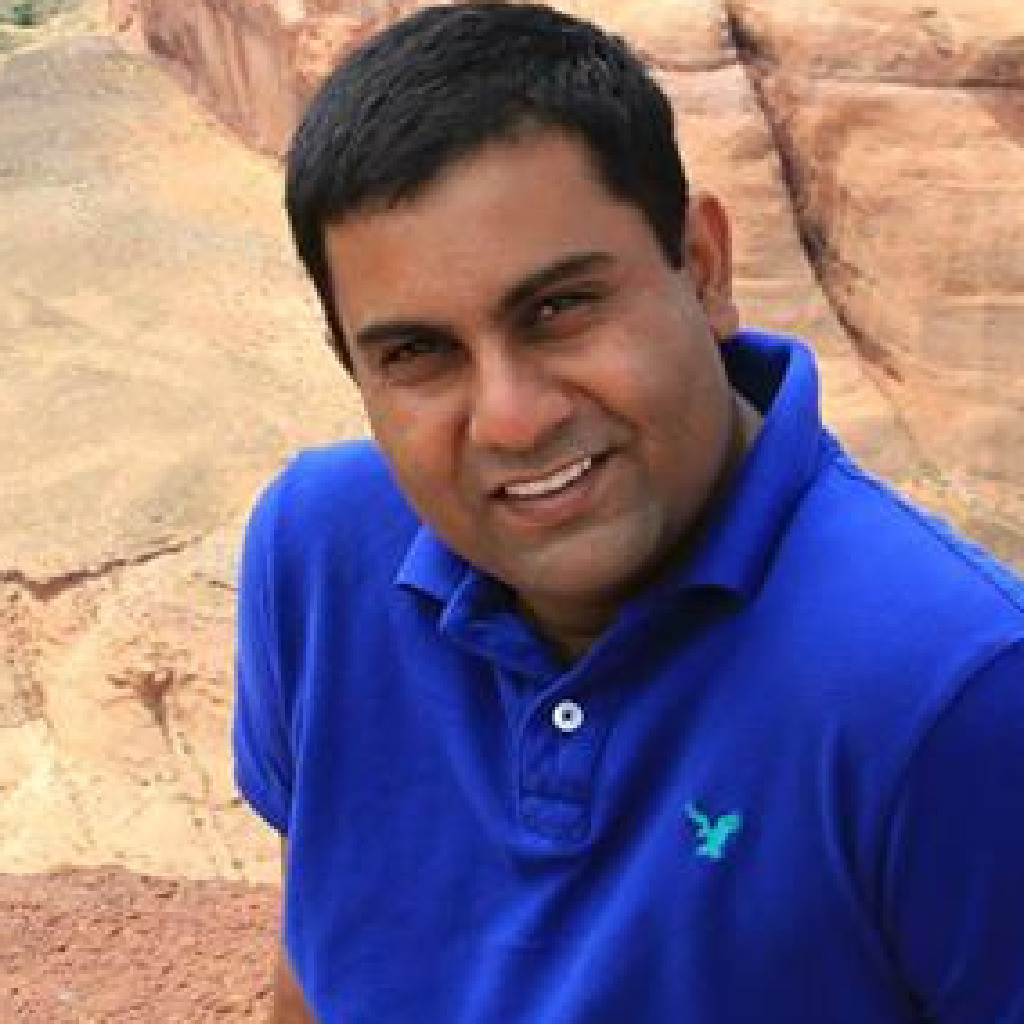
His stated approach to success gives the person behind the title some definition. He measures professional progress against goals and timelines, while also valuing his roles as a parent and spouse. He has described curiosity and experimentation as things worth continuing throughout a technology career. The picture is of someone who wants achievement to remain connected to choices he has actually made.
The Cupertino project offers a fitting final view of that career. A student looked at the available proposals and thought there was another way to answer the problem. Years later, the assignments involve more people, more systems and a different set of technologies. The test remains whether the result can serve its intended user. A well-made map has somewhere to take you.