The first uniform was his father’s old work shirt. On Saturday mornings, Rob Castaneda went to the IKEA loading dock and helped wash a truck. The job took an hour and a half. The pay was five dollars. His father had invented the position for him, a small introduction to the obligation and satisfaction of turning up. Later, when Castaneda had a warehouse job of his own, he could wear the same shirt as his dad with one important distinction: this one belonged to him.
Long before the company, there was the pleasure of being useful. Castaneda remembers getting furniture orders onto trolleys before customers arrived at the collection gate. A customer who expected a wait could leave with a pleasant surprise. It was an ordinary job with a rather good lesson tucked inside it.
Today he runs ServiceRocket from Palo Alto. The goods are less obliging than flat-packed furniture: enterprise software, customer training, implementation and support. The question behind the work has remained familiar. Has the person who came here for something actually got what they need?
A helpdesk education
Castaneda grew up in western Sydney and studied computing science at the University of Technology Sydney. The academic opening was unpromising. In his first year, he placed second from last in a class of 150. Faced with the prospect of missing out on a placement, he went looking for work himself. At 17, he joined Borland’s Sydney helpdesk.
Borland made tools for people who wrote software. Supporting its products meant fielding questions about things such as C++, Delphi and databases, often on the telephone, with a customer expecting a useful answer there and then. It was a practical education in the distance between knowing something and explaining it.
He moved through pre-sales engineering, research and development, and training. Each role offered a different view of the same exchange. Engineers could build something capable; customers still had to fit it into their working day. Teaching gave him a way to connect those two worlds.
He continued his degree while working and graduated with honours in 2001. By then, he had already started CustomWare, the business that would become ServiceRocket. Entrepreneurship arrived as an activity before it became an identity. He was doing the work; the vocabulary could catch up.
“Nothing happens until someone learns something.”
Rob Castaneda
The observation is an effective description of his career. A software licence gives someone access to a tool. Learning makes it usable. Support keeps it usable when something changes. Castaneda built a company around that continuing work, where the delivery is measured by what another person can now do.
- 2001Starts CustomWare while finishing at UTS
- 2005Opens the Kuala Lumpur office
- 2008Moves to Palo Alto
- 2013CustomWare becomes ServiceRocket
- 2025Joins WiseTech’s board; receives a UTS Fellowship
The software needs company
One early customer request brought him into contact with two other Sydney founders. Castaneda recalls an introduction in 2003 to Atlassian’s Mike Cannon-Brookes and Scott Farquhar. He wanted to buy Jira, with access to its source code, for Johnson & Johnson. A specific client problem helped begin a relationship that would run for decades.
As Atlassian concentrated on its products, ServiceRocket took on work around them. The team developed training, handled early support and built commercial apps. These were practical responses to customers needing help. A product could travel further if someone was there to teach it, adapt it and answer questions.
The partnership also placed Castaneda inside an unusual business community. He remembers early partners helping one another, with a shared interest in Atlassian doing well. Cooperation had commercial logic: more successful customers meant more opportunity for the businesses serving them. Nobody needed to own every piece of a customer’s project.
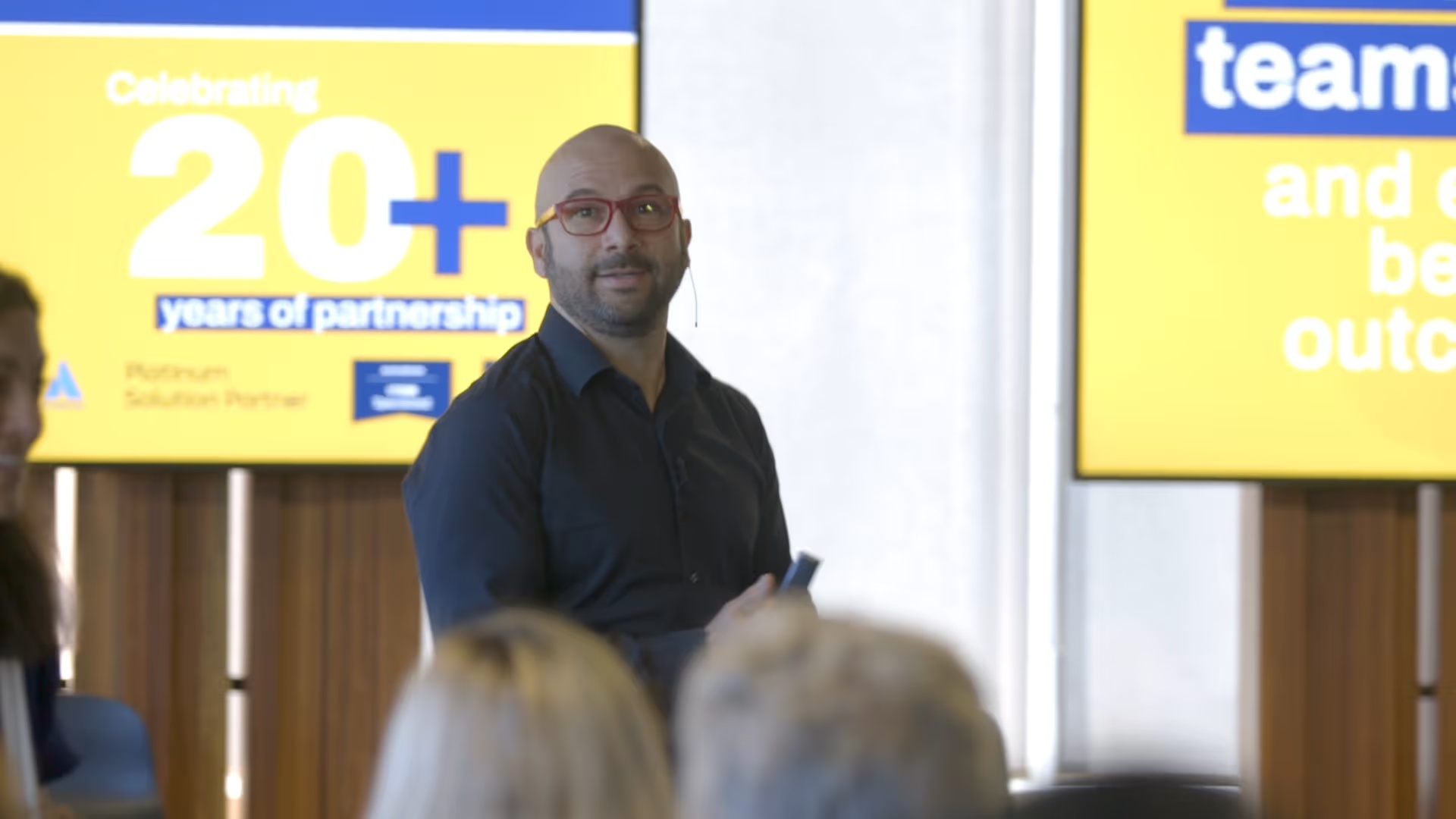
That relationship has required adjustment as Atlassian’s business has grown. Castaneda now talks about helping customers plan across several quarters or years, sometimes without ServiceRocket handling the software transaction. The work has to earn its place through the value it adds.
In 2025, ServiceRocket received Atlassian’s Co-Selling Excellence award. Castaneda enjoyed the recognition, but his explanation of the business remains stubbornly practical. A long relationship does not confer a permanent right to the next project. The customer still gets to choose. Reliability has to survive another encounter.
A feasibility study with the family
The company’s geography grew along with its customers. Kuala Lumpur became an office in 2005, drawing on a multilingual technical workforce that could support users internationally. Castaneda moved to Palo Alto in 2008, during the financial crisis. CustomWare adopted the ServiceRocket name in 2013.
In September 2025, ServiceRocket marked twenty years in Southeast Asia with events in Kuala Lumpur. Its regional presence had expanded to include Singapore and Manila, with the 2022 acquisition of the Philippines-based NetSuite development firm Ceana Technology adding another set of skills. The original support office had become part of a broader operation.
He approached another expansion by moving the family. To test the case for Chile, he asked his board for 30,000 dollars and three months, packed his bags and went. The business questions mattered. So did the experience of living in the city. He wanted to understand a place beyond the view available from a spreadsheet.
The family had also tried living in Kuala Lumpur. These stays gave the founder a more immediate way to judge where a team could build a life. International expansion brings questions about customers, coverage and recruitment. It also brings the entirely reasonable question of whether someone enjoys coming home there.
His own family makes a tidy single-country introduction difficult. He is Australian, with a mother from Malta and a father from El Salvador; his wife is Filipino. When someone asks where he is from, he has observed, the answer depends on the context. It is a useful perspective for a business that asks people across cultures to work together.
In conversations about belonging, he returns to the experiences people carry into a workplace. Company shirts and the name “Rocketeers” give colleagues a shared identity. The more demanding work is making room for the identities they already have. A global company has to manage that exchange every day.
The trouble with being agreeable
Castaneda is candid about having confused good intentions with a workable management system. As ServiceRocket spread across locations, small requests for benefits accumulated. Each approval could seem sensible in isolation. Together, they created expectations and inconsistencies that became difficult to sustain.
In a January 2023 essay, he described how close this approach had brought the business to trouble. Trying continually to keep everyone happy had drawn attention away from the company that made the benefits possible. The generous decision in the room could become an awkward obligation elsewhere.
His replacement explanation came from a tree. A business has to keep growing the capacity that supports its people. Strip away the roots and branches, and eventually there is little left to distribute. He wanted colleagues to see themselves as stewards of that shared undertaking.
Grow the Tree.
Share the Fruit.
He has applied a similar preference for specifics to culture. ServiceRocket developed five values in 2007, then added ten leadership behaviours. A statement about developing colleagues becomes more useful when it includes examples of what to do and what to avoid. Managers can discuss conduct rather than merely agree with a word on a wall.
He publishes some of this thinking in Leadership Behaviors, his newsletter. The topics include career paths, planning, responsibilities and saying goodbye to a colleague. The subject matter has the texture of running a company: recurring decisions that deserve care, even when nobody is giving a keynote about them.
A borrowed hat, a continuing education
There is room in Castaneda’s life for a less managerial kind of expression. He likes instrumental guitar, including Steve Vai. His Business of Software biography jokes about his resemblance to Joe Satriani and an ambition to join him onstage. An electrical outlet, it suggests, will do as a performance venue for now.
The guitar is a pleasing companion to the helpdesk story. Both involve practice, listening and the occasional wish that the person at the other end could hear exactly what you meant. Castaneda’s professional life has involved a great deal of explaining. Music allows the words to take a break.
He has also kept returning to the institutions and people who helped him learn. He taught at UTS from 2000 to 2007, mentored students and supported scholarships. Entrepreneurs’ Organization gave him a community of founders with different businesses and perspectives; he has served as president of its San Francisco chapter.
When he delivered a UTS graduation address in 2018, a personal piece of unfinished business surfaced. He had never got a good graduation photograph with his mother. She was in the audience. He asked if someone could lend him a graduation hat so they could finally take one. A ceremony full of completed degrees briefly acquired a very practical family errand.
In October 2025, the university conferred a Fellowship recognising his continuing contributions. That July, he had joined WiseTech Global’s board as an independent non-executive director. In June 2026, he was still explaining the choices behind ServiceRocket, discussing its American expansion and board accountability on The Briefing Room.
The responsibilities have grown since the loading dock. There are customers in different time zones, colleagues building careers and directors asking questions. Castaneda’s stated ambition is to be a reliable partner in their growth. It is a demanding promise precisely because it comes due in ordinary moments: the question answered, the colleague taught, the customer ready to get on with the day.