Jennifer Dulski’s early education in management involved a peculiar arrangement: she was responsible for helping a boat move faster, yet she had no oar. As a coxswain, first in high school and then at Cornell, she steered, watched the race and coached the people doing the rowing. Her contribution had to be useful to people who were working considerably harder with their arms.
A race made the consequences unusually clear. Feedback could not wait for an annual review. A change in pace had to reach everyone. And a motivational speech that worked for one rower might do very little for the person sitting nearby. Before the corporate titles arrived, Dulski was learning that a shared goal does not make people interchangeable.
She later explained the awkwardness neatly: “though I was in the boat, I wasn’t rowing.” Earning respect was part of the job. So was understanding how to help each person contribute. It is a useful starting point for a career that has moved between classrooms, startups and some very large technology companies.
A Post-it note with a bigger audience
Dulski began her working life in education. After graduating from Cornell in 1993, she founded Summerbridge Pittsburgh, now called Breakthrough Pittsburgh, helping students with fewer resources prepare for college. The program used a students-teaching-students model. Young teachers learned by taking responsibility for somebody else’s learning.
The introduction to her next field was charmingly low-tech. At the school housing Summerbridge, a board member wrote down Yahoo’s web address on a Post-it note. Dulski tried the site and became interested in what the internet could make possible. Her education program reached a few hundred students a year. Online, the potential audience was much larger.
She earned her MBA at Cornell in 1999 and joined Yahoo that year. The change brought her into a commercial business, with different demands and different measures of success. But the appeal was connected to the work she had already chosen: helping people gain access to information and opportunity, with a chance to reach more of them.
There is something pleasing about a career in internet leadership beginning with a handwritten address. Even a business built around discovery may need someone to point you toward the door.
The useful demotion
At Yahoo, Dulski moved through marketing roles and eventually into general management. One transition required a choice that would look distinctly unhelpful on a promotion chart. She wanted to run a business. The available role was at a lower level than her marketing position. Taking it meant accepting a demotion.
She took the job. The work offered experience she wanted, and that mattered more than preserving the level she had reached. In her later account, the decision opened a route her existing position could not provide. The apparent setback was part of learning a different job.
By 2007, she was Group VP and General Manager of Local and Marketplaces. Then she left to co-found the business that became The Dealmap, with Chandu Thota. Moving from an established company to a startup meant another exchange: less institutional certainty, more opportunity to build something herself.
The startup took repeated changes to find its way. Dulski has described four years of trying different directions before the eventual success. Google acquired The Dealmap in 2011, and she joined Google to lead product management for Shopping and Product Ads. The tidy acquisition entry on a résumé contains a much less tidy education.
- 1993Summerbridge
Pittsburgh - 1999Yahoo
- 2007The Dealmap
- 2011Google
- 2013Change.org
- 2017Facebook
- 2020Rising Team
+ Stanford
An empty circle beats a clever guess
One of Dulski’s more useful discoveries as a manager came from an employee who was clear about what she wanted. Money mattered to her. Recognition and other rewards held less appeal. Dulski realized she might otherwise have offered the sort of encouragement she herself would appreciate.
That encounter helped shape the motivational pie chart. People divide a circle according to what matters to them at work, then indicate how satisfied they are with those things. The exercise makes room for answers a manager might overlook. Responsibility, compensation, learning and public appreciation need not occupy equal slices.
The drawing is simple enough to resist management theatre. Someone has to ask a question, and someone else has to answer honestly. A manager can admire the graphic all afternoon, but the useful information is in the differences between people.
Dulski also uses a personal user-manual exercise. Colleagues describe preferences, pet peeves, how to earn their trust and how they like to receive feedback. Household appliances arrive with instructions; people usually arrive with a calendar invitation. Her exercise supplies a little of the missing documentation.
A party needs a host
In January 2013, Dulski became president and COO of Change.org. Her responsibilities included growing the organization and the systems supporting its international community. The platform put her close to people trying to persuade institutions to act, often without a formal position of authority themselves.
In 2017, she moved to Facebook to lead Groups and Community. The company was different; the importance of participation was familiar. A community depended on people wanting to return, contribute and recognize one another. Simply providing a place to gather left plenty of work unfinished.
Dulski has credited Flickr co-founder Catarina Fake with a helpful analogy: building a community resembles hosting a party. The host welcomes people, makes introductions and helps conversations begin. When conflict appears, the host has a responsibility to respond. A room full of guests is only the beginning.
Her own management practices included making room to discuss mistakes. At Change.org, a Festival of Failure allowed people to share what had gone wrong and what they had learned. The name supplied some levity to a conversation that can otherwise be difficult to start.
“If you don’t let them fail, they won’t grow.”
Jennifer Dulski
Permission to make mistakes came with attention to what followed. A failure became something colleagues could examine together, rather than a private embarrassment everyone quietly worked around. For a leader who wanted people to develop, the lesson mattered beyond the immediate result.
The book with other people at its center
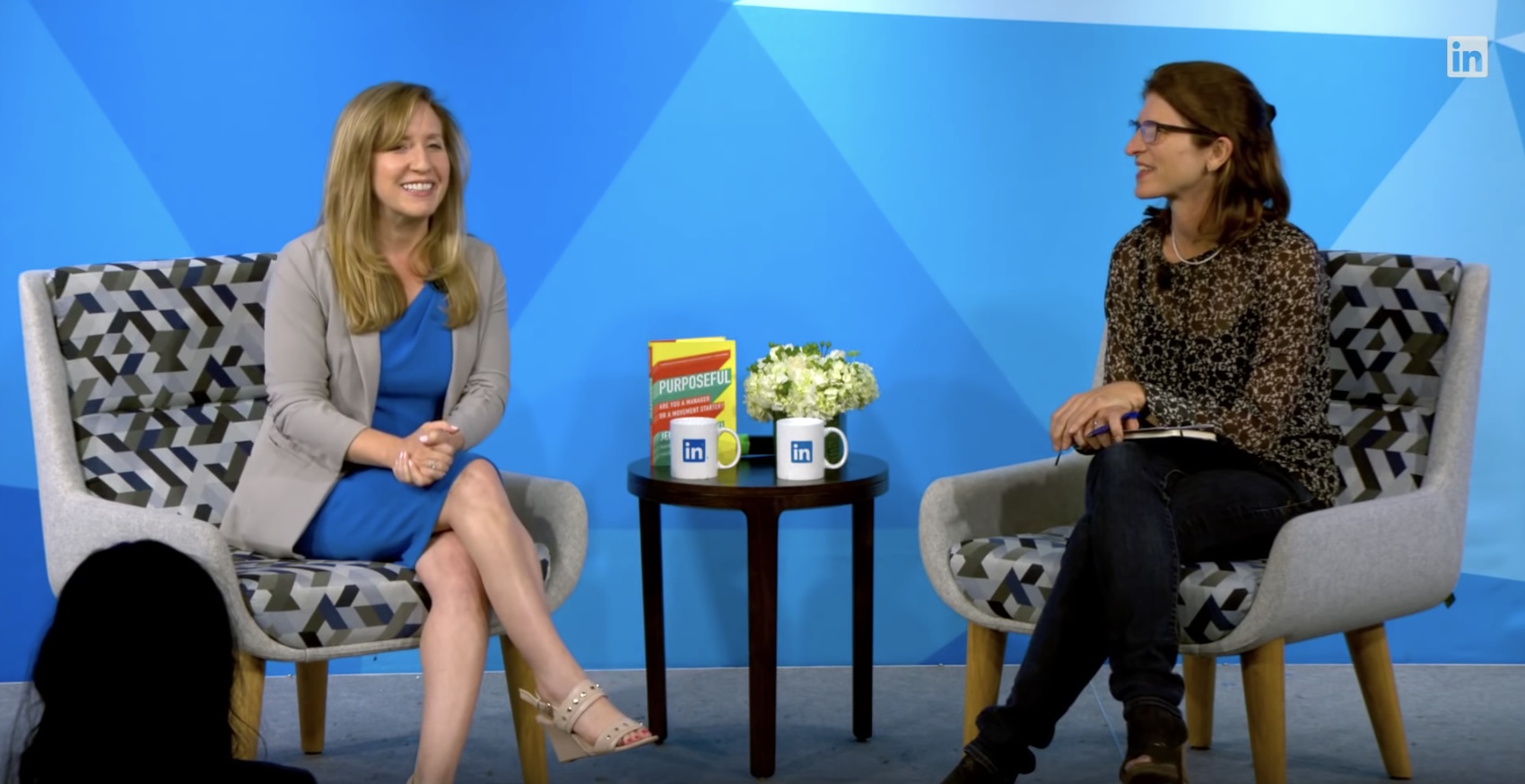
Her 2018 book, Purposeful: Are You a Manager or a Movement Starter?, drew on the people she had watched organize and create change. Its title posed a challenge to anyone content merely to keep an organization running. What might become possible if more people could mobilize others around something they believed mattered?
The book developed from a writing habit as well as her executive work. When regular publishing felt intimidating, Dulski began looking back at experiences and identifying lessons she could explain. A talk in London brought an introduction to someone in publishing. For the book itself, she built an outline and interviewed people whose stories could carry its ideas.
She also had a phrase for doing things that felt frightening: “If I can do this, I can do anything.” She compressed it into IICDTICDA, an acronym with very little chance of being mistaken for an elegant piece of branding. Its purpose was practical: use one uncomfortable experience to make the next challenge feel more manageable.
The classroom comes back
In April 2020, Dulski founded Rising Team. Later that year, she began teaching at Stanford Graduate School of Business, where her courses include Managing Growing Enterprises. Education had returned as an explicit part of her working life, alongside another attempt to build a company.
Rising Team began with a problem she had encountered as an executive. Senior leaders could receive personal coaching and substantial development support. Extending that attention to all the managers in an organization was harder. Meanwhile, an employee survey could reveal a problem without giving the manager much help deciding what to do on Monday.
Her company’s guided team sessions let managers practice with the people they lead. Topics have included appreciation, expectations and natural talents. In June 2024, Rising Team announced an $8 million Series A led by Zeal Capital Partners and plans to deepen its investment in AI.
Funding for Rising Team’s next chapter, including personalized AI leadership coaching.
Its current platform combines team experiences with Arti, an AI leadership coach, roleplay and growth plans. Dulski’s ambition is to make development more personal and more widely available. The product asks whether software can help a manager use what colleagues choose to share, and practice the conversations that might otherwise be improvised.
There is a lighter side to her habit of studying leadership everywhere. Her writing has found examples in Ted Lasso, The Bear and Top Gun: Maverick. A television kitchen supplies rather different feedback from a university seminar. Both can give people something concrete to discuss.
In August 2026, Dulski joined Lisa Kay Solomon on How We Future. They had been Cornell roommates; now both taught at Stanford. The conversation returned to learning, purpose and helping other people develop. Across all those changes of workplace, Dulski was still interested in what someone else might become capable of doing.
That gives the boat a lasting place in her story. Steering requires paying attention to the people moving it. The oars remain in their hands.
Keep the conversation going
Visit Rising Team and the Purposeful book website. Follow Dulski on LinkedIn, X and Facebook, or explore the Purposeful Instagram account.
Watch her How We Future conversation with Lisa Kay Solomon. Read her career interview, the Rising Team funding report, and her conversation about writing Purposeful. Meet the company in its Rising Team profile.