For Riley Brown, a good question has a way of becoming a job. His friends have a name for the recurring pattern: “Riley’s phases.” He has described stretches devoted to poker, reselling, crypto, content and artificial intelligence. Each arrived with the force of a fresh obsession. Each eventually gave way to a newer one. The sequence sounds improvised, yet it has produced a recognizable career: learn a tool in public, show people what it can do, then ask whether the demonstration could become something more durable.
The current version of that question concerns software. Brown spent years teaching people about AI through short videos and longer tutorials. Then the tools he explained began to make working interfaces from ordinary language. A viewer could watch a demo and, with a little patience, try the same thing. Brown moved from showing the trick to helping build the stage. He co-founded Vibecode, a company that lets people create mobile apps with AI. In 2026 he was talking about another venture, Agent Native, and about agents that carry out pieces of his own production work.
The chronology is neat only from a distance. Up close, it has the untidy texture of actual curiosity: a six-week job, poker games in Portland, a book business, internet experiments and a great deal of time spent testing what happens when a new tool meets a person with an idea.
The phases before the camera
Brown has written that college, between 18 and 22, felt strangely fast to him. The cycle of tests and papers offered little of the novelty he wanted. At 23, he left a job after about six weeks and worried that he had stepped off the expected path. Looking back, he treated the departure less as a lapse than as an early clue about how he works: he needed problems that felt real enough to hold his attention.
His inventory of what followed reads like a cabinet of entrepreneurial curiosities. He played high-stakes poker in Portland. He started a book company, then sold its inventory and traffic to an Amazon competitor. He explored NFTs and crypto. There is an unguarded comedy in his account of those years, particularly in the way he lets the crypto chapter sit beside the rest without dressing it up as destiny. His friends' “phases” label survives because it is fair.
He offered his own, less tidy description of his work: “exploring the deepest trenches of whatever” he found most interesting at the time. That is a poor answer to a form asking for a job title and a fairly good description of an internet career. An interest can become a project before it becomes a company. It can also be abandoned after teaching its lesson. Brown seems comfortable saying so.
“My friends call these ‘Riley’s phases.’”Riley Brown, on the pattern his friends noticed
A new tool, and an audience watching
Artificial intelligence gave Brown a particularly rich supply of new problems. He has recalled trying Midjourney in 2022. He began making AI content as the category spread from image generation into everyday writing, research and creative work. Instagram and TikTok were his starting points; later came YouTube and X. His videos tended to favor the visible test: here is the tool, here is the prompt, here is what happened. The suspense was small but effective. Would the thing actually work?
By 2024, Brown was describing more than a million followers and subscribers across Instagram, TikTok and YouTube. In an August 2026 interview, he said his combined following across platforms was approaching 1.7 million. Such totals are snapshots, and platforms count audiences differently. The durable fact is the shift in his position. An experiment that once occupied his own afternoon could now reach enough people to become a shared conversation about what to try next.
He has also described the business behind the camera. In 2024 he wrote that sponsorships alone had reached $150,000 in monthly recurring revenue at that point. It is a striking claim, but it is his own dated account, not a number to carry forward indefinitely. More revealing is the method: he discovered that the same curiosity that drew him into unfamiliar tools could be made legible to a much larger audience, one demonstration at a time.
Brown makes dedicated material for Instagram and TikTok and prefers longer form work for YouTube and X. That distinction matters. Each platform asks a different amount of patience from a viewer. A good sixty-second demonstration can spark interest; a longer piece has room to examine where the tool fails and what a user has to do next. His audience grew around the first promise, but the second created room for more serious questions.
When code became something you could see
Brown traces his turn toward AI-assisted software creation to Claude Artifacts in 2024. The novelty, for a person without a conventional software background, was immediate feedback. Code no longer had to arrive as a wall of text that required a separate environment to run. It could become an interface in front of you. The change sounds modest until one imagines the difference between receiving a recipe and smelling dinner.
He began making small applications, including image generators and a Figma-style experiment, and posting what he had made. People responded with their own projects. He started a free community without, by his account, much of a plan. Early on, hundreds of people a day were submitting examples. The activity predated the phrase “vibe coding” in his telling; he and others called it software composing or AI coding. Whatever the label, the attraction was concrete. Someone with an idea could get a version of it on a screen.
That feedback loop helps explain Brown's leap from creator to founder. Videos could reveal what excited people and which obstacles kept returning. A product could attack one of those obstacles directly. In a 2025 interview, he said code had become “the connective tissue” between the AI tools he had spent years showing on camera. He could build utilities for his own videos, connect services that had previously been separate, or create an interface tailored to a single job.
One utility he described framed screen recordings inside an iPhone outline, turning raw app footage into clearer social videos. It is a small example, almost comically practical beside the rhetoric that often surrounds AI. It is also a revealing one: the new capability did not have to produce a grand platform on day one. It could save a creator from repeating an irritating task on Tuesday.
Three founders and an app that makes apps
In 2025 Brown moved to San Francisco to start Vibecode with Ansh Nanda and Kehan Zhang. The company's proposition was easy to say and difficult to deliver: describe an idea on your phone, then build and publish an iPhone app without first learning to write code. Brown compared the shift he hoped for to the way easy video tools had widened participation in content creation. If more people could make a clip, perhaps more people could make a small piece of software too.
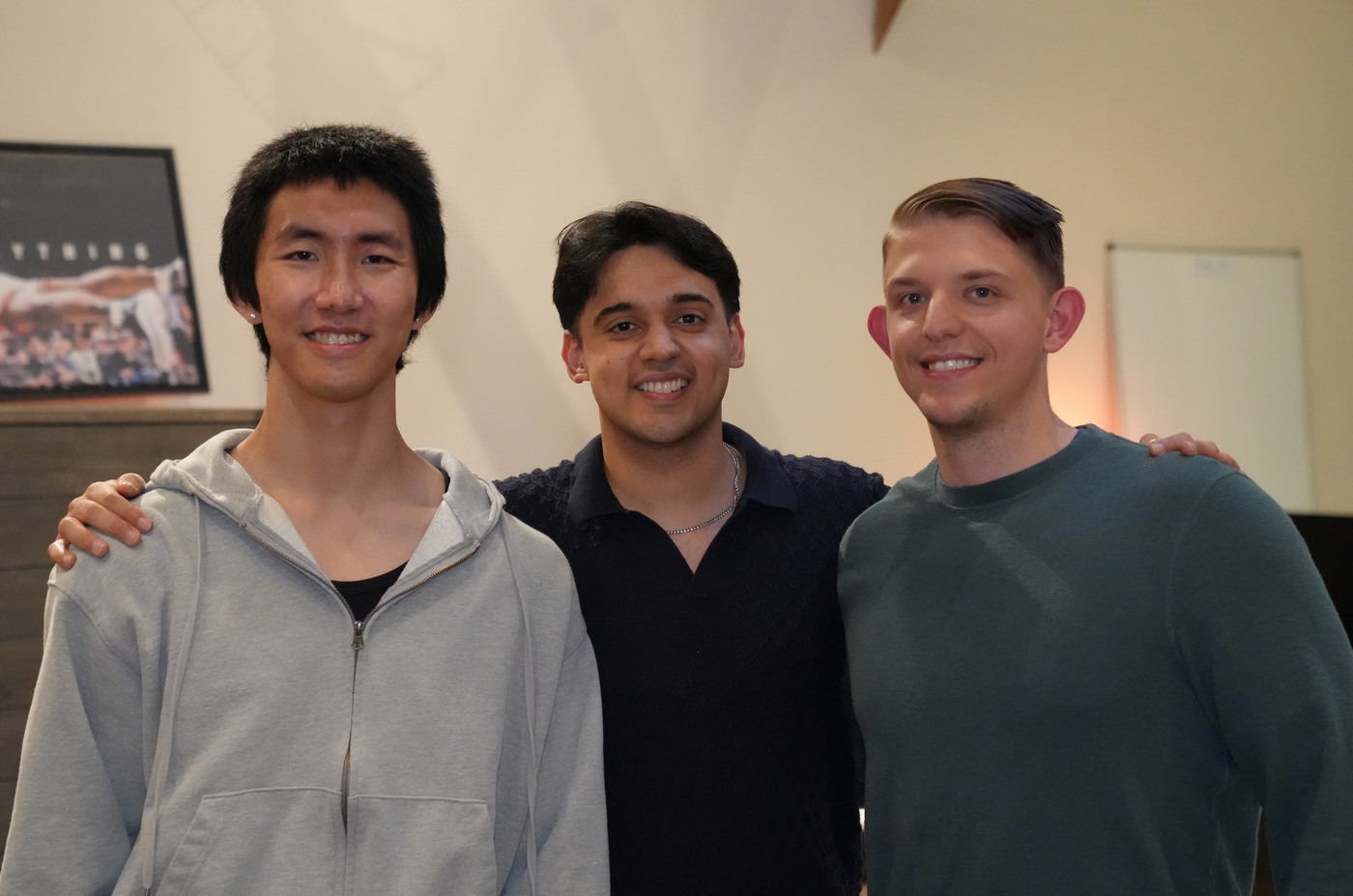
The company announced a $9.4 million seed investment led by Seven Seven Six, Alexis Ohanian's fund. Funding gave the idea a team and time to develop. It did not settle the central question. A mobile app builder has to make creation easy enough for beginners while handling the unglamorous parts of software: accounts, data, payments, publishing and maintenance. A convincing demo lasts a minute; a useful app has to keep working after the applause.
Brown's public examples often leaned toward the playful. He demonstrated a “selfie roaster,” an app that would react to a photograph with a joke. The gag has a purpose. It makes an abstract claim about accessibility testable in a minute. A viewer can see the prompt, the generated interface and the result. The app itself may be silly; the act of making it is the serious point.
“Code is just kind of the connective tissue between all of it.”Riley Brown, on connecting the AI tools he used
The editor stays in the room
By August 2026, Brown was describing Agent Native as a new company and discussing work on AI agents. He also spoke about Chorus and about helping companies use agents in their operations. The theme connects naturally to the earlier chapters: first make an idea visible, then make the tool easier to use, then ask which repetitive tasks the tool might carry through on its own.
His own content operation serves as a workshop. He described using AI for research, planning, video hooks, graphics and thumbnails. A researcher workflow grounds material in YouTube; other tools help assemble visuals or turn a rough idea into a more deliberate opening. Brown says the introduction matters especially to him because once he is inside the subject, explaining it comes naturally. The work of getting someone to pay attention in the first place still takes care.
He has been candid about limits. He continues to hire video editors and said that the editing itself was not yet where he wanted AI to be. He also pushed back against the obvious temptation to use automation merely to produce more. “What I want is better,” he said of his content workflow, arguing that quality sustained over time matters more than batching material until it feels soulless. That is a useful distinction from a person whose job depends on publishing often.
The tension is familiar to anyone who has found a faster way to work. Speed can clear room for thought, or it can fill the room with more work. Brown's public experiments sit somewhere inside that choice. He uses agents to research and arrange, while still treating a hook, an explanation and a final edit as decisions worth making. The tools may help lay out the cards; someone still has to decide which hand to play.
What comes after a phase?
There is a tidy version of Riley Brown's story in which every early venture was preparation for the present one. His own account resists that neatness. Poker did not have to predict app builders. A book business did not secretly contain an AI company. The ventures were experiments that taught him what held his attention and what other people wanted to try. Their value is easier to see in retrospect, but they did not arrive with labels attached.
What repeats is the motion. Brown enters a new territory, learns it in public and makes a demonstration simple enough for someone else to attempt. When the audience begins to make its own experiments, he looks for the friction that a product might remove. Vibecode was one answer. Agent Native suggests another. Neither requires the promise that this will be his final phase.
The appealing part of Brown's story is not that curiosity guarantees a company, an audience or a funding round. Most curiosities do nothing of the sort. It is that he has treated changing interests as material to work with rather than evidence that something is wrong. The next interesting problem may arrive in a new tool, a clumsy workflow or a viewer asking whether the trick on the screen can work for them. Brown has made a career of answering by opening the tool and trying it.