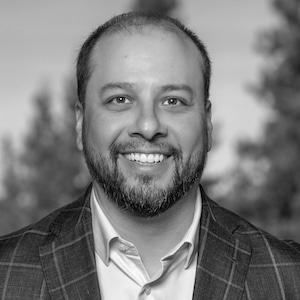
Inside the machine, building a way out
There is a specific kind of frustration reserved for people who understand a broken system from the inside. Rick Tellez spent more than two decades inside DHL - not observing logistics, but running it. Operations manager. District manager. National account manager. He moved through the ranks with the granular knowledge of someone who has personally watched a shipment stall at a port because a broker couldn't decipher a document scanned sideways in Mandarin.
That knowledge became KlearNow.AI. Co-founded with Sam Tyagi in 2018 out of San Jose, California, the company does one thing relentlessly: it takes the unstructured paperwork nightmare of global trade - bills of lading, commercial invoices, packing lists, certificates of origin - and makes them machine-readable, searchable, and actionable. In any format. In any language.
By the time KlearNow closed its $50M Series B in December 2021, the platform had crossed 1,000 organizations. Today it reports $26.8M in annual recurring revenue and a 250-person team. The customs clearance process - historically among the most opaque, manual, and error-prone steps in global supply chains - is Tellez's specific obsession. Not because it's fashionable, but because he watched it fail, repeatedly, for twenty years.
"AI can read unstructured data in any format or language, extract the relevant information and populate any system."
- Rick Tellez, Co-Founder, KlearNow.AIA psychology degree, a shipping giant, and twenty years of notes
Tellez graduated from the University of Colorado at Boulder with a degree in psychology - not supply chain management, not computer science. The detour matters. It means he approaches logistics systems the way a behavioral analyst might: what do people actually do, where do the incentives break, and why does the same failure keep repeating?
At DHL, he cycled through roles that gave him a complete cross-section of how global freight actually moves. Special projects. District operations. International sales. National accounts. Each layer added texture - and each layer revealed the same persistent drag: manual data entry, disconnected systems, documents that were neither standardized nor digitized, and brokers spending hours on tasks that should take minutes.
By his final years at DHL, Tellez had a clear picture of the problem. What he didn't have was the technology to solve it - until the convergence of machine learning and cloud infrastructure made it possible to build what incumbents hadn't bothered to.
The Core Problem KlearNow Solves
Customs clearance generates thousands of unstructured documents per shipment - in multiple languages, formats, and systems. Brokers manually re-enter data across platforms. Errors cause delays. Delays cost money. KlearNow's AI reads, extracts, and routes that data automatically - turning hours of manual work into seconds of machine processing.
From DHL floors to a $69M AI platform
One data layer for everyone touching a shipment
KlearNow.AI connects every participant in the import lifecycle - importers, customs brokers, freight forwarders, carriers, drayage providers - on a single unified platform. The product suite includes KlearHub, KlearCustoms, and KlearD, each targeting a specific workflow bottleneck in the trade process.
The technical innovation is a patented AI layer that processes unstructured trade documents in any format or language. Scanned PDFs. Email attachments. EDI files. The system reads them, extracts the relevant data fields, and populates downstream systems automatically. For a customs broker managing dozens of entries simultaneously, this collapses hours of manual key-entry into automated workflow.
The result shows up in the customer base: furniture companies, industrial manufacturers, food and beverage importers, automotive suppliers, apparel and footwear brands, chemical distributors. Any importer touching international trade has the same paperwork problem - KlearNow has built one platform to absorb all of it.
"Small brokers can now compete at par and better than the largest companies in the world."
- Rick Tellez, on KlearNow's leveling effect in the customs brokerage marketThat last point is one Tellez returns to often. The customs brokerage market has historically concentrated power in large firms with the resources to staff manual data teams. KlearNow's AI effectively makes that staffing advantage irrelevant - giving small and mid-sized brokers access to the same processing throughput as enterprise players.
$69 million in, and still in motion
KlearNow.AI Funding Rounds
The Series B investor roster - Kayne Partners Fund, GreatPoint Ventures, Argean Capital, Autotech Ventures, Activate Capital - signals that institutional capital sees the customs automation market as durable, not cyclical. Trade doesn't pause during economic contractions; if anything, compliance costs intensify.
With $26.8M in ARR and 250 employees, KlearNow has moved well past proof-of-concept. The platform is in production across 1,000+ organizations in sectors where international sourcing is table stakes, not optional.
What he's built, what he's won
$69M Raised
Two rounds of institutional funding validating the AI-native trade compliance market.
1,000+ Organizations
Cross-industry adoption spanning furniture, automotive, food & beverage, apparel, chemicals.
Patented AI
Proprietary technology that reads and extracts structured data from any unstructured trade document in any language.
PSC LIVE London 2024
Keynote speaker at one of global logistics' premier supply chain conferences.
$26.8M ARR
Recurring revenue from a platform serving importers and brokers at global scale.
250-Person Team
Built from two co-founders in 2018 to a 250-person company headquartered in San Jose.
What he's pointed at next
In a 2023 interview, Tellez outlined a direction that goes beyond KlearNow's current product suite: packaging the company's AI and machine learning engines as standalone modules that other logistics technology platforms can integrate. This positions KlearNow less as a single application and more as infrastructure for a digitizing industry.
The aspiration is explicit: automated, collaborative workflows across every participant in the supply chain, built on a centralized data layer where no single party is re-entering information that another party already captured. Every handoff - importer to broker, broker to carrier, carrier to trucker - becomes a data relay rather than a paper shuffle.
"We aspire to create automated, collaborative workflows across all supply chain partners with a centralized, data-centric approach."
- Rick TellezWhether KlearNow stays independent, expands through acquisition, or eventually provides the AI rails for a broader logistics stack is an open question. What isn't open is the problem Tellez identified in his DHL years: global trade generates enormous amounts of unstructured data, and almost none of it flows cleanly between the parties who need it. That friction is what he built KlearNow to eliminate - and it shows no sign of solving itself.
The stack behind the platform
KlearNow operates a cloud-native stack spanning infrastructure, backend, frontend, and data systems.
Rick Tellez in his own words
Revolutionizing Logistics with AI - Digital Supply Chain
Innovating with Scott Amyx - Co-Founder Interview
The KlearNow Story - Logistics of Logistics Podcast
Rick Tellez on Supply Chain Visibility and AI