At 11:08 one morning in May 2019, a detective in Raleigh received a sign-up link. Two minutes later, he had an account. The invitation came from Richard Schwartz, a former New York City mayoral adviser who was now selling a rather different way of finding people. His company, Clearview AI, could take a photograph and search for matching faces across images collected from the public internet. A mutual acquaintance had supplied the introduction. The software did the rest.
It is a useful scene for understanding Schwartz. Technology stories tend to put the programmer in the foreground, fingers poised above a keyboard. Here, the consequential action was an email from someone who knew someone. Schwartz had spent decades moving between public institutions and private businesses. By the time facial recognition became his business, introductions were familiar territory.
He co-founded Clearview with Hoan Ton-That in 2017. In February 2025, the company publicly confirmed Schwartz and investor Hal Lambert as co-CEOs. That title belongs to a particular chapter: Clearview's 2026 announcements identify Amos Kyler as CEO. Schwartz's longer story begins well before the company, in parks offices, mayoral campaigns and a newspaper opinion department where his arrival caused something less than universal delight.
A career built inside the city
Schwartz entered New York municipal politics in 1982 as a staffer for City Council member Henry Stern. He followed Stern into the Parks Department, became his chief of staff in 1985 and assistant commissioner for capital projects in 1987. These were jobs concerned with the physical and administrative workings of a city: projects, budgets, agencies and the people responsible for getting things done.
His education combined a Columbia undergraduate degree with a master's in public policy from New York University. In 1992, he joined Giuliani's campaign as deputy campaign manager. A December 1993 appointment made him senior adviser to the incoming mayor. His responsibilities included reorganizing agencies, changing how services were delivered and overseeing capital programs. For a future technology founder, it was an apprenticeship in a system with unusually demanding users.
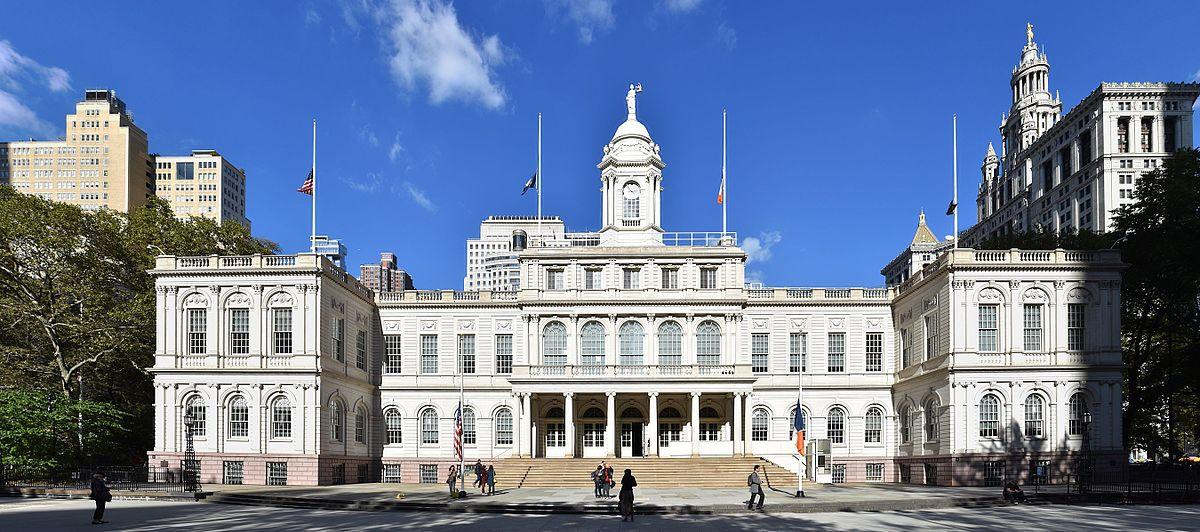

The policy that came to define his City Hall years was workfare. Schwartz helped design the Work Experience Program, which assigned welfare recipients to tasks in city agencies. Supporters saw a route toward employment and a change in expectations. Critics questioned whether the work led to durable jobs and objected to the program's demands. Its effects reached well beyond an organizational chart.
The next move came quickly. Schwartz announced his departure from government on February 11, 1997. The following day, he founded Opportunity America, a business intended to help employers hire welfare recipients. The calendar barely had time to turn over before the public official became an entrepreneur.
The employer became the customer
Opportunity America's approach put employers at the center. Companies needed help with screening, regulations and the practical business of hiring. Schwartz offered to connect them with people seeking work. His familiarity with government programs became part of a commercial service, backed by relationships developed over years in New York's public and private institutions.
That proximity drew scrutiny. Questions followed about a former policymaker seeking work in a market shaped by policies he had helped create. Opportunity America did obtain city business, despite his earlier stated preference to avoid it. Investigators found no evidence of criminality in the matters later examined, but criticized aspects of contract performance and information provided by the firm. The distinction matters: political controversy, administrative criticism and criminal wrongdoing are different things.
Schwartz defended the change in approach. Once the company had investors, partners and employees, he said, excluding it from the local market would be unfair to them. His answer placed the obligations of running a business beside the expectations attached to leaving public office. Those obligations can share a desk without sharing a view.
“Not every project goes perfectly.”
Richard Schwartz, discussing Opportunity America in 2003
A filter, then an editorial chair
By 2000, Schwartz had co-founded ClickSafe, an internet filtering company. Its software aimed to prevent children from accessing sexual material online, using words and image characteristics to identify content. This was an earlier encounter with technology that classified what people could see. The product belonged to the dot-com era, when an ambitious policy argument could arrive with a download button.
Then came another change of profession. In February 2001, the New York Daily News announced Schwartz as its editorial-page editor. He had public-policy experience and no previous journalistic experience. For an opinion department, those qualifications could be read in more than one way. Some journalists questioned the appointment and what his relationship with Giuliani would mean for the newspaper's independence.
The newspaper's spokesman defended the choice by pointing to Schwartz's policy knowledge. The appointment gave a former participant in city government a position from which to pass judgment on it. For Schwartz, the move extended his career into the institution that argues with government over breakfast. In New York, the distance between an official's office and an editorial writer's desk can be measured in column inches.
He later worked in public relations at Source Communications and was a senior fellow at the Manhattan Institute. The sequence helps explain the business experience he brought to Clearview. He had worked with government, sold services connected to government and helped shape arguments about government. The company would need people willing to answer its calls as well as people able to write its software.
The introduction meets the algorithm
At Clearview, Ton-That supplied the technical background. Schwartz brought experience in operations and sales. Their venture developed a search engine that used facial geometry to find possible matches among photographs collected from websites. Results linked back to the pages where the images appeared. A photograph became a starting point for finding a name and following the accompanying public information.
Its commercial possibilities depended on the people allowed to use it. Police investigators with an unidentified face in a photograph were a natural audience. The Raleigh invitation shows how personally Schwartz could pursue that audience. He offered a free demonstration account to Detective Robert Pike and extended the offer to colleagues. Access subsequently spread through the department, reaching at least 20 people before Raleigh banned the service in February 2020.
The episode exposes an institutional problem that a quick demonstration cannot resolve. An officer can find a tool useful before a department has settled who should approve it, what rules should govern it or how its use should be recorded. Selling to one enthusiastic investigator and securing an agency's considered agreement are different stages of adoption. Schwartz's email sat at the beginning of that process.
- A photographAn investigator submits an unidentified face.
- A possible matchThe system searches facial patterns in its image database.
- A lead to examineResults link to public web pages. Investigators must corroborate them.
A search result is an investigative lead. It does not establish guilt.
The market acquires boundaries
Clearview's collection of images without the photographed people's consent produced lawsuits and regulatory action. The same feature that made its database useful to an investigator could make it troubling to someone whose picture had been collected. Posting a photograph on a website and agreeing to its use in a face-search database are separate decisions. Much of the company's legal history turns on that gap.
A 2022 settlement with the American Civil Liberties Union and other organizations restricted access to the database for most private businesses and individuals nationwide, with specified exceptions. It also imposed a five-year restriction covering Illinois state and local agencies. Clearview denied wrongdoing; the settlement did not involve an admission of liability. Government customers elsewhere remained a route for the business.
The legal consequences continued after the leadership changes. On July 13, 2026, a federal appeals court vacated approval of a separate class-action settlement and returned it for further proceedings. Schwartz was among the defendants. The court's objection concerned adequate representation when allocating benefits among different groups of claimants. It did not reject equity-based relief in principle. For a company built around identifying people, the dispute concerned whose interests had been represented at the negotiating table.
The co-CEO chapter, in perspective
The 2025 leadership announcement put Schwartz beside Lambert, an early investor with Republican political connections. The company sought more federal business, including opportunities involving defense and homeland security. Schwartz's experience with government customers was relevant to that ambition. The change also brought an original founder into a more publicly visible executive role as Ton-That left the chief executive position.
By 2026, Kyler was the CEO named in company announcements. Clearview continued to describe its product as a tool for law enforcement and government, with results that should be supported by other evidence. Schwartz's place in its history remains specific: co-founder, commercial operator and a participant in the leadership transition publicly reported in February 2025.
Across the changes in job title, a recognizable professional pattern emerges. Schwartz has repeatedly worked where public institutions meet private services. Sometimes he helped write the policy. Sometimes he offered a business to carry it out. Sometimes he occupied the editorial chair from which the argument was made. At Clearview, he helped bring a technical product into that same institutional world.
The Raleigh email makes a fitting final image. A new account appeared in two minutes. Everything surrounding it - permission, oversight, responsibility and the public's say - took considerably longer. Richard Schwartz's career offers a close view of that difference in speed, and of the business opportunities that arise while institutions work out what to do next.
Follow the connections
- Clearview AI ↗
- Ducere biography & interview ↗
- Watch the Ducere interview on Vimeo ↗
- New York City government career archive ↗
- Raleigh police and the free trial ↗
- The 2025 leadership announcement ↗
- Clearview’s 2026 CEO announcement ↗
- The July 2026 appeals decision ↗
- The Daily News appointment ↗
- Opportunity America in 1999 ↗
- Opportunity America in 2003 ↗
- The 2022 database-access settlement ↗