The first thing to understand about a corporate bond is that knowing what it is worth and finding someone willing to trade it are different problems. A price on a screen helps. A person on the other side helps more. Trumid’s history sits in the space between those two facts.
- Institutional bond trading, with several routes to a counterparty.
- Anonymous sessions and dealer relationships share one application.
- Tradeweb’s proposed acquisition is pending, with closing targeted for 2027.
Consider the announcement of October 19, 2026. Tradeweb agreed to acquire Trumid for approximately $1.97 billion, including about $220 million for tax assets. Behind that price is a practical question: how do you persuade people who already know whom to call to do more of their trading on your screen?
The demo you could swipe through
In November 2014, Ronnie Mateo and Mike Sobel were in Santa Monica, taking the Trumid idea on the road. Sobel later recalled iPads loaded with wireframe screenshots that resembled a demonstration if someone swiped quickly enough. Before year-end, the team had visited hundreds of prospective clients in dozens of cities.
It is a useful founding detail because it reverses the usual glamour of financial technology. Before there was a network, there were meetings. Before there was a working product to show, there were pictures of one. The people expected to supply the liquidity got an early look at the proposed room.
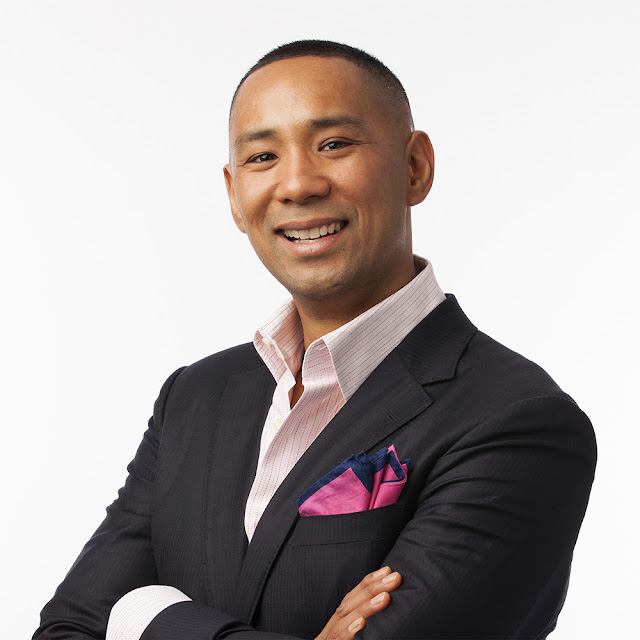
Mateo founded Trumid in 2014; Sobel joined that year and became co-CEO in 2021. The first platform trade came in April 2015. An internally developed platform followed in 2016, including Swarms, the name Trumid gives its anonymous, session-based trading protocol.
A market needs more than one door
Swarms brings orders together in sessions throughout the day. Participants can seek liquidity without announcing their identity to the market. That matters when showing your hand might change the price someone offers you. But anonymity solves one problem in a market that has several.
By 2019, Trumid was adding Attributed Trading, a bilateral dealer-client protocol. Dealers could distribute their trading interests and inventory to selected clients. A familiar relationship could move onto an electronic workflow. The product history suggests a broadening view of what belonged on the platform: different trades call for different degrees of disclosure.
“At Trumid, we dream big and we execute small.”Ronnie Mateo, 2021
RFQ and Portfolio Trading arrived in 2023. RFQ lets a trader ask for quotes on a bond or list; Portfolio Trading lets a desk negotiate a basket as a single transaction. A portfolio manager moving many positions has a different task from a trader hunting a counterparty for one awkward bond.
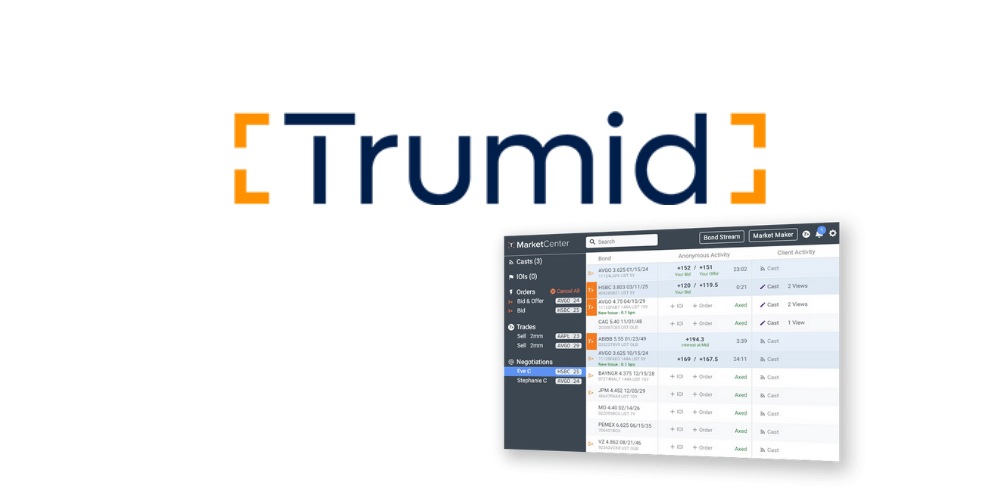
The customers are institutions: asset managers, banks, hedge funds and other market participants. In June 2026, Trumid described a network of approximately 1,000 buy- and sell-side firms. Its focus is U.S. dollar-denominated investment-grade, high-yield, distressed and emerging-market bonds. This is infrastructure for professional desks, with transaction fees attached to executed trading.
The screen starts doing the legwork
More ways to trade create another kind of work: choosing among them. Trumid’s Full Self Trading, launched in May 2026, addresses that burden. Traders set objectives and constraints, including size, price limits and time horizon. The system engages liquidity across Swarms and RFQ. Its product page lists Attributed Trading integration as planned for the second half of 2026.
The distinction is worth keeping straight. Delegating execution does not mean abandoning judgment. A trader still decides what to buy or sell and the conditions under which the order may trade. Automation takes on repeated market engagement inside those boundaries.
Pricing is the companion problem. Trumid’s FVMP uses proprietary and external data with machine learning to generate continuous, two-sided prices and confidence scores. As of August 31, 2026, its stated coverage exceeded 30,000 U.S. corporate bonds. A model price offers a reference point; execution still requires available liquidity at an acceptable level.
Count the people who come back
The revealing number in Trumid’s third-quarter 2026 release is 60%: the proportion of users who traded through at least two protocols. It suggests the extra doors were getting used. The same release reported $9.6 billion in average daily volume, up 38% from a year earlier, against estimated market-wide growth of 16%.
Distribution matters, too. A June 2026 agreement with BlackRock expands integration with Aladdin’s order execution management system, including native RFQ interaction and improved access to Swarms. For shared clients, the point is less hopping between systems. For the marketplace, easier participation can mean more opportunities for everyone already there.
Competitors include MarketAxess and Tradeweb, alongside the enduring option of calling a dealer. Trumid’s distinction is its particular combination of anonymous sessions, bilateral relationships, list trading and tools around them. The proposed Tradeweb combination would bring complementary workflows and client networks together, including capabilities earlier in a bond’s lifecycle.
The expensive part is earning the habit
Building that network required capital. Trumid received a $200 million growth investment in 2020 and a $208 million financing in October 2021. The latter valued it at roughly $2.4 billion. Those figures describe investment and valuation, rather than the cost of coding a trading screen.
Its internal division of labor offers a smaller lesson. When Sobel became co-CEO, Mateo retained a focus on clients and culture; Sobel concentrated on strategy, operations and growth. The company’s stated values put trust, domain expertise and design close together. In this business, all three have practical uses.
For other builders, the sequence is copyable: put a concrete idea in front of prospective users early, preserve relationships they value, then automate the repeated work. The conditions matter. Thin participation limits a marketplace; a price estimate cannot manufacture a willing buyer. Trumid’s story makes the screen interesting because of the people it gathers.