fixed-income
(24)
Vlad Berson Learned to Frame a Shot. Then He Learned to Frame Fixed Income.
Before he marketed market data, Vlad Berson studied filmmaking. Three decades later, the SOLVE CMO still thinks in scenes, audiences and cuts - only now the subject is fixed income.

SOLVE Turned Bond Traders' Messy Inboxes Into a Market Data Machine
The bond market still speaks in fragments - runs, chats, spreadsheets and stale prints. SOLVE built a business by teaching machines to read that mess, then used more than $80 million and a string of acquisitions to turn the resulting data into pricing intelligence.

Anish Karyat Spent Two Decades Teaching Bonds to Move Faster
After 15 years at Jane Street and a turn leading systematic credit at Citadel Securities, Anish Karyat joined former colleagues at Moment. His assignment is familiar in principle and larger in scope: turn the bond market's hard-won human judgment into software.

Numerix Built the Math Wall Street Trusts. Then It Had to Rebuild the Machine.
Numerix began by making exotic-derivative calculations run faster. Thirty years later, its harder job is making every desk, risk officer and regulator arrive at the same number - quickly enough to act on it.
North Square Built the Sales Engine Boutique Fund Managers Couldn’t - Then a $160 Billion Giant Came Calling
North Square made a business out of the least romantic part of asset management: getting good strategies onto advisers’ shelves. Eight years, several acquisitions and $4.05 billion in retail fund assets later, its distribution machine belongs to Azimut.

The Chicago Firm That Sold Wall Street's Playbook to Families Who Aren't Endowments
Two Chicago traders spent a decade turning hedge-fund tactics into a wealth business for families who aren't endowments. In 2026 they sold it - $5.6 billion later.

The $564 Billion Finance Firm That Refuses to Go Public
Baird began as a Milwaukee bond house in 1919. A century later, its five-business portfolio, employee ownership and nearly $564 billion in client assets make it a quiet counterexample to Wall Street's quarterly reflex.

Apollo Built a Trillion-Dollar Machine on the Boring Middle of the Balance Sheet
It started as a distressed-debt shop picking through the wreckage of the 1990 junk-bond collapse. Thirty-five years later Apollo runs close to a trillion dollars and is trying to sell private credit to your 401(k).
From Student Fund to Mortgage Desk: Christopher Levins Learns the Market by Getting Close to It
Before trading agency mortgage structures at Jefferies, Christopher Levins learned to use clubs, mentors and a student-run fund as practical classrooms. His short public record offers a useful study in turning proximity into responsibility.
Anni Wang left Carnegie Hall for the mortgage desk
She trained for the concert stage under one of the great piano teachers and won a national arts prize at sixteen. Now she prices collateralized mortgage obligations at a French investment bank.

The Company That Owns Wall Street's Plumbing
ICE began by dragging energy trading onto the internet. Twenty-six years later, its machinery runs beneath oil benchmarks, bond desks, the New York Stock Exchange and much of the American mortgage system.

First Horizon Bank
First Horizon has spent 162 years learning a difficult banking trick: how to get bigger without becoming distant. Its wager is that Southern customers still want a banker who knows the market - plus the balance sheet, software and specialists of an $84.4 billion institution.

Raymond James
A firm that started in a downtown St. Petersburg apartment now watches over $1.92 trillion - and it still measures itself one advisor and one client at a time.

Victory Capital
How a management buyout out of a Cleveland bank turned into a $300-billion-plus asset manager that collects boutiques the way other firms collect logos.

Oppenheimer & Co. Inc.
A 140-year-old Wall Street house that never grew into a giant - and turned staying mid-sized into the whole pitch.

Jefferies
How a 1962 Los Angeles block-trading desk turned into the last independent full-service investment bank standing between the boutiques and the giants.
9fin
9fin is a London-based, AI-native intelligence platform for the global debt markets. Founded in 2016 by former banker Steven Hunter and former engineer Huss El-Sheikh, it uses machine learning to extract structured data from dense financial documents and pairs that data with news, analytics, and AI-powered workflows. Its platform covers leveraged loans, high-yield bonds, distressed debt, CLOs, private credit, and asset-based finance, and is used by investment banks, asset managers, hedge funds, law firms, and advisors. In March 2026 the company raised a $170M Series C at a $1.3 billion valuation.

IMTC
IMTC is a New York-based fintech that builds a cloud-native, AI-enhanced platform for fixed income investing. It combines portfolio construction, optimization, order management, risk and compliance, and reporting into one system, helping asset and wealth managers customize bond portfolios and separately managed accounts at scale while automating manual workflows. Founded in 2017 and led by CEO Russell Feldman, the company raised a $12M Series A in December 2025 led by Nyca Partners.
OpenYield
OpenYield is a New York-based fintech operating an automated, all-to-all bond marketplace that brings an equity-like trading experience to fixed income. A FINRA-registered broker-dealer and SEC-registered alternative trading system (ATS), it offers firm, executable quotes with no minimum trade sizes across corporate bonds, municipal bonds and U.S. Treasurys, connected to brokerages, advisors, asset managers and market makers through API-first infrastructure.
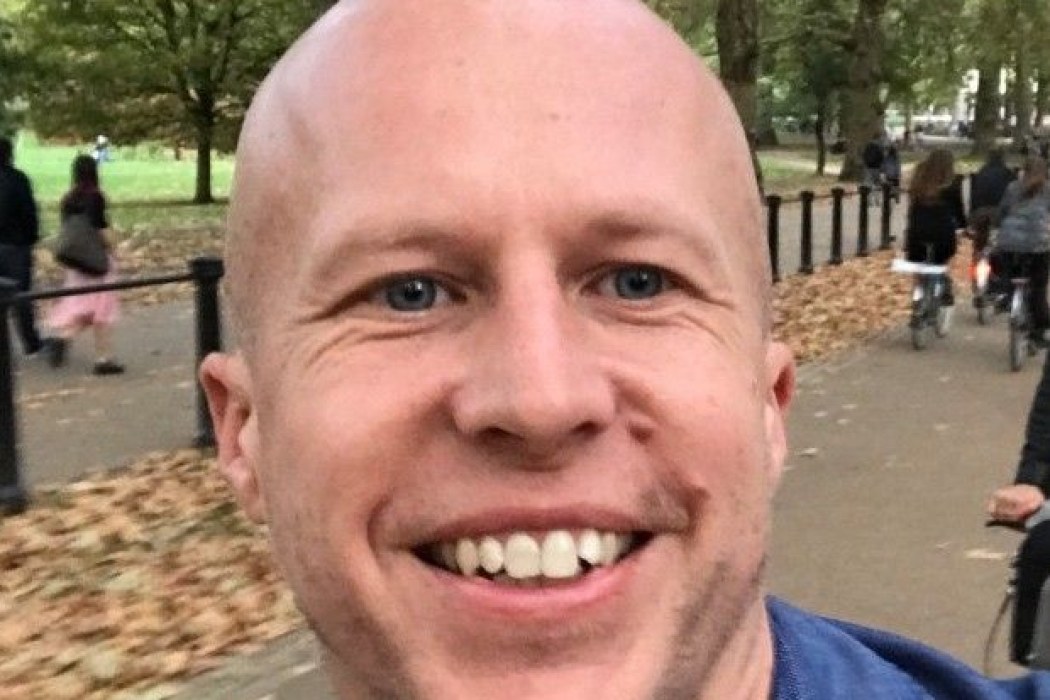
Henry Adams
Henry Adams is US CEO and Global Head of Capital Markets at TreasurySpring, a London-founded fintech that opens up the multi-trillion dollar wholesale money markets to corporates and institutions. He joined the founding team at the start of 2018 after roughly a decade running secured financing portfolios at RBC and earlier work at BlackRock, and now leads the company's push into the United States from New York. His background sits at the intersection of repo trading, fixed income and product, which he channels into building the market plumbing behind TreasurySpring's Fixed-Term Funds.

Jonathan Birnbaum
Jonathan Birnbaum is the founder and CEO of OpenYield, a New York-based fixed income marketplace that brings an equity-like, fully automated trading experience to bonds. A former US credit trading COO at Morgan Stanley and fixed income execution lead at Bridgewater Associates, he later helped build consumer investing platforms as general manager of SoFi Invest and founding COO of Domain Money. He founded OpenYield in 2023 to make bonds cheap and easy to trade for retail investors, backed by a 2026 Series A of more than $6 million from investors including LeveL Markets, Draper Associates, Canapi Ventures and Clocktower Ventures.
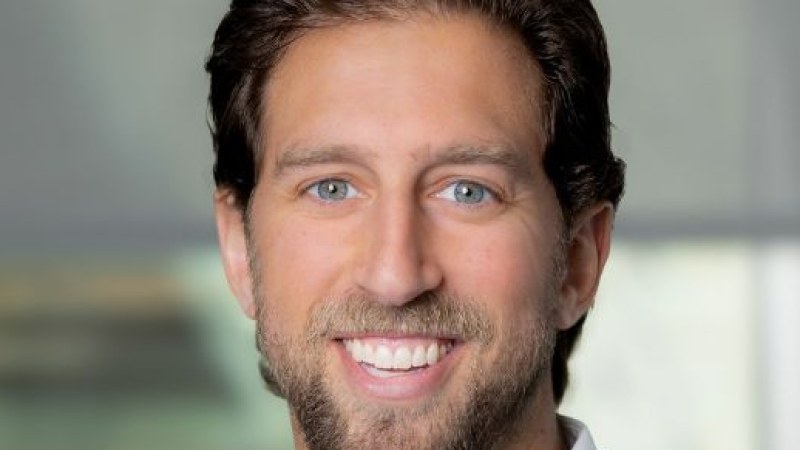
Russell Feldman
Russell Feldman is the co-founder and CEO of IMTC, a New York-based fintech building cloud-based portfolio management software for fixed income teams. He took the CEO seat in May 2022 when IMTC raised its first outside capital led by Nyca Partners, and has grown the company from serving small RIAs to top-tier asset managers. Before IMTC he worked in institutional sales and client advisory at Deutsche Asset Management, an experience he says was his real education in how broken fixed income tooling was.
Moment
Moment is a New York fintech building the AI operating system for investment management. Founded in 2022 by former Citadel quants, it unifies trading, portfolio management, research, reporting, and compliance for fixed income and beyond into a single platform with an API layer. In roughly 18 months it grew from powering $300 billion to more than $10 trillion in client assets, working with firms like Edward Jones, LPL Financial, and Hightower Advisors. The company has raised $134 million across rounds led by Index Ventures, with backing from Andreessen Horowitz, Lightspeed, and others.

Dylan Parker
Dylan Parker is the co-founder and CEO of Moment, the AI operating system for investment management. A former Citadel Securities and Jane Street fixed income quant, he and two Harvard friends set out to drag the $150-trillion bond market out of spreadsheets and chat threads. In under four years Moment went from $300 billion to over $10 trillion in client assets monitored and raised $134 million across three rounds, counting Edward Jones, LPL Financial, and Hightower Advisors as customers.