The clever thing about North Square Investments is that its most important product is not a fund. It is a route. On one end sit small, research-heavy asset managers with a performance record and a problem: reaching thousands of financial advisers is brutally expensive. On the other end sit advisers who want something more interesting than another broad index, but do not have a spare month to inspect every boutique in America. North Square built the road between them.
The Chicago company calls itself a multi-boutique asset manager. In plain English, it finds specialist investment teams, vets them, wraps their strategies in mutual funds, ETFs or separate accounts, and supplies the distribution, marketing, operations and compliance machinery. The investment teams keep doing the part they claim to be good at. North Square handles the decidedly less cinematic work of getting the strategy approved, explained and placed.
That division of labor has produced a curious company - part fund sponsor, part sales organization, part acquisitive holding platform. Its current menu spans small-cap and international equities, taxable and multisector bonds, preferred securities, tactical allocation and alternative strategies. Its customers are not chiefly people tapping an app. They are the intermediaries between products and portfolios: broker-dealers, registered investment advisers, wealth managers, private banks, family offices, retirement plans and institutional consultants.

The launch was a lift-out, not a blank page
North Square officially launched in 2018, but it did not arrive with the usual startup starter pack of beanbags and vague disruption. Mark Goodwin, previously president and chief operating officer of Oak Ridge Investments, led 24 experienced people out of Oak Ridge along with distribution, operations and product capabilities. Estancia Capital Partners supplied institutional backing. Former Nuveen chief John Amboian, former Allianz Global Investors U.S. chief Brian Gaffney and Barclays Capital founding management committee member Neil Cummins joined the board and co-investor circle.
The thesis came from a specific fracture in asset management. Passive funds had made generic active exposure difficult to defend. Meanwhile, genuinely specialist managers could still have a reason to exist, but many lacked the scale to build a national sales force. Goodwin’s launch message was unusually candid: North Square had no legacy asset base to protect in categories being squeezed by passive investing. It could shop for niches instead.
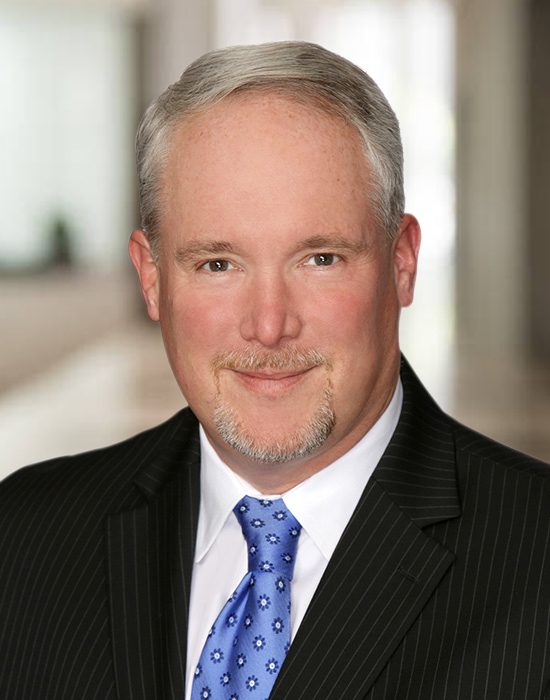
“Unburdened by legacy assets under management, we are free to focus on pursuing growth opportunities.”Mark Goodwin, at the firm’s launch
That is the first answer to what failed. It was not a public blow-up inside North Square. It was the older assumption that good performance sells itself. Boutique managers can be excellent at security selection and still fail commercially because platform approvals, wholesaler coverage, product packaging and persistent adviser education consume money and time. North Square did not abandon active management. It changed the unit of competition from one manager versus another to an ecosystem versus an isolated shop.
The machine behind the funds
Buy the craft. Centralize the plumbing.
North Square used several deal structures rather than insisting on one corporate template: direct ownership, minority stakes, sub-advisory contracts, fund adoptions, revenue sharing and joint ventures. In 2020 it acquired a majority interest in C.S. McKee, a Pittsburgh institutional manager founded in 1931 with more than $8 billion under management at announcement. McKee brought taxable fixed income, equity and balanced portfolios - and a client list that included public bodies, unions, corporations, endowments, hospitals and universities.
That same year, North Square acquired Advisory Research’s All Cap Value Fund, renamed it and retained Advisory Research as sub-adviser. The distinction matters. North Square did not claim it could suddenly pick every stock better. It took control of the product and distribution relationship while leaving the investment process with the specialist.
The pattern repeated. In 2024, it adopted Evanston Capital’s alternative-opportunities fund, renamed it the North Square Evanston Multi-Alpha Fund and kept Evanston as sub-adviser. The vehicle, designed for accredited investors, invests across hedge-fund strategies. In April 2025, North Square completed C.S. McKee’s acquisition of Foundry Partners. Foundry was merged into McKee, adding roughly $2.3 billion and a value-equity team. Foundry’s small-cap mutual fund became the North Square Small Cap Value Fund in a tax-free reorganization involving about $255.2 million of net assets. The advisory fee rate did not change.
This is where North Square differs from an ordinary fund company. Its pitch runs in two directions. To managers: keep your investment identity and gain a scaled commercial apparatus. To advisers: get institutional-style strategies in familiar, diligence-ready formats. The company’s website currently lists 13 mutual funds and three ETFs across equities, fixed income and allocation strategies. It also supports separate accounts, model delivery and the closed-end alternatives vehicle.
What it costs - and what Azimut paid
For investors, there is no single North Square price. Each product and share class has its own management fee and operating expenses. The Multi Strategy Fund, for example, lists net annual expenses of 1.33 percent for Class I and 1.58 percent for Class A. The fund largely invests in other North Square funds, so investors must read the acquired-fund-fee mechanics carefully. Other products can cost less or more. The practical rule is dull but useful: compare the current prospectus with a cheap passive alternative and ask whether the strategy’s diversification, risk control and performance record justify the gap.
For Azimut, the price was more legible. Transaction materials described a minimum purchase price of $110 million based on a $165 million enterprise value: roughly $60 million at closing and $50 million deferred over four years. An earn-out and management incentive plan could bring overall consideration to about $160 million. The deal closed on January 8, 2026.
What changed North Square’s mind about remaining independent? Public comments point to capability rather than distress. The company had built U.S. reach; Azimut had global equity, fixed income, private-market and alternative strategies plus a much larger balance sheet. North Square could accelerate its product roadmap. Azimut could avoid building American intermediary distribution from scratch. The combined Azimut NSI platform placed North Square alongside C.S. McKee and Kennedy Capital Management, with more than $20 billion in assets at the deal announcement.
Retail fund assets nearly doubled in 20 months
North Square fund-complex figures. The larger affiliate/platform asset totals use a different perimeter and should not be mixed with these bars.
By August 14, 2026, North Square said its retail fund family held approximately $4.05 billion, up from $3.15 billion at the end of 2025 and $2.06 billion in December 2024. Management attributed the 2026 advance to steady organic inflows and fund performance. Three strategies had crossed $500 million: Strategic Income at $1.28 billion, Dynamic Small Cap at $734.8 million and Tactical Growth at $618.9 million.
The product mix is also changing. North Square entered 2025 with one ETF. By mid-2026 it had launched two more - the Disciplined Value ETF, NSIV, and Growth Opportunities ETF, NSIG - using C.S. McKee teams. When the Azimut transaction was announced, the combined group said it planned seven active ETFs in the first 12 months built around Azimut capabilities. That promise is now an obvious scoreboard for the integration.
The part worth stealing
The transferable idea has little to do with mutual funds. Find skilled producers who share an expensive bottleneck. Build that layer once. Let the producers retain the identity and process that made them valuable. North Square did this with wholesaling, regulatory infrastructure and fund administration. A healthcare group might do it with billing. A collection of design studios might do it with enterprise sales and procurement. The trick is to centralize the burden without flattening the craft.
There is a second lesson: choose partners for a missing capability, not just a flattering brand. North Square’s roster spans systematic equity, fundamental international value, preferred securities, fixed income, small caps and hedge-fund portfolios. Those strategies give advisers distinct jobs to hire them for. A shelf full of nearly identical large-cap funds would not create the same reason to take the meeting.
The risks are equally portable. Active funds live under constant fee pressure. Past performance can vanish precisely when new assets arrive. Fund adoptions and acquisitions add operational complexity, and a distributor that owns products must manage obvious conflicts when presenting them to advisers. The multi-boutique model also depends on restraint. Central management has to know what to integrate and what to leave alone.
North Square fits between the giant vertically integrated fund houses and the boutique with twelve employees, one excellent strategy and no national wholesaler. Competitors include other multi-boutique platforms such as Virtus, Affiliated Managers Group, iM Global Partner and Resolute, as well as large firms building their own sub-advised lineups. North Square’s advantage is not immunity from those rivals. It is a compact explanation of why it exists: niche managers need reach; advisers need filtering; the platform charges for connecting them.
The company named itself after the civic square, a place where people and ideas meet. That metaphor could have become corporate wallpaper. Instead, it describes the economics rather neatly. North Square does not need to invent every investment idea in the building. It needs to own the intersection, keep the traffic moving and make sure the interesting travelers have somewhere useful to go.