An analyst had a domestic scheduling problem. BGC’s coming FMX investor day was the day after his wedding anniversary, he explained on the company’s July 2026 earnings call. He would try to make it work. John Abularrage, BGC’s co-chief executive officer, supplied a solution: “We can extend an extra invitation to your wife.” Financial infrastructure is rarely sold as a romantic excursion. Still, it was a neat little piece of brokerage: two competing commitments, one proposed accommodation, no need to leave the conversation empty-handed.
The exchange offers a useful entrance into Abularrage’s working life. His career has passed through equity sales, the management of regional brokerage businesses and, since February 2025, shared leadership of BGC Group. The recurring subject is the relationship between people who need to trade and the organizations that make those trades possible. Along the way, the products have multiplied and the machinery has become more electronic. The requirement to persuade someone to participate has stayed rather stubbornly human.
A business degree, then a business of introductions
Abularrage graduated from Georgetown University’s McDonough School of Business in 1999 with a bachelor’s degree in business administration. His early career included equity sales at ABN Amro. At Collins Stewart, he helped develop the American equities business and its relationships with hedge funds. These were years spent close to the customer, where a firm’s research and trading capabilities still needed someone to explain why they were worth a client’s attention.
In 2005 he moved to London to help develop Collins Stewart’s large-cap broking business. Moving between New York and London meant working across two financial centers rather than simply acquiring a more elaborate business card. The work concerned the same broad problem from another location: bringing a brokerage’s capabilities to the people who might use them. His responsibilities expanded from equities leadership to running Collins Stewart’s North American operation, where he became chief executive in January 2009.
That date matters. A promotion at the beginning of 2009 placed him in charge during the aftermath of the financial crisis. The former equity salesman now had responsibility for an operating business at a time when its customers were reassessing risk, counterparties and the institutions they relied on. His next appointment would take him deeper into the business of connecting financial firms. In March 2011, Tullett Prebon announced that he would become its chief executive for the Americas. Martin Lynch, also from Collins Stewart, was appointed regional chief operating officer.
The customer’s name belonged somewhere
One revealing public appearance came in November 2017, when Abularrage addressed TP ICAP’s capital markets update. His subject was customer relationship management. It sounds like the sort of phrase that can clear a room. In brokerage, it contained a delicate question about ownership: if a broker had spent years building a trader’s trust, how much of that relationship could the wider firm share?
He described a Salesforce-based system that mapped client contacts and collected information from meetings. The rollout began in the United States. It sought to preserve brokers’ personal ties while giving the organization a fuller picture of its customers. His phrase for the desired relationship was “something more akin to a partnership.” The distinction was practical. A client could need several services while different desks each saw only their own transaction.
Read as a management episode, the presentation shows his attention to the workings behind a relationship business. A valuable conversation can disappear into one person’s memory. Recording it makes coordination possible, though asking people to share hard-won contacts requires care. The spreadsheet has a social problem to solve before it can have a commercial one. His presentation made the management problem unusually concrete: preserve a broker’s personal trust while helping colleagues understand what the same client might need.
A larger map, then a shared office at the top
In October 2018, Abularrage was appointed to lead TP ICAP’s Global Broking business. The move extended his remit beyond the Americas. He joined BGC in 2021, taking on the Americas chief executive role and serving as a global co-head of financial services brokerage. The route to BGC therefore ran through a competitor’s regional and global management, with a decade at Tullett Prebon and TP ICAP behind him.
On February 18, 2025, BGC appointed Abularrage, JP Aubin and Sean Windeatt as co-chief executive officers. Howard Lutnick stepped down as chairman and CEO following his confirmation as United States secretary of commerce. Windeatt retained the chief operating officer position. Abularrage continued as Americas CEO. The succession put three executives already involved in running the brokerage into shared leadership of the group.
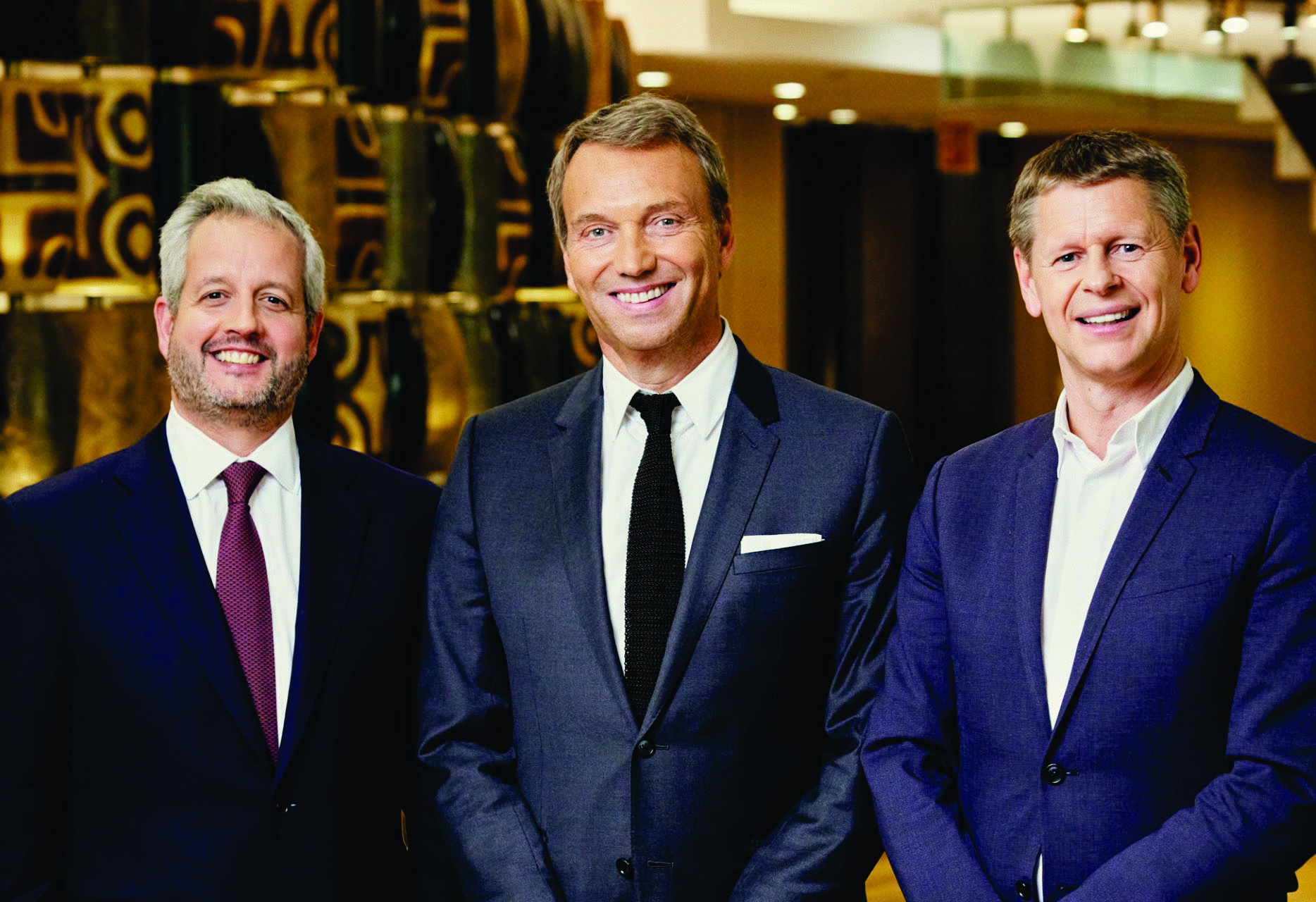
The arrangement gives Abularrage’s story a different shape from the usual account of a solitary arrival at the top. His promotion was explicitly collective. Aubin brought a long history in European and listed-products brokerage; Windeatt brought operating experience across the company. Abularrage brought his Americas responsibilities and prior global broking leadership. Their task was to keep a trading business moving through a change in leadership while pursuing expansion already under way.
In his appointment statement, Abularrage thanked the board and emphasized continuing with his two colleagues. Such statements are formal occasions, with very little room for improvisation. The allocation of responsibility is more informative than the ceremonial adjectives: he was becoming a co-leader of the company while remaining responsible for its Americas business. The international title did not make the regional work disappear.
What $325 million buys - and what it leaves to do
Weeks after the leadership change, BGC completed its acquisition of OTC Global Holdings. The April 1, 2025 transaction carried a headline consideration of $325 million, subject to adjustments, and was substantially in cash. OTC had generated more than $400 million in revenue in 2024. It added businesses and client relationships in energy and commodities, broadening the group that Abularrage and his colleagues now led.
The distinction between an executive’s career and a company’s acquisitions is worth preserving. This was a BGC transaction under collective leadership. Its relevance to Abularrage is the enlarged operating responsibility that followed. Buying a brokerage brings people, product knowledge and relationships into an organization. Keeping those relationships productive becomes a continuing job after the acquisition announcement has finished its brief life as news.
A smaller expansion illustrated the same attention to specialist markets. In July 2023, BGC hired Nicholas and Eric Ernst to establish a weather derivatives team. Abularrage publicly welcomed their experience in weather derivatives and climate risk transfer. It was a concrete example of the business he was helping develop: brokerage could concern the price of money, an energy contract or exposure to the weather. Each required particular knowledge and particular customers.
The exchange still needs company
FMX brings the electronic side of that work into view. Its futures exchange began trading SOFR futures in September 2024. Ten banks and market-making firms were equity partners in FMX Holdings, among them Bank of America, Barclays, Citadel Securities, Citi, Goldman Sachs and J.P. Morgan. The clearing partnership with LCH was designed to allow eligible positions to benefit from cross-margining. The proposition combined a trading venue with potential capital efficiencies for participants.
For a brokerage executive, an exchange presents a familiar problem in a new form. Customers need reasons to arrive, and reasons to return. Trading technology supplies the venue; participation gives it commercial purpose. The list of equity partners makes that relationship visible. Some of the institutions that might use the marketplace also had an ownership interest in it. An exchange may look impersonal on a screen, but its development involves a great deal of organized courtship.
“Higher would be the answer.”
John Abularrage, asked about future FMX market share, July 2026
On the July 2026 earnings call, Abularrage said buy-side onboarding was accelerating and declined to supply an exact future market-share target. His brief answer about direction was “Higher would be the answer.” It conveyed ambition without offering a number for the next caller to pin to the wall. The same call contained the invitation to the analyst’s wife. Between those two moments lay much of the public job: defend the commercial direction, manage expectations and keep people interested.
A growing business, a continuing question
The scale is measurable. BGC reported second-quarter 2026 revenue of $845.5 million, compared with $784 million a year earlier, an increase of 7.8 percent. Those are group results, shared across its businesses and leadership. Its reported 42 percent FMX U.S. Treasury market share concerned the cash Treasury platform. It should be read separately from the futures business, whose development Abularrage was discussing with analysts.
+7.8% year over year. Group revenue, not an individual performance measure. Bars start at zero.
On October 13, 2026, Abularrage opened FMX’s first investor day. The event put the marketplace directly before investors, with a webcast for those joining remotely. It was another setting in which he had to explain why a financial business deserved attention and participation. The technology and the size of the audience had changed considerably since his equity-sales years. The need for a convincing commercial conversation remained.
His career now spans the individual client contact, the regional business and the group leadership table. That progression gives the 2017 discussion about sharing relationships a lasting relevance. Brokerage grows by making connections useful at greater scale, without treating the people inside them as interchangeable. Abularrage’s public work returns to that problem in successive forms. Even the wedding-anniversary invitation fits. Before anyone can trade on your exchange, it helps if they are willing to turn up.