A hotel can polish its silver, improve its pillows and teach the front desk to remember your name. It still has to persuade you to arrive. Richard W. Gray built much of his career around that less photogenic part of hospitality: the journey a reservation makes before a guest ever sees the lobby.
Gray co-founded TravelClick with Ray Cohen and served as its chairman and co-CEO. Their business helped hotels understand electronic bookings, advertise where travel was being purchased and manage reservations across different channels. The view from this corner of the industry is unusual. A room is both a place to sleep and a small commercial mystery. Who will buy it? At what rate? Through whom?
The guest sees a confirmation number. Gray’s business dealt with the machinery that makes the number possible. There is something quietly comic about that division of labour: an industry selling escape depends on people who pay close attention to booking reports.
Before the booking button
Gray graduated from Florida State University in 1975 and began his business career at Procter & Gamble the following year. Executive positions at Hertz and Pan American World Airways came before his own ventures. His route into hotel technology therefore ran through businesses already occupied with the practical problems of moving people and selling services.
The early venture he built with Cohen was called The Graycon Group. Reservation consulting and benchmarking were part of its work. That consulting lineage matters: it put a specific operating problem ahead of a particular piece of software. Hotels needed a clearer picture of how their rooms were being sold.
By 1996, Global Marketing Services was the business supplying digital marketing and data products. A 1999 investment partnership with Bain Capital supported expansion, and the company adopted the TravelClick name. The progression carried Gray from advising travel businesses into selling repeatable tools. A useful answer for one client could become a product for many.
The report behind the room
In November 2000, Best Western International subscribed to TravelClick’s Hotelligence reports across its brand. The reports brought together electronic booking information: the sources of business, room rates and length-of-stay patterns, including information about competing properties. These were working details for managers deciding where to direct their attention and advertising budgets.
The attraction was comparison. Knowing your own reservations tells you what happened inside your hotel. Seeing a relevant competitive set gives that performance some context. A quiet period looks different when the surrounding market is busy. A busy period deserves a second look if everybody else is doing still better. Hotels could use the reports to sharpen their marketing plans rather than judge results in isolation.
Carlson Hospitality Worldwide followed with plans in January 2002 to extend TravelClick products across its brand portfolio. The initiative included Radisson and Regent, along with other Carlson brands. Hotelligence and PHASER Complete Access linked booking intelligence with electronic marketing. The commercial idea was readily understandable: learn where business is coming from, then appear where the next booking may be made.
For Gray, the customer conversation could begin with a familiar managerial frustration. A hotel had rooms to sell and money to spend on attracting guests. TravelClick offered information about the market and places to advertise within it. The product names required a little decoding; the reason to buy them required rather less.
An office is a peculiar thing to export
International growth also raised a question about the shape of the company itself. TravelClick used locally based salespeople, many with hotel-industry experience, rather than treating every market as a distant extension of an American office.
Gray gave a succinct explanation in 1999: “I’d rather spend money on people than on office expenses.” It is a pleasingly unceremonious line from somebody selling technology across borders. The expensive address could wait; the person who understood the customer could not.
That preference fits the business he was building. A report about reservations becomes useful through the decisions somebody makes with it. Selling such a product calls for an understanding of hotel operations as well as an explanation of software. The company could travel electronically. Its customers still lived and worked somewhere particular.
“I’d rather spend money on people than on office expenses.”Richard W. Gray, 1999
The independent hotel gets a bigger shop window
By 2004, the story extended from understanding bookings to handling them. The Alexander All-Suite Oceanfront Resort in Miami Beach selected TravelClick’s iHotelier booking engine for its website and global distribution system connectivity. Those distribution systems, generally shortened to GDS, were the networks travel agents used to shop for and reserve travel.
For an independent hotel, access mattered. A recognised chain could bring its own distribution infrastructure and commercial relationships. A standalone property needed ways to reach the same electronic marketplace while managing its own business. The Alexander’s general manager, David Dohmen, described the need for an independent hotel to have a presence comparable to the chains.
The iHotelier offering combined a web booking engine with reservation and distribution tools. It also supported reservations for corporate accounts and meeting attendees through the property’s own website. The hotel could have its own appearance online while gaining a more connected system behind the scenes. A handsome photograph of the ocean was useful; being able to buy the room beside it was rather important too.
The same year, the 75-room Country Club Lima Hotel implemented iHotelier for website reservations and GDS connectivity. It had discontinued its arrangement with a representation firm. That is a concrete expression of the opportunity Gray was pursuing: a relatively small property taking more direct responsibility for its electronic distribution.
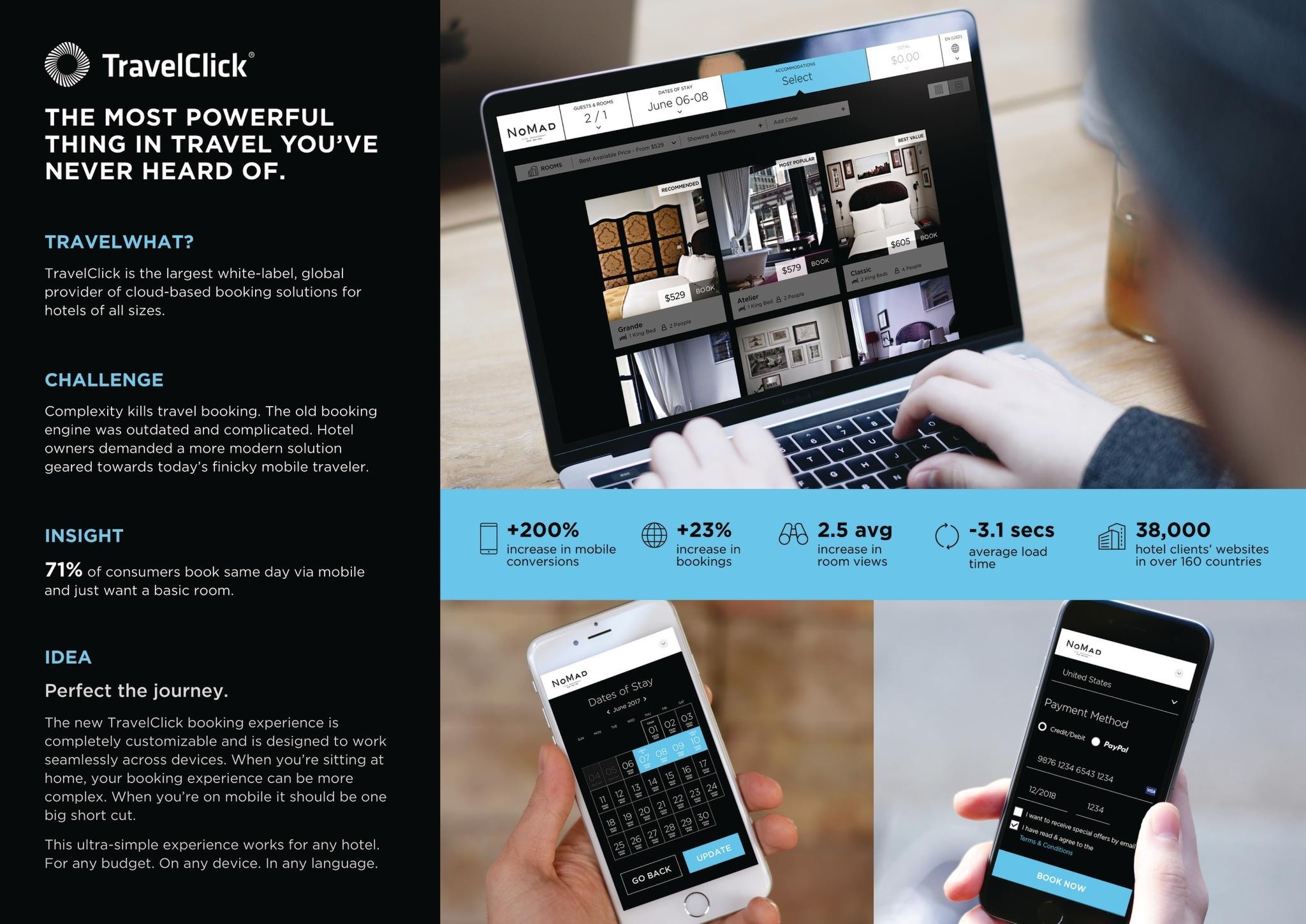
One room, several ways to sell it
In February 2005, Gray explained another advantage of iHotelier. Reservation agents could put telephone bookings into the same system used for website and GDS reservations. Bringing the hotel’s inventory together made revenue management more effective. The benefit lay in making different routes to the customer work from a shared picture of availability.
It is easy to think of a booking engine as a button on a website. Gray’s explanation reached further into the hotel. A guest might telephone, use the property’s website or ask a travel agent to arrange a stay. Behind those choices sat the same rooms. The operational challenge was to keep the channels connected well enough for staff to manage what they were selling.
This helps explain why TravelClick’s history includes both information products and reservation technology. A manager could learn something about demand, choose a commercial response and then need the systems to carry it out. Gray’s work occupied the space between a useful observation and an actual reservation.
The founder’s chair changes shape
In May 2005, Robert Post was named president and chief executive, succeeding Gray and Cohen as co-CEOs. Post had joined as chief financial officer a year earlier. Gray remained chairman. The transition gave the company a single chief executive while preserving his involvement at board level.
Gray’s remarks about the appointment concentrated on Post’s experience and his contribution to growth and financial performance. The succession was a practical milestone in its own right. A business built by two founders now had another executive responsible for running it.
In December 2007, Genstar Capital acquired TravelClick from Bain Capital and the co-founders. Bain Capital Ventures made a new minority investment alongside Genstar. Gray was identified as chairman in the transaction announcement. This was the sale involving the founders; later ownership changes belong to the continuing life of the company they had started.
Thoma Bravo bought TravelClick in 2014 in a transaction announced at $930 million. Amadeus subsequently acquired it from Thoma Bravo for $1.52 billion in 2018. By that acquisition, TravelClick served more than 25,000 customers in 176 countries, with roughly 1,100 employees transferring to Amadeus. Those figures describe how far the company eventually travelled, across several owners and management teams.
- 2005Post becomes CEO.
Gray remains chairman. - 2007Genstar buys from Bain
and the co-founders. - 2014Thoma Bravo acquisition
announced at $930 million. - 2018Amadeus acquires TravelClick
for $1.52 billion.
Still looking behind the front desk
Gray’s entrepreneurial work also included co-founding Virtual Agent Services, a customer call-centre business specialising in travel and hospitality. It merged with Cloud5 and was later sold to a private equity firm. The medium was different, but the setting remained familiar: the operational work that connects a travel business with its customers.
In April 2021, Gray led DJR Advisors’ investment in Virdee, whose software addressed digital check-in and virtual customer engagement. Silverton Partners and LiveOak Venture Partners also participated in the funding. Virdee’s tools covered tasks including reservations, room assignments, verification and payments. His attention had moved along the guest journey, from securing the reservation toward managing arrival.
Later that year, Above Property Services announced Gray’s appointment to its board alongside former Hyatt president Ed Rabin and hospitality executive John Ceriale. APS was developing software for the travel industry, with an emphasis on flexible systems. The appointment placed Gray among people advising another generation of hospitality technology builders.
The continuity is striking without requiring a grand theory of his character. Gray has worked as an executive, founder, chairman, investor and director. Across those roles, the recurring setting is a hotel or travel company trying to make its commercial machinery work better. The setting is less glamorous than the brochure. It is also where many consequential decisions get made.
A traveller finally arrives, gives a name and receives a key. For the guest, the holiday can begin. Gray’s career invites a glance at everything that happened before that moment: the report, the advertisement, the booking, the shared inventory and the people who kept them connected. The room has an occupant. Somewhere behind the desk, a practical question has found its answer.
Follow the reservation
Continue with Gray’s DJR biography, the 2005 leadership handover, his Virdee investment and the APS board appointment. Explore the TravelClick company profile or the Amadeus acquisition announcement.