Before the Vancouver Winter Olympics began in 2010, Richard Carrión carried the flame through a wet, cold morning. It was around 7:30. Spectators stood three deep. Parents lifted babies for a look. The Puerto Rican banker, accustomed to negotiating what the Games were worth on television, was briefly responsible for something that could not be put in a contract.
He remembered the crowd when he announced his campaign for the presidency of the International Olympic Committee three years later. The spectators had come for the flame. The person holding it was incidental. “That flame evokes an emotion,” he said. Here was a useful corrective for a financier: the valuable thing might be the thing you could never own.
Carrión’s working life offers several ways into that thought. There are cash machines, broadcasting agreements, basketball tournaments and a bank that releases music. There is also a family name embedded in Puerto Rican banking. Follow only the job titles and you get a succession of boardrooms. Follow the audiences and a more interesting story appears: who gets access, who feels included, and what an institution can do to make either happen.
“That flame evokes an emotion.”
Richard Carrión · recalling Vancouver 2010
A family bank meets a systems student
Carrión was born in San Juan on November 26, 1952, into a family already closely associated with Banco Popular. His grandfather, Rafael Carrión Sr., helped shape the bank; his father, Rafael Carrión Jr., ran it. The young Richard did not have to invent a connection to banking. He did have to decide what to bring to it.
His education supplies a clue. He graduated from the University of Pennsylvania’s Wharton School in 1974 and earned a master’s degree in management information systems at MIT in 1976. Economics and information systems make an instructive pair. One asks how resources move. The other asks how to make the movement work without losing something important along the way.
At MIT, he worked with Robert Smith on a project called A Decision Framework for Consumer-Oriented Electronic Funds Transfer Systems. The title has the conversational sparkle of a filing cabinet. Yet the subject is unusually revealing: electronic money, considered from the consumer’s end. Long before digital banking became ordinary vocabulary, Carrión was studying the systems underneath it.
He joined Banco Popular in 1976. An inherited institution and a technical education had arrived at the same address. That combination helps explain the work that followed. Banking could be redesigned at the level of the transaction: how a customer withdrew money, paid a merchant or dealt with an account beyond the counter.
Economics
Information systems
President
Chief executive
The bank goes outside
Carrión helped introduce Puerto Rico’s first ATM network and pushed the move from paper transactions to electronic ones. Cash machines and debit payments were among his early projects. In Puerto Rico, the machines became familiar as ATHs. The visible object was a box that dispensed money; behind it sat the less photogenic business of processing transactions.
The practical appeal was easy to grasp. A machine could make a routine withdrawal possible without a conversation at a teller’s window. Electronic payments could change the relationship between a shopper, a merchant and a bank. Such changes are most successful when people eventually stop thinking of them as changes at all.
His responsibilities expanded with the technology. He became president of Banco Popular de Puerto Rico in 1985 and its chief executive in 1989. He became chairman of Popular in 1993. The dates describe a gradual accumulation of authority, rather than a sudden entrance through the chairman’s door. The technical work preceded the long tenure at the top.
Over time, his appointments also took him into telecommunications and central banking. He served on Verizon’s board until 2019 and on the Federal Reserve Bank of New York’s board from 2008 through 2015. These were different institutions with a common practical demand: enormous numbers of people needed complicated systems to keep working.
A surprisingly musical balance sheet
Then there is the music. In 1993, for Banco Popular’s centennial, Carrión commissioned a musical special. The bank had made an earlier tribute to composer Rafael Hernández in 1965, under his uncle Billy Carrión. The centennial production turned that earlier experiment into an annual tradition. A financial institution had found a reason to ask people to turn up the volume.
The specials brought performers, musical history and Puerto Rican identity onto television and recordings. Their appeal extended to relatives living in the mainland United States. Carrión described customers sending the bank’s CDs to family members who missed the music. A corporate production could become something to put in the post, carry home or associate with Christmas.
“Music and sports are really what define us as a people,” he said in 2011. The observation makes his extracurricular interests feel considerably less extracurricular. A bank’s relationship with a place can include the things people sing together, as well as the things they buy. That is an unusually tuneful interpretation of customer relations.
The arrangements had a practical educational side. Proceeds from the musical productions supported Fundación Banco Popular’s music education work. Popular has described funding for school music projects and laboratory classrooms equipped for composition. The sequence matters: a television audience, a recording purchase, then equipment for students. Culture was allowed to produce more culture.
Popular’s musical specials became an annual tradition in 1993. Their proceeds have supported music education.
Four Olympics, one very large number
Carrión joined the International Olympic Committee in 1990. He served on its executive board from 2004 to 2012 and chaired its finance commission from 2002 to 2014. His Olympic work also included broadcasting negotiations. It placed a Puerto Rican banking executive at a meeting point between sport, national audiences and the economics of television.
In June 2011, NBC secured the US rights to four Olympic Games, covering 2014 through 2020, for $4.38 billion. Carrión was central to the negotiations. Fox and ESPN were also in the bidding. The award involved both the money on offer and the broadcaster’s commitment to an event whose appeal depends on people caring about unfamiliar competitors.
The scale deserves a pause. Four editions of the Games were being sold together, committing a broadcaster across years of changing audiences and technology. A contract could settle the price in advance. It could not settle which athlete would become a household name, which race would be remembered, or which family would gather around a screen.
Carrión was already thinking about viewing beyond conventional television. In 2013, he discussed how broadband, mobile devices and new distribution partners could increase the value of Olympic coverage. More ways to watch meant more ways for viewers to encounter the event. The information systems student had found a rather larger network to consider.
One NBC agreement. Four editions of the Olympic Games.

The election he did not win
In May 2013, Carrión entered the race to succeed Jacques Rogge as IOC president. He proposed drawing on his business experience as the Games became more complicated to organise. His ideas included stationing IOC staff permanently in host cities, so that an organisation staging a recurring event would retain more of the knowledge required to deliver it.
His campaign also exposed a difference between holding authority and asking for votes. He could appear reserved. At the time, he described himself simply: “I am a listener.” Campaigning required him to sit down with colleagues and explain his ideas. A negotiation over broadcast rights and an election among peers demand different kinds of persuasion.
The result in Buenos Aires was clear. Thomas Bach won the deciding round with 49 votes. Carrión received 29 and finished second. He had put himself forward for the presidency and lost. A career that includes a public defeat is easier to understand than one polished until every appointment appears to have been inevitable.
His work in sport continued. He chaired the board of the 2023 FIBA Basketball World Cup, hosted across the Philippines, Japan and Indonesia. The opening-day Philippines-Dominican Republic game drew 38,115 spectators at the Philippine Arena. It was another crowd, another set of arrangements and another reminder that the administrative work exists because people want to be there.
Votes for the two leading candidates. Other candidates also received votes.
Keeping the institution, changing the chair
Carrión handed over Popular’s chief executive role to Ignacio Álvarez in July 2017, became executive chairman and moved to non-executive chairman in July 2019. He also founded RCA3 Investments, a consulting firm, in 2017. His other roles have included operating partner at J.C. Flowers. His later career spread his banking experience across advisory and investment settings.
By 2026, the distinction between chairman and chief executive was especially relevant. In July, Popular announced that Jorge J. García would succeed Javier D. Ferrer as president and CEO. Carrión spoke for the board about the appointment and its succession planning. He remained chairman, participating in the institution’s direction while another executive took responsibility for running it.
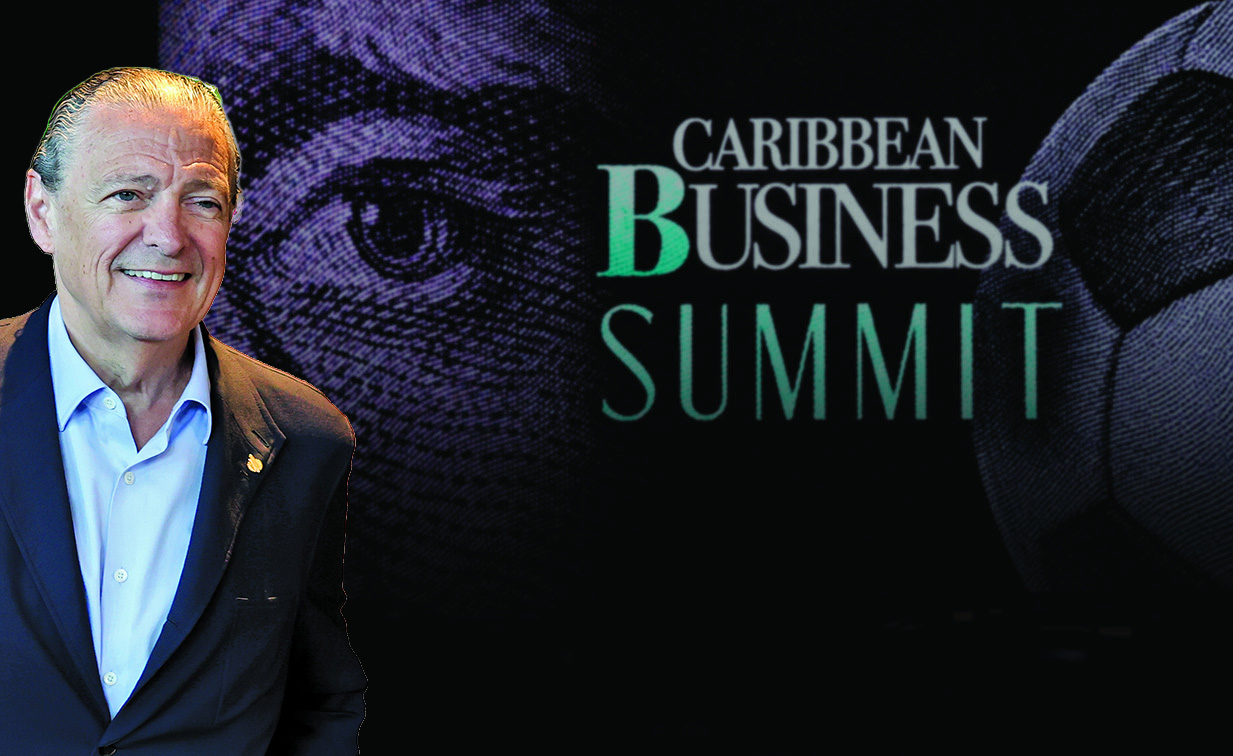
At a June 2026 business summit, his advice to leaders was practical. Concentrate on strengths, maintain discipline and prepare for circumstances beyond your control. He also spoke about Puerto Rico’s younger entrepreneurs, the need for investment and the importance of fixing infrastructure. His optimism came with specific conditions attached. Electricity, incentives and execution were part of the conversation.
The useful way to read this career is through its actual objects: an ATM, a recording, a broadcast contract, a basketball court. Each puts institutional resources between people and something they want to do. The machinery can be cumbersome and the negotiations expensive. Sometimes the result is money in a hand. Sometimes it is a song sent home. And sometimes it is a crowd, standing in bad weather, waiting for a flame.