A bank can live with an old piece of software for a remarkably long time. At Trustmark, the core system had reached 45 years. By the time Duane Dewey discussed its replacement in July 2026, the project had pulled employees across the company into the same assignment. For a chief executive who had spent much of his career learning how the place worked, here was a particularly literal test: change the workings.
“It was a major lift,” he said. On the earnings call, he described roughly 50 to 55 additional retail employees brought in to help staff branches through the conversion. A banking upgrade has an awkward audience. Customers may welcome better tools, but they also expect their money to be available while the improvements are being made. Nobody opens a checking account for the pleasure of admiring a migration plan.
Dewey, president and CEO of Trustmark Corporation and Trustmark Bank, had arrived in Jackson long before this particular change. He joined in 2003 and took the top job in January 2021. The intervening years brought him through investment services, corporate banking and operations. His story is unusually well suited to a question that established companies eventually face: what does someone who knows the institution do when it needs to change?
Seventeen years to the corner office
His banking career began in 1985 at Republic Bank, later absorbed into what became Bank of America. His early assignments included corporate banking in Dallas, followed by private banking in Washington, DC, and McLean, Virginia. Before Trustmark, he worked at Provident Financial Group in Cincinnati, with responsibilities that also extended to Florida. He arrived with experience of both business customers and private clients.
The educational foundation was finance twice over: a bachelor’s degree and a master’s degree from Louisiana State University. His later training included the Center for Creative Leadership in Greensboro and the College for Financial Planning in Denver. His LinkedIn education entry also lists baseball. There is a pleasing breadth to those entries, although the degrees, rather than the extracurricular activity, explain the professional starting point.
Trustmark’s September 2003 welcome announcement named him president of Investment Services. The assignment covered investments, financial and estate planning, and trust services. At the time, the bank described $7 billion in fiduciary assets, including $2.5 billion in discretionary assets under management. Those were the assets of the division he was joining, rather than a trophy collection he had personally assembled.
That announcement included an unexpected civic detail: service on the Cincinnati Opera board. It also recorded work with the Fellowship of Christian Athletes. Later came service with Jackson Preparatory School and LSU’s business college advisory council. The opera entry is a small reminder that an executive biography can contain something more interesting than an uninterrupted procession of committee names.
- 2003Investment services
- 2008Corporate banking president
- 2019Chief operating officer
- 2020Bank president + director
- 2021Chief executive officer
His Trustmark responsibilities widened. He ran the Central Region, encompassing Jackson, Vicksburg and Mississippi Delta markets. As president of Corporate Banking from 2008, his remit included real estate banking, insurance, wealth management and treasury management, as well as oversight of business in Houston. A customer’s portfolio and a region’s branch network present different operating problems. Dewey’s assignments put both on his desk.
The final promotions arrived in annual steps. He became chief operating officer in January 2019. A year later, he became bank president and joined the corporation’s and bank’s boards. In October 2020, Trustmark announced he would succeed Gerard R. Host as CEO, effective the following January. Host would become executive chairman. The change gave an experienced insider the executive role while preserving continuity at board level.
“accelerating our pace of progress”
Duane Dewey · CEO succession announcement, October 2020
The business he helped run, then sold
That promise acquired a concrete form in April 2024. Trustmark agreed to sell Fisher Brown Bottrell Insurance to Marsh McLennan Agency in a transaction announced at $345 million in cash. Insurance had once been among Dewey’s responsibilities. Now, as chief executive, he was leading the bank during its departure.
The agency had grown from one Jackson office to ten offices across Mississippi, Alabama and Florida. Trustmark said the transaction’s value equaled approximately 5.9 times the agency’s 2023 revenue and 28 times its net income. It planned to use the estimated after-tax proceeds to reposition the bank’s balance sheet, improve earnings and strengthen capital. A familiar subsidiary had become a source of financial flexibility.
The buyer announced completion on June 3, 2024, and said the agency’s employees would join Marsh McLennan Agency while remaining in their existing locations. The transaction changed ownership without requiring the business to pack its desks. For Dewey’s story, the distinction matters: a long career across divisions can end in a decision to let one of those divisions go.
Announced cash transaction value for Fisher Brown Bottrell Insurance.
Transaction value, not personal wealth or the bank’s net proceeds.What the word community has to carry
A regional banker’s public language often returns to communities. Dewey’s tenure gives that word specific obligations. In October 2021, during his first year as CEO, Trustmark settled federal allegations involving mortgage lending in the Memphis area. The Justice Department alleged that the bank had avoided predominantly Black and Hispanic neighborhoods between 2014 and 2018.
The agreement included $5 million in civil penalties and a $3.85 million loan subsidy fund. It also required annual spending on outreach, advertising and financial education. The alleged conduct preceded Dewey’s CEO appointment, although he had held senior responsibilities at the bank during those years. The settlement became part of the institution he was now leading.
“We fully cooperated with the agencies,” Dewey said when the settlement was announced. He described the decision as a way to avoid protracted litigation and said the bank shared the goal of reducing barriers to home financing. In May 2025, the court terminated the DOJ and CFPB consent order and dismissed the case with prejudice. Trustmark reported substantial compliance and remediation; the termination came seventeen months before the scheduled expiration.
Both episodes belong in an account of his leadership. So do the partnerships. In August 2021, Trustmark announced a collaboration with Commonwealth National Bank through the Office of the Comptroller of the Currency’s Project REACh initiative. Its stated purpose was to expand economic opportunities in minority and underserved communities. That November, Trustmark joined Operation HOPE and the City of Montgomery to offer financial education and counseling, with a location inside its Carmichael Road branch.
Those arrangements describe practical ways a bank can meet people who need help with credit and money. They also place a useful burden on the word relationship. A relationship must have somewhere to happen, someone responsible for it and a service the customer can actually use. An office, a counselor and a lending policy are more concrete than a corporate promise.
From the boardroom to the branch counter
In March 2022, Trustmark announced it would eliminate non-sufficient funds fees on consumer checking accounts by year’s end. It also planned a small-transaction threshold for overdraft charges. Dewey linked the changes to customer satisfaction. The bank continued to promote deposit channels that could provide same-day credit as late as 9 p.m., giving customers another opportunity to avoid an overdraft fee.
Here the chief executive’s work comes down to details a customer might notice on a Tuesday evening. A fee disappears. A deposit receives credit. An employee explains a new system. Strategy eventually has to survive this scale of attention. The bank can discuss its future in an earnings presentation; its customers encounter that future one transaction at a time.
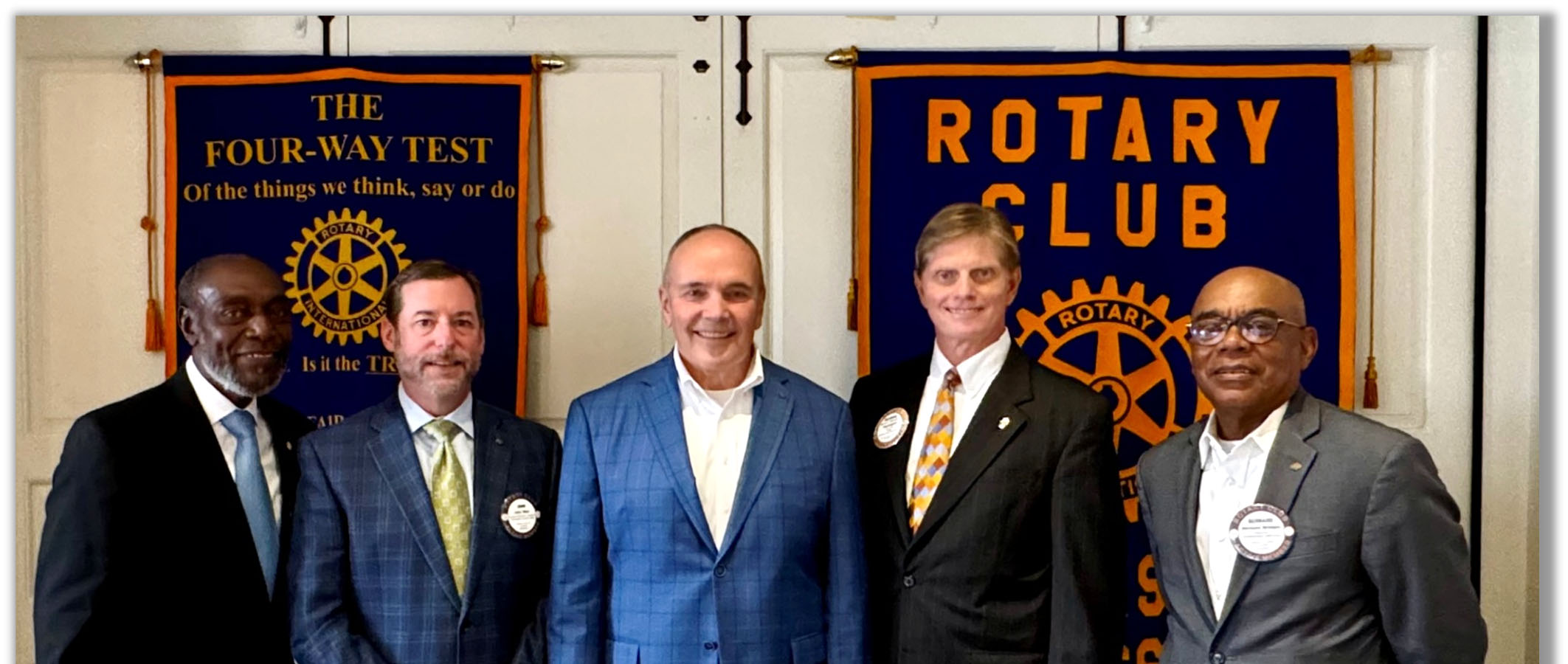
The personnel decisions continued in 2026. Thomas Owens, the bank’s finance chief, became chief operating officer effective May 1. Joseph Bond arrived as chief financial officer. Dewey praised Owens’s understanding of customers, markets and growth opportunities, and pointed to Bond’s experience in treasury and capital management. An internal move and an outside appointment gave the leadership team two different kinds of experience.
The core conversion completed in the second quarter belongs beside those appointments. Trustmark reported $63.5 million in quarterly net income and said the new deposit and related systems would support customer experience and efficiency. The work of installing a platform and the work of obtaining benefits from it are separate assignments. Completion gives management a new set of promises to deliver.
A larger table, the same questions
Dewey’s responsibilities now extend to a national advisory setting. The Atlanta Fed appointed him the Sixth District representative on the Federal Advisory Council for 2026. The council brings representatives from the twelve Federal Reserve districts into discussions with the Federal Reserve Board. It is an advisory position, distinct from being a governor or a monetary-policy voter.
He also serves as second chair of the Mississippi Business Alliance. At Trustmark, his frame of reference spans a bank serving Alabama, Florida, Georgia, Mississippi, Tennessee and Texas. That geography makes the listening assignment tangible: different markets, customers and kinds of credit demand, carried into a broader economic conversation.
As of October 22, the next scheduled public checkpoint was close: third-quarter results on October 27, followed by an analyst call led by Dewey on October 28. After the software conversion, the next numbers would offer another opportunity to question the operating plan. Seventeen years inside Trustmark helped him reach the CEO’s chair. The work now is to make the changes visible to the people on the other side of the counter.
Continue the conversation
- Trustmark ↗
- Duane Dewey on LinkedIn ↗
- Federal Advisory Council biography ↗
- 2026 earnings-call conversation ↗
- 2024 insurance sale ↗
- 2021 settlement announcement ↗
- 2025 consent-order termination ↗
- 2026 leadership appointments ↗
- Rotary appearance and photograph ↗
- Trustmark on LinkedIn ↗
- Trustmark on Instagram ↗
- Trustmark on Facebook ↗
- Trustmark on X ↗