A vacant apartment has a peculiar talent: it keeps costing money while producing none. Someone has to paint it. Someone has to fix the sink. Someone has to notice that neither job is finished. At Rex, this unglamorous interval between one resident leaving and another arriving has become a software opportunity. The company owns and operates property, encounters the mess, then builds tools to manage it.
- Rex combines real estate investment with an in-house software business.
- Its current tech directory lists eight revenue-generating products, sold individually.
- The useful idea: test a product where your own money is already at risk.
That arrangement makes Austin-based Rex an unusual entry in the venture capital directory. Founded by Peter Rex, it builds companies as well as investing in assets. Its customers include apartment owners, property managers, maintenance teams and vendors. Residents encounter the technology through maintenance requests, rent payments and rent reporting. The common subject is the administrative machinery behind a place to live.
A repair job becomes a product brief
Consider what happens after a resident reports a leak. A call must be answered, urgency established, a technician reached and a work order recorded. Rex's JobCall handles call intake and routing; the current portfolio describes it as GetDone Dispatch. GetDone manages the resulting work, including assignments, unit turns and documentation for high-risk issues.
The latest addition has a pleasingly unpretentious name: Rusty. This AI agent sits inside GetDone and can prepare assignments, turn a photo into a work order or identify apartments whose repairs threaten a move-in date. Its published design includes a consequential pause: proposed changes wait for a person to press Commit. The person doing the work retains a say in what the machine does.
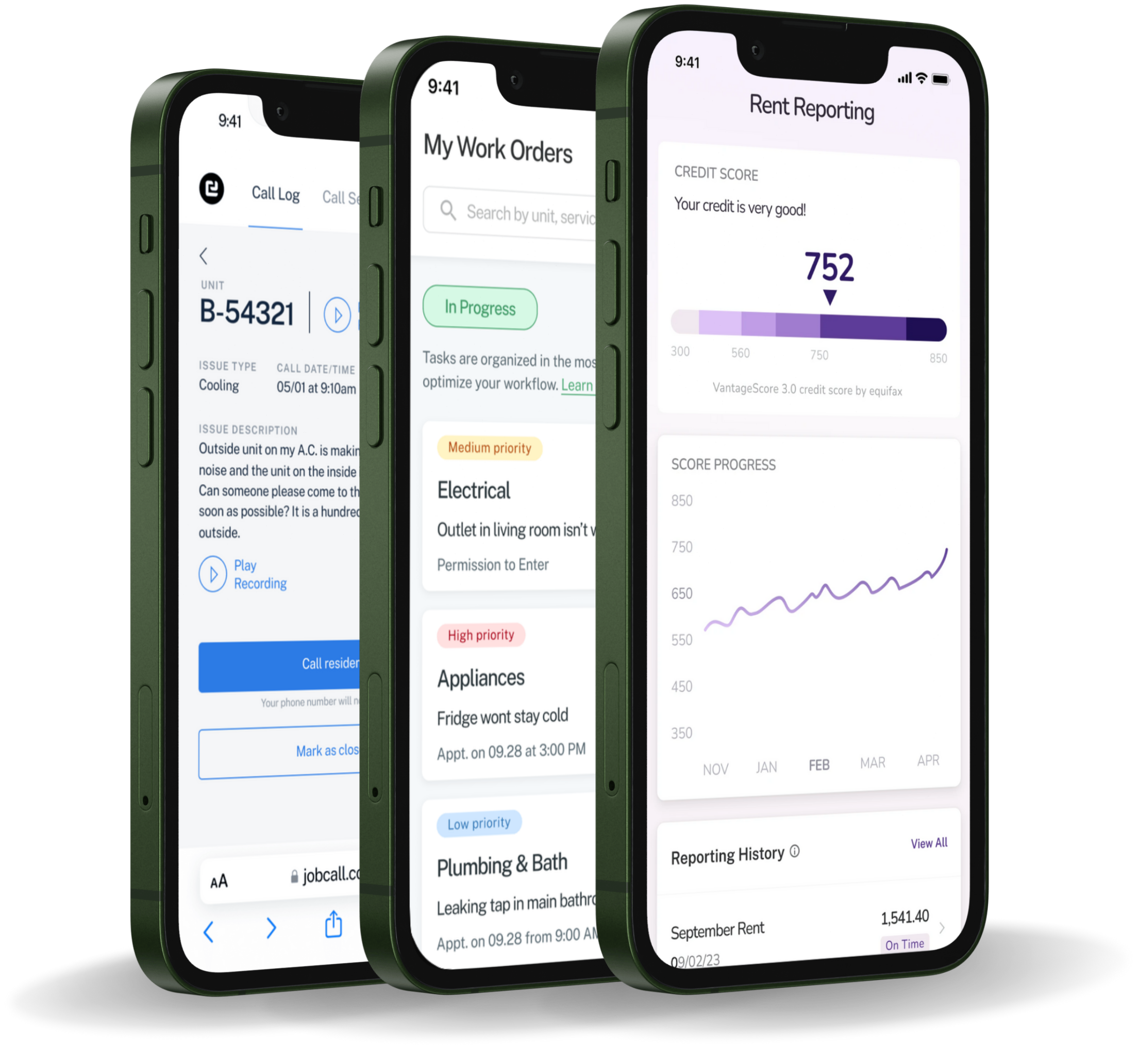
The rest of the portfolio follows the paperwork. BillRoute processes invoices; PayUp automates vendor payments; IDCore checks vendor compliance. ProofUp verifies applicants' income and identity. CredBuild reports rent payments to credit bureaus, while TenantPort provides a resident portal. These are narrow jobs with identifiable users. An accounts payable clerk and a maintenance supervisor need different screens, even when they work for the same landlord.
The price of an empty room
GetDone's own case study makes the economic argument through Ayla, a 340-unit community. It reports that make-ready delays cost the property $601,807 in vacancy loss in one year. After adopting GetDone, the property reported 51% faster make-readies and 55% less vacancy loss compared with the prior year. Those are vendor-published results from one property, rather than a forecast for every buyer.
The arithmetic behind the pitch is easier to inspect. At an illustrative $1,500 monthly rent, a vacant day represents about $50 using a 30-day month. Save two days and roughly $100 of rent becomes available per turn, assuming the apartment can actually be leased. Software cannot manufacture a tenant. It can help remove an operational delay between an available tenant and a finished apartment.
Costs also appear at a much larger scale elsewhere in Rex. Its current real estate page describes a planned $150 million development at Hotel Ella. That is a proposed property project, separate from the cost of developing or buying its software. Rex's businesses involve both code and capital-intensive buildings; their economics should never be casually folded into one number.
The investor who stopped buying
Peter Rex's interest in downside protection has a personal history. In a Mixergy interview, he described losing his early property holdings during the financial crisis, negotiating with lenders and borrowing from friends to keep going. These events predated the present Rex company. The lesson he described was acquired through exposure to an unforgiving market.
His official biography records a later change of direction: in 2019, worried about exuberant asset prices, he shifted from buying to selling and stopped accepting funds into the private equity operation. The team, according to that account, sold more than $1.5 billion through 2022, disposing of lower-quality assets first. Price, rather than affection for property as an asset class, changed the decision.

“We will find a way, or make one.”Rex's published FAWOMO principle
Today Rex again describes real estate as a contrarian buying opportunity. Hotel Ella and Arena Hall show its taste for assets with a second act. Rex says it rebuilt Arena Hall from a hotel into a space for tenants and community events. At Ella, the stated plan preserves the historic front while adding a modern building behind it. The ambition is architectural as well as financial.

One building, several businesses
Rex's advantage is the proximity between the person buying technology and the person building it. Its tech group says products are used on properties it operates before being offered outside. An internal customer supplies immediate feedback, but also a distribution starting point. Each current product has its own team, brand and contract; operators can buy one without committing to the whole collection.
Broad suites such as AppFolio and Yardi address overlapping needs. Rex offers individually sold tools developed inside its own property operations. The revenue routes differ accordingly: investment and property operations sit alongside commercial software and payment services. IDCore adds an insurance connection through InsurePro: a vendor with inadequate coverage can seek coverage within the compliance workflow. ResMan appears repeatedly as an integration across the product sites. For buyers, that connection matters because replacing an accounting system is a larger undertaking than adding a useful tool beside it.
Copy the feedback loop
Rex's careers page advertises speed, lean teams, cost cutting and direct communication. It also seeks values alignment and uses explicitly missionary language. That combination gives the company a clear personality, with a demanding view of work. Its stated mission, to catalyze human flourishing, finds its most concrete expression when a worker gets a clearer task or a resident gets an answered call.
The transferable idea is specific: find a repeated operational expense, build against it, then measure the result. The hard part is proving that a fix developed inside one portfolio works elsewhere. Different accounting systems, staffing habits and leasing markets can undo an elegant demonstration. Rex's proposition becomes persuasive at the point where an outside operator can recognize the same problem, use the tool and keep more of the rent.