Before a startup has a product, it needs a collection of people who are willing to take it seriously. An engineer. A backer. Someone with a laboratory. Someone who knows whether the idea already exists in another country. Rene Tõnnisson has spent much of his working life assembling that collection. His career stretches across research institutes, regional development projects and investment funds, with Tartu as a recurring point of departure.
There is something pleasingly unfashionable about the job. Startup culture likes a solitary founder with a sudden revelation. Tõnnisson’s record is crowded with colleagues, institutions and partnerships. Even his main company’s name, Baltic Innovation Agency, gives the geography a place at the table. The interesting question running through his work is what happens between having a promising idea and having the means to do something with it.
A policy education, with several borders crossed
Tõnnisson’s route into entrepreneurship passed through public administration. He earned a master’s degree at the University of Tartu and a Certificat d’Etudes Politiques in Strasbourg. Further study took him to Cambridge for economics and the European University Institute for European Union law. It is an education concerned with the rules, incentives and institutions around an enterprise, as well as the enterprise itself.
That background fits the variety of his subsequent work. He became a founder and board member of the Institute of Baltic Studies, where his responsibilities include international cooperation, innovation, knowledge management and smart cities. He also served on the boards of Tartu Science Park and Tartu Biotechnology Park. Those roles placed him around the machinery that helps research find a practical use.
Read together, these appointments suggest a particular professional interest: the conditions that allow other people’s ideas to move. A research result needs an organisation around it. A young company needs people outside its founding team. Public administration turns out to be quite relevant when the business plan keeps running into the rest of the world.
Buildit puts a physical object on the table
In 2013, Tõnnisson joined the founding effort behind Buildit, an accelerator focused on hardware. The Estonian company’s original board included Aleksander Tõnnisson and Toomas Noorem alongside him. Its early team also brought together investment and engineering experience. The proposition was refreshingly concrete: help young companies turn electronics and robotics ideas into prototypes that could be produced.
The first application round opened in 2014. The plan was to choose eight teams for a three-month programme, backed by an initial investment fund of €500,000. Its network included 70 mentors. These were programme ambitions at launch, rather than a retrospective count of successes. They show the scale of the experiment: a small intake, a short timetable and a sizeable collection of people available to help.
Hardware gives ambition a rather strict examiner. A prototype must survive contact with materials, manufacturing and cost. The early Buildit team drew on Tartu Science Park’s laboratories and nearby hardware businesses. There was a practical logic to starting where some of the expensive equipment and relevant experience already lived. A circuit board has little interest in the quality of a founder’s motivational speech.
The work before the pitch
Backing companies also meant helping prospective founders reach the point where an investor could assess them. Tõnnisson was project manager for EstLat-Accelerate, an initiative built around three pre-acceleration programmes in Tartu and Riga. Its stated tasks included team formation and idea validation, preparing participants for pre-seed financing. The first-time entrepreneur was explicitly part of the audience.
The partnership divided that preparation among organisations with different capabilities. TechHub Riga coordinated programmes and communication. The University of Tartu and Latvian Startup Association handled mentoring in their respective countries. Garage48 organised ideation workshops and hackathons. The design treated entrepreneurship as a sequence of learnable, testable activities. Having an idea was a starting point; finding collaborators and examining the idea came next.
There is a useful distinction here between an investment decision and the work that makes one possible. Before a team can explain what it will do with money, it must decide what it is actually building. Before it promises a market, it has to investigate one. Tõnnisson’s involvement in pre-acceleration puts him on that earlier stretch of the journey, where the questions are still being sharpened.
A workshop’s arithmetic
A participant’s account of a January 2019 Buildit workshop offers a closer view of this practical world. Aleksander and Rene Tõnnisson were among the organisers giving advice to aspiring founders. One exercise concerned judging a proposed change through three dimensions: its cost, the time required and its likely impact, each considered on a scale from zero to ten.
It is a modest piece of arithmetic with a useful social consequence. It asks a team to explain why something deserves its attention. The example was changing a website button’s colour. A small task can still consume a surprisingly large conversation; putting cost, time and impact beside one another gives the conversation a chance of ending.
The account also described a selection process that narrowed hundreds of applicants through interviews and a bootcamp to a much smaller investment group. The lesson was about preparation and choice. In this setting, encouragement came with evaluation. That combination helps explain the appeal of an accelerator: founders get company on the journey, alongside repeated invitations to make their case more convincing.
The investor and the regional adviser
Buildit subsequently developed from an accelerator into a venture investment operation. Its team lists Tõnnisson as a partner and investor. Its history describes a progression from early €10,000 seed tickets to the capacity to invest up to €1.5 million. Those figures belong to Buildit’s development as an organisation. They are neither his personal investment total nor a measure of his private wealth.
His work at Baltic Innovation Agency has continued alongside that investment role. The company describes his particular strengths as developing project ideas, bringing people and funding together, budgeting and strategic implementation. Colleagues including Mart Veliste, Kadri Uus and Kertu Ling cover social innovation, research and development, and project coordination. The business depends on a team with different parts of the process in view.
The European Innovation Council’s biography also records his involvement as an investor and investment committee member in four funds in Estonia and Latvia, and his membership of the Estonian Business Angels Network. Across these roles, the unit of work changes: sometimes a company, sometimes a project, sometimes an investment proposal. Assessing how an idea might become workable remains a recognisable thread.
Making an opportunity readable
The same concern appears in his regional policy work. Baltic Innovation Agency has supplied expertise to Interreg Europe’s Policy Learning Platform since 2018. Tõnnisson works there with colleagues helping regions exchange experience through advice, publications, peer reviews and matchmaking. The audience includes public bodies trying to improve the support available to businesses.
In March 2025, he was listed as a speaker at the Europe, let’s cooperate! event in Krakow, in a session about communicating with policy beneficiaries. One example on the programme was a regularly updated document from Ukraine’s Voznesensk City Council that made grant opportunities easier for small businesses to understand. The subject was access through clear language and usable information.
It is easy to overlook that last step. A funding programme may exist, yet remain distant to someone who cannot quickly understand its terms. For a career spent around finance, policy and entrepreneurship, making an opportunity legible is a fitting concern. Even a generous invitation needs an address people can find.
The city gets a seat at the table
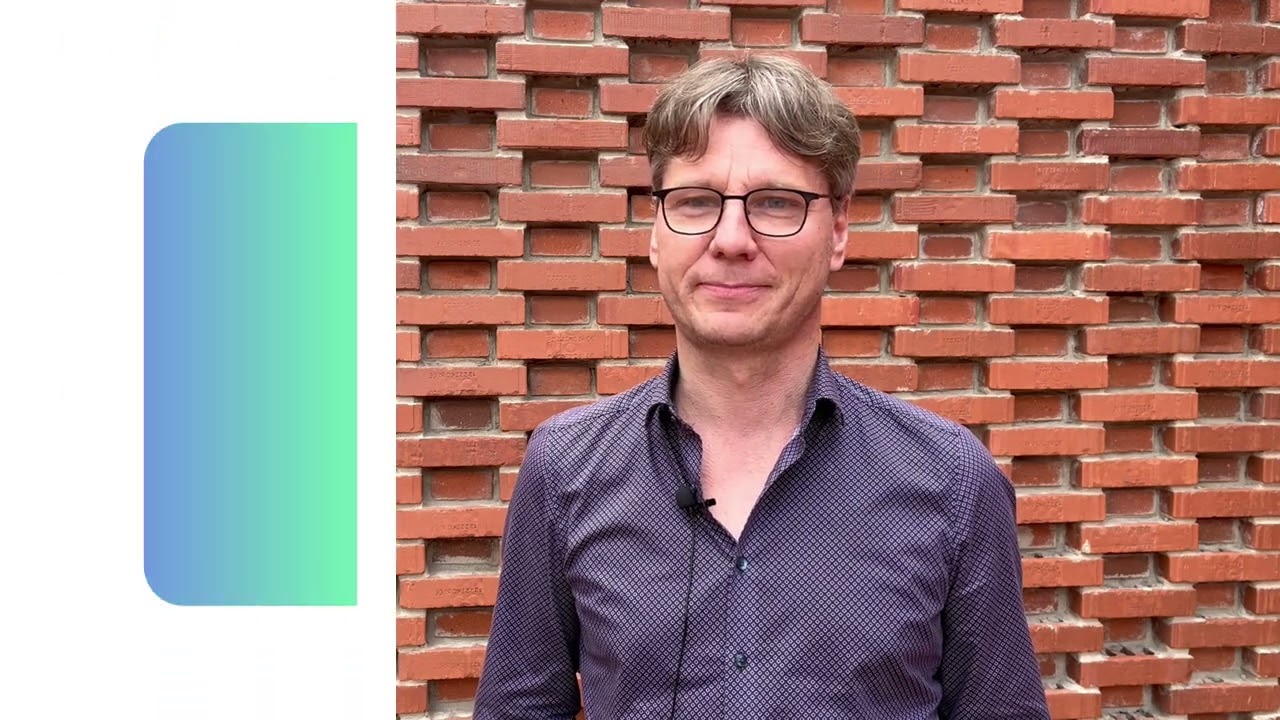
In February and March 2025, Tõnnisson led online focus groups in Tartu for the RETIME project, supported by Mari Einmann at the Institute of Baltic Studies. Participants included city-centre housing associations, residents, local organisations and representatives of Tartu City Council. Their task was to help identify challenges and priorities for the city’s future.
This brings the story back to the people around an idea. Here, they were people whose buildings and neighbourhoods would be affected by the proposed work. RETIME’s Tartu pilot concerns climate adaptation in a historic city centre, including alerts and simulation tools for buildings and districts. In his interview, Tõnnisson described the aim in terms of practical responses developed with the community.
“RETIME gives Tartu better chances to adapt by providing tools to mitigate heatwaves, cold spells and flooding”
Rene Tõnnisson, RETIME interview feature, June 2025
The focus groups make that community element tangible. People living in a district bring knowledge that does not arrive automatically with a technical model. Housing associations and city officials bring different responsibilities. Bringing them into the same process is part of deciding what a useful solution should do, before judging whether the technology can deliver it.
What happens after the introduction
A career like Tõnnisson’s is difficult to compress into a single company’s growth chart. There are founders being prepared for investment, regions comparing policies and residents discussing their city. He has occupied several positions within those processes. The continuity lies in the work of arranging cooperation, then giving it enough structure to proceed.
Tartu runs through the story, from university study to science parks, accelerator programmes and neighbourhood conversations. International connections keep widening the circle. The resulting picture is of entrepreneurship practiced through institutions and teams, with room for both an investment committee and a housing association. Getting the right people together is an achievement. Giving them something useful to work on is the next appointment.