A police-car lightbar is an unlikely place to look for a second career in lighting. Yet it makes a useful introduction to Akif Ekin. Long before his company developed equipment that could read number plates from a moving patrol vehicle, he started a lamp-design business while studying aerospace engineering in Germany. The objects changed. His work kept bringing electronics, physical design and the problem of seeing something clearly into the same small space.
Today, Ekin is the founder and chief executive of Ekin Smart City. His company's equipment operates at the junction of traffic management and public safety: cameras, sensors, vehicle-mounted systems and the software that connects them. A city, in this view, is full of information already in motion. The engineering question is how to collect useful parts of it, and put them somewhere a person can act on them.
There is a temptation to tell this sort of career backwards, as though a childhood interest inevitably produced a company. Ekin's actual route contains more turns. It runs through Turkey and Germany, a university laboratory, aircraft production, automotive training, security systems and books about Turkey. The police car comes rather late in the story. First there is a boy leaving Denizli.
The long way back to Istanbul
Born in Denizli in 1967, Ekin moved to Germany in 1972. He completed his school education there, then studied aircraft and aerospace engineering at the University of Stuttgart between 1986 and 1992. The geography matters: Germany was where he grew up and learned his profession, rather than a brief overseas stop appended to an otherwise Turkish career.
His early engineering work included research on lightweight, heat-resistant coating materials for the European Space Agency's Hermes spaceplane project. He also interned at aircraft manufacturer Zenair in Canada in 1988. The scale of the problems was considerable, but the work itself was specific: materials, manufacturing and the practical demands of a machine that has to function outside the comfort of a drawing.
In 1990, still a student, he founded Akart Lamp. Later came work with Iltis Consulting and a period as general manager of Pyramid Security Systems from 1993 to 1995. His professional life was already moving between technical work and commercial explanation. Knowing how a thing worked and persuading someone to use it were becoming adjacent occupations.
There was writing, too. His name appears on Nachbar Türkei, published in 1997, and his biography also lists Erfolg in der Türkei from 1998. Turkey was a subject he could explain to German readers as well as a place to return to. The future technology founder had spent time making a country legible before turning to cities.
In Istanbul he distributed Sanyo products before founding Ekin in 1998. Suzan Ekin, his wife, is also credited with founding the business. Years later, speaking in Denizli, he explained his return through a belief that Turkey could produce a success story in software. The company gave that conviction a working address and a set of products to build.
- Denizli1967 · Born in Turkey
- Stuttgart1986-1992 · Aerospace studies
- Istanbul1998 · Founded Ekin
The camera leaves its post
The firm grew through several related disciplines. Design and production businesses followed in 2000, with an information-technology business in 2002. That sequence helps explain why Ekin talks about software, hardware and design together. A camera needs somewhere to sit, a processor needs somewhere to go, and an operator needs an intelligible result. None of those requirements disappears because the software becomes cleverer.
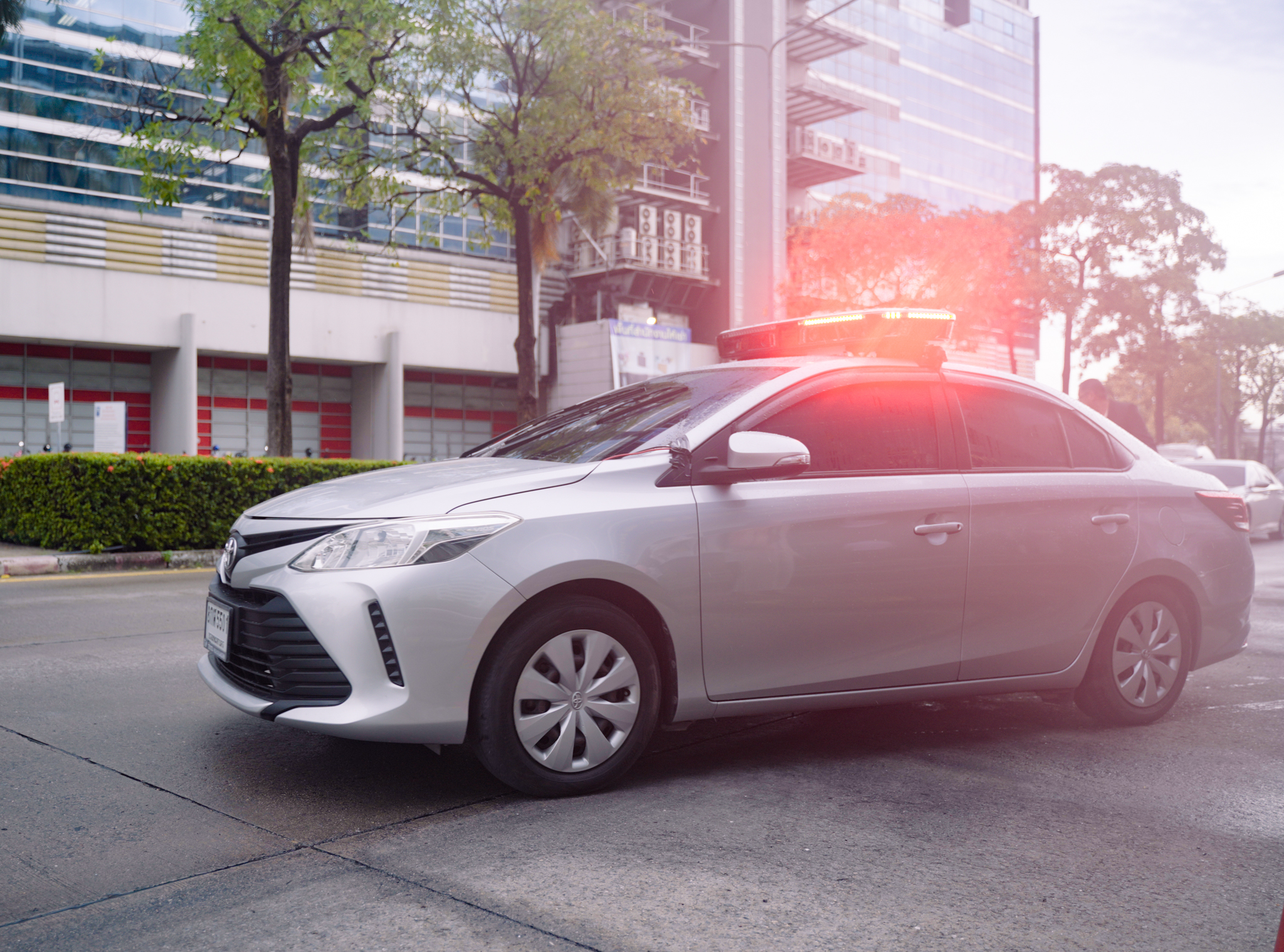
By 2013, Ekin had developed its Patrol system. Its central proposition was easy to picture: put detection equipment on a vehicle that already travels through the city. Fixed cameras can observe their particular corners. A moving patrol takes the equipment to other streets. Mobility changes the places a system can reach without requiring a permanent installation at every one of them.
The invention also appears in the less theatrical language of a patent application. A US publication dated May 12, 2016 names Akif Ekin as inventor of a portable licence-plate reader, speed sensor and face-recognition system. Its description includes cameras, LED illumination, police lights, wireless communication and cooling. The document traces a related international application to December 2013. Here the founder is attached to a particular apparatus, component by component.
A lightbar is a shrewdly ordinary home for such a collection. The patrol vehicle already has a roof and a reason to be on the road. Giving the familiar object additional functions brings the technology into an existing routine. It also poses a designer's problem: fitting more capability onto the car without turning the car into a travelling equipment cupboard.
Good design has to survive the car roof
Patrol G2 carried that approach forward. The German Design Award entry describes cameras covering a full circle, automatic number-plate recognition, video and speed detection. It lists support for up to seven lanes and emphasizes the absence of extra components inside the vehicle. Those are product capabilities in the award entry, rather than a promise that every street or deployment produces the same result.
The iF Design entry credits Ekin Smart City Solutions and designer Ulaş Erdoğan. That credit is a useful reminder of the people around a founder. Industrial products emerge from teams; a chief executive's name cannot stand in for every drawing, circuit or line of code. Ekin's own descriptions of the business consistently return to the combination of disciplines involved.
The awards reach beyond one competition. The Patrol G2 S received a Silver distinction in the 2023 NY Product Design Awards, in vehicle technologies. In 2020, Ekin also spoke about Patrol G2's German Innovation Award recognition and a design commendation for Bike Patrol. The bicycle version extends the same question to a smaller vehicle: how much useful detection can travel with an existing patrol?
Recognition from Germany had a personal resonance. Discussing the innovation award, he connected his excitement to the country where he had lived and found inspiration. After the departures, the return to Turkey and the work of exporting, an award could still point back to the place where he became an engineer. Business geography and personal geography sometimes occupy the same map.
Cameras on all four sides of Patrol G2 provide a view around the vehicle, as described in its iF Design entry.
A smart city needs more than a label
Ekin can be a brisk critic of the language surrounding his own industry. In a 2020 interview, he argued that a small technological addition followed by a smart-city label was essentially promotion. His alternative was a system built up over time, with residents and municipal organizations included in the process. The word “smart” has enjoyed a remarkably accommodating career; he was asking it to do some actual work.
His practical example concerned public investment. Police and municipalities have different needs, but buying separate systems for each can miss the benefit of planning them together. Traffic provides an entry point, followed by a broader, continuing effort to connect operations. This is a fairly patient account of urban change from someone selling technology: purchasing a device begins a process rather than completing a city's transformation.
His current product portfolio reflects that emphasis on connection. Maestro OS brings fixed and mobile Ekin equipment into a central platform, with video, detections, alerts and traffic information. Patrol G2 feeds vehicle and video data into that environment. The appeal is an operational picture assembled from equipment in different places. Whether the object is on a pole or a moving car, somebody still has to understand what it reports.
There is another person in this picture: the citizen being observed. Facial recognition and mobile surveillance bring questions about permission, access and control. During scrutiny of Ekin's Swiss activities in 2019, he said the company had demonstration equipment there and no access to police data. Privacy specialists challenged the legal basis for the described surveillance. Those were questions about that proposed use, with consequences beyond the product's technical specification.
“Es gibt Gesetze, und die gilt es einzuhalten,” he said: there are laws, and they must be obeyed. He also described Switzerland as important because it looked closely. An engineer can specify a camera's field of view. The limits on its use require a different kind of agreement, involving people who never ordered the camera.
“Es gibt Gesetze, und die gilt es einzuhalten.”Akif Ekin, 2019
“There are laws, and they must be obeyed.”
Back in front of an audience
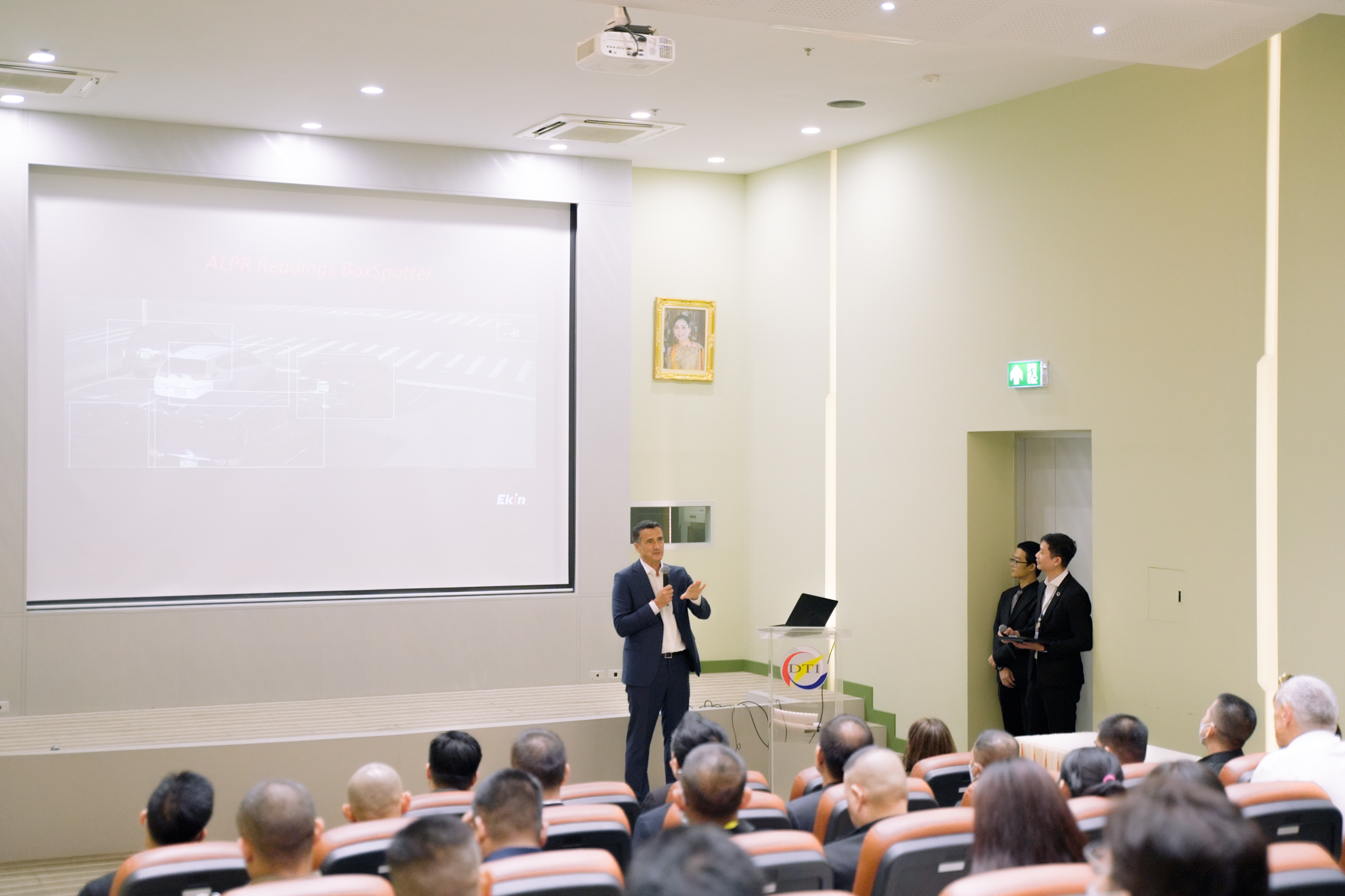
In May 2025, Ekin delivered a keynote at the Thailand Roadshow in Bangkok, where the company appeared with partner KHL Secure. Photographs show him speaking in front of projected technical material, with the audience seated close by. The setting is more useful than a futuristic city rendering: a person explaining machinery to other people, one room at a time.
By September that year, he and his son Malik were telling the company's story together in a video interview. Malik now appears on the leadership roster as chief strategy officer. The family connection is public, but so is the professional distinction: Akif remains founder and chief executive, while the younger Ekin has a separately identified role.
A Smart Talks interview shared in January 2026 put US growth and connected urban operations on the agenda. At Intertraffic Amsterdam in March, Akif took the Road Safety Stage for a session on AI-driven traffic monitoring, enforcement and safer, greener cities. The company's subsequent highlights returned to mobile technology and real-time information. The geography keeps widening; the argument about connecting observations keeps returning.
Across that career, the objects make a surprisingly coherent procession: the lamp, the aircraft, the camera, the lightbar. Each has to work in a physical place, under conditions a presentation cannot tidy away. Ekin's ambition now reaches across city departments and international markets. Its most recognizable expression still sits on a car roof, going around the next corner.
More from Ekin’s world
- Ekin website
- Akif Ekin on LinkedIn
- Smart Talks · watch on YouTube
- Akif and Malik Ekin · watch on YouTube
- 2020 interview · watch on YouTube
- 2020 conversation about smart-city planning
- 2019 reporting on the Swiss privacy debate
- The mobile-system patent application
- Patrol G2 · German Design Award
- Bangkok roadshow
- Ekin on Instagram
- Ekin on X
- Ekin on Facebook
- Ekin YouTube channel